The relationship of the Trinity with Mary
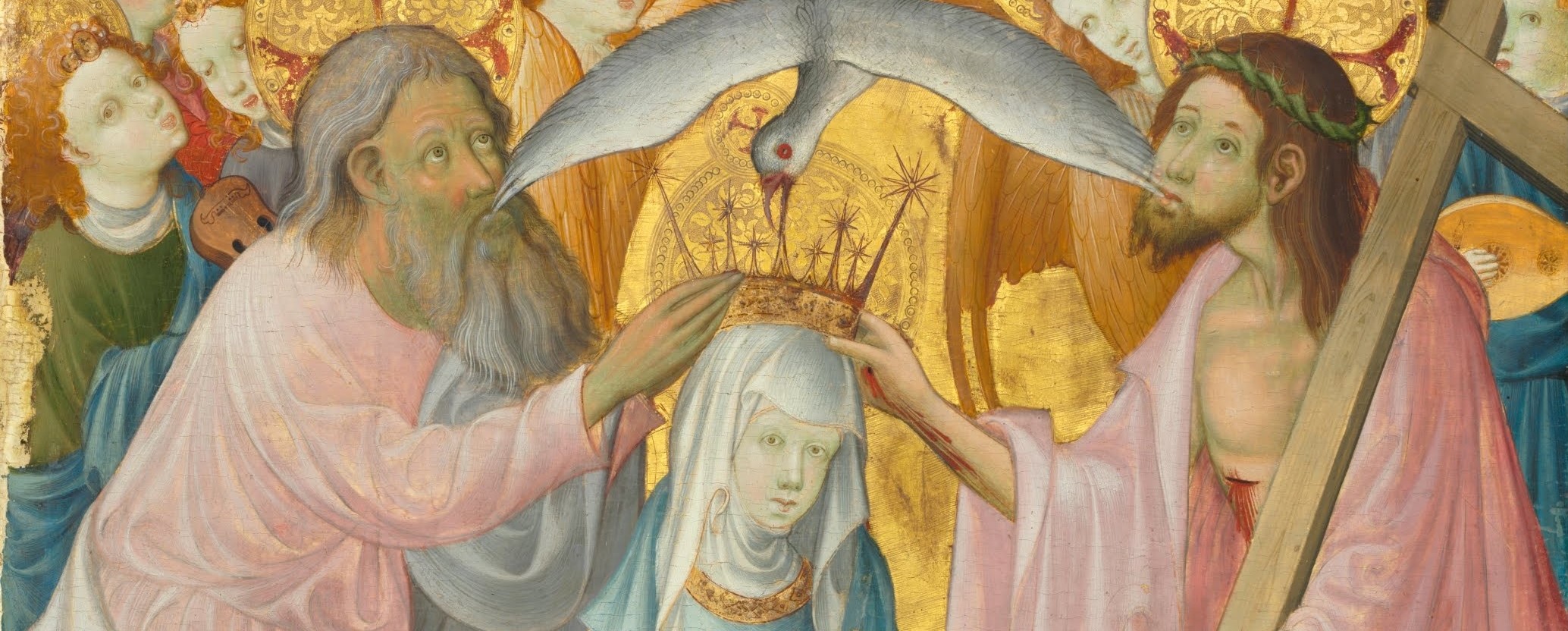
When attempting to define Mary’s relationships with the other two divine persons, a seemingly insurmountable challenge arises for theological thought. In the traditional testimonies regarding this aspect, it is notable that the same attributions often used to characterize the relationship between Christ and Mary are chosen. Thus, Mary is also called the “spousa Patris” (bride of the Father) or the image of the Father, but also the “wife of the Holy Spirit” or his image and “icon.” A possible objection arises that the precise descriptions of Mary’s trinitarian relationships, due to a lack of discernment, lead to mere verbal repetitions and designations that do not contribute to a faithful understanding of the Trinitarian mystery.
At this point, it should be responded that, obviously, given the unity of the three persons and their intimate union in the redemptive Incarnation event in Mary, each attribution of Mary’s relationship with one person also refers to the entire Trinity. Thus, her relationship with another person is also touched upon. It is not a logical error for traditional theology to have used these indications promiscuously regarding Mary’s relationships with the divine persons, but rather a sign of the profound unity of the three persons that extends to their external relations and human attributions. Furthermore, it cannot be forgotten that (due to both the analogical nature of our words and their semantic function) the same name (wife, image, dwelling, sanctuary) can carry different nuances and specific meanings depending on the context. In the Trinitarian context, attributions given to Mary in relation to one person acquire a distinct specific meaning when expressed regarding another divine person and their personal attributes.
The same thing is not meant when speaking of Mary as “wife of the Father” and “wife of the Son.” In the first case, one perceives a relationship that arises from the fact that Mary participated (in an analogical way) in the generation of the Son, just as the Father accomplishes eternal generation. However, using this title for Mary’s relationship with Christ brings to the forefront the idea of the Son’s gift to his mother, his deep alliance with her, and Mary’s subordinate involvement in the life and action of the Son. In addressing the problem of exchange and the apparent imprecision of Mary’s personal trinitarian relationships, another argument should also be considered that demonstrates how, throughout theological history, these titles have gained precision and an intricate harmony that restricted reciprocal exchange and was established, among others, by Rupert of Deutz (d. 1135): Mary is “wife of the Father, wife and mother of the Son, temple of the Holy Spirit.”
There should be no doubt, despite these objective difficulties that remain to be resolved, of the existence of Mary’s personal relationships with the divine persons, even though the question of the strictly proper character of the relationship between a divine person and a creature has not yet been settled. Regarding Mary’s special relationship with the Father, it derives from her unique union with the Son in which the Mother is united to the Son of the Father in the most perfect manner possible between a divine and human person. If the Father’s property in the Trinity consists in his being absolutely ungenerated, in his being principle, and in his paternity over all created and non-created realities, it can be explained how Mary, through her singular relationships with the only-begotten Son of the Father, enters into a special relationship with this Father. This relationship should not be derived (as has already been criticized) from the parallelism between eternal and temporal generation, as this could lead us dangerously close to placing Mary on par with the Father.
In reality, Mary receives her special affinity with the first divine Person precisely through her direct and formal subordination to the paternity that is extended into the mission of the Son in the flesh. Since this mission was for Mary an event of grace, Christian tradition, with a proper regard for the measures and limits to be applied, initially defined Mary’s relationship with the Father as filiation, more precisely as adoptive filiation. However, tradition elaborated on the difference from adoptive filiation of all other men endowed with grace by adding that Mary, as “God’s daughter” or “the Father’s daughter,” stands out not merely by a particularly intense participation in the eternal filiation of the Word whom she generated according to humanity, bringing him into herself in body and spirit, but with this generation comes also a special resemblance to the Father.
From her ontological union with her Son, the Virgin was able to participate in a superior manner in this filiation and could be called (around the Carolingian era) through the application of sapiential passages from the Old Testament, “the created wisdom” of the Father who is opposed to the Father along with the Son as “the uncreated wisdom,” yet similar to the Father through a particular image of the Father. Mary’s affinity with the Father through participation in the filiation of the Son was also legitimately emphasized by theology with the idea that the eternal decree of the Father for the Incarnation of his only-begotten Son through the Virgin Mother was united with the decree to create Mary as the seat and vessel of wisdom. This singular relationship of origin with God constitutes an exceptional filiation of the human person of Mary toward the Father in the order of grace, which is an immediate reflection of the Word’s filiation and unites the Mother of God with the Father in a communion that transcends created measures. Because of her origin from the Father’s special love and the Son’s, Mary also draws near to the Holy Spirit, the love made person between Father and Son.
However, it is not only this similarity of origins that gives Mary a special relationship with the Holy Spirit. More fundamentally for the establishment of this relationship with the Spirit is again her union with the incarnate Son, the divine Word who generates the person of the Holy Spirit. Christian tradition had no hesitation in calling her also mater Verbi (incarnati) spirantis Spiritum, even though the relationship with the Spirit is here expressed only on the part of the mother and unilaterally. The other side appears through the function of God’s Spirit in the Incarnation of the Son, a fact testified to with a richness of meanings in the words of the angel to Mary. Although the affirmation that the Holy Spirit would descend and the power of the Most High would cast its shadow leaves open in exegesis the question of the personality of the Spirit (Lk 1:35), there can be no doubt, however, that in these Scriptural words, oriented towards the economy of salvation, the Holy Spirit is presented as the productive principle of the Incarnation of the Son by the Virgin, a principle that also creates the unity of the mother with the Son, without performing the function of a human father.
This action of the Spirit must be understood as an act of perfect and sanctifying love, in which Love, made person of God himself, extends his trinitarian force of union and cohesion over a human person who is involved in the trinitarian life of divine love through the personal nexus of union that is the Holy Spirit within the Trinity. From the fertility of this love, Mary generates the humanity of God-man. The Spirit is, within the Trinity, the principle of the highest peak of mutual knowledge and an ecstasy of love and fulfillment in a “suprapersonal” of the persons. He performs this function in the Incarnation of the Son also ad extra, in Mary.
As the Mother of God perfectly opens herself to this effect, she not only enters into the fullness of created grace (cf. Lk 1:28), but she is also guided towards union with the grace of God made person, an unprecedented union in the history of creation and salvation. Thus, it becomes understandable why tradition, to determine Mary’s personal relationship with the Holy Spirit, chose again also the title of sponsa. This name, however, does not seem very appropriate because it was already used in the christological relation (even in the form of mater-sponsa) and because it is not entirely compatible with the power of the Holy Spirit that penetrates all things, that surpasses every “being before” and that impels to communicate and vivify everything.
Tradition was aware of this if it chose for this relationship the Marian title of sacrarium Spiritus Sancti, or “organ” or “vessel” of the Holy Spirit, despite these designations not providing a totally convincing description of Mary’s person. For this reason, those titles that describe Mary as the most perfect human-personal image of the Holy Spirit, as human irradiation of the Spirit, as an “icon of the Spirit” in human-personal form, as the human representative of love, beauty, and purity of God’s Spirit, should be preferred. It is not necessary to demonstrate that these personal relationships of Mary with the divine persons are also oriented towards the whole Trinity and elevate Mary to the highest participation of a human person in the Trinitarian life.
# A reflexão antropológica da mariologia trinitária: Maria como modelo da comunicação íntima de Deus com a humanidadeEsta descrição transcende as possibilidades de explicação pela doutrina psicológica tradicional da Trindade. Também vai além do escopo de uma concepção existencial moderna que limita a compreensão da Trindade apenas às ações humanas fundamentais de convivência e amor. Mais importante ainda, está a questão de como este aspecto trinitário do mistério mariano é relevante antropologicamente, oferecendo algo significativo ao homem.## O Reflexo Antropológico da Mariologia TrinitáriaA demonstração deste reflexo antropológico é compreensível para aqueles que abordam a questão teologicamente, ou seja, a partir da relação com Deus (válido para todos os seres humanos). Pode surgir uma objeção de que definir esta relação dentro do esquema tradicional de “eu-tu”, onde Deus, de forma unitarista e totalizante, ocupa o lugar do Tu absoluto, não atende às exigências do pensamento teológico mais profundo e da fé do homem. Assim, cria-se apenas uma oposição entre Deus e o homem, uma distinção inapagável, resultando em um monoteísmo que não consegue capturar nem expressar a plenitude do mistério trinitário cristão.A teologia recente tem tentado remediar esta falha, demonstrando também que cada uma das três pessoas divinas estabelece uma relação única (e não apenas apropriada) com o homem dotado de graça. À primeira vista, pode parecer difícil compreender a relevância antropológica e religiosa prática deste tema altamente especulativo sobre as relações pessoais das pessoas divinas com o homem portador da graça. No entanto, com uma análise mais profunda, torna-se claro que está em jogo principalmente um convívio aprofundado da vida de fé e do mistério trinitário. É através da verificação destas relações pessoais que o homem dotado de graça se conecta diretamente à causa primária inacessível do Pai (como “Deus acima de nós”), ao Filho que procede do Pai para o mundo (o “Deus connosco”) e ao Espírito que permeia e vivifica tudo (o “Deus em nós e ao nosso redor”). É compreensível por que estes últimos vínculos sutis são difíceis de serem percebidos pelo espírito humano. Mas, em Maria, eles se manifestaram de maneira singular e foram apresentados à vista do homem fiel.## O Aspecto Trinitário-MarianoO aspecto trinitário-mariano revela, em primeiro lugar, o evento relacionado ao relacionamento com o Filho. A união hipostática do Verbo com uma natureza humana, ocorrida em Maria, coloca a mãe em uma relação única com o Encarnaado. Esta relação deve ser estabelecida especificamente pelo Verbo, pois aqui a segunda pessoa divina estende sua propriedade como Verbo, revelação e esplendor do Pai sobre uma pessoa humana, estabelecendo um vínculo único. Embora a causa da Encarnação, vista como ato externo, fosse estritamente singular em relação às pessoas, ela resultou em um relacionamento formalmente diferente entre o Verbo e a humanidade. Por isso, também se atribui a Encarnação não de maneira apropriada, mas de modo próprio à pessoa. Isso se aplica também a Maria, que parece ser um correlato do Filho na Encarnação.Quando um relacionamento pessoal próprio de uma pessoa divina com o humano é estabelecido, tal relação não pode ser negada às outras pessoas, mesmo que sua união com o humano portador de graça não ocorra por meio da união hipostática. O vínculo materno-esponsal de Maria com o Filho implica também um relacionamento estrito com o Pai (e vice-versa) e, igualmente, um relacionamento pessoal correspondente com o Espírito como “Espírito do Pai e do Filho”. Por essa razão, Maria é o paradigma excepcional da intimidade mais profunda pela qual as pessoas divinas concedem a participação em seu caráter relacional a uma pessoa humana e entram com ela em um relacionamento correspondente ao próprio ser.## Relevância Antropológica e TeológicaA tradição cristã reconheceu corretamente que os conceitos relacionais trinitário-marianos devem ter um significado específico e próprio das pessoas. No entanto, permanece a questão antropológica: se a figura mariana como espelho da Trindade pode ser relevante para a humanidade inteira. Aqui, devemos considerar a fronteira entre uma estrutura trinitária e uma participação mediada através da união hipostática, bem como entre um relacionamento trinitário de outros homens constituído apenas pela comunicação da graça e da natureza divina.Essa diferença não é tão marcante a ponto de excluir outros homens de tal relacionamento trinitário. Embora Maria esteja no ápice da humanidade com seu caráter pessoal voltado a Deus, representando a realização mais intensa do relacionamento humano pessoal com Deus, ela permanece parte do todo e, portanto, um vínculo eficaz para estender esse relacionamento trinitário sobre toda a humanidade. A partir do relacionamento trinitário de Maria, deve-se encontrar um novo argumento para o relacionamento pessoal das pessoas divinas com os justificados. Certamente, essa relação não alcançará a mesma perfeição, intensidade e imediatez que em Maria, cuja semelhança com Deus representa o exemplo máximo e, portanto, único do vínculo trinitário de uma pessoa humana.Portanto, este “caso” exclusivo não deve ser entendido em sua essência (mesmo em seu modo de realização). O relacionamento trinitário de Maria, como todo o seu ser e agir pela humanidade, tem um significado inclusivo: a humanidade participa em Maria, “estância nupcial” em que se realizou o “casamento” do Filho de Deus com a natureza humana, criando um relacionamento específico com a Trindade. Este fato traz consequências para a compreensão teológica do homem diante de Deus. Essas consequências podem ser resumidas na ideia de que o homem não está apenas oposto ao único Deus, mas é destinado à troca, ao comércio com a vida infinitamente dinâmica da Trindade, uma vida que se realiza nos relacionamentos pessoais. O homem já está envolvido neste circuito relacional da vida divina.## Exploração AdicionalA relação entre a Trindade e Maria é aprofundada na encíclica *Redemptoris Mater* de João Paulo II, que explora Maria como lugar privilegiado da autocomunicação trinitária de Deus.Para uma compreensão mais ampla, explore: – Mariologia – Teologia Mariana – Aparições Marianas – Pós-Graduação em MariologiaGraduate Studies in Mariology
Wishing to deepen your formation in Mariology? Discover the Graduate Studies in Mariology from Locus Mariologicus, an academic formation that combines theological rigor, spiritual life, and the living tradition of the Church.
Responses