Our Lady of Sorrows: A Biblical Devotion

To understand Mary’s identity and, therefore, the truth of the Mater Dolorosa, we must grasp each fact of Scripture and bring it back to the center, to Christ. This is what the Church has always done. If we go through the Gospels, we find the Mother of God, who, from the beginning of Jesus’ historical existence, is intimately associated with His destiny of passion and resurrection.
Reflecting on some moments of her life, we come to recognize that the Virgin is marked by sufferings and difficulties proper to the human condition. She lives only a short time in the house of Nazareth. She sets out on the road to Bethlehem, where she gives birth to the awaited Messiah, experiencing the sorrow of having to lay Him in a manger [a prefiguration of the tomb] (cf. Lk 2:7). She flees to Egypt with Joseph to save her Son from the infanticidal fury of Herod (cf. Mt 2:13-14). She returns to Nazareth to work with Jesus and Joseph in the everyday life of the family (cf. Mt 2:23; Lk 2:51). Moreover, the Gospels give particular prominence to three episodes that make explicit the sorrow Mary lived through:
1. the prophecy of Simeon (Lk 2:33-35).
2. the loss of Jesus in Jerusalem (Lk 2:41-50).
3. her presence at the Cross on Calvary (Jn 19:25-27).
The constant point of reference of these passages is the passion-resurrection of Christ, an event both bitter and glorious, of death and birth, of defeat and victory, of darkness and light, of hatred and love. Mary is involved in the sorrowful and glorious life of her Son and remains faithful to Him from the initial fiat of the Handmaid of the Lord to the fiat of our Mother at the Cross. Hers is a path of humble faith, marked by a love freely offered by God and faithfully returned by her.
The Lucan and Johannine passages on the sorrows: Lk 2:33-35 (Simeon), Lk 2:41-50 (loss in the temple), and Jn 19:25-27 (the cross)
Of the three broad Gospel passages indicated above, two are found in Luke, in the infancy narrative, and one in John, in the Passion narrative.
“And a sword will pierce through your own soul also” (Lk 2:35)
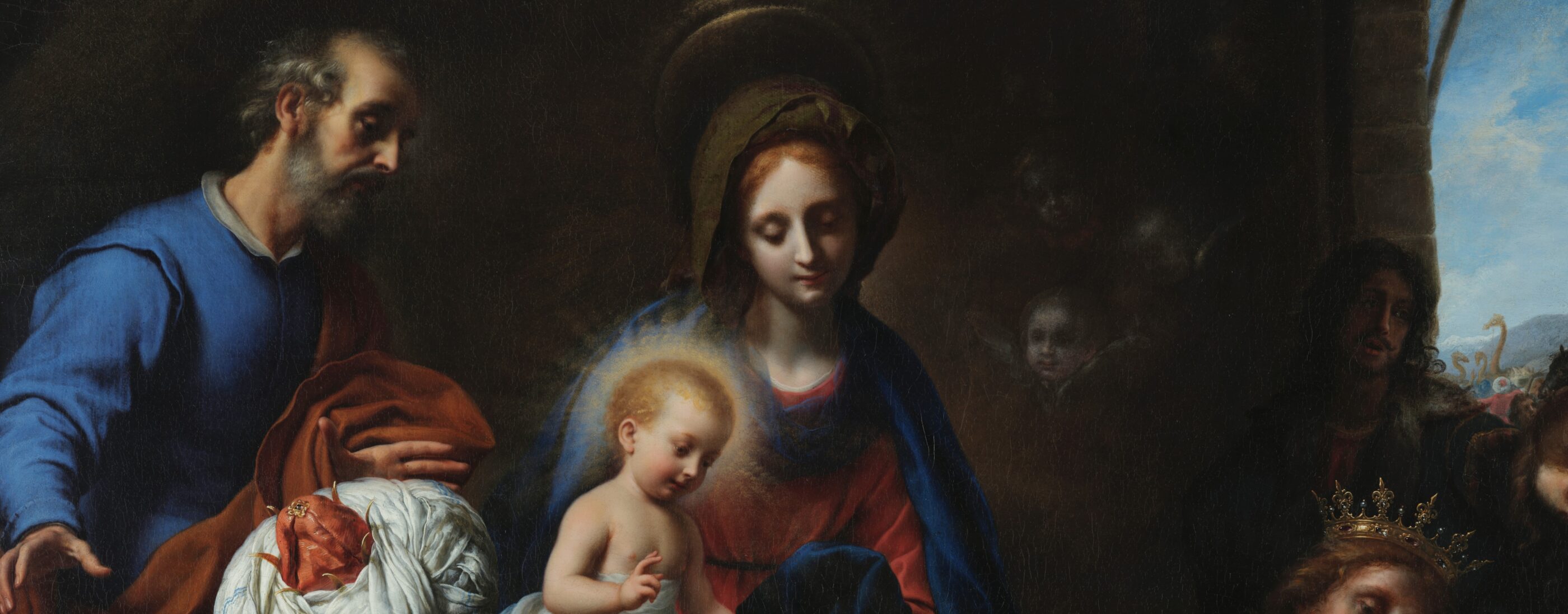
The Gospel expression refers to the episode of Jesus being presented in the temple by Mary and Joseph to be consecrated to God. In the temple, Simeon prophesies the sorrowful mission that would involve the Child and the Mother (cf. Lk 2:34-35). He pronounces two solemn declarations about Jesus (Lk 2:29-32; Lk 2:34-35). The first is a blessing that shows Him as the salvation and light of the nations (cf. Is 49:6) and the glory of Israel (cf. Ex 19:21; Wis 6:22-23). The other is a stern oracle about the future of Jesus, which will see Him become the ruin and resurrection of many in Israel and a sign of contradiction. This second oracle of Simeon foretells the effects that the presence-mission of the Messiah Jesus will produce in Israel: fall-ruin or resurrection for many. Christ as Savior and Redeemer will not meet with full acceptance and recognition. On the contrary, He will be a sign of contradiction, surrounded by hostility and misunderstanding until all this reaches its climax on Calvary. The no spoken to Christ by many in Israel will reveal the hidden thought of their hearts: unbelief.
The Mother of Jesus will also be involved in the drama of the contested-rejected-contradicted Son. Simeon addresses a startling oracle to Mary: “a sword will pierce through your own soul also” (Lk 2:35). The destiny of Jesus will strike her soul, upon which sorrow will fall like a sword. This second announcement, unlike the first, which was full of joy (cf. Lk 1:28), proclaims “the concrete historical dimension in which the Son will fulfill His mission, that is, in incomprehension and sorrow”. Simeon’s words allude to Christ’s weeping over His beloved Jerusalem, which rejects Him (Lk 13:34-35; Lk 19:41-44), and associate Mary with it; they prefigure her place at the cross, where she will be present with the beloved disciple (Jn 19:25-27). Communion of life with the Son will lead not to a destiny of splendor and glory, but rather to a communion in kenosis and in sorrow. From this moment on, the existence of the Mother of Jesus unfolds within the horizon of a foreboding of adversity.
“We were looking for you”
This declaration of Mary to her twelve-year-old Son, found in the temple among the teachers of the Law, sums up the three days of anxious searching by Jesus’ parents from the moment they noticed His absence. The finding of Jesus in Jerusalem constitutes the final episode of the infancy narrative. It is a prefigurative anticipation of the paschal triduum of sorrow and joy. Just as Joseph and Mary, distressed (Lk 2:48), set out in search of the Son, so in the days of the passion the disciples will be sad and weeping for having lost the Master (Lk 24:17); they will seek Him (Lk 24:5) and will find Him three days after His death (Lk 24:21), that is, on the third day (Lk 24:7, 46). In both texts the same terms appear: Passover, three days, fulfillment of the Father’s will, I must…
Mary therefore experiences a very intense sorrow, shared by Joseph: they are distressed, a term that in the Bible indicates at once suffering and torture. In Luke it designates the physical and spiritual agony of the rich man plunged amid the flames of hell (Lk 16:24-25); the sorrow of Paul’s disciples as they take leave of him, convinced that they will never see him again (Acts 20:38); or the sorrow that Paul feels for the Jewish people (Rom 9:2). Mary and Joseph, deeply united to their Son, are immersed in this suffering-torment. Through the reflection of faith (cf. Lk 2:51b), Mary sheds light on the meaning and scope of the incomprehension in which both parents are caught up.
“And standing by the cross of Jesus was his mother” (Jn 19:25)
The scene of the presence of Mary on Calvary is among the most evocative in the Gospel of John and has received various interpretations. Today exegetes agree that the evangelist’s interest in the Virgin Mary does not arise from psychological or anecdotal reasons centered on her figure, but aims at the salvation-historical meaning, which opens the way to understanding her sorrow. According to John, from the height of the cross Jesus indicates who His Mother truly is. First He calls her woman: “Woman, here is your son”; then, turning to His beloved disciple, He proclaims her Mother: “Behold your mother”.
The fact that the Son calls His Mother woman evokes the prophecy of the woman who gives birth, who brings forth the people of God (cf. Is 66:7-8), to which Jesus refers when He describes the disciples’ participation in the passion as a painful childbirth (cf. Jn 16:21-22). The woman who gives birth is the messianic community, Zion personified in the woman who stands by the cross of Jesus. Mary abandons herself to God without reserve and shares by faith in the startling mystery of this self-emptying. She does not receive a ready-made faith, easy and flooded with light. Mary had to search in the dark; she had to journey in order to follow her Son, where He, from time to time, denying even the legitimate expectations of a mother’s heart, let Himself be found. Mary was truly the first who believed.
The Mother of Jesus, by her mystical abandonment to God the Father, transforms her sorrow into a participation in the sacrifice of love offered by Christ and, therefore, into a place of salvation for herself and for all humanity.
The Old Testament prefigurations of the Mater dolorosa: Judith (Jdt 8:22), the woman of the canticle, and the typology of compassion
Ecclesial tradition perceives the figure of Mary as the Woman of Sorrows (Mater dolorosa) not only in the Gospel episodes but also in the Old Testament typologies, which underline the share of suffering and struggle required for the accomplishment of the plan of salvation. For example, the ancient Eve gives way to the new Mother of the living (Mater viventium), associated with the new Adam in the struggle against the ancient serpent (cf. Gen 3:15). Likewise the Daughter of Zion, the personification of Israel faithful to God despite fears and anguish (cf. Lam 1:5), foreshadows the Virgin Daughter of Zion, who trusts in the Lord alone. Above all, the liturgical tradition of East and West loves to see in certain great women of ancient Israel, marked by a destiny of sorrow and grace, so many figures of the Mother of Jesus.
Let us think of Judith, who, grieved by “the slaughter of her brothers and the enslavement of her homeland” (Jdt 8:22) and trusting in God, “savior of those in despair” (Jdt 9:11), gives her life for the salvation of her people (Jdt 13:20). Another sorrowful mother is Esther, who, “seized with mortal anguish, takes refuge in the Lord” (Esth 4:17) and also risks her life for the liberation of Israel (cf. Esth 4:11). Finally, we find the mother of the Maccabees, “admirable and worthy of glorious memory”, who, plunged into the most excruciating sorrow, sees her “seven sons die in a single day” and bears “all things serenely because of the hopes placed in the Lord” (2 Macc 7:20).
To reflect more deeply on devotion to Our Lady of Sorrows and its biblical foundation, consult the Apostolic Exhortation Marialis Cultus of Paul VI, which situates this devotion within the Church’s authentic Marian piety.
Deepen your studies: explore Mariology, Marian Theology, Marian apparitions, and the Postgraduate Program in Mariology.
Postgraduate Program in Mariology
Would you like to deepen your formation in Mariology? Discover the Postgraduate Program in Mariology of Locus Mariologicus, an academic formation that unites theological rigor, spiritual life, and the living tradition of the Church.
Would you like to study Mariology seriously?
This article grows out of the works in the Locus Mariologicus library. The Postgraduate Program in Mariology takes you to the same source, with academic guidance: Scripture, the Fathers of the Church, and the Magisterium, from the first dogma to contemporary questions.




Responses