More on the Rosary: the vision of the Holy Fathers.
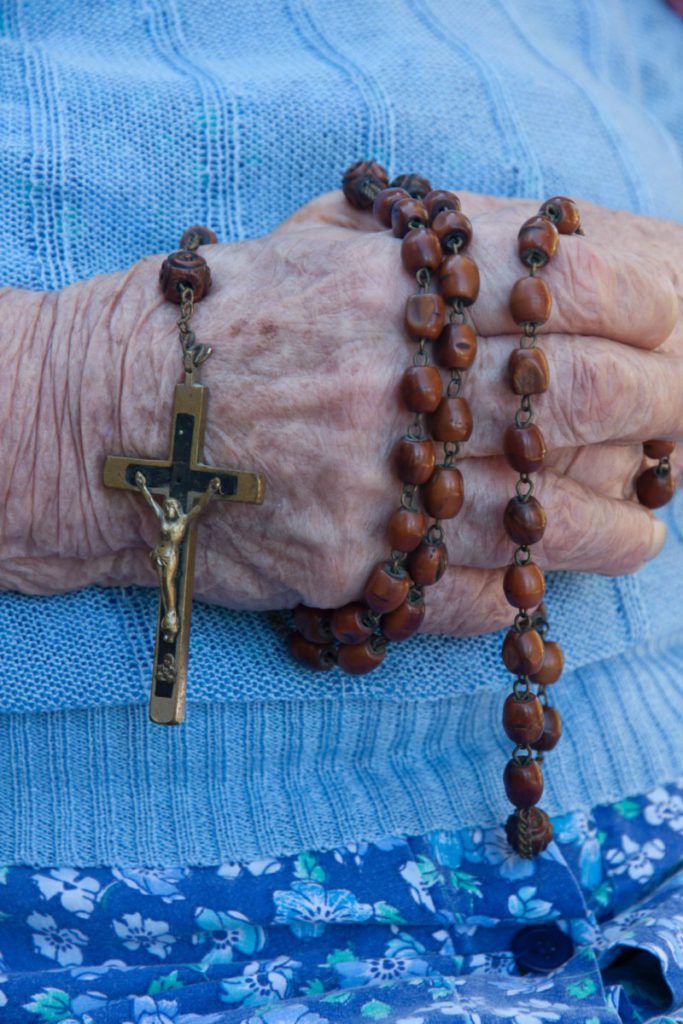
The Rosary and Mary in the vision of the Holy Fathers

Over the centuries there is no lack of references by the Holy Fathers concerning the Rosary. Rather than listing documents, in the following lines we will look for the new contribution that each of these documents brought to the understanding of the place the Rosary holds in magisterial teaching. We begin with Pius V (1566-1572), a saint and a Dominican. This Pope is known as the Pope of the Rosary, for with the bull Consueverunt Romani Pontifices, of September 17, 1569, he defines this prayer as:
“The Rosary, or Psalter of the Blessed Mary, is a pious manner of praying to God, an easy manner that everyone can carry out, which consists in praising the Blessed Virgin by repeating the angelic greeting one hundred and fifty times, as many as there are psalms of David, dividing each decade with the Lord’s Prayer, together with certain meditations that illustrate the entire life of Our Lord Jesus Christ”.
Later, with the Bull Salvatoris Domini (1572), Saint Pius V, referring to the victory of the Battle of Lepanto, instituted the liturgical feast in memory of that victory. The doctrine of St. Pius V concerning the Rosary can be summarized as follows: a) it is a prayer that should be prayed in order to overcome difficulties, calamities, pestilences, wars, and other troubles. b) It is a means that everyone can use. c) This path proved to be of great help against heresies and dangers to the faith, bringing about numerous conversions. d) It should be recited by the whole Christian people.
His successor, Pope Gregory XIII, in turn, with the bull Monet Apostolus (1573), instituted the solemn feast of the Rosary, placing it on the first Sunday of October. The successive magisterial documents would only grant privileges, indulgences, and norms for the various confraternities. Their documentary importance lies in the fact that, even without adding anything new, the Rosary continued to be of the utmost importance for the Apostolic See “as the exaltation of the Catholic faith, the extirpation of heresies, the preservation of peace among Christian princes” (Pope Clement VIII, bull Salvatoris et Domini, January 13, 1593).
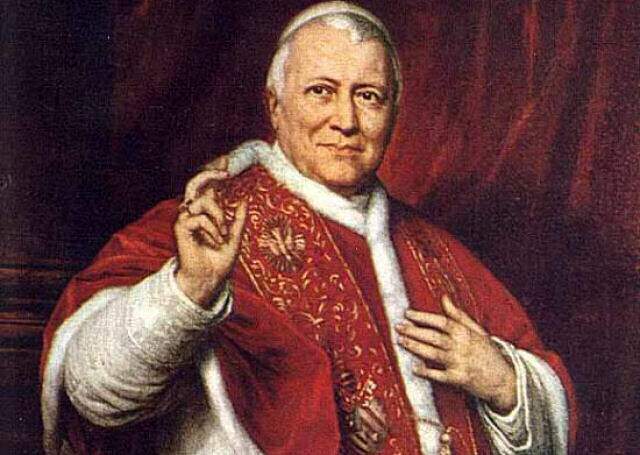
Already at the dawn of the twentieth century we have the invitation of Blessed Pius IX (1846-1870), with the letter Egregiis suis, to pray the Rosary for the success of the First Vatican Council (1869-1870). A few years later, Leo XIII (1878-1903), signing 12 encyclicals and two apostolic letters on the themes of the Rosary, would decisively influence its crystallization in the Christian experience of prayer. It is in this pontificate that the month of October is dedicated to the Rosary, a prayer which, according to the Pope, is an easy means of bringing the principal dogmas of the Christian faith into souls and of rooting them there. On the evils of society, the Pope of the social encyclical Rerum Novarum invites us to the recitation of the Rosary in order to overcome the aversion to the sacrifice and the suffering to which faith leads us, for it teaches us to look upon the sufferings of Christ and leads us to a life fashioned in the image of the humility of Christ and of Mary. The mysteries of the life to come are won through the meditation and contemplation of the mysteries of the life of Christ, of Mary, and of the Saints.
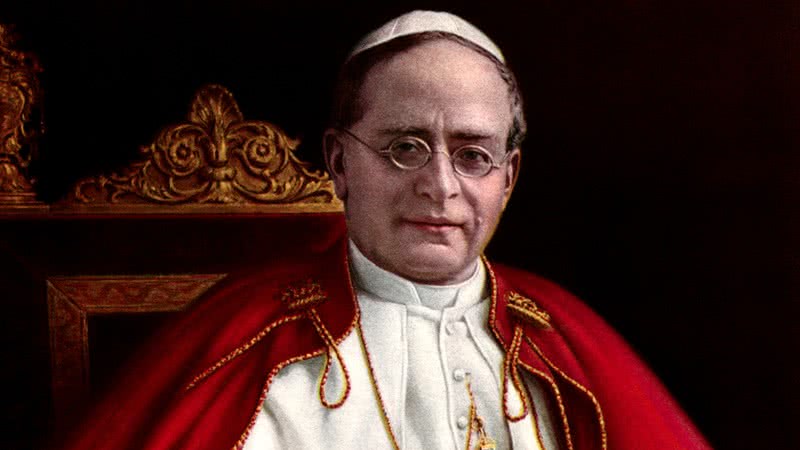
Along the same line of thought, Pius XI (1922-1939), with the encyclical Ingravescentibus malis of September 20, 1937, invites us, in the hour of danger, to pray to the Queen of Heaven, above all with the Rosary, which among the prayers to the Virgin holds first place. It is a way to awaken evangelical virtues, to awaken the Catholic faith, and to revive hope and charity.

The Venerable Pius XII (1939-1958) devoted one encyclical and eight letters to the Rosary. According to the Pope, who dogmatically proclaimed the Assumption of Mary on November 1, 1950, this prayer is: the synthesis of the whole Gospel, meditations on the mysteries of the Lord, the evening sacrifice, the crown of roses, the hymn of praise, the prayer of the family, the compendium of the Christian life, the sure pledge of heavenly favor, the stronghold for the hope of salvation. With the encyclical Ingruentium malorum (1951), the Holy Father affirmed that:
“although there is no single way of praying to obtain help, nevertheless we consider the holy Rosary to be the most fitting and effective means: as is shown by the origin of this practice, more divine than human, and also by its inmost nature. We do not hesitate to affirm publicly once again that great is the hope we place in the holy Rosary for healing the evils that afflict our times. Not by force, not by arms, nor by human power, but with the divine help obtained through this prayer, strong as David with his sling, the Church will be able to face the infernal enemy undaunted”.
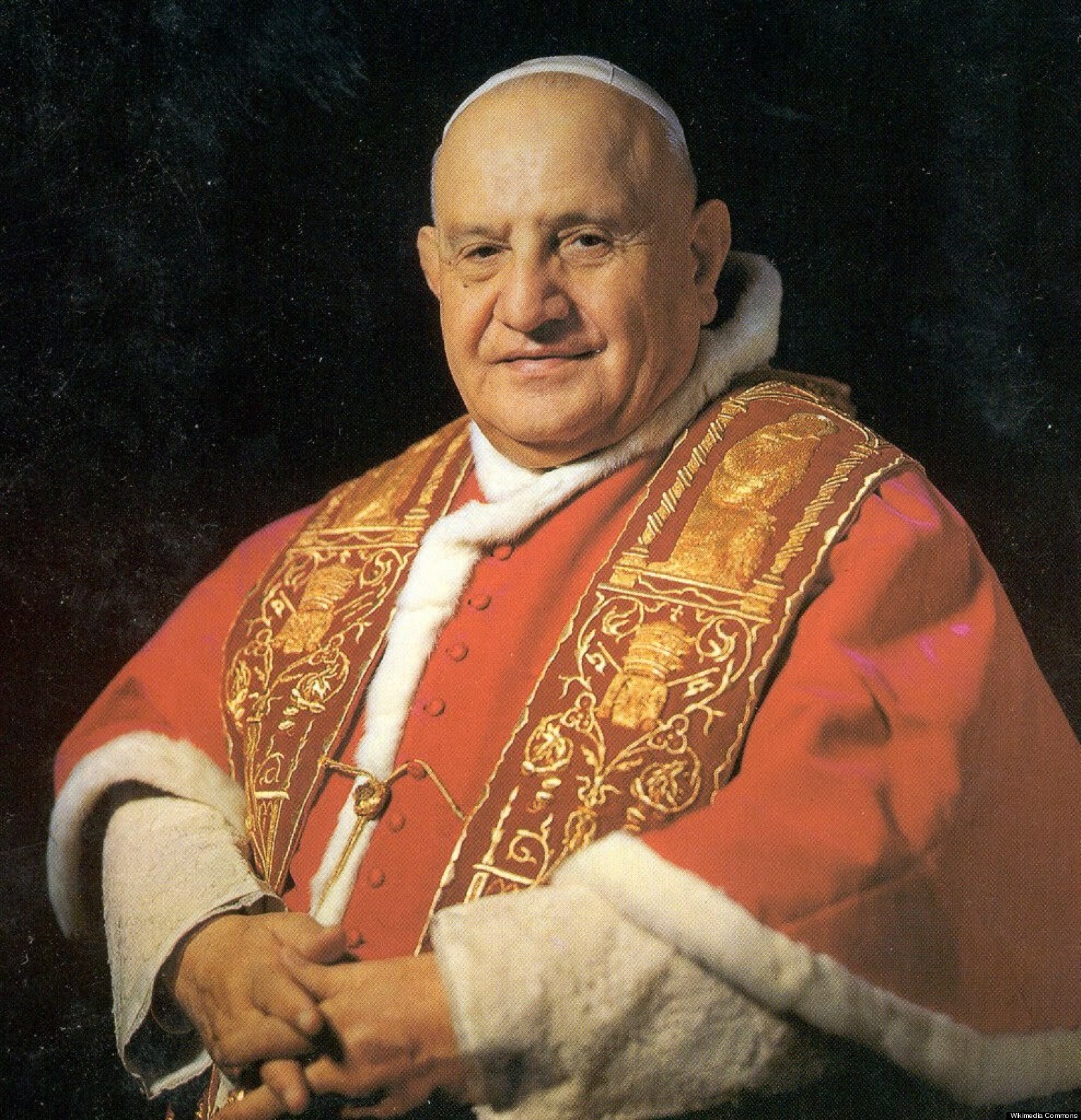
The Pope who would open the Second Vatican Council, Saint John XXIII (1958-1963), revealed that throughout his life the Rosary was always part of his spirituality. He explained his teaching on the Rosary in various encyclicals and addresses. Among them we cite Grata recordatio (1959), speaking about the devotion of the Rosary during the month of October, where the Holy Father affirms: “the Rosary, as everyone knows, is an excellent way of meditated prayer, made up of the mystical crown in which the prayers of the Our Father, of the Ave Maria and of the Glory Be are interwoven in the consideration of the highest mysteries of our faith, so that the drama of the incarnation and of the redemption of Our Lord is presented to our mind as in so many pictures”. A few years later came the apostolic letter Il religioso convegno (1961), with a fatherly manner toward the faithful, which sets forth in new language the value and the efficacy of the Rosary, and is a true summa of the Rosary.
Our journey ends here at the threshold of Vatican II (1962-1965), where saints such as Paul VI and John Paul II influenced, reformulated, and reread in the light of the Council the most prayed prayer in the world. Tomorrow we will have more content celebrating the month of the Rosary!
To deepen the spirituality of the Rosary and devotion to Mary, consult the encyclical Redemptoris Mater of Saint John Paul II, on Mary in the mystery of Christ and of the Church.
Deepen your studies: explore Mariology, Marian Theology, Marian apparitions and the Postgraduate Program in Mariology.
Postgraduate Program in Mariology
Would you like to deepen your formation in Mariology? Discover the Postgraduate Program in Mariology of Locus Mariologicus, an academic formation that unites theological rigor, spiritual life, and the living tradition of the Church.
Learn to pray the Rosary in our guide: How to Pray the Rosary, Step by Step.
Would you like to study Mariology seriously?
This article is born of the works in the library of Locus Mariologicus. The Postgraduate Program in Mariology takes you to the same source, with academic guidance: Scripture, the Fathers of the Church, and the Magisterium, from the first dogma to contemporary questions.

Responses