Mary and Those Who Fell Asleep in Hope: All Souls’ Day and Prayer for the Dead

By Prof. Dr. Daniel C. Afonso · Updated
Mary and the faithful who fell asleep in the hope of the Resurrection
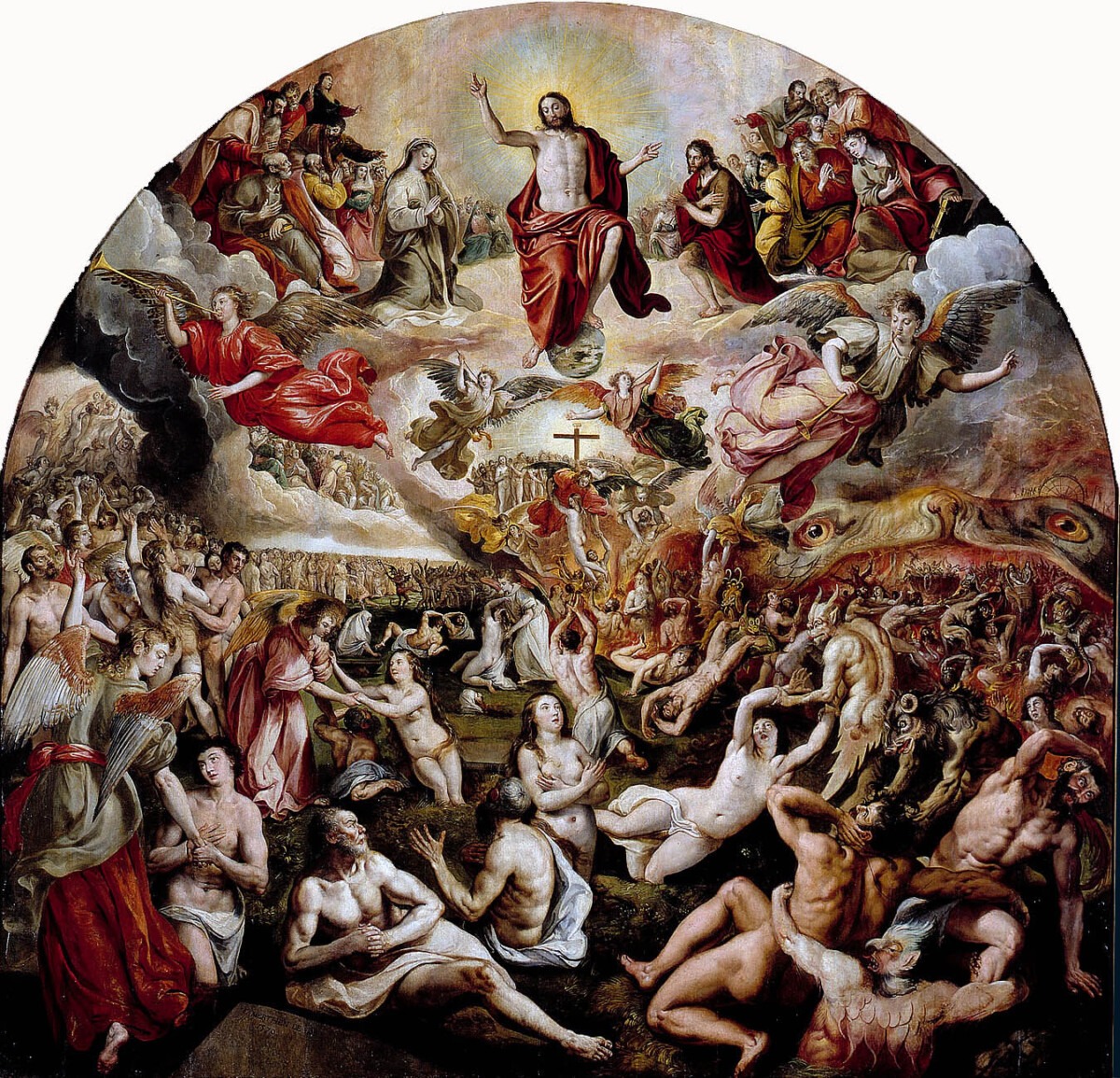
All Souls’ Day: origin of the date and the indulgence from November 1 to 8
In 2026, the Commemoration of All the Faithful Departed, All Souls’ Day, falls on a Monday, November 2, right after the Solemnity of All Saints, celebrated on Sunday, November 1. On these two consecutive days, the Church first contemplates those who are already in the glory of God and, on the following day, prays for all who died in Christ and may still be undergoing purification.
The date has a monastic origin. According to Carlo Carletti, in an article published in L’Osservatore Romano of November 1, 2009, it was in the year 998 that Saint Odilo of Mercoeur, fifth abbot of Cluny, introduced into the calendar of the Cluniac monasteries a commemoration of all the departed, to be celebrated on the second day of November. Odilo’s statute, which the same article locates in the Patrologia Latina (vol. 142, col. 1037-1038), provided for alms to the poor on the day of All Saints, the ringing of the bells and the Office of the Dead after Vespers, a solemn Mass on the morning of November 2, and Masses, private and public, for the repose of the souls of all the faithful. Carletti adds, on the basis of Ildefonso Schuster, that the extension of the date to the whole Church appears to be documented for the first time in an Ordo Romanus of the fourteenth century.
The date is medieval, but prayer for the departed is much older. The Second Vatican Council recalls that the pilgrim Church “from the very first ages of Christianity has cultivated with great piety the memory of the dead” (Lumen gentium, n. 50).
The All Souls’ Day indulgence
The Manual of Indulgences (Enchiridion Indulgentiarum, 4th ed., 1999, grant 29, § 1) grants a plenary indulgence, applicable only to the souls in purgatory, to the faithful who, on each day from November 1 to 8, devoutly visit a cemetery and pray for the departed, even if only mentally. It also grants it to those who, on All Souls’ Day, piously visit a church or oratory and there recite the Our Father and the Creed. With the consent of the Ordinary, this visit may be made on the preceding or following Sunday or on the Solemnity of All Saints. On the other days of the year, the visit to the cemetery with prayer for the departed receives a partial indulgence (grant 29, § 2).
The conditions laid down by Saint Paul VI in the constitution Indulgentiarum doctrina (1967, norms 6 to 8) apply: sacramental confession, Eucharistic communion, and prayer for the intentions of the Pope, with the rejection of all attachment to sin, even venial sin. The plenary indulgence can be obtained only once a day, and the three conditions may be fulfilled on different days, before or after the prescribed work.
In 2020 and 2021, because of the pandemic, the Apostolic Penitentiary extended these indulgences to the whole month of November. The general norm remains November 1 to 8, unless the Holy See provides otherwise. In the 2020 decree, the Penitentiary also invited priests to celebrate three Masses on All Souls’ Day, according to the constitution Incruentum altaris of Benedict XV (1915).

Establishing concepts.
By heaven we understand the place where God sits upon the throne: “The Lord is in His holy dwelling, in heaven is God’s throne. His eyes observe, His eyelids question human beings” (Ps 11:4 [Vulg. 10]). “The heavens are the heavens of the Lord, but the earth He has given to the children of Adam” (Ps 115:16 [Vulg. 113B]). It is from this same place that God comes down: “the Lord came down upon Sinai, upon the top of the mountain. The Lord called Moses to the top of the mountain, and Moses went up” (Ex 19:18-20). Yet it is the Scriptures that acknowledge that heaven and earth cannot contain God: “But is it possible that God dwells on earth? If the highest heavens cannot contain Him, how much less this house that I have built!” (1 Kgs 8:27). To this paradox concerning the “indwelling” of God is added the fact that Christian hope foresees, at the end of time, new heavens and a new earth: “What we await, according to His promise, are new heavens and a new earth, in which righteousness will dwell” (2 Pet 3:13). Briefly, we may conclude that heaven is the state in which the blessed will dwell forever with God through the glorified humanity of Christ: “then we, the living, who are still alive, will be caught up together with them on the clouds, to meet the Lord in the air. And so we shall always be with the Lord” (1 Thess 4:17). “And after I have gone and prepared a place for you, I will come back and take you with me, so that where I am you also may be” (Jn 14:3).
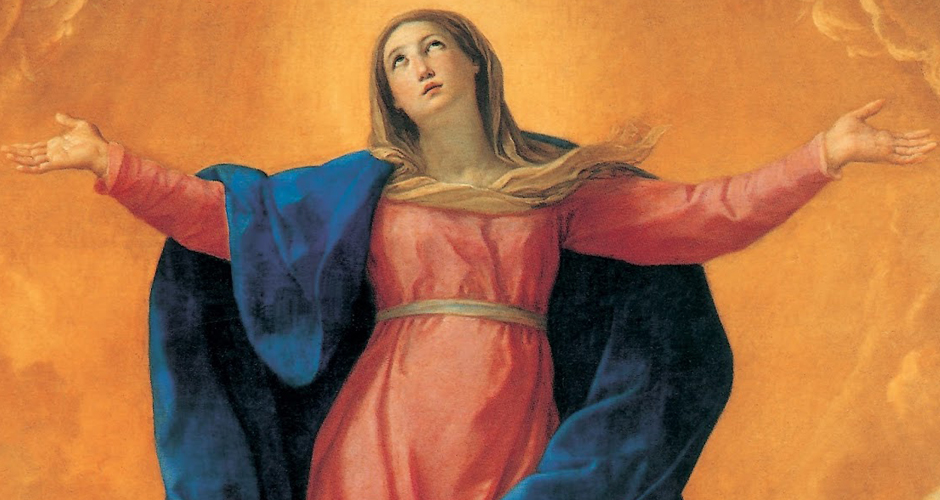
By hell we understand the state in which demons and sinners who died without repentance suffer forever, varying according to the sins committed, since they are excluded from the presence of God. These ecclesial notions are based on passages of the New Testament, such as Mt 13:36-43 and 25:31-46, and insist on the possibility of hell for those who with real malice refuse to love God and neighbor. Yet a bond exists between God and man, which is saving love: “but when all things have been subjected to Him, then the Son Himself will also be subjected to the One who subjected all things to Him, so that God may be all in all” (1 Cor 15:28). “this is good and pleasing to God our Savior. He wills that all be saved and come to the knowledge of the truth. For there is one God and one mediator between God and humanity: the man Christ Jesus, who gave Himself as a ransom for all. This was the testimony given at the proper time” (1 Tim 2:3-6).

By purgatory we understand the purification (katharsis) that is the state of those who die in communion with God, but still need their personal sins to be expiated (through the merits of Christ) and must grow spiritually before they can enjoy the beatific vision. Although we may cite numerous verses of Sacred Scripture such as 2 Macc 12:38-46, Mt 5:25-26, 1 Cor 3:11-15, these cannot define an identity of purgatory (= purification). To understand its meaning we will have to rely on elements of the Christian Tradition such as divine justice, the Christian prayers for the dead, from the second century onward, and the Eucharistic celebration for the dies natalis (day of birth) of those who fell asleep in hope. Fathers of the Church such as Clement of Alexandria (d. 215), Origen (d. 254), John Chrysostom (d. 407), Tertullian (second and third centuries), Cyprian (d. 258), Augustine (d. 430) wrote about the various modes of purification after death and about our communion through prayer with our dear departed. Prayer for the dead spread above all in liturgical settings in the Christian West and East. At the Second Council of Lyon (1274) and later at that of Florence (1438-1445) there began to be affirmed the idea of a purifying suffering borne after death by those who are not yet worthy of the beatific vision, and the value of prayers and good works as suffrage for those who endure such suffering. We must understand that there is no mention of the fire of purgatory in these Councils. In the Protestant Reformation, Martin Luther (1483-1546) would reject the value of indulgences for the dead and even the existence of Purgatory. The Counter-Reformation of the Council of Trent (1545-1563) would vigorously reaffirm the doctrine of purgatory, still without making clear its duration and nature, the value of prayers and above all of the Eucharist for all those who remain in Purgatory. In our own day we find the Second Vatican Council (1962-1965) affirming the communion of the Pilgrim Church with all those who are purified after death, reaffirming the conciliar declarations of Trent and Florence, when it says: “until the Lord comes in His majesty and all His angels with Him (cf. Mt 25:31) and, death having been conquered, all things are subjected to Him (cf. 1 Cor 15:26-27), some of His disciples are pilgrims on earth, others, having passed from this life, are being purified, others, finally, are glorified and contemplate ‘clearly the triune and one God, as He is’. All of us, however, share, though in different ways and degrees, in the same love of God and neighbor, and all of us sing to our God the same hymn of praise. For all who are of Christ and have His Spirit are united in one Church and joined to one another in Him (cf. Eph 4:16). And so the union of those who still walk upon the earth with the brethren who have fallen asleep in the peace of Christ is in no way interrupted; rather, according to the constant faith of the Church, it is strengthened by the communication of spiritual goods. For the blessed, being more intimately united with Christ, more firmly establish the Church in holiness, ennoble the worship that she offers to God on earth, and contribute in many ways to her fuller building up in Christ (cf. 1 Cor 12:12-27). Received into the heavenly homeland and living with the Lord (cf. 2 Cor 5:8), they do not cease to intercede, through Him, with Him and in Him, on our behalf before the Father, presenting the merits they attained on earth, thanks to the one mediator between God and men, Jesus Christ (cf. 1 Tim 2:5), serving the Lord in all things and completing what is lacking in the sufferings of Christ, for the sake of His body which is the Church (cf. Col 1:24). Our weakness is thus greatly helped by their brotherly solicitude”. In reality, Purgatory is today understood as a final process of loving maturation, albeit painful, before seeing God face to face. With the Last Judgment purgatory will cease to exist.
Prayer for the dead in the Bible and in the Catechism
The biblical text that the Second Vatican Council and the Catechism cite on prayer for the departed is in the Second Book of Maccabees. After a battle, the men of Judas Maccabeus find, under the tunics of the slain soldiers, objects consecrated to the idols of Jamnia (2 Macc 12:40). All turn to supplication, and Judas takes up among his men a collection of two thousand silver drachmas, which he sends to Jerusalem so that a sacrifice for sin may be offered (2 Macc 12:42-43). The author explains the gesture by faith in the resurrection: if Judas had not hoped that the fallen would rise again, it would have been superfluous to pray for the dead (2 Macc 12:44). And he concludes, in the Greek of the Septuagint:
“ὅθεν περὶ τῶν τεθνηκότων τὸν ἐξιλασμὸν ἐποιήσατο τῆς ἁμαρτίας ἀπολυθῆναι” (hóthen perì tôn tethnēkótōn tòn exilasmòn epoiḗsato tês hamartías apolythênai): therefore, for those who had died, he made atonement, so that they might be freed from sin (2 Macc 12:45 LXX, which corresponds to 2 Macc 12:46 in the Nova Vulgata and in the Catechism).
The same verse calls the dead “τοῖς μετ᾿ εὐσεβείας κοιμωμένοις” (toîs met’ eusebeías koimōménois): those who fall asleep in godliness (2 Macc 12:45 LXX). Saint Paul uses the same verb for deceased Christians:
“Οὐ θέλομεν δὲ ὑμᾶς ἀγνοεῖν, ἀδελφοί, περὶ τῶν κοιμωμένων, ἵνα μὴ λυπῆσθε καθὼς καὶ οἱ λοιποὶ οἱ μὴ ἔχοντες ἐλπίδα” (ou thélomen dè hymâs agnoeîn, adelphoí, perì tôn koimōménōn, hína mḕ lypêsthe kathṑs kaì hoi loipoì hoi mḕ échontes elpída): we do not want you to be unaware, brothers, concerning those who are asleep, so that you may not grieve as the others do, those who have no hope (1 Thess 4:13).
The expression “to fall asleep in hope,” which gives this article its title, echoes this language: the death of the Christian is seen as a sleep awaiting the resurrection.
The Catechism of the Catholic Church gathers up this heritage. It teaches that “those who die in the grace and friendship of God, but still imperfectly purified, although assured of their eternal salvation, undergo purification after death, so as to achieve the holiness necessary to enter the joy of heaven” (CCC 1030). The Church gives the name purgatory to this final purification of the elect, which the Catechism declares to be entirely different from the punishment of the damned, and she formulated this doctrine above all at the Councils of Florence and Trent (CCC 1031). The Catechism adds that the doctrine is also based on the practice of prayer for the dead, cites the same text from Maccabees, and recalls that the Church offers suffrages for them, “above all the Eucharistic sacrifice,” and also recommends almsgiving, indulgences, and works of penance on their behalf (CCC 1032).
The bond is not broken by death. “Our prayer for them is capable not only of helping them, but also of making their intercession for us effective” (CCC 958). Praying on All Souls’ Day is, therefore, an act of charity and of faith in the communion of saints.
Mary’s relationship with eschatological hope is explored in depth in the encyclical Redemptoris Mater of Saint John Paul II, which presents Mary as an icon of Christian hope in the resurrection.
Mary and the faithful departed: the hour of our death
There is no need to resort to devotional promises to understand Mary’s place on All Souls’ Day. What the Church teaches and prays every day is enough.
The first fact is biblical. When the Son dies, the Mother is present by the cross: “εἱστήκεισαν δὲ παρὰ τῷ σταυρῷ τοῦ Ἰησοῦ ἡ μήτηρ αὐτοῦ” (heistḗkeisan dè parà tôi staurôi toû Iēsoû hē mḗtēr autoû): standing by the cross of Jesus was his mother (Jn 19:25). Mary knows death up close, not as a distant spectator, but as a mother who remains.
The second fact is the Church’s simplest prayer. In every Hail Mary we ask: “pray for us sinners, now and at the hour of our death.” The Catechism comments on this petition with a sentence that illuminates the whole meaning of All Souls’ Day: “May she be present then as at the death of her Son on the cross and, at the hour of our passing, may she welcome us as our Mother, to lead us to her Son Jesus, in Paradise” (CCC 2677). The Catechism itself, when speaking of preparation for death, joins the petition to the Mother of God to pray for us “at the hour of our death” with trust in Saint Joseph, patron of a happy death (CCC 1014).
The third fact is the Assumption. The Catechism teaches that “the Assumption of the Blessed Virgin is a singular participation in her Son’s Resurrection and an anticipation of the resurrection of other Christians” (CCC 966). What we ask for our dead, full communion with God and the resurrection of the flesh, has already been accomplished in her. The Second Vatican Council affirms that the Mother of Jesus, already glorified in body and soul, “shines forth as a sign of sure hope and consolation for the People of God still on pilgrimage” (Lumen gentium, n. 68). On this foundation, see also Mary and the hope of the Resurrection.
There is also a practical fact: the Rosary. The Manual of Indulgences grants a plenary indulgence to those who piously pray the Rosary in a church or oratory, in the family, in a religious community, or in an association of the faithful, provided five decades are prayed without interruption (grant 17, § 1). And every indulgence, partial or plenary, can be applied to the departed by way of suffrage (Indulgentiarum doctrina, norm 3). When, in 2020, the Apostolic Penitentiary suggested prayers for the departed to those who could not leave their homes, it proposed praying them before an image of Jesus or of the Virgin Mary and expressly mentioned the Rosary. Praying the Rosary for the dead, at home or in church, is therefore a fully ecclesial way of living All Souls’ Day.
To visit the cemetery with Mary is to learn from her how to hope. Those we love have fallen asleep in hope, and the Mother who stood by the cross is invoked, in every Hail Mary, for the hour of our own passing.
Frequently asked questions
What is the origin of All Souls’ Day?
The commemoration of all the faithful departed on November 2 was born among the monks of Cluny. According to an article in L’Osservatore Romano (November 1, 2009), it was Saint Odilo, fifth abbot of Cluny, who introduced it in 998 into the calendar of the Cluniac monasteries, right after All Saints. The extension to the whole Church appears to be documented for the first time in an Ordo Romanus of the fourteenth century. Prayer for the dead, however, has existed since the earliest times of Christianity.
How can one obtain the All Souls’ Day plenary indulgence?
According to the Manual of Indulgences (grant 29), a plenary indulgence, applicable only to the souls in purgatory, is gained by those who visit a cemetery and pray for the departed, even if only mentally, on each day from November 1 to 8, and by those who, on November 2, visit a church or oratory and pray the Our Father and the Creed. Sacramental confession, Eucharistic communion, prayer for the intentions of the Pope, and the rejection of all attachment to sin are required.
Does the Bible speak of praying for the dead?
Yes. In 2 Macc 12:43-46, Judas Maccabeus has a sacrifice offered in Jerusalem for the slain soldiers, so that they might be freed from sin, and the text links this gesture to faith in the resurrection. The Catechism cites this passage when dealing with prayer for the departed (CCC 958 and 1032). Saint Paul, in 1 Thess 4:13, calls the deceased “those who are asleep” and asks that Christians not grieve like those who have no hope.
What is purgatory according to the Catechism?
The Catechism teaches that those who die in the grace and friendship of God, but still imperfectly purified, although assured of eternal salvation, undergo a purification after death in order to enter the joy of heaven (CCC 1030). The Church gives the name purgatory to this final purification of the elect, entirely different from the punishment of the damned (CCC 1031), and helps these brothers and sisters with prayers, the Eucharist, almsgiving, indulgences, and works of penance (CCC 1032).
What is Mary’s relationship with the faithful departed?
Mary stood by the cross when her Son died (Jn 19:25), and in every Hail Mary the Church asks her to pray for us “now and at the hour of our death.” The Catechism asks that she welcome us as Mother at that hour (CCC 2677) and teaches that her Assumption anticipates the resurrection of other Christians (CCC 966). That is why praying the Rosary for the dead is a Marian way of living All Souls’ Day.
Deepen your studies: explore Mariology, Marian Theology, Marian apparitions and the Postgraduate Program in Mariology.
Postgraduate Program in Mariology
Would you like to deepen your formation in Mariology? Discover the Postgraduate Program in Mariology of Locus Mariologicus, an academic formation that unites theological rigor, spiritual life and the living tradition of the Church.
Would you like to study Mariology seriously?
This article is born from the works in the library of Locus Mariologicus. The Postgraduate Program in Mariology takes you to that same source, with academic guidance: Scripture, the Fathers of the Church and the Magisterium, from the first dogma to contemporary questions.
Responses