Mary, Woman of the Eucharist

Mary, Educator of the People of God
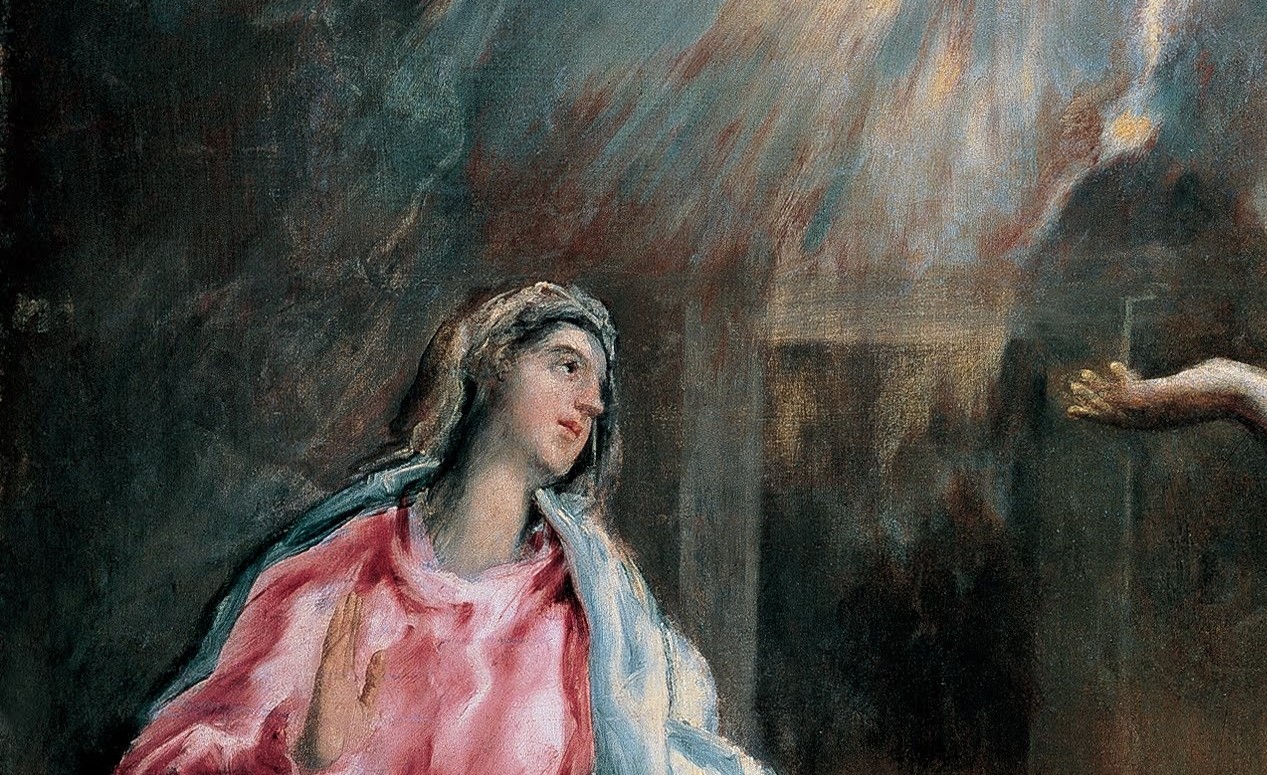
Mary is certainly an educator of the people of God, first of all because she raised Jesus in the tradition of His people and was the first mirror in which He learned to see the world.
In contact with Christ during His public life, the Mother becomes a disciple, and on Calvary she is declared mother of the beloved disciple and of all the faithful whom he represents. Her task now consists in cooperating with a mother’s love (maternal mediation), in Christ and in the Spirit, for the glory of the Father, in the regeneration and formation of the faithful (Lumen Gentium 63).
That is why Mary takes us by the hand and leads us into the mysteries of the faith, especially that of the Eucharist. As Saint John Paul II observes in the encyclical Ecclesia de Eucharistia (April 17, 2003), “the Eucharist is truly mysterium fidei, a mystery which surpasses our understanding and can only be received in faith” (no. 15). And Mary is “support and guide in faith in the mysterium fidei” (no. 53).
Let us go, then, to the school of Mary, who as a true teacher offers us first of all the witness of her life, giving herself fully to Jesus and to the gift of the Eucharist, so much so that she can be called woman of the Eucharist (Ecclesia de Eucharistia 53). The Mother of Jesus is present in the various aspects of the Eucharistic mystery: the Lord’s Supper, redemptive sacrifice, real and saving presence, communion of love. Finally, the praying Virgin leads us to the vital consequences of the mystery: to celebrate, to adore, and to live the Eucharist.
At the foundation of everything lie the two converging charges of the Mother and the Son: “Do”.
At the wedding at Cana, Mary speaks her last words recorded in the Gospels, giving an order: “Do whatever Jesus tells you” (Jn 2:5).
For His part, Jesus, on the eve of His passion, says to the Christian community led by the apostles: “Do this in memory of me” (Lk 22:19).
With these approaches, Mary’s will appears wholly centered on Christ. And the will of her Son shows itself wholly directed toward guiding the faithful to the celebration of the Eucharist, the memorial of His death and resurrection.
The ideal to be attained consists in living Mary, that is, in identifying with her, type and model of the Church in the celebration of the divine mysteries, until we progressively identify ourselves with her. Then we will in a certain sense be a sacrament of Mary in the Church, in that our life will be a sign that contains and reveals the profound spiritual attitudes of her existence. And last but not least, the essential reference to Christ and to His sacrament par excellence: the Eucharist.
This thought is illustrated by a beautiful page by Chiara Lubich (1920-2008), which constitutes a clear testimony:
One day I entered the church
and with a heart full of trust I asked Him:
“Why did You want to remain on earth,
in every point of the earth,
in the sweet Eucharist,
and not find,
You who are God,
a way to bring us and leave us Mary as well,
the Mother of all of us who are pilgrims”?
In the silence, He seemed to answer:
“I did not bring her because I want to see her again in you.
Even though you are not immaculate,
My love will virginize you,
and you, all of you, will open your arms
and your hearts as mothers to humanity,
which, just as at that time,
thirsts for its God and for His Mother.
Now, soothe your sorrows,
the wounds, dry the tears.
Sing the litanies
and try to see yourself reflected in them”.
In a precious literary form, this passage presents a demanding program of identification with Mary, so as to live her yes of virginal love to God and to prolong her maternal tenderness, which begets Christ in those who believe. Our heart will long for the sweet Eucharist and will always revolve around this mystery of faith.
The Eucharist and the Magisterium of Mary
Only from the Eucharist, deeply known, loved, and lived, can we hope for that unity in truth and charity willed by Christ and advocated by the Second Vatican Council (Saint John Paul II, 1982).
With these words, the Pope warns that ecclesial communion is built day by day around the Eucharist, the great sacrament to be celebrated, lived, and contemplated.
So that Jesus might be recognized in the Eucharist, the living and unifying center of the Church’s life, Saint John Paul II published the encyclical Ecclesia de Eucharistia (April 17, 2003) and, at the close of the Year of the Rosary, proclaimed the Year of the Eucharist, setting out in the Apostolic Letter Mane nobiscum Domine (October 7, 2004) “some perspectives that can help everyone to converge toward enlightened and fruitful attitudes” (Mane nobiscum Domine 10). To achieve this goal, the Church finds in Mary, the Mother of Jesus, a wonderful example and a valuable help.
Indeed, if we wish to rediscover in all its richness the intimate relationship that unites the Church and the Eucharist, we cannot forget Mary, Mother and model of the Church. Mary can guide us toward this Most Holy Sacrament, because she has a profound relationship with it (Ecclesia de Eucharistia 53).
To deepen your reflection on Mary and the Eucharist, we recommend reading Paul VI’s Apostolic Exhortation Marialis Cultus.
Deepen your studies: explore Mariology, Marian Theology, Marian apparitions, and the Postgraduate Program in Mariology.
Postgraduate Program in Mariology
Would you like to deepen your formation in Mariology? Discover the Postgraduate Program in Mariology of Locus Mariologicus — an academic formation that unites theological rigor, spiritual life, and the living tradition of the Church.
Would you like to study Mariology seriously?
This article grows out of the works in the Locus Mariologicus library. The Postgraduate Program in Mariology takes you to the same source, with academic guidance: Scripture, the Fathers of the Church, and the Magisterium, from the first dogma to contemporary questions.




Responses