Mary, the Woman: Anthropological and Biblical Dimension
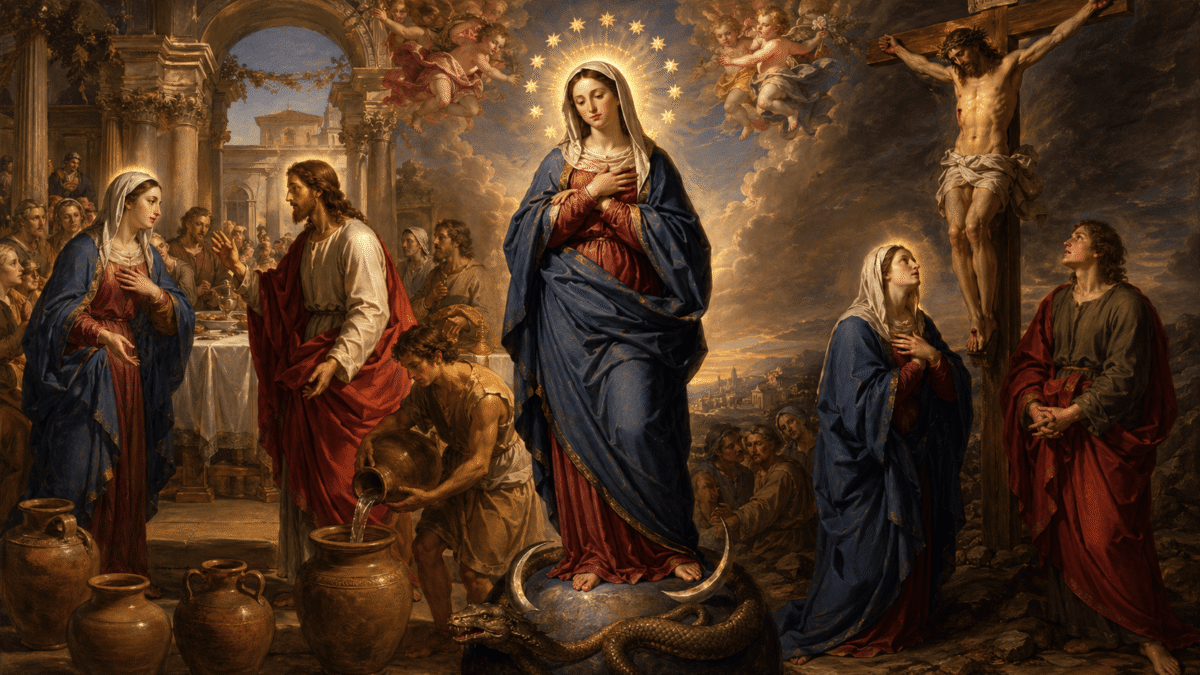
Mary, the Woman: Anthropological and Biblical Dimension
In the Gospel of John, Jesus addresses Mary with the title “Woman” at two crucial moments: at the Wedding at Cana (Jn 2:4) and at the Cross (Jn 19:26). This apparently distant title contains a profound theological intention: in calling Mary “Woman,” John evokes the figure of the woman of Genesis and of the woman of Revelation.
The New Eve
Mary is the New Eve: while the first woman said “no” to the will of God, Mary said “yes” (Fiat). This patristic typology, developed by Justin, Irenaeus, and Tertullian, underscores the salvific dimension of Mary’s femininity. The woman who brought death is replaced by the Woman who welcomes Life.
The Woman of Revelation
Chapter 12 of Revelation describes a woman clothed with the sun, with the moon at her feet and a crown of twelve stars. Catholic exegesis identifies this figure with Mary and with the Church. The artistic tradition has represented Mary with these attributes of the Woman of Revelation, an image found on the Miraculous Medal.
Mary and the Sacred Feminine
Contemporary Mariology has explored more deeply the dimension of the feminine in God and in the Church, starting from Mary. Pope John Paul II, in the letter Mulieris Dignitatem (1988), developed a “theology of the feminine” on the basis of the figure of Mary, esteeming her traits of receptivity, fidelity, and motherhood as theologically significant traits.
Deepen your studies: explore Mariology, Marian Theology, Marian apparitions, and the Postgraduate Program in Mariology.
Magisterium of the Church
Et misit Deus angelum Gabrielem… ad virginem desponsatam viro… et nomen virginis Maria.
Luke 1:26-27 (Vulgate)
📚 Literal translation: And God sent the angel Gabriel… to a virgin betrothed to a man… and the virgin’s name was Mary.
Maria est mulier nova, quae Hevae contradicit: ubi Heva inobedivit, Maria oboedivit. Ubi Heva mortem attulit, Maria vitam.
S. Irenaeus, Adv. Haer. III, 22, 4, apud Lumen Gentium n. 56
📚 Literal translation: Mary is the new woman who contradicts Eve: where Eve disobeyed, Mary obeyed. Where Eve brought death, Mary brought life.
Postgraduate Program in Mariology
Would you like to deepen your formation in Mariology? Discover the Postgraduate Program in Mariology of Locus Mariologicus — an academic formation that unites theological rigor, spiritual life, and the living tradition of the Church.
Would you like to study Mariology seriously?
This article grows out of the works in the Locus Mariologicus library. The Postgraduate Program in Mariology takes you to the same source, with academic guidance: Scripture, the Fathers of the Church, and the Magisterium, from the first dogma to contemporary questions.





Responses