Ecumenism and Mary: the Obstacle That Can Become a Bridge
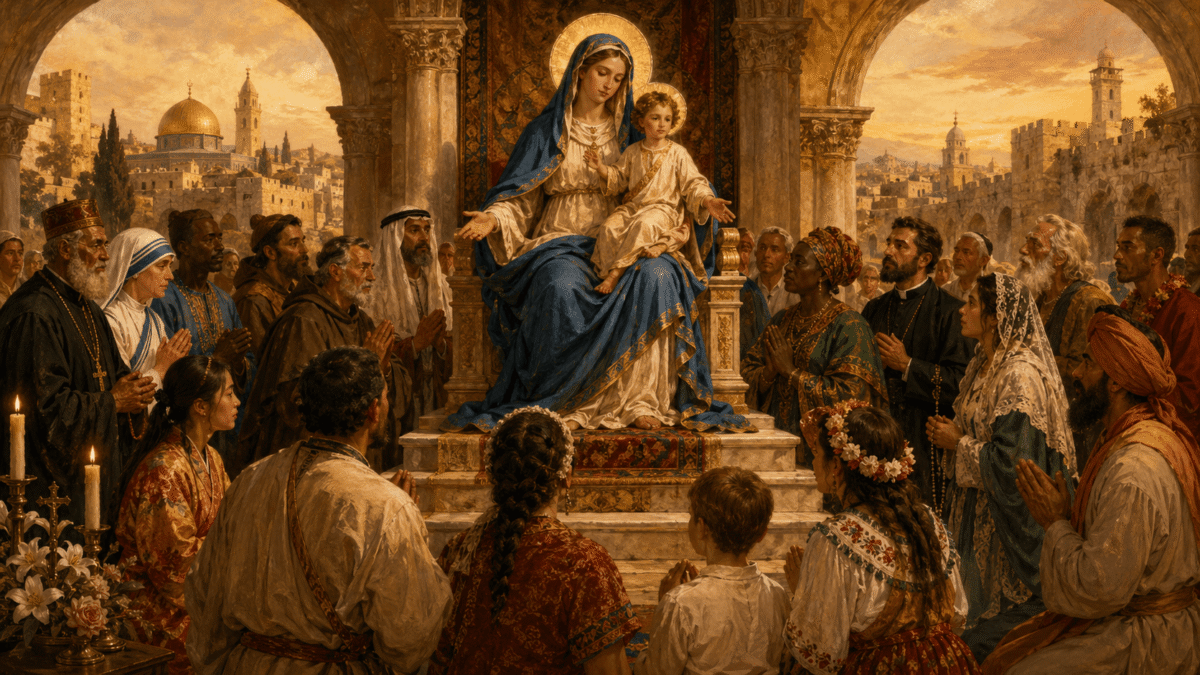
Ecumenism and Mary, the obstacle that can become a bridge
Mariology and the Marian cult constitute, together with the papacy, the greatest difficulty on the path toward Christian unity. Karl Barth described Catholic Mariology as a “parasitic excrescence that ended up endangering the vital trunk from which it proceeds, the work and the revelation of God in Christ”. The Second Vatican Council recognized the problem and asked that “in words and in deeds everything be diligently avoided which could lead the separated brethren into error concerning the true doctrine of the Church” (LG 67).
The roots of the problem
The ecumenical problem of Mariology has theological and pastoral roots. On the Catholic side, four principal causes are identified: (1) Hypertrophy of speculation: the tendency to proclaim new titles for Mary without sufficient scriptural foundation, according to the maxim “de Maria nunquam satis”. (2) Forgetfulness of the hierarchy of truths: in some practices, Mary receives more attention than Christ, and her mediation is presented in parallel with the one mediation of the Mediator (UR 11). (3) Mariological monoideism: the affective centrality given to Mary at the expense of Christ, who “descends into the shadow”. (4) Wrong model of mediation: the “ad Christum per Mariam” model of Saint Bernard, which sets Mary’s mercy over against Christ’s justice, presenting Mary as more accessible than the Lord Himself.
Ecumenical declarations on Mary
The ecumenical dialogues have produced significant convergences. Rome, 1975: Lutherans, Reformed, Orthodox, and Catholics jointly affirmed that Christ is the one Mediator (1 Tim 2:5), that Mary cooperated in an eminent way with the work of redemption, that her “fiat” has a permanent significance, and that the prayers invoking her intercession are founded on the faith that Mary remains bound to the work of redemption down through the centuries. Zaragoza, 1979: theologians of five traditions affirmed that the veneration of Mary is not adoration (reserved to God alone) but dulia, and that the differences of attitude “result from emotional rather than theological reasons”.
The Catholic-Lutheran dialogue on “Mary in the New Testament”
Between 1975 and 1978, a joint commission of Catholic and Lutheran exegetes in the United States worked on “Mary in the New Testament”. The principal conclusions: the image of Mary must be reconstructed from what the texts say or imply, without the argument from silence. The development of the Gospels moves from a more reserved image in Mark to a more positive one in Luke. The scene of Calvary in John (19:25-27) institutes a new community of disciples in which Mary becomes “mother of the disciple par excellence” and “ideal of faith”. The divergences over the Marian dogmas (Immaculate Conception, Assumption) are determined more by the different attitude toward Tradition than by the New Testament.
Prospects
The ecumenical path regarding Mary passes through three requirements: (1) to admit a theological pluralism among the churches, without demanding the immediate acceptance of all the Marian dogmas. (2) to correct the Catholic model of Mary’s mediation, giving preference to models that are more Christocentric and pneumatological. (3) to purify Marian preaching and devotion, eliminating the exaggerations that obscure the uniqueness of Christ’s mediation. As Saint Bernard, the greatest Marian preacher in history, said: “The royal Virgin has no need of false honor. She possesses true titles in sufficient abundance”.
Deepen your studies: explore Mariology, Marian dogmas, Marian Theology, and the Postgraduate Program in Mariology.
Ecumenism and Mary, Mary in inter-Christian dialogue
The figure of Mary in the ecumenical context is at once a point of convergence and a point of tension. The Christian Churches share fundamental elements concerning Mary, but they diverge on significant points, especially on the dogmas defined in the second millennium. For the full article: Ecumenism and Mary.
Catholics, Orthodox, and many Protestant communities converge in the confession of the Theotokos (defined at the Council of Ephesus in 431), in the virginity of Mary and in the conception of Jesus and in her exemplary holiness. The Lima (1982) and Dombes (1999) documents recorded these ecumenical convergences concerning Mary.
The principal divergences concern: (1) the Marian dogmas defined after the great Schism of 1054, the Immaculate Conception (1854) and the Assumption (1950). (2) the devotion and the titles such as Mediatrix and Co-Redemptrix. (3) the role of Mary in salvation. The Reformed Churches tend to esteem Mary as a model of faith, but they reject Marian intercession and devotion.
The Second Vatican Council stressed that Marian devotion must always be ordered to Christ and rooted in Scripture, which makes ecumenical dialogue easier. The Dombes Document (1999) proposed a “conversion” both of excessive Catholic practices and of the Protestant refusal of any devotion to Mary.
Deepen your studies: explore Mariology, Marian Theology, Marian apparitions, and the Postgraduate Program in Mariology.
Magisterium of the Church
Ipsa autem Virgo Maria praedicatur et honoratur etiam apud Fratres seiunctos, immo apud nonnullos Orientales ut “Deipara” magnoque affectu invocatur.
Second Vatican Council, Dogmatic Const. Lumen Gentium, no. 69 (November 21, 1964)
📚 Literal translation: The Virgin Mary is proclaimed and honored also among the separated brethren and even by some Easterners as “Mother of God” and is invoked with great affection.
Postgraduate Program in Mariology
Would you like to deepen your formation in Mariology? Discover the Postgraduate Program in Mariology of Locus Mariologicus – an academic formation that unites theological rigor, spiritual life, and the living tradition of the Church.
Learn what the Church teaches about Mary, Mediatrix of All Graces.
Would you like to study Mariology seriously?
This article grows out of the works in the Locus Mariologicus library. The Postgraduate Program in Mariology takes you to the same source, with academic guidance: Scripture, the Fathers of the Church, and the Magisterium, from the first dogma to contemporary questions.



Responses