God sent His Son, born of woman: Num 6, Gal 4, and Mary, Mother of God, in Lk 2.
Misit Deus Filium suum, factum ex muliere.
Gal 4:4
The Solemnity of Mary, Mother of God, celebrated on January 1, the first day of the civil year, is the most ancient Marian feast of the Roman liturgy and the theological crowning of Christmas. Num 6:22-27 hands on the priestly blessing that the Lord commanded Aaron to pronounce over Israel. Gal 4:4-7 sets forth the Christological foundation of Mary’s divine motherhood: “In the fullness of time, God sent His Son, born of woman, born under the law”. Lk 2:16-21 recounts the moment after the birth: the shepherds arrive at Bethlehem, see the child in the manger, praise God, and “Mary kept all these things, pondering them in her heart”. The three texts converge in the mystery of God who draws near: the blessing that the name of the Lord brings, the Son whom a woman bore, and the Mother who contemplates what the shepherds saw.
I. The First Reading: Num 6:22-27
The Lord commanded Moses to have Aaron and his sons bless Israel with these words: “The Lord bless you and keep you. The Lord make His face shine upon you and grant you grace. The Lord turn His face toward you and give you peace” (Num 6:24-26). And He explains: “Thus they shall put My name upon the children of Israel, and I will bless them” (v.27). The priestly blessing of Numbers is one of the most ancient texts of the Bible and stands at the center of the Jewish and Christian liturgy. Its structure is threefold: blessing and keeping, light and grace, presence and peace. The progression moves from exterior protection to interior illumination and culminates in peace. The name of the Lord placed upon Israel is the sign of belonging: whoever is blessed belongs to the Lord. The blessing that Aaron pronounces is the foreshadowing of the blessing that the name Jesus, “the Lord saves”, brings to the world: the new Aaron who is the Son of God Himself.
II. The Second Reading: Gal 4:4-7
Paul formulates faith in the Incarnation with theological precision: “When the fullness of time had come, God sent His Son, born of woman, born under the law” (Gal 4:4). The sentence states two births: born of God (sent by the Father) and born of woman (brought forth by Mary). The purpose is twofold: “to redeem those who were under the law, so that we might receive adoption as sons” (v.5). And the pneumatological confirmation: “And because you are sons, God has sent into our hearts the Spirit of His Son, crying: Abba, Father”! (v.6). “So you are no longer a slave but a son. And if a son, then also an heir, by the grace of God” (v.7). Paul does not name Mary, but the expression “born of woman” is the dogmatic basis of the title “Mother of God”: if the Son of God was born of a woman, that woman is the Mother of the Son of God. The Council of Ephesus (431) defined that to refuse Mary the title Theotókos is to deny the Incarnation. The feast of January 1 celebrates not only Mary, but the mystery that she makes possible.
III. Evangelium: Lk 2:16-21
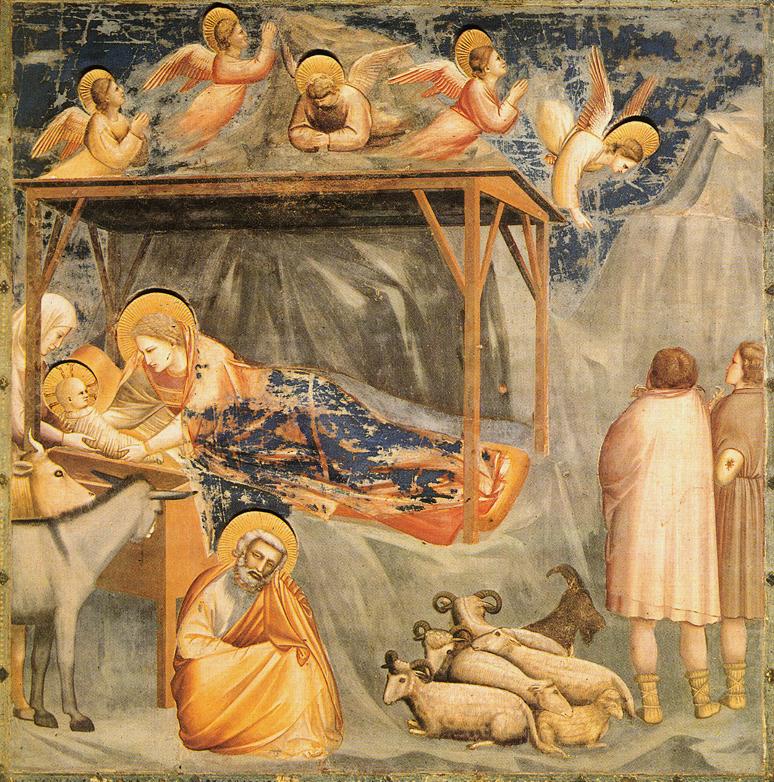
The shepherds went to Bethlehem without delay and found Mary, Joseph, and the child lying in the manger (Lk 2:16). When they saw Him, they made known what had been told them about that child, and all who heard marveled at what the shepherds recounted to them (vv.17-18). “But Mary kept all these things, pondering them in her heart” (v.19). When the eight days for the circumcision were completed, they gave Him the name Jesus, the name the angel had given Him before He was conceived (v.21). Verse 19 is one of the densest in the whole Gospel of Luke: while the shepherds speak and the hearers marvel, Mary keeps and ponders. The verb “to keep” implies an active preservation, not a passive one: she gathers the events and keeps them alive. The verb “to ponder” implies that she confronts and joins what she sees with what she knows, the words of the angel, the prophecies of Simeon, the texts of the Scriptures. Mary is the first theologian: the one who thinks the faith on the basis of what she saw and what she heard.
IV. Mary, Mother of God
The feast of January 1 is the Marian feast par excellence because the title “Mother of God”, Theotókos in Greek, Dei Genitrix in Latin, is the most radical and the most dense title that the Christian tradition has given to Mary. Radical because it goes to the root: it does not say only that Mary is holy, beautiful, pure, or exemplary, but that the Son whom she bore is God. Dense because it contains the whole of Christology: if Jesus is God and Mary is His Mother, then Mary is the Mother of God. Ephesus (431) defined this title not in order to exalt Mary but in order to protect faith in Christ against those who separated the human Jesus from the divine Logos. Gal 4 says that the Son of God was “born of woman”: that woman did not bring forth only a nature, she brought forth a Person, and that Person is the eternal Son of the Father. Num 6 asks that the name of the Lord be placed upon Israel: the name that Mary placed upon the Son, Jesus, is the name that saves. Lk 2:19 shows us Mary keeping and pondering: she is the model of the faithful one who does not merely celebrate the mystery but lets it grow within herself. On this first day of the year, the Church places under Mary’s motherhood all the time that now opens: she who kept the Son for nine months, who presented Him to the world at Christmas, and who intercedes for us on every day of the year that begins.
Postgraduate Program in Mariology
Would you like to deepen your formation in Mariology? Discover the Postgraduate Program in Mariology of Locus Mariologicus – an academic formation that unites theological rigor, spiritual life, and the living tradition of the Church.
Would you like to study Mariology seriously?
This article grows out of the works in the Locus Mariologicus library. The Postgraduate Program in Mariology takes you to the same source, with academic guidance: Scripture, the Fathers of the Church, and the Magisterium, from the first dogma to contemporary questions.

Responses