Behold the Lamb of God: Is 53, 1 Cor 1 and John’s testimony in Jn 1
Ecce Agnus Dei, ecce qui tollit peccatum mundi.
Jn 1:29
The Second Sunday in Ordinary Time of Year A brings together three texts around the identity of Jesus and the testimony that proclaims Him. Is 49:3, 5-6 proclaims the second Song of the Servant: it is too little to be the servant of Israel; the mission is to be a light to the nations. 1 Cor 1:1-3 opens Paul’s letter to the Corinthians with the apostolic greeting that defines the Christian community as called to holiness and to communion. Jn 1:29-34 presents John’s testimony: on seeing Jesus, he designates Him as “the Lamb of God who takes away the sin of the world” and as the one upon whom he saw the Spirit descend and remain, the Son of God. The three texts describe the same process of progressive revelation: the prophecy of the universal servant, the convocation of the community of the saints, and the designation of the Lamb to whom the Baptist points.
I. The First Reading: Is 49:3, 5-6
The Lord says to the Servant: “You are my servant, Israel, in whom I will be glorified” (Is 49:3). And the Servant confesses: “The Lord formed me from the mother’s womb to be His servant, to bring Jacob back to Him and to gather Israel” (v.5). But the mission is not limited to Israel: “It is too little for you to be my servant, to restore the tribes of Jacob and to bring back the survivors of Israel. I will make you a light to the nations, so that my salvation may reach to the ends of the earth” (v.6). The second Song of the Servant deepens the first: the mission begins with the people and goes beyond them. The Servant is formed from the mother’s womb for a universal mission. The expression “from the mother’s womb” is theologically weighty: the Servant exists as Servant before any visible act, because his identity is given by God at the moment of his origin. Jesus, the Servant par excellence, received this identity from Mary; it was in Mary’s womb that the eternal Servant took on human form.
II. The Second Reading: 1 Cor 1:1-3
Paul opens the letter to the Corinthians with a greeting that is at the same time a definition of the Christian community: “Paul, called to be an apostle of Jesus Christ by the will of God, and Sosthenes our brother, to the Church of God which is at Corinth, to those sanctified in Christ Jesus, called to be saints, together with all those who in every place call upon the name of our Lord Jesus Christ, their Lord and ours” (1 Cor 1:1-2). Three elements define Christians: sanctified in Christ, called to holiness, united with all who call upon the same name. The greeting, “grace and peace to you from God our Father and the Lord Jesus Christ” (v.3), is not a conventional formula: it is a condensed theology. “Grace” is the free gift of God. “Peace” is the biblical shalom, the integrity of one who stands in a right relationship with God. And this gift comes from two articulated sources: the Father and the Son, the source and the channel.
III. Evangelium: Jn 1:29-34
On the day after the interrogation of the envoys from Jerusalem, John sees Jesus coming toward him and exclaims: “Behold the Lamb of God who takes away the sin of the world” (Jn 1:29). John bears witness: this was the one of whom he said that He came after him but was before him, because He existed before (v.30). John did not know Him, but he came to baptize with water precisely so that He might be manifested to Israel (v.31). And the decisive testimony: “I saw the Spirit descending from heaven like a dove and remaining upon Him. I did not know Him, but He who sent me to baptize with water said to me: He upon whom you see the Spirit descend and remain, this is He who baptizes with the Holy Spirit” (vv.32-33). “And I have seen and I bear witness that this is the Son of God” (v.34). The title “Lamb of God” is one of the richest in the New Testament: it evokes the paschal lamb of Exodus, the suffering Servant of Is 53 described as a lamb led to the slaughter, and the lamb who in Rev 5 receives universal adoration. John points and bears witness: the function of the Precursor is exactly this, not to be the light, but to point to it.
IV. Mary and the Lamb of God
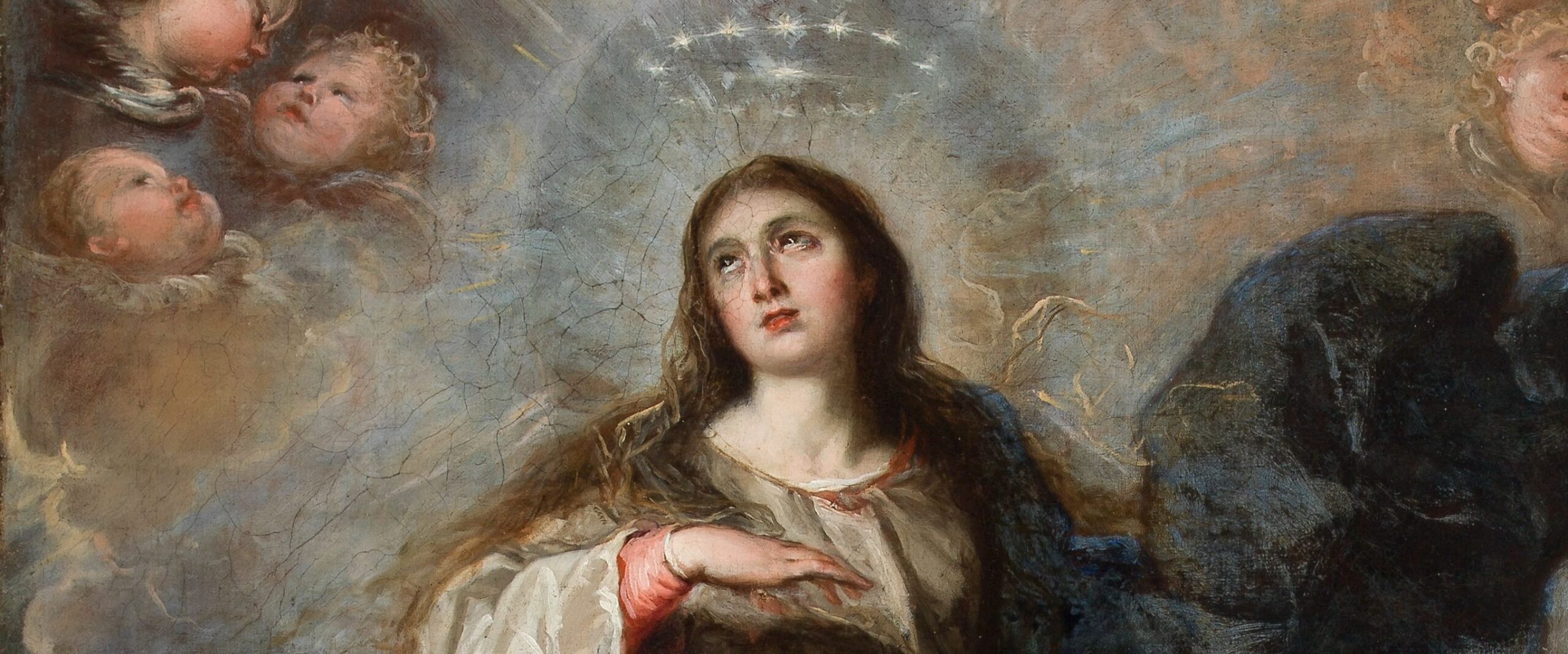
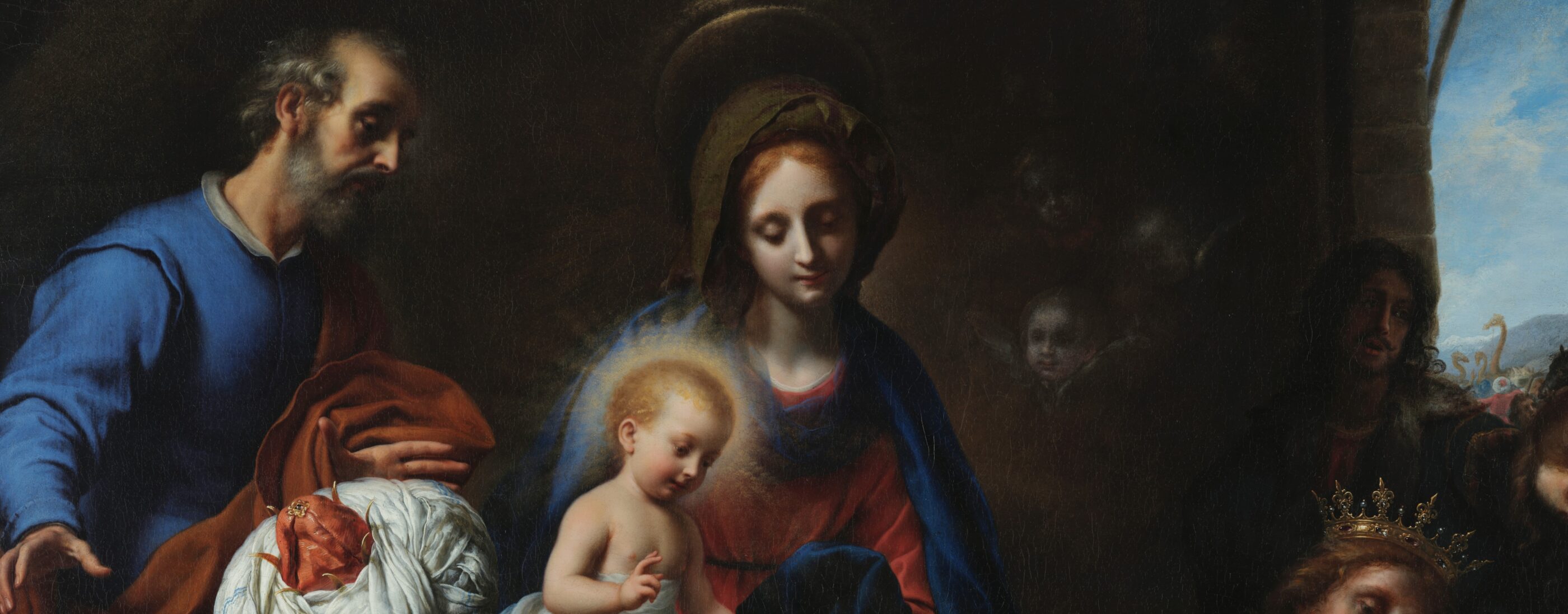
When John exclaims “Behold the Lamb of God,” he points to the same one whom Simeon had indicated to Mary in the temple: “Behold, this child is destined to be a sign of contradiction, and a sword will pierce your own soul” (Lk 2:34-35). Simeon saw in the child the Servant who would be the victim. John, thirty years later, formulates the same reality with the image of the lamb. Mary knew the Lamb from before any public designation: it was she who conceived Him, fed Him, raised Him in Nazareth. Is 49 says that the Servant was formed “from the mother’s womb”: the mother’s womb of the Servant of Yahweh is the womb of Mary. The universal mission of the Servant, “a light to the nations, salvation to the ends of the earth,” begins at the moment when Mary says “Let it be done” and the Word takes flesh in her womb. 1 Cor 1 describes Christians as “sanctified in Christ”: Mary is the creature who was most completely sanctified in Christ, because she lived most fully in relation to the Lamb. Tradition invokes her as “Our Lady of Perpetual Help,” the one who is always present at the side of the Lamb who offers salvation. John points to the Lamb and disappears. Mary remains: at the side of the Lamb to the end.
Postgraduate Program in Mariology
Would you like to deepen your formation in Mariology? Discover the Postgraduate Program in Mariology of Locus Mariologicus – an academic formation that unites theological rigor, spiritual life and the living tradition of the Church.



Responses