I did not shrink back: Is 50, Phil 2, and the Passion according to Matthew on Palm Sunday
Sunday of the Palm Branch and the Passion of the Lord opens Holy Week with a paradox that structures all Christian faith: the King enters Jerusalem on a donkey, hailed by the crowds, and six days later dies as a criminal on a cross. Is 50:4-7 presents the Servant of the Lord who did not falter before scourging and insults, because he knew that the Lord would assist him. Phil 2:6-11 sings of Christ’s kenosis: from being equal to God, he emptied himself, took the form of a servant, was obedient to death on a cross, and God exalted him above all name. Mt 26:14-27:66 narrates the Passion in its full extent: from Judas’ betrayal to the tomb of Joseph of Arimathea.
I. The First Reading: Is 50:4-7
*The third song of the Servant of the Lord presents an interlocutor who each morning receives from God a disciple’s tongue to speak to the weary the word that sustains them. “The Lord God has opened my ears, and I have not resisted, I have not withdrawn” (Is 50:5). The Servant offered his back to those who scourged him and his face to those who plucked off his beard: “I did not hide my face from insults and spitting” (v. 6). The reason for this non-resistance is not stoicism but faith: “The Lord God is with me, so I am not confounded; therefore I have set my face like a hard stone, knowing that I will not be put to shame” (v. 7). The face like a hard stone: not hardened by bitterness but firm in confidence. The Servant does not flee because he knows God sustains him. The Passion reading that follows in Matthew will narrate this firmness taken to the limit.*
II. The Second Reading: Phil 2:6-11
*The hymn in the Letter to the Philippians is one of the densest texts in the New Testament. Christ Jesus, “being in divine nature, did not consider equality with God as something to be seized, but emptied himself, taking the form of a servant, becoming like men” (v. 7). The kenosis is voluntary: not a loss but a choice. “Having the appearance of a man, he humbled himself even further, becoming obedient to the point of death, and death on a cross” (v. 8). The lowest point of the descent is the Cross: the instrument of execution of slaves and criminals. And it is precisely from this lowest point that exaltation begins: “Therefore God exalted him to the highest place and gave him the name above every name” (v. 9). “Every knee will bow and every tongue confess that Jesus Christ is Lord, to the glory of God the Father” (vv. 10-11). The Phil 2 hymn is the hermeneutical key for all Holy Week: descent is the path to exaltation.*
III. The Passion: Mt 26:14-27:66
*The Passion according to Matthew has its axis in the figure of the Son of Man who comes not to be served but to serve and give his life as a ransom for many. Judas goes to the chief priests and agrees to betray for thirty pieces of silver. At the Last Supper, Jesus institutes the Eucharist and announces the betrayal. In Gethsemane, prayer is repeated three times: “Father, if it be your will, let this cup pass from me.” The betrayal, trial, condemnation, and crucifixion unfold in a narrative of obedience to the point of death.*
“Father, if it be possible, let this cup pass from me. Yet not as I will, but as thou wilt” (Mt 26:39). The disciples sleep. Jesus is arrested. Peter denies Him three times. Jesus is judged by the Sanhedrin, then by Pilate. Pilate offers to release Jesus or Barabbas. The crowd demands Barabbas. Pilate washes his hands: “I am innocent of the blood of this righteous man” (27:24). Jesus is scourged, crowned with thorns, carried to Golgotha, and crucified between two thieves. On the cross, darkness covers the land for three hours. Jesus cries out:Deus meu, Deus meu, por que me abandonaste
»? (v.46, Ps 22:2). And he gave up his spirit. The veil of the Temple was rent in two, the earth quaked, the rocks rent asunder. The centurion and his soldiers said: «Truly, this was the Son of God!» (v.54). The body was laid in the new tomb of Joseph of Arimathea.
IV. Mary and the Stabat Mater
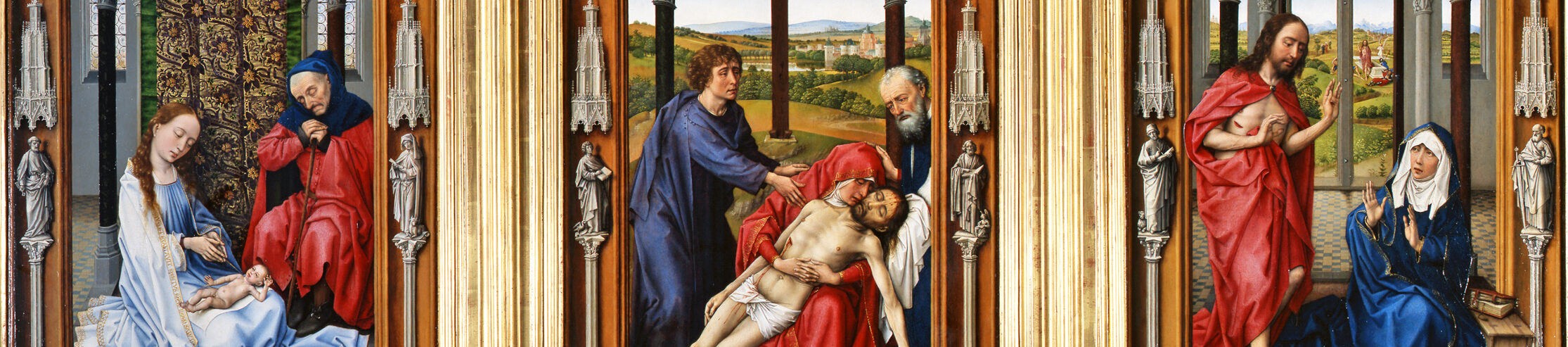
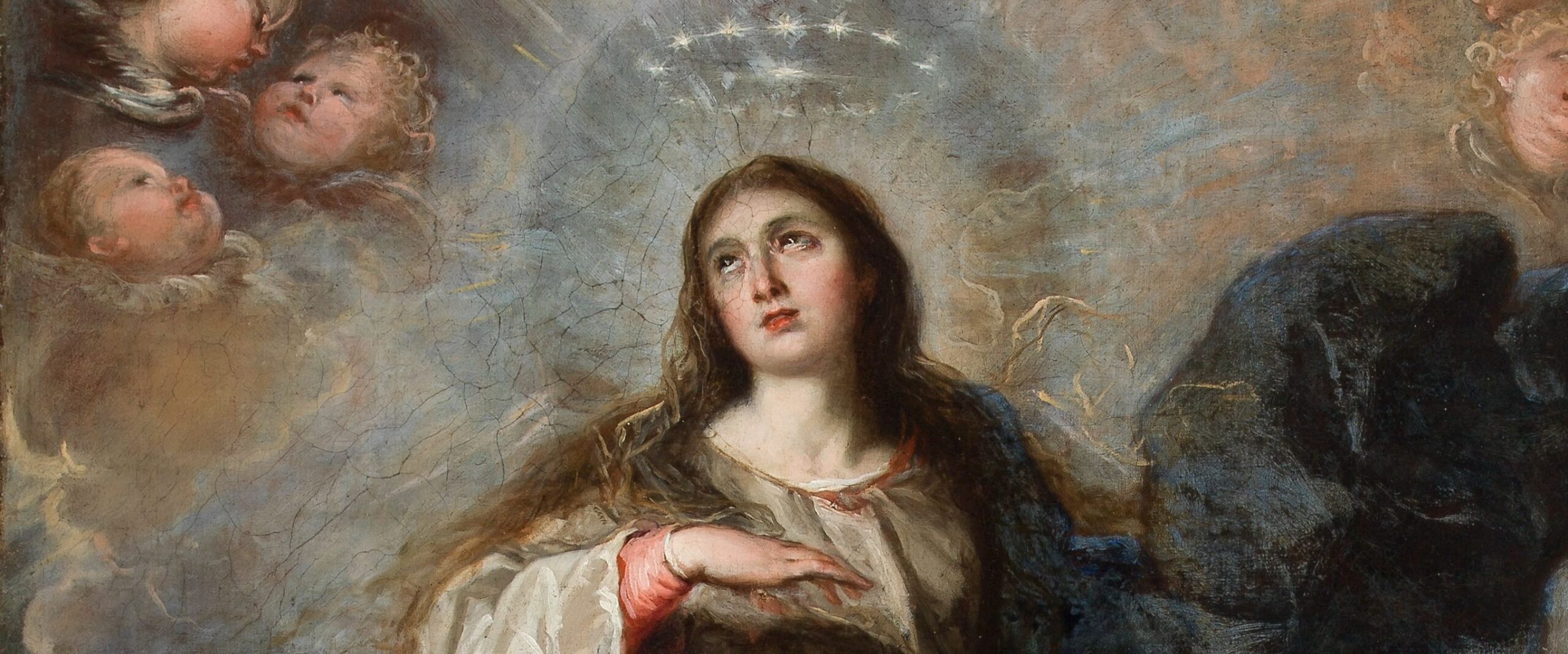
Simeon said to Mary in the Temple: «A sword shall pierce through your soul» (Lk 2:35). The Passion is the fulfillment of this prophecy. Matthew does not mention Mary at the foot of the Cross (that presence is described by John, Jn 19:25-27), but he does mention the women who watched from afar, among them Mary Magdalene and Mary, the mother of James and Joseph (Mt 27:56). Tradition understands that the Mother of Jesus participated in the suffering of her Son in a unique way: not by distance but by interior presence to what was happening. Isaiah 50 describes the Servant who «did not hide his face from shame». Mary also did not hide her face: she remained until the end, observing what the disciples fled to see. Philippians 2 says that Christ emptied himself: Mary, too, was emptied of everything she had hoped for, everything she had understood during the thirty-three years prior, all human security. The emptying of Mary at the foot of the Cross is her maternal participation in the kenotic emptying of the Son. Holy Week begins with the waves of palm branches and the Hosannas: it ends on Holy Saturday, with the stone rolled away from the tomb and Mary watching within, still not understanding what no human eye had yet comprehended.
Postgraduate Program in Mariology
Would you like to deepen your formation in Mariology? Get to know the Postgraduate Program in Mariology from Locus Mariologicus – an academic formation that combines theological rigor, spiritual life, and the living tradition of the Church.



Responses