The Virgin Mary at the Epiphany of the Lord
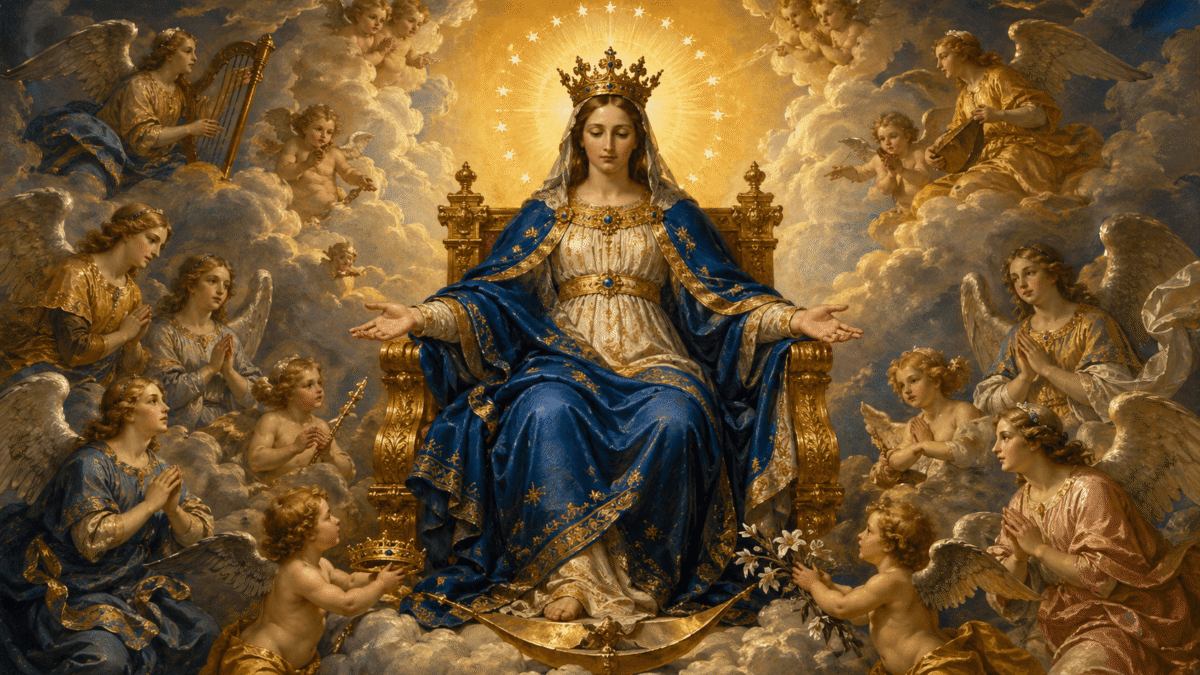
“Surge, illuminare, Hierusalem, quia venit lumen tuum et glória Domini super te orta est”. “Arise, shine, Jerusalem, for your light comes and the glory of the Lord rises upon you”. (Is 60:1)
I. The Light That Comes from Afar: The Oracle of Isaiah 60
The sixtieth chapter of the book of Isaiah belongs to the most eschatological section of the so-called Third Isaiah: it is the vision of the restored Jerusalem, of the city that shines with the divine glory while the rest of the world remains in darkness. “Arise, shine, Jerusalem, for your light comes and the glory of the Lord rises upon you. Behold, darkness covers the earth, and thick darkness the peoples, but upon you the Lord shines forth and his glory appears upon you” (Is 60:1-2). The contrast between the light that radiates from the chosen city and the darkness that covers the world is the way the prophet expresses the universality of a salvation that begins with Israel but is destined for all the nations.
The oracle continues with the vision of the nations converging on Jerusalem, bringing their riches: “The nations shall walk by your light, and kings by the brightness of your dawn” (Is 60:3). The image of the kings bringing gold and frankincense (Is 60:6) is the one Matthew will take up in the account of the Magi. The Isaian prophecy, originally addressed to the community returning from exile, acquires at the Epiphany its fullest realization: the Magi from the East are the representatives of the nations who, guided by the light of the star, make their way to the source of the true light. And at the center of this universal convergence, humble and unassuming, stands Mary with her Son.
II. The Path of the Star and the Logic of the Search
The account of the visit of the Magi in the second chapter of Matthew is a text that the liturgical and spiritual tradition has always contemplated with particular devotion, because it contains in miniature the dynamic of every authentic religious search. The Magi are wise men of the East, probably astrologers or natural philosophers, who observe the signs of the universe and interpret them as indications of events of cosmic importance. On seeing the star, they recognize that a king has been born, and they set out to find Him. Their search does not begin from a supernatural revelation: it begins from human reason which, attentive to the signs of creation, opens itself to the transcendent.
But reason by itself is not enough: the Magi arrive in Jerusalem but do not know where to look. They need the Scriptures in order to discover Bethlehem. Human wisdom that sets out from the observation of nature needs the revealed word in order to find its destination. This dialogue between reason and faith, between the contemplation of the universe and the hearing of Scripture, is inscribed in the very itinerary of the Magi as a program of spirituality that the Church has always recognized as exemplary. Mary and her Son are waiting at the end of this road: the natural philosophy of the Magi and the prophecy of Micah both converge on the same stable of Bethlehem.
III. “On Seeing the Star, They Were Filled with Immense Joy”
The Matthean account of the Magi gives special attention to interior movements. When Herod hears the question of the Magi, he “was troubled, and all Jerusalem with him” (Mt 2:3): the arrival of the Messiah causes disquiet in those who hold power and fear losing it. When the Magi see the star again after having consulted the Scriptures, they “were filled with immense joy” (Mt 2:10): the rediscovery of the sign that was guiding them gives rise to a joy that the text underscores with an expressive accumulation. And when they reach the house where the child is with Mary, His mother, “they prostrated themselves and adored Him” (Mt 2:11). The prostration of the Magi is the highest gesture of veneration that Eastern culture knew: it is the reverence of human intelligence recognizing the presence of the Absolute.
Mary is present in this scene as the one who presents the Son to the world. Matthew explicitly mentions “the child with Mary his mother” (Mt 2:11): the Mother is not a backdrop, she is a constitutive presence. It is the Magi who adore, it is the Son who is adored, but it is Mary who unites them: she who received the Son of God in the fiat of the Annunciation and now presents Him to the adoration of the nations. The Epiphany is, in this sense, the first act of Mary’s maternal priesthood: she who offers to the Father, through the Son, the adoration of the nations that He created.
IV. Mary, Sign of the Light That Draws the Nations
The sixth Mass of the Collection contemplates Mary in her universal dimension: the one who is present at the moment when salvation is manifested to the nations. The Epiphany is not merely an event of the past: it is the permanent form by which Christ continues to draw to the knowledge of Himself those who sincerely seek the truth. And Mary continues to be, in this process of universal attraction, the Mother who presents the Son, the door through which the nations find the Savior.
The Mariology of the Epiphany is a Mariology of maternal mediation. Not in the sense that Mary interposes herself between the Son and the nations, but in the sense that she is the human context in which the Son makes Himself known. The Magi did not find Jesus without Mary: they found Him with her, and it is she who presents Him. The whole missionary activity of the Church prolongs this gesture of presentation: leading the nations to the Son through the maternal mediation that Mary inaugurated at Bethlehem. The oracle of Isaiah is fulfilled permanently: the light that the Magi followed was not extinguished with the death and resurrection of Jesus. It goes on shining in every place where Mary is honored and where, through her, the nations draw near to her Son.
Postgraduate Program in Mariology
Would you like to deepen your formation in Mariology? Discover the Postgraduate Program in Mariology of Locus Mariologicus – an academic formation that unites theological rigor, spiritual life, and the living tradition of the Church.
Would you like to study Mariology seriously?
This article grows out of the works in the Locus Mariologicus library. The Postgraduate Program in Mariology takes you to the same source, with academic guidance: Scripture, the Fathers of the Church, and the Magisterium, from the first dogma to contemporary questions.




Responses