The Litany of Loreto (Litany of Our Lady): Origin and Meaning
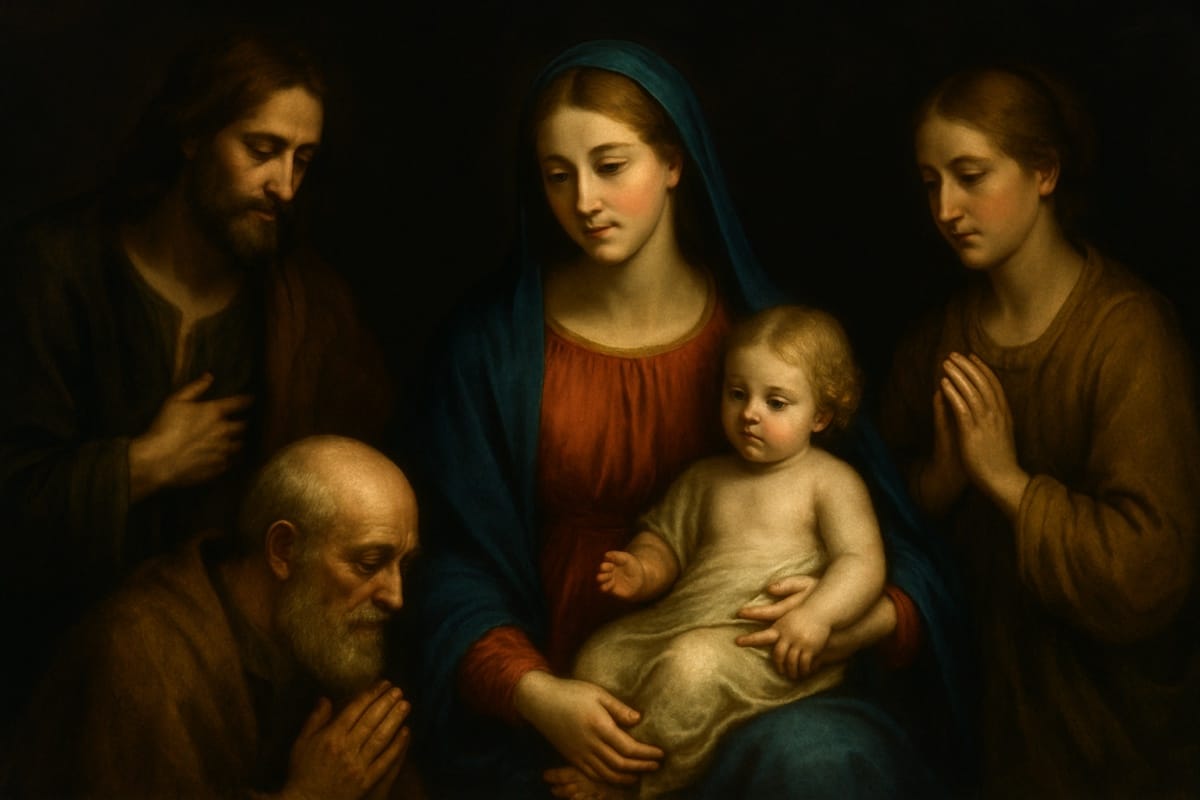
The Litany of Loreto (or Litany of Our Lady) is one of the most beloved Marian prayers of the Church: a succession of invocations that praise Mary under her many titles, to each of which one responds “pray for us.” It is traditionally prayed after the Rosary. This guide explains its origin, its structure, and its meaning.
What the Litany of Loreto Is
A “litany” is a prayer of supplication, made up of repeated invocations. The Litany of Loreto gathers dozens of titles of Mary—biblical, dogmatic, and symbolic—into a prayerful praise that runs through the whole mystery of the Mother of God. It takes its name from the shrine of the Holy House of Loreto, in Italy, where it was sung and from which it spread.
Origin and Approval
Marian litanies have existed since the Middle Ages, but the Loreto form took shape in the sixteenth century and was approved for the whole Church by Pope Sixtus V in 1587. Over the centuries, the Popes added invocations to it: “Mother of Good Counsel” (Leo XIII), “Queen of Peace” (Benedict XV), “Queen assumed into heaven” (Pius XII), and, more recently, “Mother of Mercy,” “Mother of Hope,” and “Solace of Migrants” (Francis, 2020).
The Structure
The litany unfolds in groups of invocations:
- To the Most Holy Trinity (Lord, have mercy; Christ, hear us…).
- Mary as Mother (Mother of Christ, Mother of the Church, Mother of divine grace…).
- Mary as Virgin (Virgin most prudent, Virgin most faithful…).
- Symbols and figures (Mirror of justice, Seat of wisdom, Ark of the Covenant, Morning star…).
- Mary as Queen (Queen of Angels, Queen of Saints, Queen of Peace…), connecting with the Queenship of Mary.
Frequently Asked Questions
When is the Litany of Loreto prayed?
Traditionally after the Rosary, and at Marian celebrations.
Why is it called “of Loreto”?
Because of the shrine of the Holy House of Loreto (Italy), where the form of this litany became popular.
See also
Would you like to study Mariology seriously?
This article grows out of the works in the Locus Mariologicus library. The Postgraduate Program in Mariology takes you to the same source, with academic guidance: Scripture, the Fathers of the Church, and the Magisterium, from the first dogma to contemporary questions.





Responses