Saint Michael the Archangel: Who He Is and the Prayer of Leo XIII
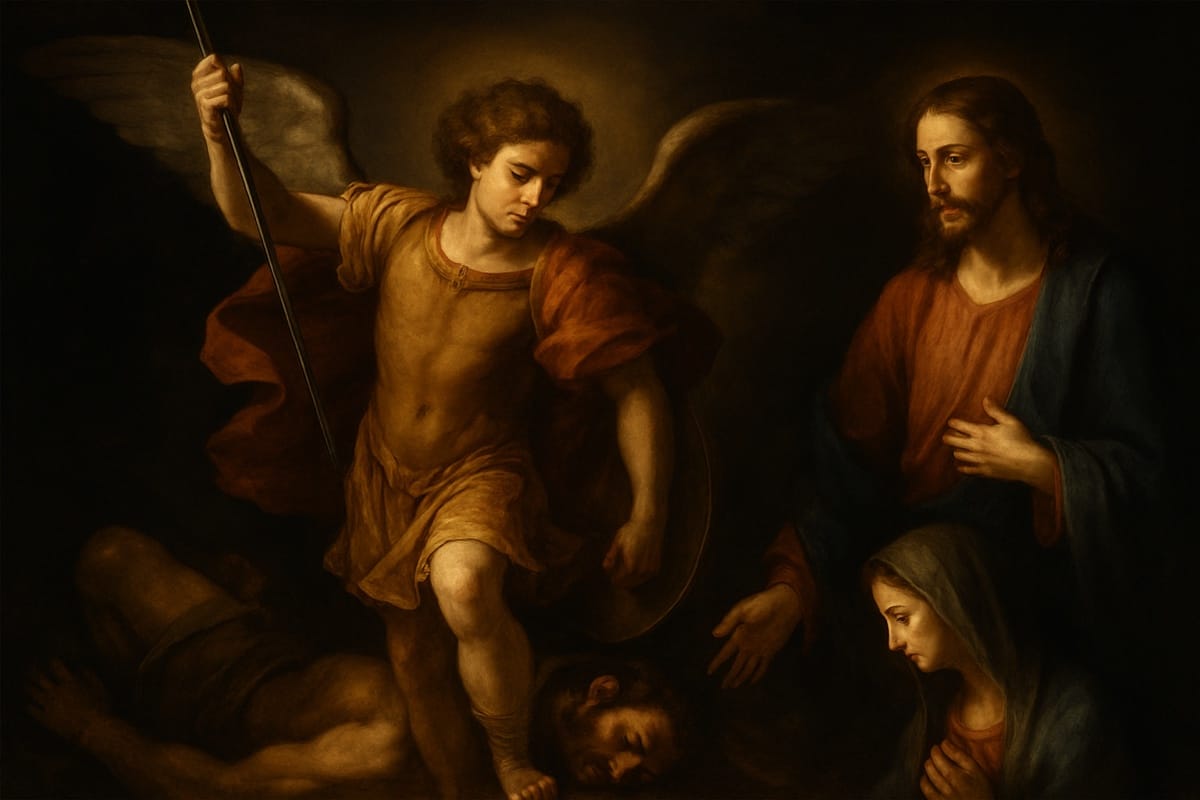
Saint Michael the Archangel is the prince of the heavenly hosts and the great defender of the People of God against evil. His name, from the Hebrew Mikha-El, means “Who is like God?”—the cry with which he opposes the pride of Satan. He is one of the central figures of Catholic angelology. This guide presents his figure and the devotion to him.
Who Saint Michael Is
Saint Michael appears in Scripture as the defender of the people (Dan 10:13; 12:1), as the one who disputes with the devil (Jude 9) and, above all, in the Book of Revelation: “There was a battle in heaven: Michael and his angels fought the dragon” (Rev 12:7). He is traditionally venerated as the leader of the heavenly armies and protector of the Church.
The Prayer to Saint Michael
Pope Leo XIII composed, at the end of the nineteenth century, the famous Prayer to Saint Michael the Archangel (“Saint Michael the Archangel, defend us in battle…”), asking for protection against the forces of evil. Pope Francis has recommended its recitation several times.
The Feast of the Archangels
Saint Michael is celebrated on September 29, together with the archangels Gabriel (the messenger of the Annunciation) and Raphael (the guide of Tobias). He is also the patron of soldiers, of police officers, and of a good death.
Frequently Asked Questions
What does the name “Michael” mean?
“Who is like God?”—a question-cry that affirms the sovereignty of God against the pride of the devil.
When is the feast of Saint Michael?
On September 29, the feast of the Holy Archangels Michael, Gabriel, and Raphael.
See also
Would you like to study angelology and demonology in depth?
This article comes from the Locus Mariologicus library. The postgraduate specialisation in Angelology and Demonology (360 hours, fully online) studies angels and demons in Scripture, the Fathers and the Magisterium, with a whole area on practical demonology, exorcism and deliverance prayer. The new class begins on 18 January 2027. Classes are taught in Portuguese.



Responses