The Archaeology of the House in Bethlehem

The Archaeology of Bethlehem and the Birth of Mary and Jesus
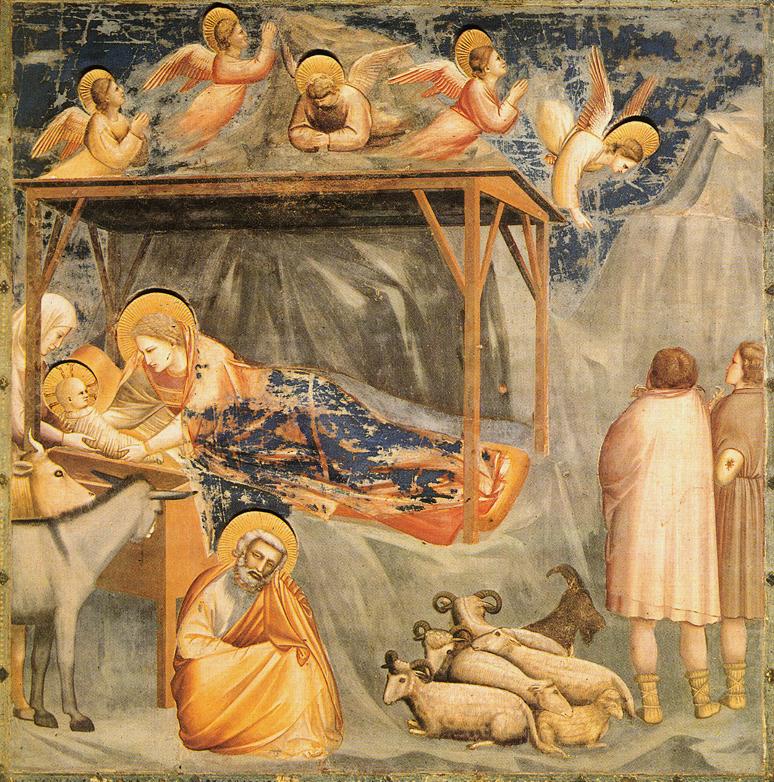
There are reliable references to the narrative of Matthew (chs. 1-2) and of Luke (2:1-40) concerning the Birth of Jesus in Bethlehem. In these sources, the place of the Birth is spoken of as a house, a manger, and a cave. Matthew mentions a house where the Holy Family was living before the Adoration of the Magi and the consequent Flight into Egypt. Luke emphasizes that the Holy Family was in Bethlehem only because of the Census of Quirinius and that their Firstborn was born in a manger, since there was no place in the guest room. From this it can be deduced that the house where they were staying belonged to relatives and that, because of the Census itself, it also had other guests, who evidently left as soon as they had completed the census formalities, while the Holy Family remained in the town at least until the Presentation of the Child in the Temple and the Purification of the Mother after childbirth (unless Joseph wished to take up residence in Bethlehem once again, as Matthew suggests), until they received the unexpected visit of the Magi, followed by the Flight because of Herod’s unexpected persecution. This agrees with the report of the Bethlehemite origin of the House of Joseph, since he was of Davidic birth. It also agrees with what Jn 1:11 and 7:5 attest, where we read that those closest to Christ, evidently by ties of blood, “his own,” did not recognize Him, assigning to His Mother the most marginal place in the already poor dwelling in which to give birth, despite the care that her state of pregnancy would have deserved. Luke highlights the detail of the manger because he sees in it the fulfillment of two messianic prophecies of the Old Testament: Is 1:3 and Hab 3:2 according to the LXX. In the Protoevangelium of James, a very interesting historical source, although apocryphal and not free of legendary superstructures, we read that the Holy Family, going to Bethlehem for the Census, had to stop halfway, at the fifth mile from Jerusalem, between the territories of the tribe of Judah and the tribe of Benjamin, near Rachel’s Tomb, in a deserted place in the area of Ephrathah, because Mary had reached the moment of giving birth. The birth took place in a cave, described as underground and dark. One must deduce that the house of the Davidides in Bethlehem stood a little outside the village and that some of its rooms were fitted into natural caves. The Palestinian Fathers harmonized the data, and Justin joined the manger to the cave. Origen followed the same line. Eusebius harmonizes Bethlehem with Ephrathah.
Archaeology has provided adequate evidence, as readers familiar with New Testament questions already know. First of all, it should be mentioned that even in Nazareth houses have been found that inform us very well about their layout in the time of Christ. The famous “House of the Capitals,” discovered by Father Viaud, has four rooms, separated by a central corridor that divides the guests’ area from the owner’s area. Here are the family’s bedroom and the storeroom. In the other part are a small entrance hall and the reception room, attached to an oven and to a cave used as a stable for the animals. Evidently, the house, the cave, and the manger are easily identified with one another, since the last two terms indicate a natural space serving a dual purpose. Luke, in fact, speaks of the katályma, that is, the guest room, and not of a public inn, for which in 10:34 he uses the appropriate term. It was precisely this room that was connected to the cave serving as a stable. This house-cave-stable was a place of worship for the Jewish Christians, who established a domus ecclesiae there. This worship is mentioned by Justin. It was profaned by Hadrian, who, in the context of eradicating Jewish worship, also persecuted the Jewish Christians, putting the commemoration of a pagan mystery in place of the Christian one. He erected a temple in honor of the lamentations of Venus and the apotheosis of Tammuz-Adonis, with an adjoining sacred grove. This is attested in the literary sources by Origen, Jerome, and Cyril. Nevertheless, as Origen himself attests, veneration of the Cave of the Nativity continued. Eusebius gives the same report, even before the site was Christianized again. After one hundred and eighty years of profanation, the site was recovered by Constantine, who, after the inspection carried out on the spot by his mother Helena (248-329) in 326, built a basilica with a polygonal apse, a central altar surmounted by a baldachin, columns separating the nave from the aisles, and a platform in front of the presbytery, from which one descended into the cave, whose manger was covered with precious materials. The greatest splendor was reached under Justinian, who, after the damage inflicted on the Constantinian buildings by the Samaritan revolt of 529, built a basilica that, in its general lines, still exists today. Having survived the devastation of the Persians in 614—thanks to the depiction of the Magi, their fellow countrymen, in the mosaic at the entrance—and the fury of El-Hakim, because it had been used as a mosque to venerate the birth of the prophet Isa Ben Yousuf (Jesus Son of Joseph), Bethlehem also escaped being sacked by the Crusaders through a wise surrender to Tancred on his march to Jerusalem. The Crusaders embellished the church and attached an Augustinian monastery to it. The Basilica of the Nativity then took on the fortress-like appearance that it still retains today. One enters through a single small, low door, because the three portals were walled up to prevent profanation by infidels riding in on horseback. After the dark narthex and beyond a dilapidated door, one enters the majestic basilica, in which four rows of monolithic columns of reddish limestone, arranged in pairs, divide the side aisles from the central nave, supporting the high walls of the latter and the beams of the wooden roof, which is visible today. The choir at the east end is raised, and by two side staircases, reached through two Crusader portals with sixth-century bronze doors, one descends into the Grotto of the Nativity. On its floor, in a niche, a star of gilded silver and a Latin inscription in white marble mark the place of the Birth of Jesus. In another niche is the manger hewn out of the rock and now faced with marble, where the Child was laid. The silver manger, donated by Helena to be placed there, is now in Santa Maria Maggiore in Rome. The altar opposite is dedicated to the Magi. The rock walls are covered with leather and precious fabrics. Fifty-three lamps hang from the ceiling.
To the north, adjoining the Basilica of the Nativity, stand the Church of Saint Catherine (1881) and the Franciscan friary, built on the ruins of the Augustinian monastery. From the right side aisle of the Church of Saint Catherine, a staircase descends into a labyrinth of grottoes, burial niches, and underground passages that in fact make the place resemble a Catacomb. Among them are those that house the tomb of Saint Jerome, who arrived in Bethlehem in 384 and there translated the Vulgate, and those of his disciples Paula and Eustochium. A locked door separates the complex from the Grotto of the Nativity.
Fr. Bagatti’s plan makes it possible to draw the following map of the original sites of the Birth of Christ: beneath the altar of the Nativity lies the Grotto of the Manger. Descending vertically, we come to the Grotto of the Nativity. This is connected, by an inclined ramp that was its entrance in the twelfth century, to the Altar of Saint Joseph, which lies even deeper and in whose floor there are four graves, while two more graves are in arched side niches, because from pre-Constantinian times Christians liked to be buried in this place as a testimony of their devotion. Farther on, one descends into the Great Grotto, which has the original entrance to the underground complex and contains five tombs. To the left of the Great Grotto, looking from the Altar of Saint Joseph, is the Grotto of the Holy Innocents, although there is no proof that the little Martyrs of Herod’s persecution were buried here. Beside it are another altar with arched tombs and the altar of the Holy Innocents. Opposite the Great Grotto are a pre-Constantinian arch and the Constantinian foundations of the Basilica. Beyond them, a staircase leads to the twelfth-century entrance. To the right, looking from the Altar of Saint Joseph, are first the Grotto of Saints Eusebius, Paula, and Eustochium (to the right of which is the Grotto of the Spring, with two more graves in the rock), and then the Grotto of Saint Jerome, with a cenotaph and two underground graves. This grotto communicates with the Cell of Saint Jerome to the north, which contains two more graves beneath the floor.
East of the Grotto of the Nativity are the Cistern of the Magi and the Grotto used as a water reservoir. To the west is another Grotto with several graves. Southeast of the Basilica of the Nativity, beneath a Franciscan chapel, is the Milk Grotto, where a sixth-century tradition identified a few drops of the Virgin’s milk. A healing power is attributed to the white stone of the grotto.
To reach Bethlehem, the Holy Family, leaving Jerusalem behind, came to Beit-Hakerem, where the kibbutz of Ramat Rachel stands today. There they rested at a spring, shortly before reaching the summit of Mar Elias, where there is now an Orthodox monastery. Unfortunately, this spring is now sealed by a cement slab, over which runs the large pipe of an aqueduct. On this site was built the ancient Church of the Kathisma, discovered in 1992—the church, that is, of the place where the Virgin stopped to rest during the journey to Bethlehem. This place of very ancient veneration is also associated with a stop of the Holy Family during the Flight into Egypt and with a halt of the Magi on their journey to meet the Child. It was there that they are said to have seen the Star again after leaving Herod’s court. The church was built between the Council of Ephesus (431) and that of Chalcedon (451), evidently over the relic already venerated by Ikelia, a pious woman of Jerusalem, in the time of Archbishop Juvenal (422-458). It was destroyed by the Persians in 614, but the site continued to be visited by the faithful in the following centuries.
In neighboring Beit Sahur, east of Bethlehem, churches and numerous chapels commemorate the Shepherds to whom, as they kept watch by night, the Angels appeared announcing the Birth of Christ. Around the little town lie the Shepherds’ Fields, still cultivated and used as pasture today, just as in the days of Ruth and Naomi. Here Jerome identified the Tower of the Flock, mentioned by Micah, at the site of the Annunciation to the Shepherds, where the remains of a modest pastoral settlement from the time of Jesus have in fact been found. As is well known, the Holy Family had to flee into Egypt, where there is very ancient evidence of their presence, dating from the first century.
Delve deeper into your studies: explore Mariology, Marian Theology, Marian apparitions, and the Postgraduate Program in Mariology.
To reflect more deeply on Mary and the historical context of Bethlehem, consult the Encyclical Redemptoris Mater by Pope John Paul II.
Postgraduate Program in Mariology
Would you like to deepen your formation in Mariology? Discover the Postgraduate Program in Mariology of Locus Mariologicus – an academic formation that unites theological rigor, spiritual life, and the living tradition of the Church.




Responses