The Mariology of Piero della Francesca (Part 1)
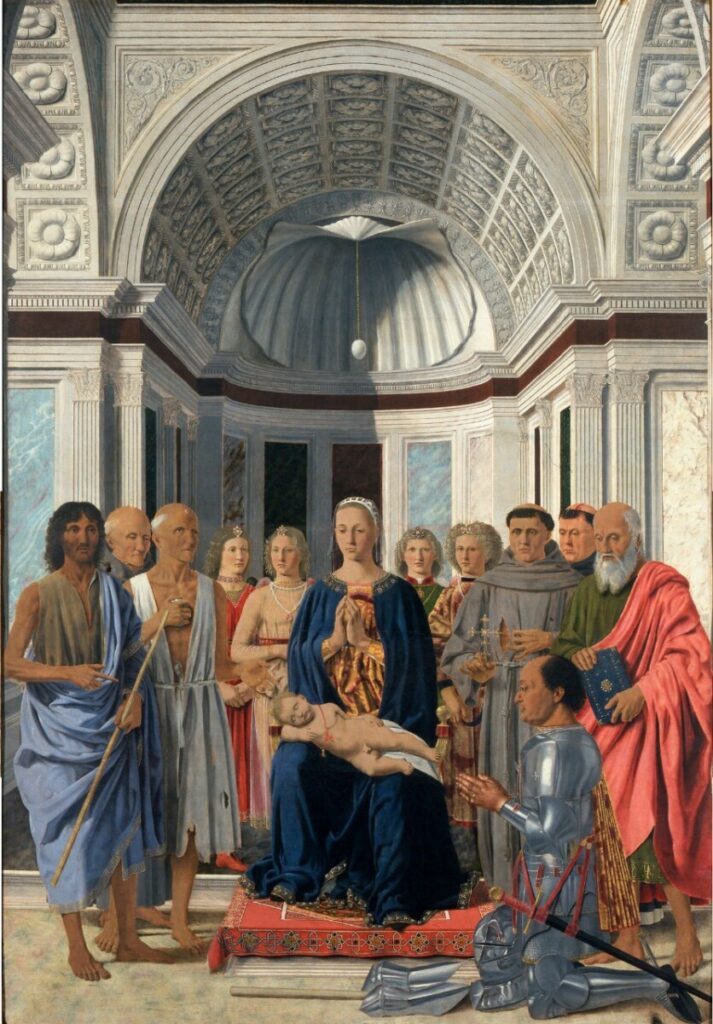
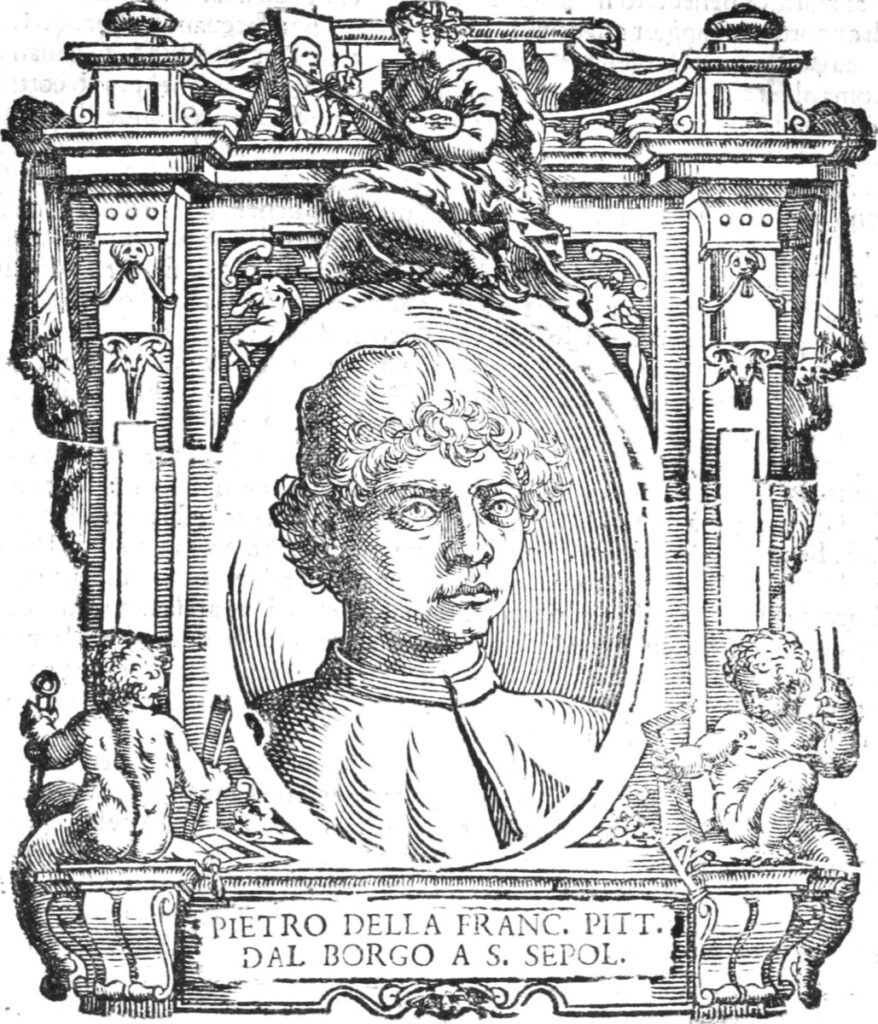
Piero della Francesca (Sansepolcro [Tuscany] 1418-1492) is undoubtedly one of the greatest Italian artists of the fifteenth century. His spacious, monumental, and rationally impassive painting attains the highest ideals of the early Renaissance, an age in which art and science were united by deep bonds. Like Leonardo da Vinci, born two generations after him, Piero is an outstanding experimenter.
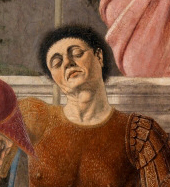
A master of fresco, a technique in which he excels, he is chiefly interested in applying the newly discovered rules of perspective to narrative and devotional painting: the absolute mathematical rigor of his creations contributes to the abstract and iconic quality of his painting, giving his masterpieces a powerful sacred value.
Context
Modern Humanism and the “devotio moderna”
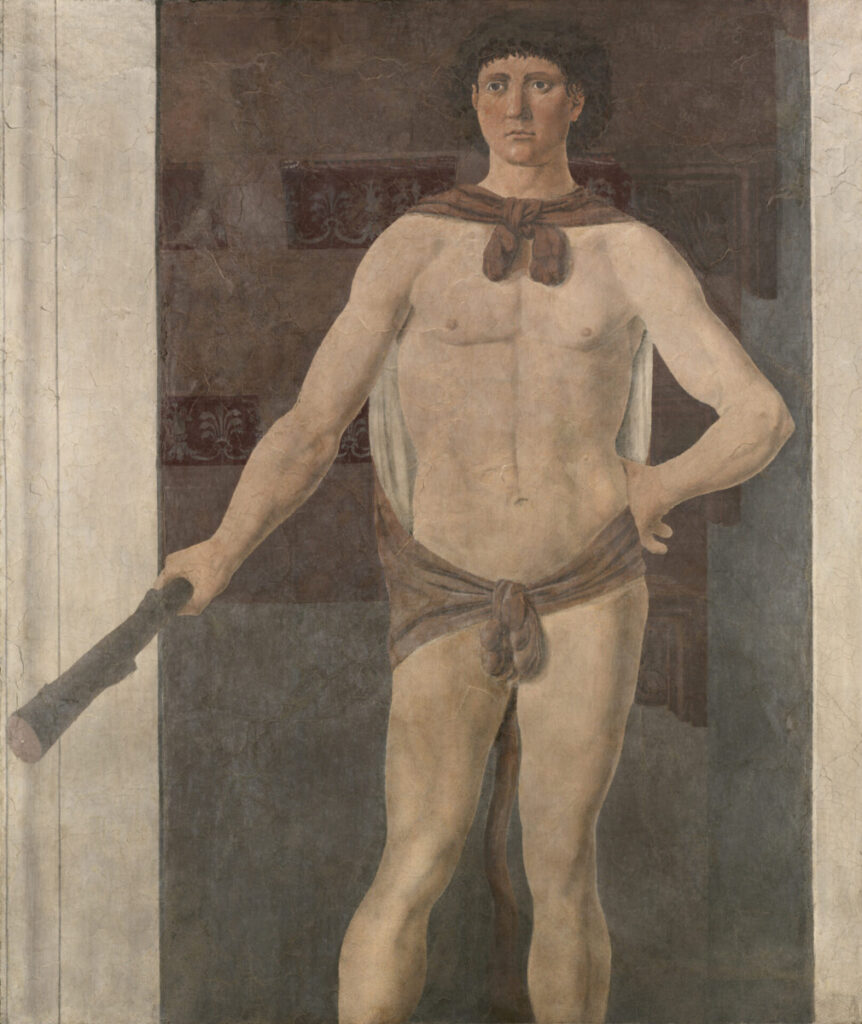
Piero’s age is that of humanism, a phenomenon that, from the beginning of the fifteenth century, expresses a new confidence in the world, in man, and in his cognitive possibilities. The study of the literary and artistic classics allows the last phase of the Middle Ages to lay the foundations of the future Renaissance. Ancient texts are rediscovered; ancient statues, medals, and coins bring classical culture, both Greek and Latin, back to life.

The recovery of man, of his physicality, is no longer mortified by the impropriety of representation, which was never supposed to be too realistic, especially where saints, virgins, or even God were concerned. The impulse to explore in the opposite direction becomes evident, with a taste for a realism that fundamentally celebrates man, entrusting to God and to heavenly creatures faces, bodies, and sensations that express the everyday world.
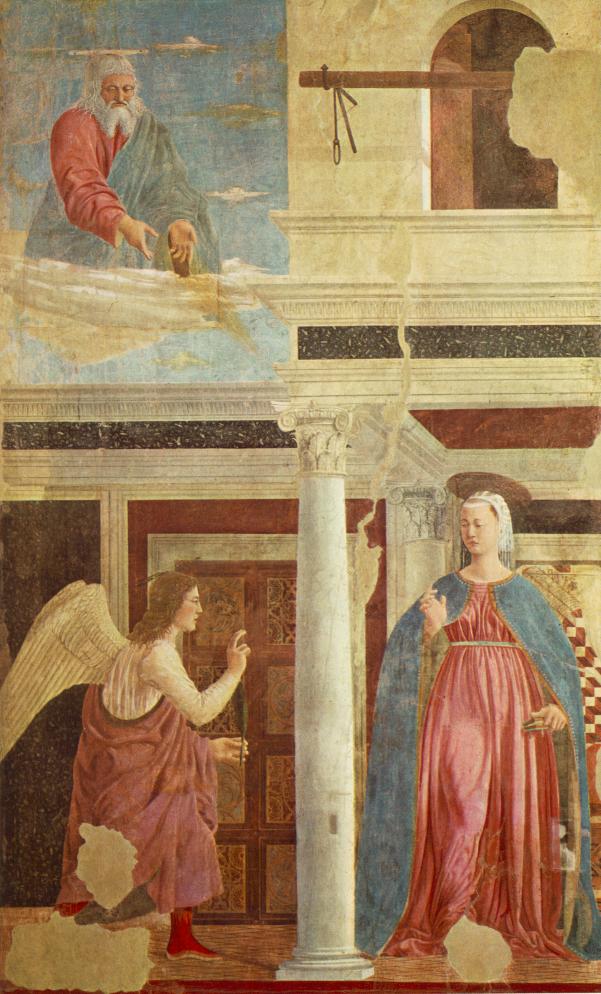
Popular culture became a model of tragic values. Hence, no more fear of representing God in human garb. A sermo vulgaris that becomes epic in mural imagery, in the cycles that exalt the Virgin in her capacity as mother, in the torn humanity of the crucified Christ, in the intimate mystical asceticism of a saint.
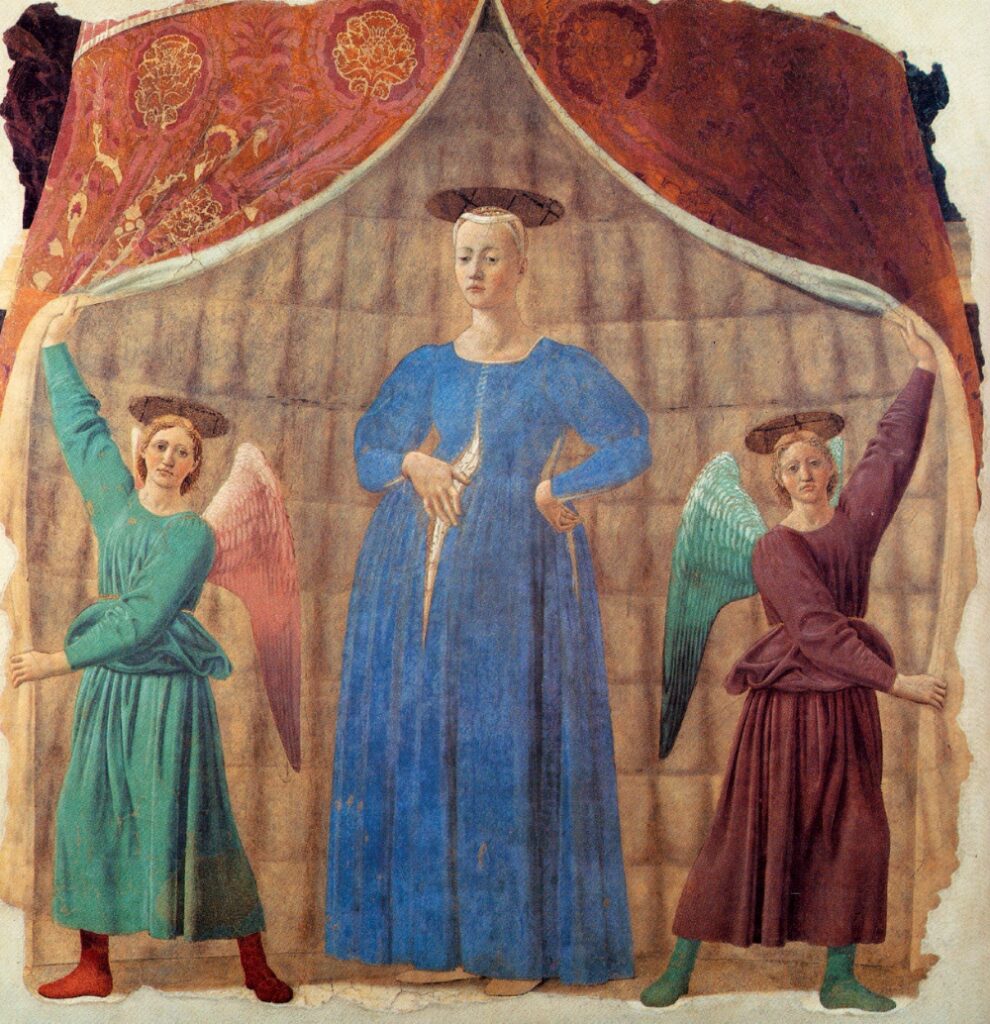
In reality, humanism in Italian art begins well before its literary counterpart. Arnolfo, Giotto, and Nicola Pisano are the ancient fathers of this new feeling for man, still primordial, perhaps unconscious, but already proudly straining to claim from God the right to exist independently of the divine. All iconoclastic modesty began to disappear. That fear of touching the lips of God with the brush, of drawing the bust of Christ or the womb of the pregnant Mary.
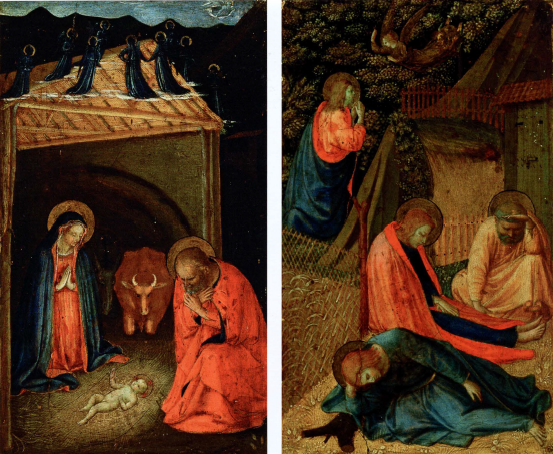
No desire for synthesis, because man faces himself in a narcissistic aesthetic reflection that leads him to seek in the virgins, in the saints, in Christ, in the child, the features of his own dramatic physicality, of his indispensable humanity. In art, all this is the miracle of humor: ancient art, literally rediscovered in that period, refers to the celebration of someone’s myth, in the elegance of the nude, in which a smooth brow becomes pure thought.
Piero della Francesca believes in man and exalts his beauty with a moral and ethical canon, capable of raising the loftiest spirits to the most sublime moments of existence. The ultimate challenge of early medieval painting is to dialogue with the divine without being able to enclose it within the visual lexicon of humanity. The faces are silent, distant, framed in architectures that are an almost metaphorical symbol of the surrounding world.
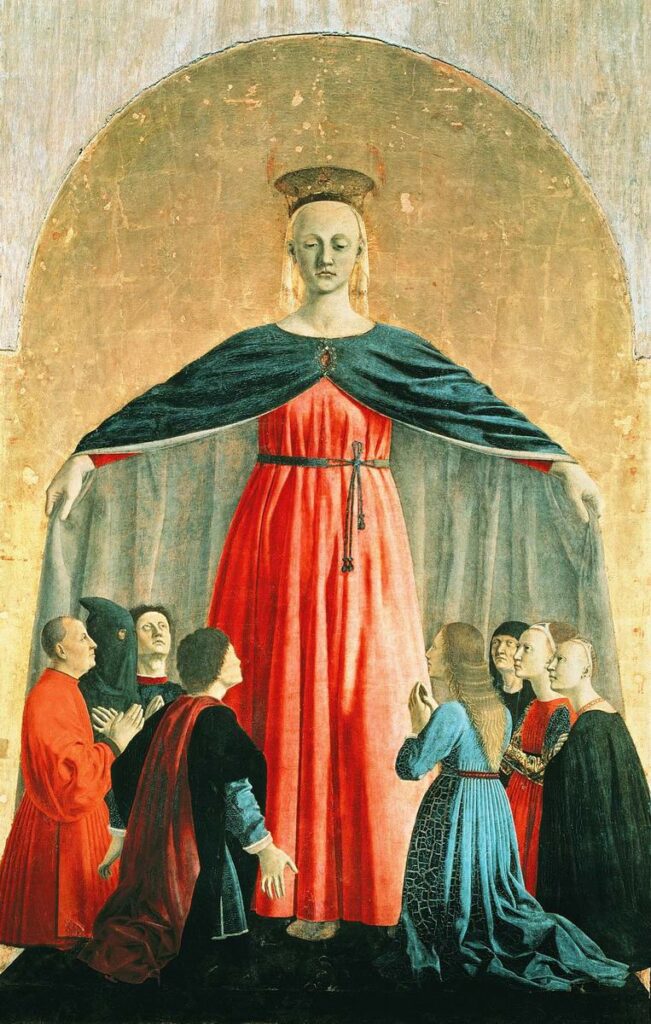
The architectural values had as their background not a landscape or a sky crossed by clouds or birds, but gold leaf, with which the very modern Piero is forced to contend in the Misericordia Polyptych, probably his first known work.
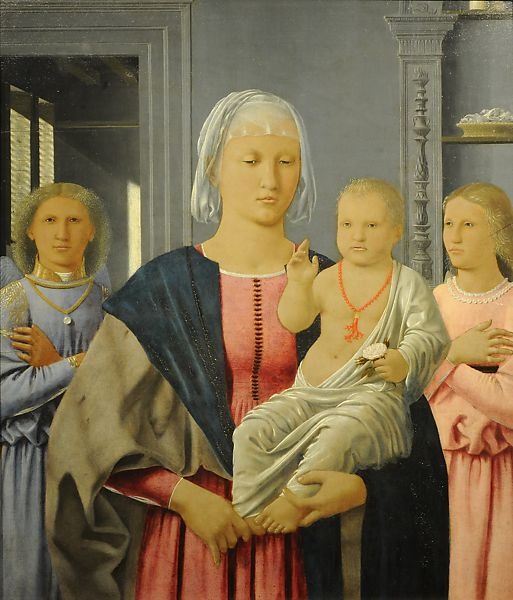
But Piero’s figures, especially the Holy Virgin Mary, express themselves through silence, through an impersonality full of meaning, in faces hewn in volume, broad features inhabited by simple thoughts, a dramaturgy that is resolved, like the shadows, in light. Peace in intelligible space.
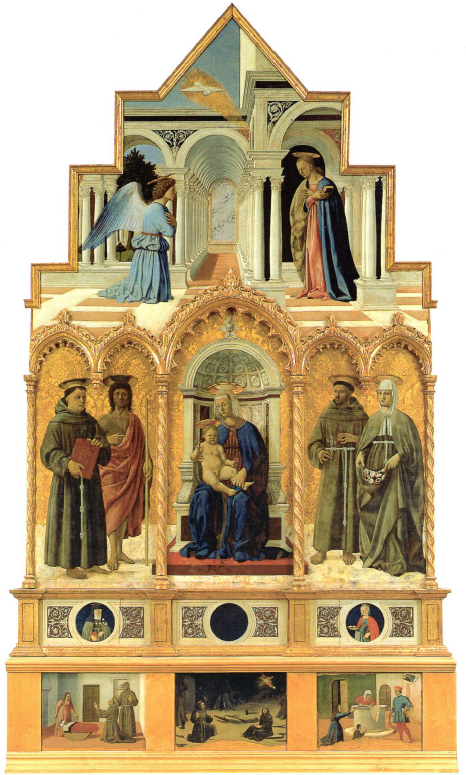
What is striking is the use of light, a diffused light born of the somatic blending of colors, which he learns from Fra Angelico on the frescoed walls of the convent of San Marco in Florence, and which is thus transformed into poetry.
Postgraduate Program in Mariology
Would you like to deepen your formation in Mariology? Discover the Postgraduate Program in Mariology of Locus Mariologicus, an academic formation that unites theological rigor, spiritual life, and the living tradition of the Church.
Would you like to study Mariology seriously?
This article grows out of the works in the Locus Mariologicus library. The Postgraduate Program in Mariology takes you to the same source, with academic guidance: Scripture, the Fathers of the Church, and the Magisterium, from the first dogma to contemporary questions.


Responses