The Origins of Hope: Foundations
Introduction
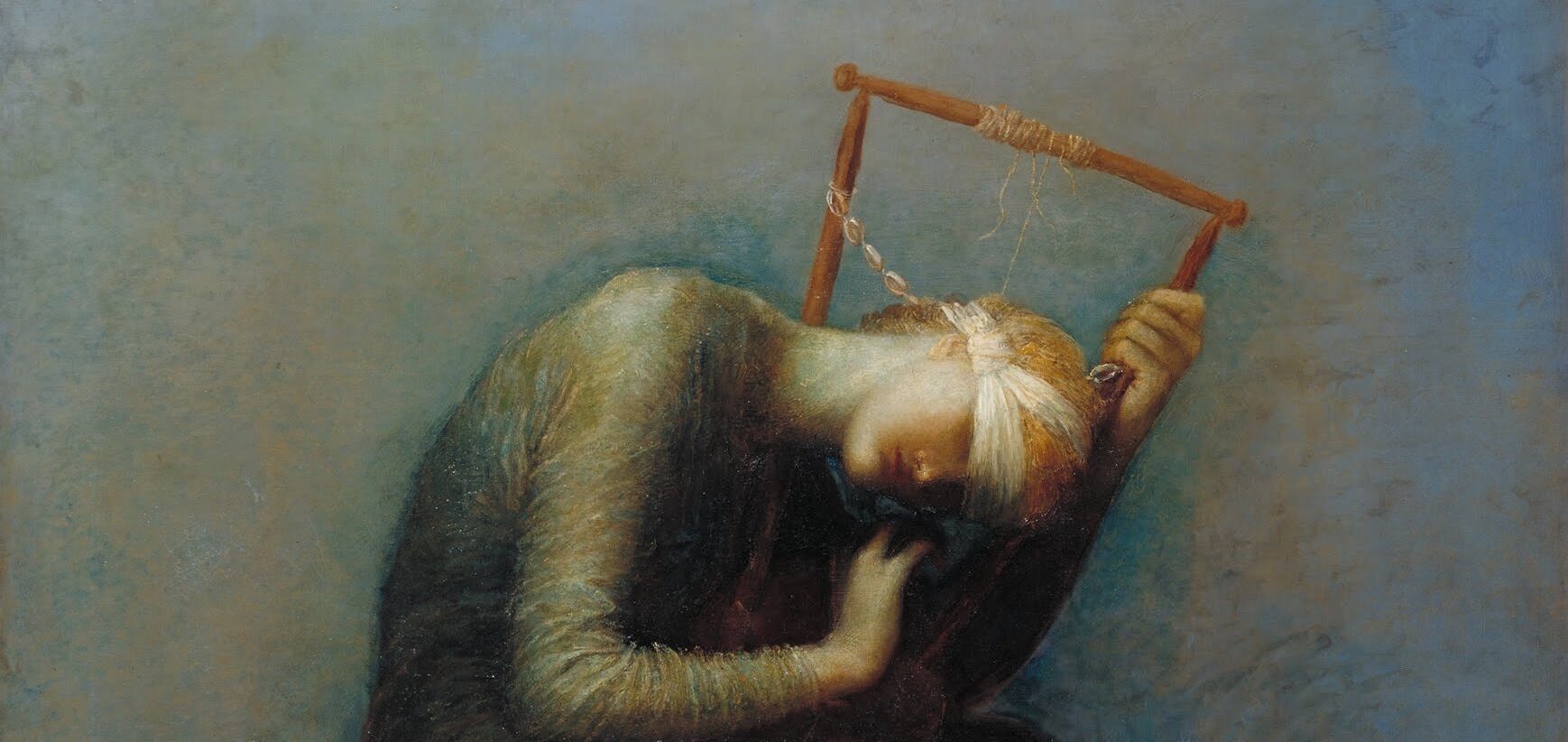
In this space, over the course of several weeks, we will explore how the notion of hope (ἔλπις in Greek) was understood both in Greek philosophical contexts and in the Judeo-Christian tradition. The present study, academic and conceptual in character, remains accessible to the reader who wishes to follow each stage of the historical and theological development of this concept, so fundamental to human experience.
The Term
The Greek term ἔλπις is considered by scholars to be a vox media, something we may translate as “hope”. Historically, the positive component of ἔλπις gained strength in periods later than the classical period (as observed in Pseudo-Plato, Definitions, 416A), but this optimism never became absolute. However, in the Judeo-Christian linguistic context, the word takes on an exclusively positive sense, being understood, in fact, as “hope”.
It should be noted that, in that tradition, the positive character of ἔλπις did not arise, at first, because of hope in a specific Christian “beyond”. The idea of a hope in the beyond within Greek culture, as we find in the mysteries of Eleusis (cf. Homeric Hymn to Demeter, 480-483), does not fully clarify the meaning of ἔλπις.
In the Greek language, the root ἔλπ essentially alludes to expectation or supposition based on experience and on the general understanding of the world. The boundary between supposition and knowledge sometimes proves blurred, but it gains relevance in philosophy, which distinguishes mere opinion (δόξα, ἔλπις) from actual knowledge of being (e.g.: Parmenides, Fragments, VS 28 [18] B 1, 30. Plato, Philebus 12d, 39e, Statesman 306a).
The definition of the place of hope, especially hope in the beyond, whether it belongs to the domain of faith and opinion or to the domain of knowledge, will depend on the philosophical school in question. In Plato, for example, we see in the Phaedo that hope can be linked to a higher form of knowledge. Even among those “initiated” into the mysteries, hope would be based on a special knowledge (εἰδώς, according to Euripides, Bacchae, 72-74).
For Hellenistic philosophy, however, real knowledge about the structure of the world would be the only solid foundation for ethical action. In this sense, conduct based on hope or on suppositions would not have the same status as something grounded in knowledge. That is why, from the late classical period onward, terms such as πίστις (faith), δόξα (opinion), and ἔλπις (hope) are considered, in many cases, inferior to demonstrable knowledge.
The Stoics, for their part, although they did not employ ἔλπις as a technical term to classify one of the four fundamental affects, had recourse to ἐπιθυμία (desire) to express incorrect judgments about good or evil. Thus, in the Stoic scheme of affects related to the present and to the future, pain, pleasure, hope, and fear, hope, although present as a general concept, did not receive in ἔλπις its best linguistic expression, owing to its character as a vox media.
Philosophical and Religious Usage
In both the philosophical and the non-philosophical use of classical Greek, hope, supposition, and knowledge refer essentially to the order of nature, a horizon in which theories could be verified or discarded by reality itself. For the Greek mentality in general, there would be no authority outside the cosmos to which hope or knowledge could refer. The gods, in this conception, are also part of the cosmos, even if in the intelligible cosmos of the Platonists.
On the other hand, the biblical tradition introduces hope as something that directly concerns the promise or the action of a Creator God who transcends the natural world. Both in the Old Testament, which emphasizes a hope directed toward the present (for example, Psalm 91), and in the New Testament, with its eschatological emphasis on the beyond, this hope cannot be measured by the parameters of the physical universe or by the prevailing social order. It is manifested, ultimately, in obedience and in trust (cf. Psalm 73).
Hope as a Positive Concept
In Judeo-Christian usage, the term hope (ἔλπις) acquired an essentially positive connotation, differing considerably from its habitual use in Greek culture. It is a linguistic phenomenon similar to what occurred with the word πίστις (faith), which takes on new contours of meaning under the influence of biblical thought.
In this way, the principal question is not whether hope aims at the “beyond”, but on which ultimate point of reference it rests:
- The cosmos, with its inherent laws and moral norms. Or
- A Creator and Redeemer God, who reveals Himself independently of the cosmic order.
In the Bible, ἔλπις is often translated as trust or confident perseverance, revealing the notion of a direct relationship between God and the human being (see, for example, Job 24). Thus, the crucial point of this debate lies in how hope grounded in natural laws is articulated in contrast with a hope founded on the divine promise.
Recommended reading: Spe Salvi (Benedict XVI), an encyclical on Christian hope.
Deepen your studies: explore Mariology, Marian Theology, Marian apparitions and the Postgraduate Program in Mariology.
Continuation
With this first overview, we have observed how the concept of hope emerged and developed in Greek and biblical thought, taking on distinct meanings in each cultural and religious context. In the next part of the series The Origins of Hope, we will deepen these reflections, examining more closely how these two strands, the philosophical and the religious, interact and are transformed throughout history.
Follow the continuation of this study week by week. The reader will thus find the basis for a solid and rigorous understanding of the subject. After all, knowing the different roots of hope helps us to understand better why it is so essential and, at the same time, so diverse in its manifestations, until it reaches the Mother of Hope.
The Locus Mariologicus Institute is the worldwide academic reference in Mariology. Discover our resources on Marian Theology, Marian apparitions and the Postgraduate Program in Mariology.
To deepen the theology of Marian hope, consult the Encyclical Redemptoris Mater of Pope John Paul II.
Postgraduate Program in Mariology
Would you like to deepen your formation in Mariology? Discover the Postgraduate Program in Mariology of Locus Mariologicus, an academic formation that unites theological rigor, spiritual life, and the living tradition of the Church.



Responses