Thanks to the grace of Our Lady

Thanks to grace, the great gift of God, to the light of the New Testament
If there is a notion, or rather, a central event in the Bible, it is precisely the Graceor the free divine benevolence, which runs through both Testaments until it becomes Gospel of GraceIt is the overflow of divine love for human creatures, making them participants in the trinitarian life.
The first and supreme gift that God grants to his creatures is the love He has for them, and at the same time, the infinite pledge by which He sets this love. And through this first outpouring of Himself, in which He pours forth, like an infinite wave, the current of divine love also overflows outward, covering creatures with the abundance of gifts.
At the same time, there is no topic that requires more renewal than grace, for it was defined and considered as a quantity and not a quality.
Let us think for a moment about what Saint Bernard calls aqueduct to the Virgin Mary who compensates us with the flow of grace. This way of thinking led to obscuring other interpretive elements, which are not alternative but cumulative, of the relationship with the Holy Spirit in the mystery of grace:
- Divinization
- dialogical event
- vital relationship
- humanization
Grace is a dialectical event or a living relationship of love and salvation
What unites the two Testaments is the particular type of relationship, the act of condescension and love, that God maintains with man and the world. Grace is an event linked to the event of the Word’s coming among us because From his fullness we receive grace upon grace “Short title/phrase – translate without context or additional information”“Jo” (no translation needed, as it’s a short, standalone title/phrase) 1,16)
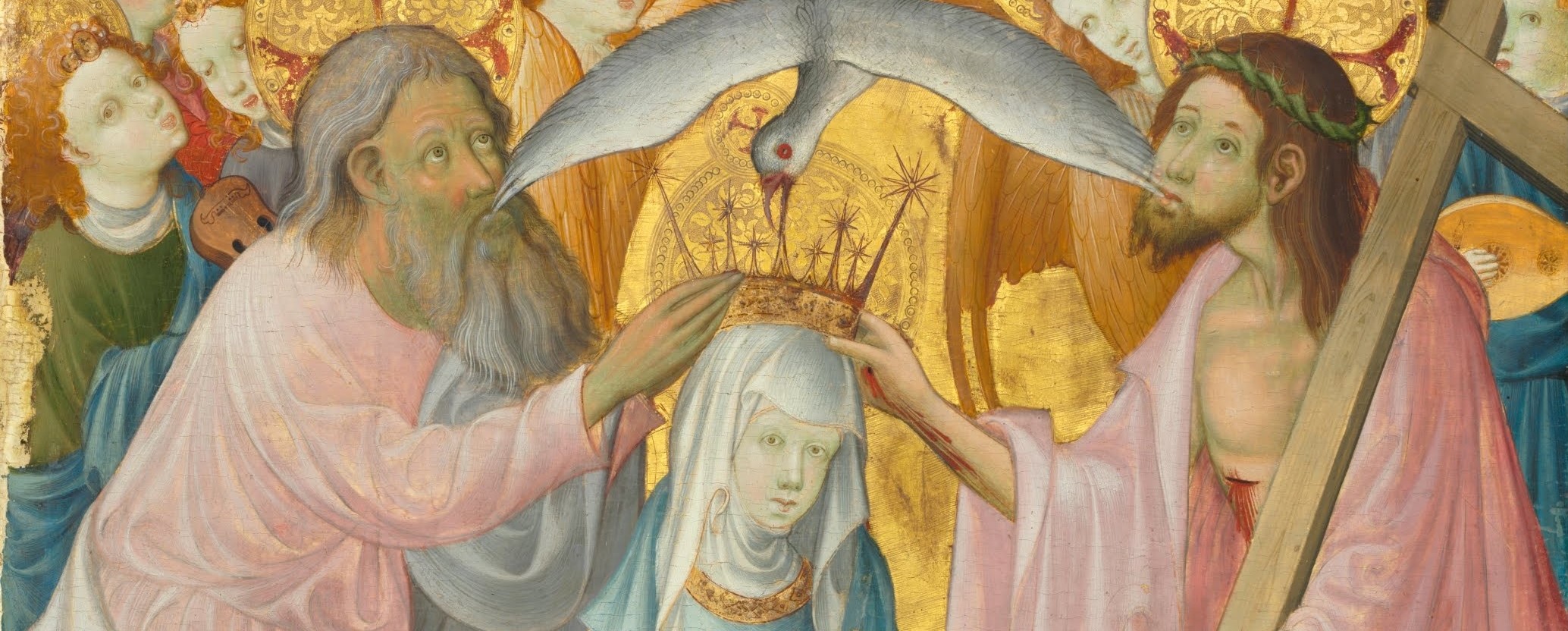
Thus, grace has a dialectical structure, involving God’s offer of love and humanity’s response in love. The good news takes the form of Gospel of Grace Grace cannot be conceived as destructive of the nature of man, which would be annulled by its occurrence. On the contrary, it demands and evokes the human response. Let us reflect for a moment: God’s grace comes to us according to the way in which the Holy Spirit acts, as a force, an internal movement that does not coerce the person, but awakens and sets them in motion. In this, God takes the initiative, as in creation. But it is not a gift that blocks the path of man towards freedom, guiding him in the opposite direction to his value system. The gratuity of grace cannot establish a spirituality of man’s annihilation, as happened in the past, especially in the 16th and 17th centuries. On the contrary, being a relationship, grace involves the person, who must embrace it so that it becomes a true gift. Grace becomes a personal encounter between God, who places himself in the event of Christ, the definitive salvific word of the Father, and man who responds by embracing the grace and living in consistency with this gift. It is not a matter of moments, because grace is a continuous process, a dynamic relationship that requires ongoing response and participation. Grace is the immediate communion with the Father through Christ in the Spirit. It is an educational process that helps the human being, created in the image of God, to free himself from sin and attain divinization (theosis). This is encapsulated in the words of the Greek Fathers: «Deus se fez homem, para que o homem se tornasse Deus And the New Testament speaks of the outpouring of the Spirit as the principle of rebirth (Jn 3:3.5-7), of new life (Rom 5:5. 6:4), of filial life (Rom 8:15-16. Gal 4:6), and of eternal life (Rom 6:23). Justification of the paschal mystery places me in a new relationship with God. But rebirth transforms my inner substance, gives me a new seed of life, places a new self within me, and renews the way I look at and live life. Grace is the greatest value in life: a dialectical event, a living relationship between God and humanity. Grace implies two elements: If we open the New Testament, we notice that the doctrine of grace is personalized, after the supreme prototype that is Christ full of grace and truth (Jn 1:14), in the figure of Mary linked to grace through two main bonds: A theology of grace cannot fail to take into consideration the history and presence of one who is full of grace (Lk 1:28). Firstly, the title Our Lady of Grace is based on the fact that the Virgin of Nazareth becomes a participant in the charisms that the Spirit grants to members of the people of God for the building up of the Church. The Acts of the Apostles testify that Mary was among all those who were filled with the Holy Spirit and began to speak in tongues and prophesy. There is no reason to deny the two charisms of glossolalia and prophecy to the pentecostal experience of the Mother of Jesus. Once glorified in body and soul, the Mother of God, in her role as Coredemptrix, Mediatrix of All Graces, and Queen of Heaven, continues to intercede for us, offering us her grace and her intercession as a gift from her Son, our Lord Jesus Christ. To recognize Mary Full of charisms Manifesting her salvific prominence, a result of God’s love for her. By conferring upon her the title of Mediator in ChristThis knowledge emerges from isolation, placing Mary in relation to God and to humanity. It is a consequence of the principle of universality, which situates Mary within the history of salvation, in relation to Christ and the Church. In Mary converges the real benevolence of the Father who looks at her with love and fills her with grace. The first historical-salvific name of Mary is charity “Short title/phrase – translate without context or additional information”Luke “Recipient of perpetual divine love” charité“What does it mean?” to become agreeable, to show oneself benevolentIt indicates a continuous action of God in the present. You who have been and remain full of divine grace.Gabriel reiterates this meaning when he adds: “Do not be afraid, Mary, for You have found grace. “You have found grace in God’s sight.” This expression, “you have found grace,” is rarely used in reference to God (“Noah found grace in the eyes of the Lord” Gen 6:8) and is often used to describe the condescendence of a powerful man towards a poor or weak person. Maryfound grace Before GodLuke “As Esther gained access to King Ahasuerus (Xerxes I).”He found grace. to her (Esther 8:5). God turned to her with love and in a friendly relationship. God’s love is effective in Mary. transformed by graceSave her and bless her, and do great things in her, beginning with the virgin conception of the Son of God. Ultimately, Mary is the first to participate in the new and divine life communicated to the baptized, who live in a living and vital relationship with the three divine persons. The Mother of Jesus, in addition to offering the paradigm of this operative grace in her own life, serves as a model for all who seek to live in communion with the Trinity. Chosen Onethrough her life and presence on the Son’s cross, she becomes a cooperator of the Spirit in the rebirth of the children of God. Therefore, she is declared Mother in the order of grace.“Jo” (no translation needed, as it is a short, standalone title/phrase) (19,25-27) Mary’s relationship to baptismAs Augustine intuited and the Second Vatican Council reaffirmed, it derives from the fact that Mary is the Mother of the Faithful because she participated in the redeeming mysteries of Christ’s life. “Short title/phrase – translate without context or additional information”Light of the Nations (61) and also because she currently collaborates with maternal love in the generation and formation of the faithful (Lumen Gentium 63). The Council emphasized this reality, explicitly maintaining the term generate, with reference to St. Augustine’s text: Mary collaborated in charity in the birth of the faithful in the Church. This is therefore a Virgin’s intervention in the very act of baptism, by which men are regenerated into a new life in Christ. This is also the call of Benedict XVI during his pilgrimage to Etzelsbacht (September 23, 2011), when he exhorts us to move from the graces experienced in recourse to Mary in particular moments to a permanent response of love throughout our existence.Grace is the participation in divine life
Mary and grace in the light of the New Testament
Legitimacy of the title «Our Lady of Grace»
Mary, filled with grace and transformed, responds with total availability.
To deepen devotion to Our Lady and the theology of Marian graces, consult the Apostolic Exhortation Marialis Cultus From Paul VI, about Marian devotion In Christian life.
Deepen your studies Explore (no translation needed, keep as is) Mariology“Short title/phrase – translate without context or additional information.” Marian theology“Short title/phrase – translate without elaboration” Marian apparitions “And (she) said” Postgraduate Program in Mariology“Mariology, angelology, demonology, josephology”
Postgraduate Program in Mariology
Would you like to deepen your formation in Mariology? Get to know the Postgraduate Program in Mariology from Locus Mariologicus – an academic formation that combines theological rigor, spiritual life, and the living tradition of the Church.
Would you like to study Mariology seriously?
This article arises from the works in the Locus Mariologicus library. The Postgraduate Program in Mariology takes you to the same sources, with academic guidance: Scripture, the Fathers of the Church, and the Magisterium, from the first dogma to contemporary issues.




Responses