Janua caeli: Mary as the gate of heaven in the patristic tradition
“Porta haec clausa erit, non aperietur, et vir non transibit per eam, quoniam Dominus Deus Israel ingressus est per eam” (Ezek 44:2), “This gate shall remain shut, it shall not be opened, and no man shall pass through it, because the Lord God of Israel has entered by it”
I. The shut gate of the east: the prophetic vision of Ezekiel
The forty-fourth chapter of the book of Ezekiel presents one of the densest visions in all Old Testament prophetic literature. Ezekiel contemplates, in vision, the restored eschatological temple, and describes with particular care a special gate of the sanctuary: “He brought me back by the way of the outer gate of the sanctuary, which faces east, and it was shut. The Lord said to me: This gate shall remain shut, it shall not be opened, and no one shall enter by it, because the Lord God of Israel has entered by it. It shall remain shut” (Ezek 44:1-2). This mysterious gate became, in ancient Christian exegesis, one of the most powerful typological figures of Mary. The Fathers of the Church read here a prophecy of the perpetual virginity: the gate through which the Lord entered the world remains shut forever, that is, Mary, through whom the eternal Word entered into human flesh, remains a virgin before, during, and after the birth. And at the same time, this gate became a figure of Mary as Janua Caeli, Gate of Heaven, because it is through the place by which God came down to us that the ascent to God becomes possible for us. The gate that God opened in order to descend is the gate by which we ascend. And in both movements, divine descent and human ascent, Mary is the one threshold.
II. Janua caeli: the title in its patristic and medieval roots
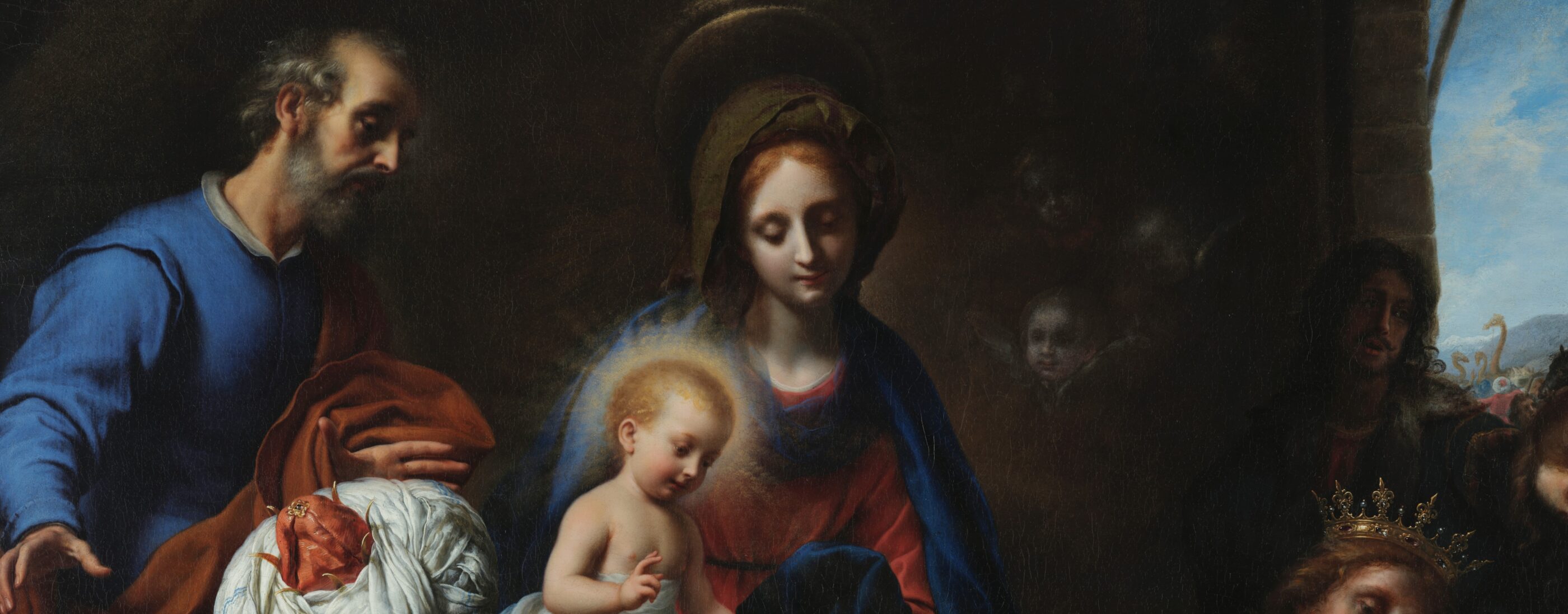
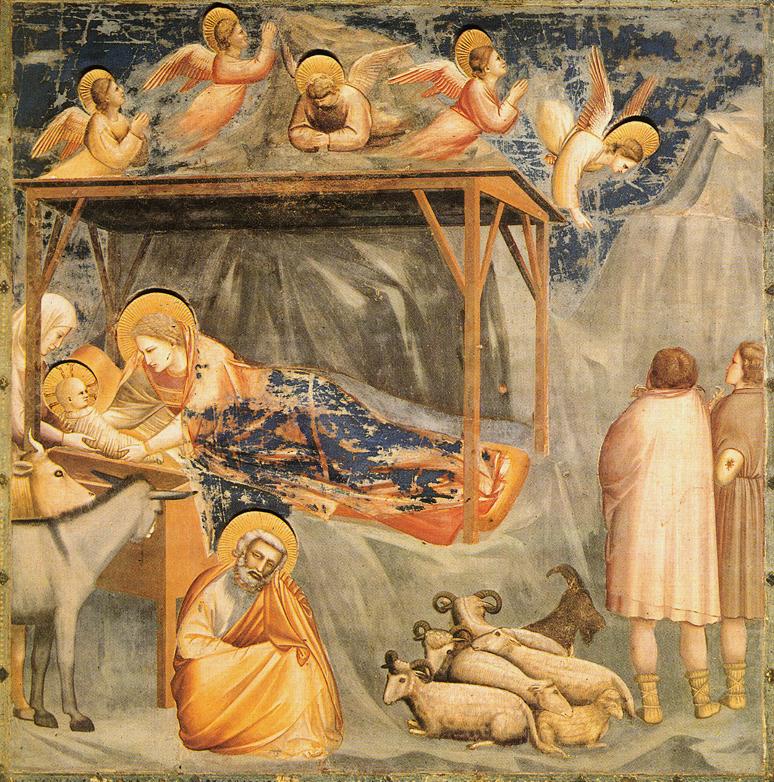
The title Janua Caeli, “Gate of Heaven,” appears in the Christian tradition from the earliest centuries and is associated with the typological interpretation of Ezek 44:1-3 that we mentioned. Ambrose, in the fourth century, was one of the first to articulate this reading explicitly: Mary is the shut gate through which the King entered and which remains shut forever. Cyril of Alexandria, in the fifth century, took up and developed this insight in the context of the defense of the divine motherhood against Nestorius. Byzantine theology, with Andrew of Crete, Joseph the Hegumen, and Germanus of Constantinople, liturgically codified the title in various Marian hymns, particularly the Akathistos. Medieval Western theology, with Ildephonsus of Toledo, Peter Damian, and Bernard of Clairvaux, prolonged this tradition. The Litany of Loreto, in its definitive codification in the sixteenth century, included Janua Caeli among the fundamental Marian invocations. Medieval iconography accompanied this reflection with particular success: Mary is frequently represented beside a gate or a portal, or else she herself is the gate through which the faithful gain access to the Son. In some Gothic representations, Mary appears as the majestic portal of the heavenly cathedral, with Christ enthroned within her. This iconography expresses visually what theology formulated in concept: Mary is the threshold through which pilgrim humanity enters into divine communion.
III. The Annunciation: the instant in which God passed through the gate
The Gospel of Luke that accompanies this meditation is the account of the Annunciation. “The angel Gabriel was sent by God to a city of Galilee called Nazareth, to a virgin betrothed to a man named Joseph… Behold, you will conceive in your womb and bear a son, and you shall give Him the name Jesus” (Lk 1:26-31). This moment is, in the proper theological sense, the instant in which God passed through the gate. The eternal Word, who was in the beginning with God, entered historical time through the free consent of Mary. And it is precisely this consent, this “let it be done to me according to your word” (Lk 1:38), that constituted Mary as Janua Caeli forever. The gate did not open by itself: it was Mary who said yes. And when God passed through the gate in order to descend to the world, He left the gate forever as an open way by which humanity can ascend to heaven. This dialectic between Mary’s yes and the permanent opening of the gate is the key to the Marian theology of Janua Caeli. The dogma of the bodily Assumption of Mary, defined in 1950 by Pius XII, completed this tradition: the Mother who was the gate of the Incarnation is the first to pass wholly through the gate of glorification, anticipating the destiny that awaits all redeemed humanity.
IV. The Mariological category of the gate: eschatological and ecclesial dimension
The Mariological title of Janua Caeli inscribes at the heart of Catholic theology a fundamental eschatological dimension. The Christian life is not a journey without a destination: it is a pilgrimage toward definitive communion with God, a communion that has a face, has a gate, has a threshold. Mary is, in the economy of salvation, this personal threshold. She does not replace Christ (who is the Gate in the absolute sense, according to Jn 10:7-9), but she is the first human gate through which Christ came to us, and for this reason she is also the first human being through whom we, configured to Christ, go to the Father. The Second Vatican Council, in Lumen Gentium, articulated this eschatological dimension of Mary with particular precision: “Assumed into heaven, she did not lay aside this saving office, but by her manifold intercession continues to obtain for us the gifts of eternal salvation… The Mother of Jesus, in the same way as she is already glorified in heaven in body and soul, is the image and beginning of the Church that is to have its fullness in the age to come” (LG 62, 68). Mary is the Gate of Heaven not in the sense of competing with Christ, the Gate of the sheepfold, but in the sense of being the perfect firstfruits of all humanity which, configured to the Son, enters through Him into trinitarian communion. Every Christian who journeys as a pilgrim in this life looks to Mary assumed into glory and recognizes in her the half-open gate that confirms the real possibility of the promised destiny. Catholic theology thus ends, like all true theology, in an eschatological horizon: Janua Caeli is not a decorative title, it is a confession of hope founded on the first human being who has already definitively crossed the threshold, and who awaits on the other side the children who still journey on earth.
Postgraduate Program in Mariology
Would you like to deepen your formation in Mariology? Discover the Postgraduate Program in Mariology of Locus Mariologicus – an academic formation that unites theological rigor, spiritual life, and the living tradition of the Church.
Would you like to study Mariology seriously?
This article is born of the works in the library of Locus Mariologicus. The Postgraduate Program in Mariology takes you to the same source, with academic guidance: Scripture, the Fathers of the Church, and the Magisterium, from the first dogma to contemporary questions.



Responses