“My name is Legion”: the demoniac of Gerasa (Mark 5)
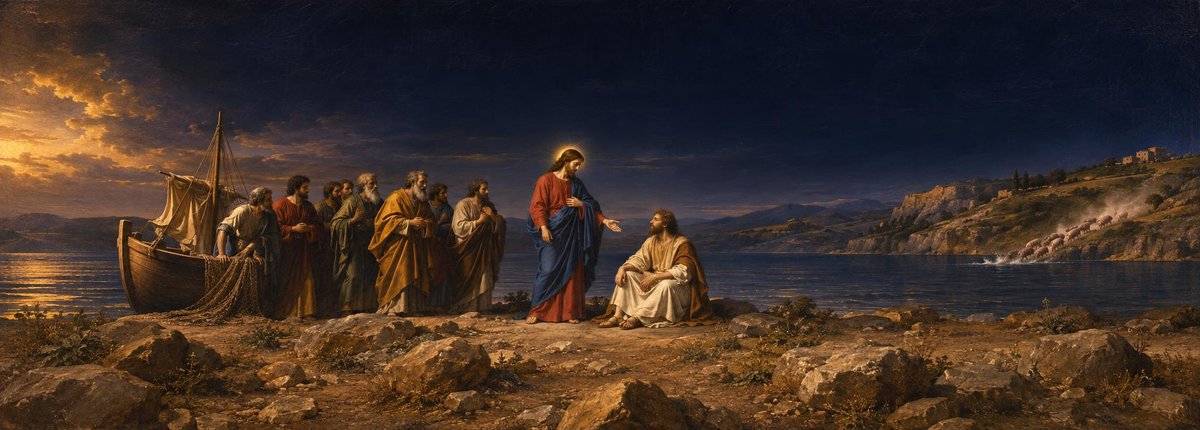
By Prof. Dr. Daniel C. Afonso · Updated
The demoniac of Gerasa is the man who, when questioned by Jesus, replies: “My name is Legion, for we are many” (Mk 5:9). The episode, also narrated in Mt 8:28-34 and Lk 8:26-39, shows Christ’s authority over demons, who recognize him and ask permission to act, and concludes with the freed man “sitting, clothed, and in his right mind,” and sent to announce in the Decapole what the Lord had done for him.
In summary
- The Account: Mark 5:1-20 provides the most detailed narrative. Matthew mentions two possessed, and Luke closely follows Mark.
- The location: The Gospels give different names (Gerasa, Gadara, Gergesa), and commentators debate which is the original.
- “Legion”: the name of a Roman military unit, which Mark uses to say “we are many.”
- The man set free: “Sitting, clothed, and in his right mind,” he asks to follow Jesus and is sent to proclaim.
- The Church’s teaching: Jesus’ exorcisms are signs of the defeat of the kingdom of Satan (Catechism, #550).
What Mark Relates
After crossing the lake, Jesus lands in the “region of the Gerasenes” (Mk 5:1). To Him comes forth, issuing from the tombs, “a man possessed with an unclean spirit.” No one could bind him, neither with chains, nor with fetters, and he would spend nights and days crying out and wounding himself with stones (Mk 5:2-5). Seeing Jesus, he runs, prostrates himself, and cries out: “What have I to do with you, Jesus, Son of the Most High God? I conjure you by God, do not torment me!” (Mk 5:7).
The cry comes because Jesus already commanded the spirit to depart. Then he asks the name, and the answer is the center of the narrative:
«καὶ λέγει αὐτῷ· Λεγιὼν ὄνομά μοι, ὅτι πολλοί ἐσμεν» (Mk 5:9, grego). «Et dicit ei: “Legio nomen mihi est, quia multi sumus”» (Nova Vulgata). Em português: «E ele lhe diz: Legião é o meu nome, porque somos muitos.»
The spirits beg Jesus not to drive them out of the region, but to send them to the pigs. Jesus consents, and the pigs, “about two thousand,” rush into the sea (Mk 5:10-13). The shepherds relate everything in the city. The people come and see the formerly possessed, and the reaction is fear, so they ask Jesus to leave their territory (Mk 5:14-17). The man asks to go with him, but Jesus does not let him, and sends him: “Go to your home, to your people, and tell them what the Lord has done for you and how he had mercy on you” (Mk 5:19). He departs and begins to proclaim in the Decapole, “and all were amazed” (Mk 5:20).

Three Gospels, Three Versions
Mark is the most detailed. For Luke, according to Bovon, Mark is the sole source, and Luz understands that Matthew also summarizes Mark.
Matthew (8:28-34) speaks of “two” possessed men in the “region of the Gadarenes.” He does not include the dialogue about their names, the story of the pigs, or the final mission. Jesus says only one word, “Go” (Mt 8:32). Luke (8:26-39) retains only one man, states that he had not worn clothes or dwelt in a house for a long time, and adds that the spirits begged not to be sent “into the abyss” (Lk 8:31). When the man is found, he is sitting “at the feet of Jesus” (Lk 8:35).
Regarding one or two possessed, St. John Chrysostom observes that there is no contradiction, because Luke chose the more violent for his narrative (Homilies on Matthew, 28). It is an ancient harmonization, not a teaching of faith.
Gerasa, Gadara, or Gergesa?
The name of the place varies. In the Greek I consulted (SBLGNT), Mark and Luke say “Γερασηνῶν” and Matthew “Γαδαρηνῶν”. The New Vulgata follows this in Mark (“Gerasenorum”) and Matthew (“Gadarenorum”), but reads “Gergesenorum” in Luke (8:26 and 8:37).
In his commentary on Mark, Cranfield explains that the manuscripts vary between the three forms in the three Gospels. “Gerasenos” is the best-attested form in Mark and Luke, “gadarenos” in Matthew, and “gergesenos” in Mark is, according to him, a correction linked to Origen. The geographical problem is that Gerasa was located about thirty miles from the lake (approximately 48 km, our conversion), while Gadara was six miles away. Cranfield suggests that Mark wrote “gerasenos” thinking of a location by the lake, perhaps the current Kersa, and that early readers confused it with the famous Gerasa. Bovon, commenting on Luke, also notes Origen’s location in Gergesa, and leans towards “gergesenos,” but states that the identification with Kersa remains uncertain.
There are differing solutions among serious commentators, and none of them alter the doctrine. What the three Gospels have in common is that the event takes place on the opposite shore of the lake, in non-Jewish territory.
“Legion”: a military name
“Legion” is a Latin word that entered Greek and Aramaic (Cranfield). It designated a unit of the Roman army, which, according to Cranfield, had between 4,000 and 6,000 men. Saint Jerome, in his commentary on Mt 26:53, reproduced in the Catena Aurea of Saint Thomas, speaks of six thousand. However, the Gospel does not count the demons. It simply says “we are many,” and the text itself shifts from the singular to the plural, as in verse 9.
Why that name? Cranfield questions whether it expresses the feeling of being possessed by a whole troop, perhaps because the man had seen a legion marching, or if it is a evasive response from the demons. Bovon notes that demons, like angels (Mt 26:53), appear organized as an army, and that Jesus’ question in Luke serves to show the greatest demonic concentration, not to gain power over them. Origen, cited in the Catena Aurea, sees in the legions of angels the celestial militia fighting against the legions of demons.
The Pigs
The pig was an unclean animal according to the Law (Lev 11:7). The large herd indicates, for Bovon and Cranfield, a pagan or semi-pagan environment. Bovon also reminds us, citing F. Annen, that the Romans reinforced the association between pagans and pigs through the standard of the Xth Legion Fretensis, stationed in Syria and Palestine.
The question remains as to why Jesus allowed it. Chrysostom answers that he did not yield to the demons. He wished to show the malice of the adversaries, to teach that “not even against the pigs do they dare, unless he permit it,” and that they would have treated men even worse, were it not for the restraint of Providence (Homilies on Matthew, 28, our translation from English). St. Jerome says it was “to seek the salvation of men by the death of the pigs” (Catena Aurea, our translation from Spanish). Cranfield, agreeing with Calvin, admits that we cannot know for certain, and suggests it was to give man assurance of his liberation. Bovon notes that in Luke, the responsibility for the loss falls on the demons, who made the request. These are explanations from commentators, and none is of faith.
“Sitting, dressed, and in perfect judgment”
The people gather and see the man “καθήμενον ἱματισμένον καὶ σωφρονοῦντα” in the New Vulgata “sitting, clothed, and of sound mind” (Mk 5:15). Before, he was never still, naked and living among the tombs, and now he is quiet, dressed, and lucid. Cranfield sees in the image a portrait of conversion. Bovon reminds us that sitting is the posture of the disciple, and that Luke adds “at Jesus’ feet.” The clothing restores the man’s identity.
Bovon warns that normality does not exhaust salvation. Seeing what happened is not yet faith, and thus the city’s reaction is only fear. According to Chrysostom, when Jesus is sent away, he does not resist but departs, leaving behind as teachers the freed ones and the shepherds.
## Announcing in the Decapole
The man desires to remain with Jesus, and the response is unexpected: “Go home” (Mk 5:19). In other passages of Mark, Jesus commands silence about what was done. Here, He commands that it be told. Cranfield suggests, as a hypothesis, that the pagan context explains this.
There is a notable detail. Jesus says “how much the Lord has done for you,” and the man proclaims “how much Jesus has done for him” (Mk 5:20). Cranfield understands that “Lord” designates God, and Luke explicitly states this with “God” (Lk 8:39). Thus, Jesus’ work is the work of God’s mercy. The Decapole, according to Cranfield, was a league of Greek cities, originally ten, among which Pliny includes Gadara and Gerasa, the names in dispute above.
The Theological Reading
The Authority of Christ. In Matthew, it is with a single word that Jesus asserts his authority, while in Mark and Luke, spirits beg for permission. The Catechism states that “the coming of the Kingdom of God is the defeat of the reign of Satan” and that “Jesus’ exorcisms free men from demonic power” (n. 550). The demon remains a creature: “He is but a creature” and his actions “are permitted by Divine Providence” (n. 395).
The Recognition of Demons. They call Jesus “Son of the Most High God.” According to Saint Jerome, this is not a voluntary confession, but something wrenched from them by necessity. Bovon sees in the scene less a struggle than a negotiation for an painless surrender. Recognition is not belief. On exorcism in the Church, see Exorcism in the Catholic Church.
Liberation and mission. The liberated man does not remain on the sidelines. He becomes a witness, and the first announcement in pagan territory is entrusted to those who have been healed. The Fathers also read figuratively, seeing the pagan peoples as “possessed” (Hilary and Ambrose, in the Golden Chain). It is a spiritual reading, and should not be confused with the literal meaning of the narrative.
A final caution. The Catechism reminds us that solemn exorcism demands prudence and that it is necessary to verify whether it is a presence of the evil one or a disease (n. 1673). Mark 5 is not a diagnostic manual. For a homiletic meditation on the same text, see In regionem Gerasenorum.
## Frequently Asked Questions
Who was the demoniac of Gerasa?
The Gospels do not name him. Mark and Luke speak of a man, Matthew of two, and the freed man became the first to announce in the Decapole what Jesus had done for him (Mk 5:18-20).
What does «Legion» mean in Mark 5?
It is a Latin word that designated a unit of the Roman army, from 4,000 to 6,000 men according to Cranfield. In the text it means «we are many» and does not indicate an exact number of demons.
Why did Jesus send the demons into the pigs?
The Gospels do not explain. Chrysostom says that Jesus did not yield to the demons and that they can do nothing without permission. St. Jerome speaks of the salvation of men. These are explanations of commentators.
Was the scene in Gerasa, Gadara, or Gergesa?
The manuscripts bear the three names. Gerasa is far from the lake and Gadara is closer. Cranfield proposes a location on the lake shore (Kersa) and Bovon prefers «gergesenos». The doctrine does not depend on the solution.
Why did Jesus not let the man follow him?
Jesus sent him to his home and to his people to announce what God had done for him (Mk 5:19). In Luke, Bovon sees in this the task that accompanies the cure, that of giving witness.
## References
- SACRED SCRIPTURE: Mk 5:1-20, Mt 8:28-34, Lk 8:26-39, Lev 11:7, Mt 26:53. Greek text: SBL Greek New Testament (via MorphGNT). Latin: Nova Vulgata, vatican.va. Our translations.
- Catechism of the Catholic Church, nos. 395, 550, and 1673.
- CRANFIELD, C. E. B. The Gospel according to Saint Mark. Cambridge Greek Testament Commentary. Cambridge: Cambridge University Press, 1959 (reimpr. 2005), pp. 175-182.
- BOVON, François. The Gospel According to Luke, Part 1 (Lk 1:1-9:50). Evangelical-Catholic Commentary on the New Testament III/1. Zürich: Benziger, Neukirchen-Vluyn: Neukirchener, 1989, pp. 426-441.
- Light, Ulrich. The Gospel According to Matthew, 2nd Part (Mt 8-17). Evangelical-Catholic Comment on the New Testament I/2. 3rd ed. Düsseldorf: Benziger, Neukirchen-Vluyn: Neukirchener, 1999, pp. 30-34.
- John Chrysostom. Homilies on Matthew, 28. In: Nicene and Post-Nicene Fathers, I series, vol. 10, pp. 340-344 (English version).
- Thomas Aquinas. Golden Chain (Catena Aurea), commentary on Mt 8:28-34 and Mt 26:53 (Jerome, Origen, Hilary, Ambrose, Rabina). Spanish edition, 2016.
Responses