Belzebub: Who is he in the Bible and what does his name mean?
By Prof. Dr. Daniel C. Afonso · Updated
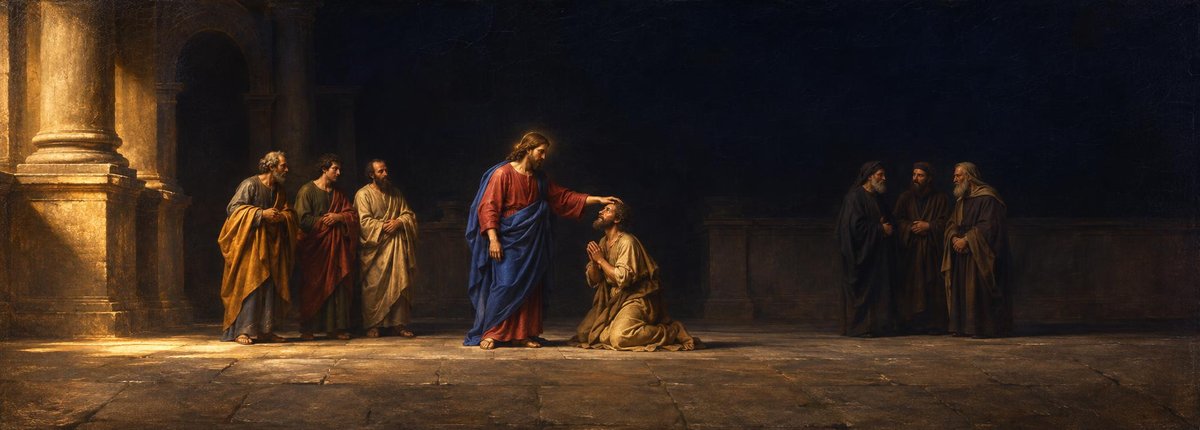
Belzebub is, in the Bible, the name of a foreign god and, subsequently, the name given by Jesus’ adversaries to the prince of demons. In the Old Testament, King Ahaziah consults “Baal-Zebub, the god of Ekron” (2 Kings 1:2). In the Gospels, some accuse Jesus of casting out demons “by Belzebub, the prince of demons” (Matthew 12:24), and he responds by speaking of Satan: “If Satan casts out Satan, he is divided against himself” (Matthew 12:26).
In summary
- Where it appears: in 2 Kings 1 (in the form “Baal-Zebub”) and in Matthew 10:25, Matthew 12:24, 27, Mark 3:22, and Luke 11:15, 18-19 (in the form “Belzebul”).
- Who is he in the Gospels: the “prince of demons” of whom Jesus is accused of receiving power. His response speaks of Satan.
- The Name: The Hebrew in 2 Kings 1 ends in «-bub», while the Greek in the Gospels ends in «-bul». The origin of the evangelical form is debated.
- Jesus’ response: “A kingdom divided against itself cannot stand, and the Jewish exorcists show that this argument is invalid” (Mt 12:25-27).
- Christ’s victory: “By the finger of God” the Kingdom has come, and the strongest has overcome the strongest (Lk 11:20-22).
Belial in the Old Testament: the god of Akhon
The name appears first in 2 Kings 1, and only there in the Old Testament. King Ahaziah falls through the latticework of his upper room in Samaria, and becomes ill. Then he sends messengers with a command: “Go, inquire of Baal-Zebub, the god of Ekron, to know if I shall recover from this disease” (2 Kings 1:2, translated from the Hebrew). The New Vulgata reads: “Go, inquire of Beelzebub, the god of Ekron.”
At the command of the angel of the Lord, the prophet Elijah confronts the messengers and poses a question that forms the heart of the narrative: “Is it because there is no God in Israel that you are consulting Baal-Zebub, the god of Acar?” (2 Kings 1:3). The question is repeated in 1:6 and 1:16, along with the sentence: “You shall not come down from the bed on which you have lain, for you shall surely die.” The king’s sin lies in seeking another god as if Israel did not have its own.
## Belzebub in the Gospels: The Prince of Demons
In the Gospels, the name appears in a scene of exorcism. In Matthew, Jesus heals a man possessed by demons who is blind and mute, and the Pharisees respond: “He does not cast out demons except by Beelzebul, the prince of demons” (Mt 12:24, translated from the Greek). In Mark, it is the scribes who have come down from Jerusalem who say: “He has Beelzebul” and “it is by the prince of demons that he casts out demons” (Mk 3:22). In Luke, the accusation comes from “some of them” (Lk 11:15).
The biblical scholar François Bovon notes that the accusation is one of magic: the success of the exorcism is acknowledged, but Jesus is attributed with the power of Satanic forces rather than divine forces. There is yet a detail that reveals the gravity of the insult. In Matthew 10:25, Jesus himself warns the disciples: “If they call the master of the house Belzebul, how much more his family!”
What does the name mean?
It is necessary to distinguish between what the texts show and what scholars propose. The texts reveal four things. First: in 2 Kings 1:2-3-6-16, the Hebrew writes two words, baal zevuv (בַּעַל זְבוּב). Second: in Isaiah 7:18, the same word zevuv, with the article, is a common noun, and the New Vulgate translates it as «mosca»: sibilabit Dominus muscae, «the Lord will whistle at the mosca». Third: the Gospels, in the Greek text we consult, write Beelzeboul (Βεελζεβούλ), with the ending «-boul», and the New Vulgate follows this form in the Gospels, while in 2 Kings it writes Beelzebub. Fourth: the form of the Gospels appears only in Matthew 10:25, Matthew 12:24-27, Mark 3:22, and Luke 11:15-18-19.
It is from this that comes the popular translation “lord of the flies.” It is based on the Hebrew of 2 Kings, and Bovon describes it as an ironic distortion of the name: the Old Testament would have extended the polemic to the name of the adversary and called the god “god of the flies.” As for the evangelical form, the text does not say if it is the same name altered or another name, and the question is debated.
Bovon’s Hypothesis, and the Textual Evidence: The original name would have been Baalzebul, a deity of the Philistines in Ekron, meaning “lord of the high place.” He supports this through the concept of a “high place,” as seen in 1 Kings 8:13, where the Hebrew reads bet zevul, “house of dwelling.” The author acknowledges the limitations of this reading: the name is not found in Jewish literature outside the Gospels, and the choice of such a rare name remains enigmatic.
Jesus’ Response: A House Divided
Bovon identifies three replies in Jesus’ response. The first is the one about a divided house: “Every kingdom divided against itself is laid waste, and every house divided against itself will not stand. If Satan casts out Satan, he is divided against himself. How then can his kingdom stand?” (Mt 12:25-26). Mark records that Jesus spoke “in parables” and adds that if Satan rises up against himself, “he cannot stand but is destroyed” (Mk 3:23.26).
In addressing Satan, Jesus shows that to accuse him of acting as the chief of demons is to accuse him of acting through Satan. Bovon notes that the phrase “chief of demons” does not necessarily imply this identification, but that the mention of Satan in Luke 11:18 is an argument in his favor. He also acknowledges that the logic of the passage is complex, because in reality the realm of evil is far from being divided. Jesus’ point is otherwise: he does not act under the orders of the chief of demons.
The second reply turns the argument against the one who made it: “And if I cast out demons by Belial, by whom do your children cast them out? Therefore they themselves will be your judges” (Mt 12:27). Bovon understands the “sons” as Jewish exorcists. According to him, the Christians who transmitted this saying recognize the value of these exorcisms and ask that those of Jesus also be recognized. Whoever places Jesus on the side of Satan condemns himself.
“By the finger of God’: the Kingdom has come”
The third reply is decisive: “If it is by the finger of God that I cast out demons, then the Kingdom of God has come upon you” (Lk 11:20). In Matthew, the phrase is “by the Spirit of God” (Mt 12:28), and the Catechism cites this form when teaching that “the coming of the Kingdom of God is the defeat of the kingdom of Satan” (n. 550).
The expression “finger of God” has its roots in the Old Testament. In Ex 8:15, the magi of Egypt, in the midst of a plague, say to Pharaoh: “It is the finger of God.” In Ex 31:18 and Deut 9:10, the tablets of the Law are written “with the finger of God.” Bovon believes that Luke here preserves the expression from the oldest source of Jesus’ sayings, and that the word “finger” emphasizes the instrument and the effectiveness, while “hand” would evoke power. The Greek verb éphthasen means that the Kingdom “has come,” not just that it is approaching. For the same author, Jesus’ exorcisms are signs of the presence of the Kingdom.
The strongest conquered the strong
Jesus concludes the argument with an image: “When a strong man, fully armed, guards his palace, his goods are safe. But when a stronger than he comes upon him and overcomes him, he strips him of his armor in which he trusted and divides his spoils” (Lk 11:21-22). In Mark, the same teaching states that no one can raid the house of the strong “unless first he ties up the strong man” (Mk 3:27). The “strong man” is Christ himself, and each exorcism shows that the power of the prince of demons has already been broken.
The Catechism presents a framework for Christ’s work: “For this reason the Son of God became man: to destroy the works of the devil” (n. 394). The Catechism states when this victory was achieved: “The victory over the ‘prince of this world’ was accomplished once and for all at the moment when Jesus freely gave His life by dying” (n. 2853). Exorcisms, according to n. 550, “anticipate the great victory of Jesus.”
What does this mean for us?
Belzebul is not a rival of God. The Catechism reminds us that Satan’s power “is not infinite”: “He is but a creature, powerful because he is a pure spirit, yet always a creature; he is not able to hinder the building up of the Kingdom of God” (n. 395). For information on the general adversary, see What is Satan in the Bible.
Anyone who wishes to see how the Church deals with the action of the devil and exorcism today can read “Exorcism in the Catholic Church” (https://locusmariologicus.org/exorcismo-na-igreja-catolica/).
## Frequently Asked Questions
Quem é Belzebu na Bíblia?
No Antigo Testamento, «Baal-Zebub, deus de Acaron» é a divindade que o rei Ocozias manda consultar (2Rs 1,2). Nos Evangelhos, Belzebu é o «chefe dos demônios», e Jesus, ao responder à acusação de agir por ele, fala de Satanás (Mt 12,24-26).
Belzebu significa «senhor das moscas»?
Essa tradução se apoia no hebraico de 2Rs 1, em que a segunda palavra, zevuv, é a mesma que em Is 7,18 a Nova Vulgata traduz por «mosca». A forma dos Evangelhos, Beelzeboul, termina de outro modo, e o seu sentido é discutido. Bovon propõe, como hipótese, «senhor da residência elevada».
Belzebu e Satanás são o mesmo?
Nos Evangelhos, Jesus responde à acusação de agir pelo «chefe dos demônios» falando de Satanás (Mt 12,26), e Bovon vê nisso um argumento para identificá-los. O Catecismo fala de Satanás, do Diabo e do Maligno (n. 391 e 2851).
Em que textos da Bíblia aparece Belzebu?
Na forma «Baal-Zebub», só em 2Rs 1,2.3.6.16. Na forma «Belzebu», em Mt 10,25, Mt 12,24.27, Mc 3,22 e Lc 11,15.18-19.
O que significa «pelo dedo de Deus» em Lucas 11,20?
É a expressão com que Jesus diz que os seus exorcismos são obra de Deus e sinal de que o Reino chegou. Em Mateus ela se lê «pelo Espírito de Deus» (Mt 12,28). Em Ex 8,15 os magos do Egito já tinham dito diante de um sinal: «É o dedo de Deus».
## References
- SACRED SCRIPTURE: 2 Kings 1:2-3, 6, 16; Isaiah 7:18; Exodus 8:15; 31:18; Deuteronomy 9:10; 1 Kings 8:13; Matthew 10:25; 12:24-28; Mark 3:22-27; Luke 11:15-22. Translations from Hebrew (Leningrad Codex, Open Scriptures Hebrew Bible) and Greek (SBL Greek New Testament).
- NEW VULGATE. Sacred Books Edition. Vatican City: Vatican Library Press. Text available at vatican.va/archive/bible/nova_vulgata.
- Catechism of the Catholic Church, nos. 391, 394, 395, 550, 2851, and 2853.
- BOVON, François. The Gospel According to Luke (Lk 9:51-14,35). Evangelical-Catholic Commentary on the New Testament III/2. Zürich: Benziger / Neukirchen-Vluyn: Neukirchener, 1996, pp. 163-176. Our translations from German.
Responses