Can demons repent? What the Church teaches
By Prof. Dr. Daniel C. Afonso · Updated
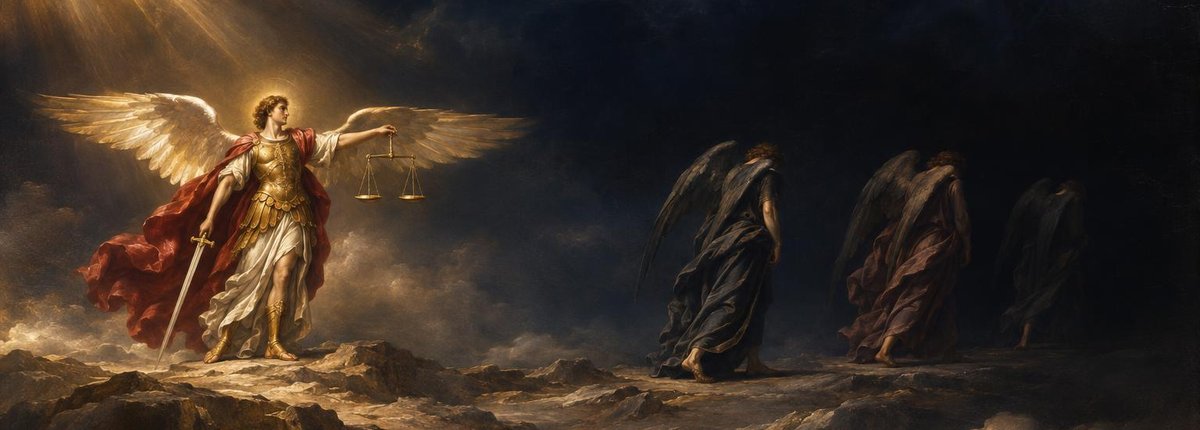
No. The Church teaches that demons cannot repent, and the reason is not in the limits of God’s mercy, but in the choice they themselves made: “It is the irrevocable character of their option, and not a deficiency of divine mercy, that prevents the sin of the angels from being forgiven” (Catechism of the Catholic Church, no. 393).
In summary
- Short answer: No. The refusal of the rebel angels is “radical and irrevocable” (Catechism, nos. 392-393).
- The classic comparison: The fall is to the angel what death is to man (St. John Damascene).
- Reason: The angel chooses at once and with full knowledge, and is fixed in his choice (St. Thomas Aquinas).
- What the Church rejected: the idea that the punishment of demons will ever end (anathemas against the theses of Origen, 543).
- And what about us? While we live, the door of repentance is open.
# What the Catechism Says
The Catechism addresses the issue in the chapter on the fall. It first states that the devil was created good: “The Devil and other demons were created good by God in their nature, but they became evil by their own initiative” (n. 391, citing the Fourth Council of Lateran). It then describes their sin as a choice: the fall “consists in the free choice of these created spirits, who have radically and irrevocably rejected God and his Kingdom” (n. 392).
The decisive word is irrevocably. In the following passage, the Catechism draws the consequence and explains it with a phrase from Saint John Damascene:
“It is the irrevocable nature of their choice, and not a defect in the infinite mercy of God, that prevents the sin of the angels from being forgiven. ‘There is no repentance for them after the fall, as there is not for men after death.’ (Catechism, n. 393)”
To understand what this means, it is useful to consider who the fallen angels are and how they decided. We have already treated their origin in Fallen Angels: Who Are They, What the Bible Says, and What the Church Teaches and their freedom in Do Angels Have Free Will?.
“What death is for men, fall is for angels.”
The phrase that the Catechism cites comes from the *Exposition of the Orthodox Faith* by Saint John Damascene, monk and Doctor of the Church of the 8th century. In Book II, after speaking of the devil and his angels, he writes:
“It is necessary to know that what death is for men, that is the fall for angels. For after the fall there is no repentance for them, as there is none for men after death.” (John Damascene, *Exposition of the Orthodox Faith* II, 4)
The comparison is very clear. Our life on earth is the time of decision: we can fall and rise again, sin and convert. Death closes this time, and what we have chosen becomes fixed. For the angel, this time extends not over years. His trial was one, and the choice he made in it has for him the definitive weight that death has for us.
Why the Choice of the Angel is Definitive
Saint Thomas Aquinas devotes an entire article in the *Summa Theologica* (I, q. 64, a. 2) to this question. He begins by rejecting a hasty explanation: the cause is not that the sin of the angels was too great. “The cause of this obstinacy is not to be taken from the gravity of the fault, but from the condition of nature.” He also reminds us that, even for humans, all grave sins can be forgiven before death, but none after.
The difference lies in the mode of knowledge. Man knows little by little, reasoning, moving from one thing to another, and thus his will can change direction. The angel is pure spirit: he sees at a glance and entirely what he chooses, without anything that later might change the picture. Hence the formula that Thomas collects from the tradition of the schools:
“The human’s free will is pliable for the opposite before and after the choice. But the angel’s free will is pliable for both opposites before the choice, and not after” (St. Thomas Aquinas, *Summa Theologica* I, q. 64, a. 2).
The same law holds true for the faithful angels. Thomas concludes: “The good angels, always adhering to justice, are confirmed in it, and the evil ones, having sinned, are obstinately entrenched in sin.” The steadfastness of the holy angels in good and the obstinacy of the demons in evil are the two faces of the same nature.
And the mercy of God?
The most natural objection is this: if God’s mercy is infinite and the devil’s malice is finite, why doesn’t God save him? St Thomas himself raises and answers it:
“Because God’s mercy is not intended for the salvation of all, but for the salvation of those who are willing to be saved” (Summa Theologica, I, 19, 3).
“God’s mercy liberates from sin those who repent. But those who are not capable of repentance, firmly attached to evil, are not freed by divine mercy.” (Summa Theologica I, q. 64, a. 2, ad 2)
God does not refuse forgiveness to demons. It is they who do not ask for it nor desire it, because their will is bound to refusal. The Catechism describes hell in the same way for men who die in grave sin without repentance: it is “a state of definitive self-exclusion from communion with God and the blessed” (no. 1033). And, among the paragraphs related to this number, it specifically refers to no. 393, that of the angels.
Do demons believe in God? Is this not a beginning of conversion?
Scripture shows demons recognizing God and Christ. In the synagogue of Capernaum, the unclean spirit cries out to Jesus: “Knowest thou who thou art? The Holy One of God” (Mk 1:24). And Saint James writes: “Thou believest that there is one God? Thou doest well. Even the demons believe, and tremble” (Jas 2:19).
This is not the faith that saves. St. Thomas explains that when the devil does something good, he does not do it well: he tells the truth to deceive, and believes and confesses “not willingly, but forced by the evidence of the things” (I, q. 64, a. 2, ad 5). Knowing that God exists is not to love Him. The saving faith is the one “that acts by charity” (Gal 5:6), and that is what is lacking in those who have permanently refused God.
## Origen’s Thesis and the Church’s Response
In the early centuries, there were those who thought otherwise. Origen, a great theologian of Alexandria in the third century, maintained, according to Saint Thomas’s summary, that every created will can always turn to good or evil. From this idea, his followers developed the hope of a final restoration of all things, the apocatastasis, which would include even demons themselves.
The Church rejected this thesis. In 543, Emperor Justinian sent to Patriarch Menas of Constantinople an edict with nine anathemas against the doctrines of Origen, read publicly at a synod in Constantinople. The ninth says:
“If anyone says or thinks that the punishment of demons and wicked men is temporary and will end after a certain time, that is, that there will be a restoration of demons or wicked men, let him be anathema.” (Denzinger-Hünermann, n. 411)
St. Thomas adds two reasons. The first is that this thesis would take away from the saints the firmness of eternal happiness, because if everything could always change, the blessed could also fall. The second is Christ’s word, which speaks of “eternal fire, prepared for the devil and his angels” (Mt 25:41).
What does this mean for us?
The doctrine about demons is not a curiosity. It tells us two things about our life.
The first is the seriousness of freedom. Our choices shape what we are, and death fixes them. Therefore the Church never tires of calling to conversion while there is time, and St. Peter reminds us that God is patient, “not wishing for anyone to perish, but for all to come to repentance” (2 Peter 3:9).
The second is trust. The devil is fixed on evil, but he is not equal to God. “He is but a creature,” says the Catechism, and “he is not able to hinder the building of the Kingdom of God” (n. 395). Whoever repents always finds mercy open to him that he refused. For what the Bible says about the adversary, see also What is Satan in the Bible.
## Frequently Asked Questions
Os demônios podem se arrepender?
Não. O Catecismo ensina que a escolha dos anjos caídos foi radical e irrevogável, e que é esse caráter irrevogável, e não um limite da misericórdia divina, que faz com que o seu pecado não possa ser perdoado (n. 392-393).
Por que Deus não perdoa os demônios?
Porque eles não se arrependem nem querem arrepender-se. São Tomás de Aquino explica que a misericórdia de Deus liberta os que se arrependem, e que os demônios, aderindo imovelmente ao mal, não são capazes de arrependimento (Suma Teológica I, q. 64, a. 2, ad 2).
O que significa «a queda é para o anjo o que a morte é para o homem»?
É uma frase de São João Damasceno citada pelo Catecismo (n. 393). Assim como depois da morte já não há conversão para o homem, depois da queda já não há arrependimento para o anjo. A escolha do anjo tem para ele o peso definitivo que a morte tem para nós.
Lúcifer pode ser salvo no fim dos tempos?
Não. A ideia de uma restauração final que incluiria os demônios, ligada a Orígenes, foi condenada nos anátemas de 543 (Denzinger-Hünermann, n. 411). Cristo fala de «fogo eterno, preparado para o diabo e os seus anjos» (Mt 25,41).
Os demônios acreditam em Deus?
Sim, sabem que Deus existe, e a Escritura diz que «também os demônios creem, e estremecem» (Tg 2,19). Mas essa fé não salva, porque não vem do amor. São Tomás diz que eles creem forçados pela evidência e não por vontade.
## References
- HOLY BIBLE: Mk 1:24; Mt 25:41; Gal 5:6; Jas 2:19; 2 Pet 3:9. Translations from the Greek text.
- Catechism of the Catholic Church, nos. 391-395 and 1033.
- The Fourth Council of Lateran (1215), Chapter 1 (DH 800), cited in the Catechism, n. 391.
- Justinian. Edict against Patriarch Menas concerning Origen (543), anathema 9. In: Denzinger, Heinrich; Hünermann, Peter. Enchiridion Symbolorum, n. 411.
- John Damascene. *Exposition of the Orthodox Faith* II, 4. In: MIGNE, J.-P. *Patrology Graeca*, vol. 94, col. 877-878.
- Thomas Aquinas. *Summa Theologiae* I, q. 64, a. 2 (body and answers 2 and 5).
Responses