Leonardo da Vinci, Painter of Symbolic Mariology
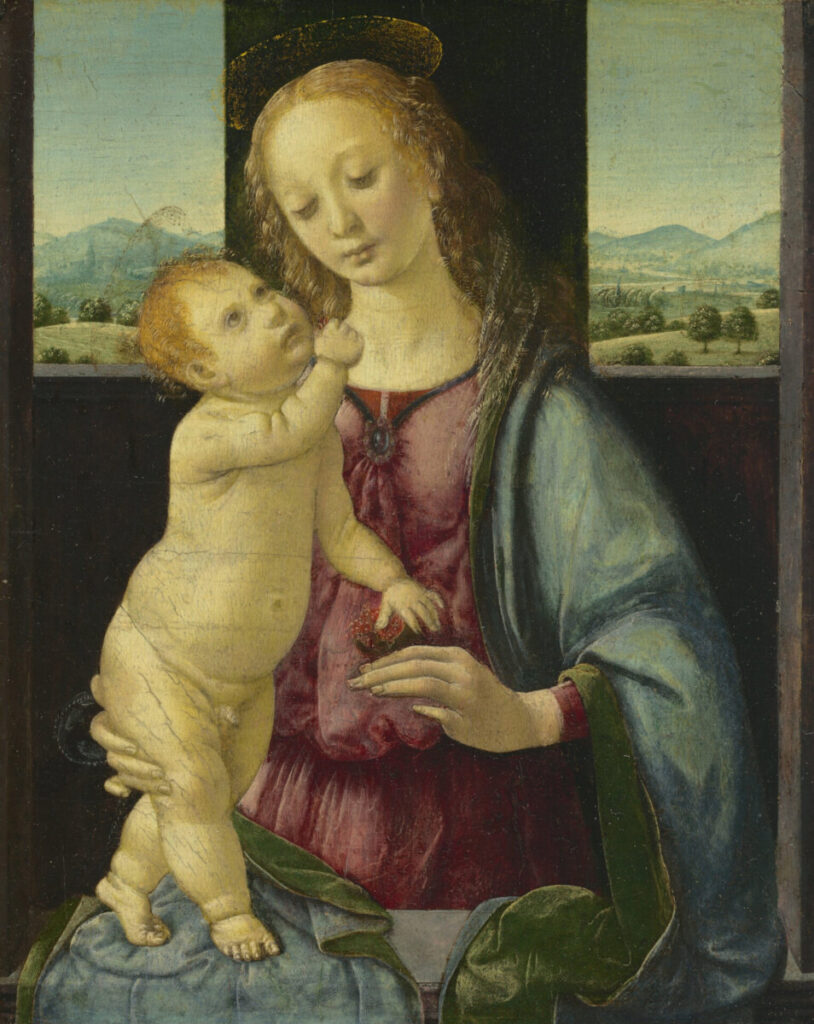
In the work “Madonna of the Pomegranate, or Dreyfus Madonna,” Leonardo seeks a new concept of lighting, the fruit of careful study.

Also attributed by critics to Lorenzo di Credi, it reinforces the idea that it was common practice in a workshop to use the same studies to make paintings, which became testing grounds for verifying the pupil’s abilities.
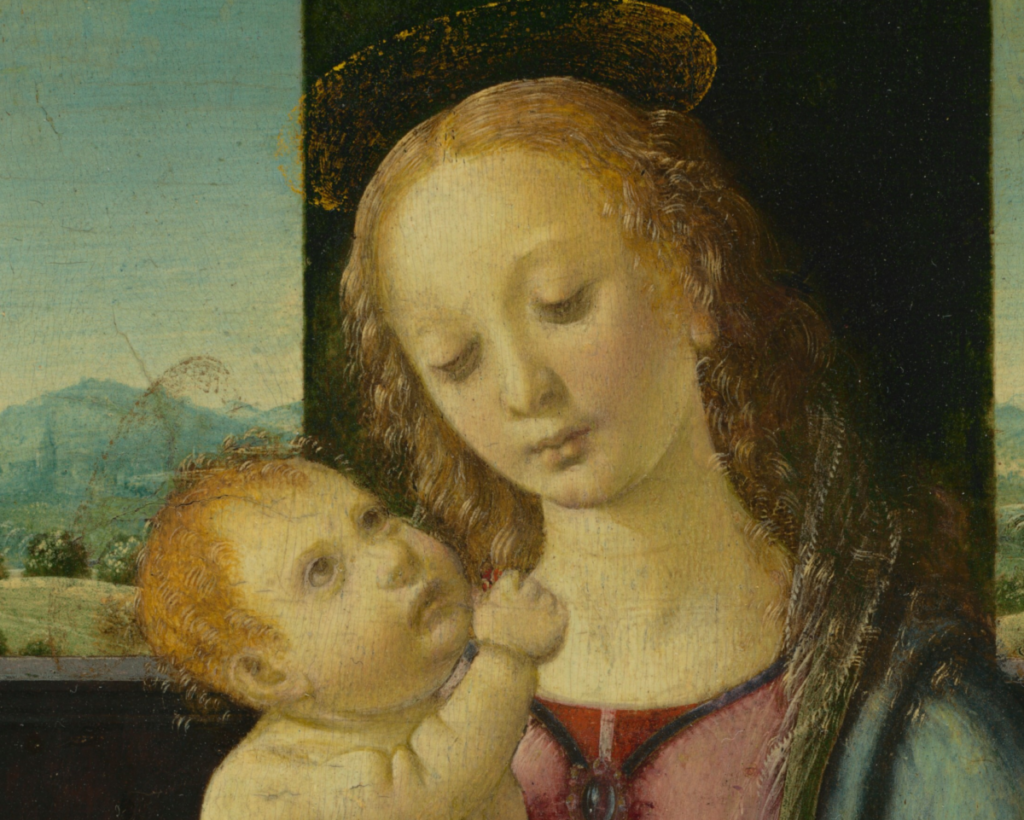
The two figures, although they show great tenderness and loving intentions, do not yet seem well related to each other.
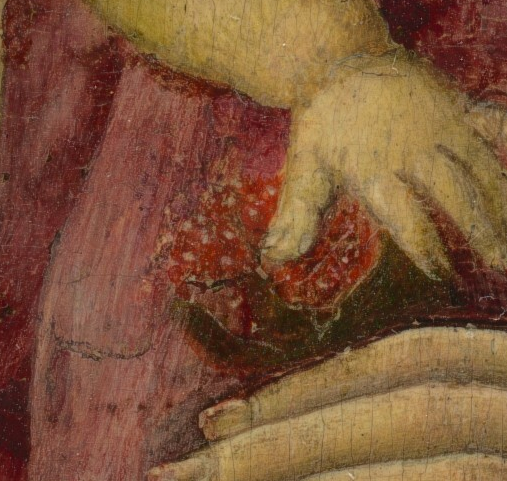
The Virgin seems to be looking at the pomegranate, and the Child hands His Mother a piece of the fruit He has just picked. The chromatic accord is harmonious: a variant of red that goes well with a soft blue.
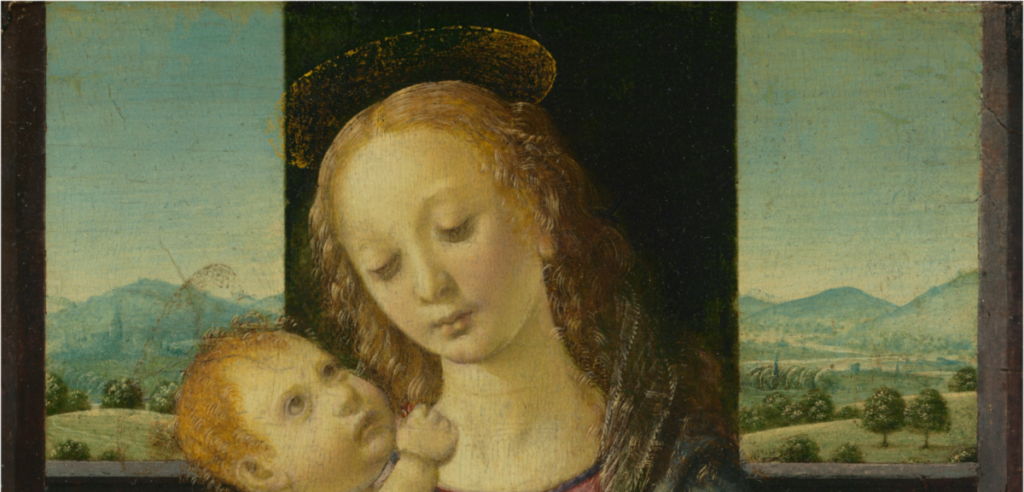
The Virgin’s face emerges from a dark background, probably a wall, between two rectangular windows that open up a typically Leonardesque landscape to the eye.
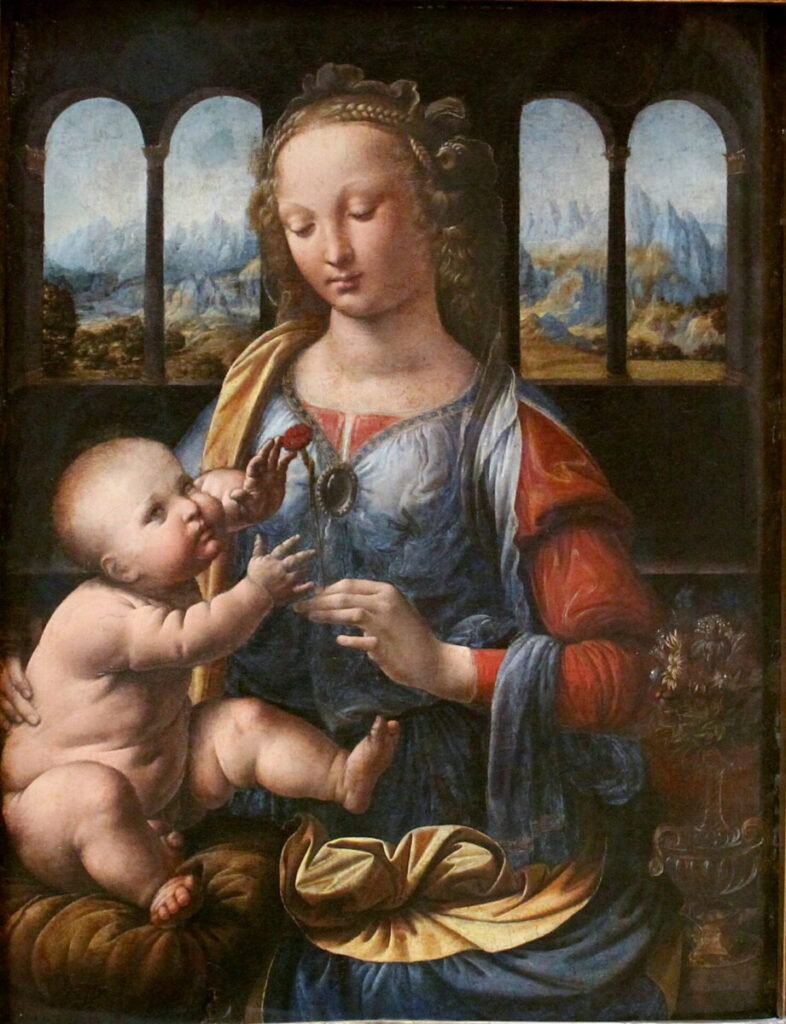
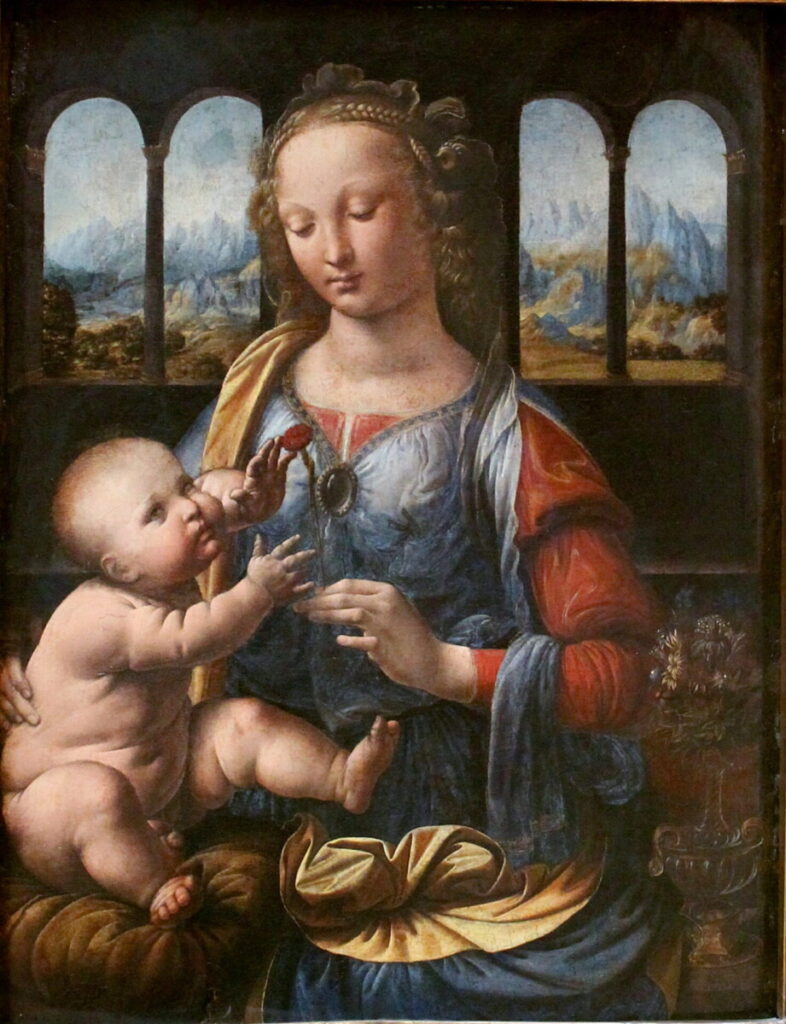
In the work “Madonna of the Carnation,” painted in the years when the artist was actively collaborating with Verrocchio, light enters through the two latticed windows in the background, enveloping the Virgin and Child in a warm chromatic embrace.
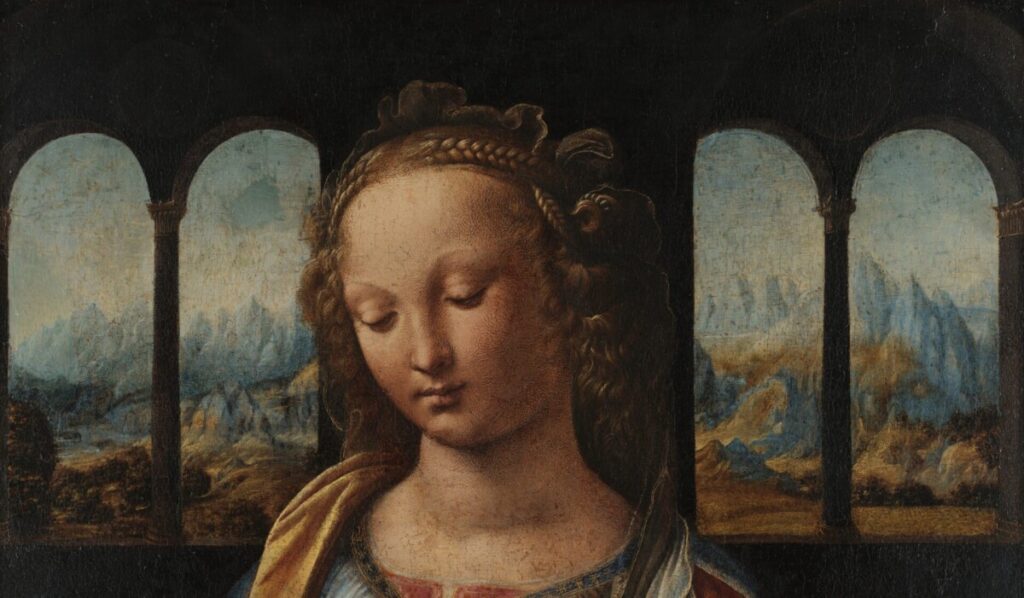
The architectural space is well orchestrated, and the elegant latticed windows reveal a landscape whose mountains are arranged on three levels of depth, receding into the distance thanks to the skillful use of color and of “aerial perspective.”
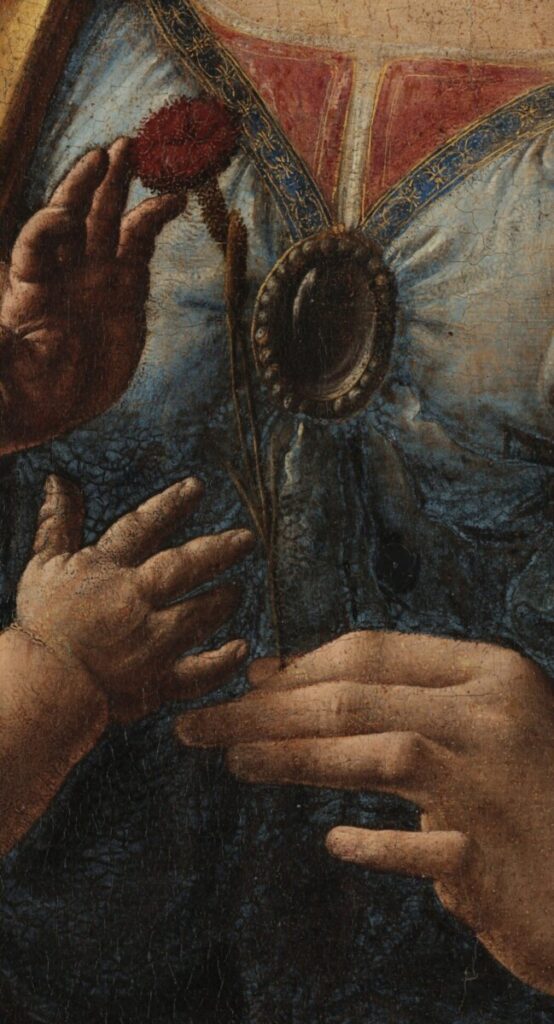
The Mother offers a carnation to the Child Jesus. This work was painted for the Florentine pope Clement VII, nephew of Lorenzo the Magnificent.
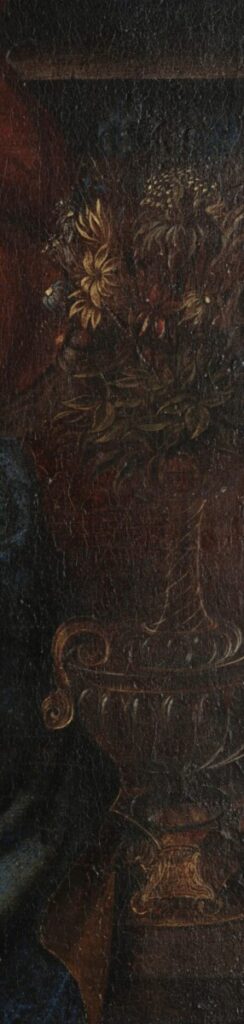
Leonardo created a carafe full of water with a few flowers in it. Besides the marvel of its vividness, he had imitated the dewdrops of water upon them, so that it seemed more vivid than vividness itself.

The two figures of the Mother and the Son in the Madonna Benois, built on oblique and opposing spatial lines, are skillfully linked to each other by that little flower, which serves as a gestural link.

The liveliness of the Child, who raises His leg and conveys a sense of vigor, the exquisite rendering of the hands of both, and the Virgin’s contented smile are elements of truth that make the scene intimate and familial. The use of color, played out in modulated tones, and the warm light create a subtle, soft outline around the figures, which are made alive and mobile in the atmospheric space that contains them.

It is the Child’s face that bears the absorbed expression of silent wonder. His attentive eyes carefully observe not so much the flower His Mother is handing Him (the cruciferous flower, symbol of the Passion) as the shining berries on the same stem, which He is already holding between His chubby fingers and which are reflected in the Mother’s brooch-shaped oval, with its heraldic suggestion of the Medici coat of arms.
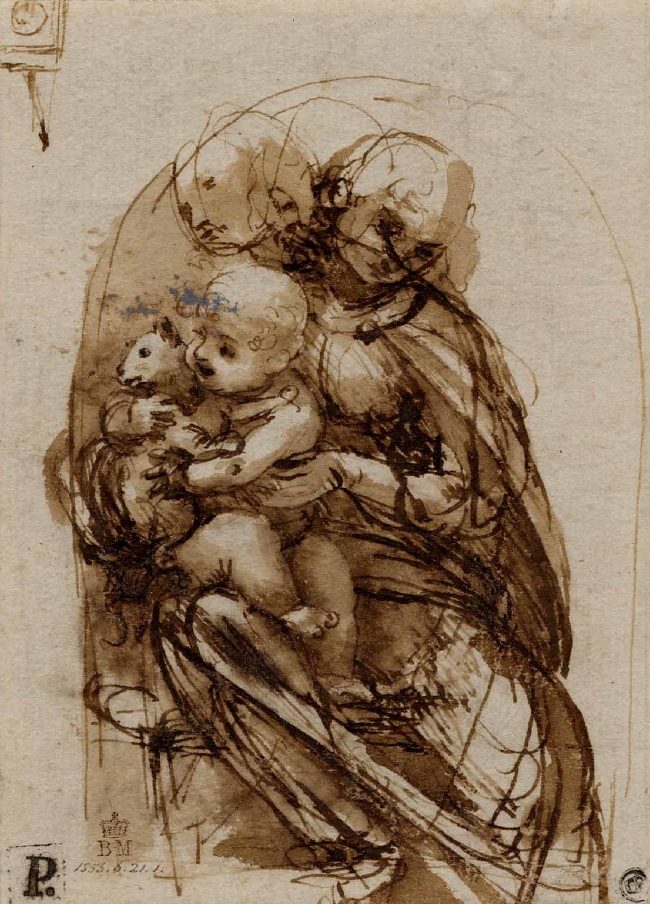
It is likely that Leonardo painted the work “Madonna of the Cat” at the same time, so close is the compositional correlation of its drawings with the Madonna of the Carnation. Both were conceived within a vaulted space with a small arched window suspended in the background. Dominated by a melodic sense of line and executed at a brisk pace, these studies find their happiest expression in the delightful drawing of a young girl standing, seen in profile, walking with a child in her arms.
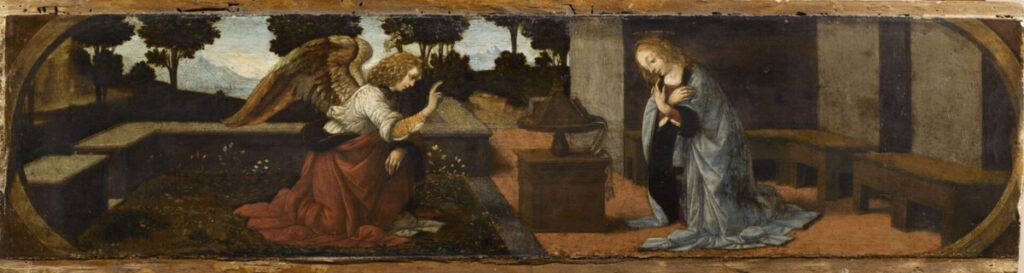
A small Annunciation, now in the Louvre, has often been attributed to Lorenzo di Credi, a gentle disciple of Verrocchio, enclosed in a religious silence that is always delicate in the monotonous purity of his paintings, far from the inquisitive restlessness of Leonardo’s spirit.

But the artist’s hand can be seen in the hazy backgrounds of the landscape and in the minute description of the little flowers, whose stamens and pistils he investigates.
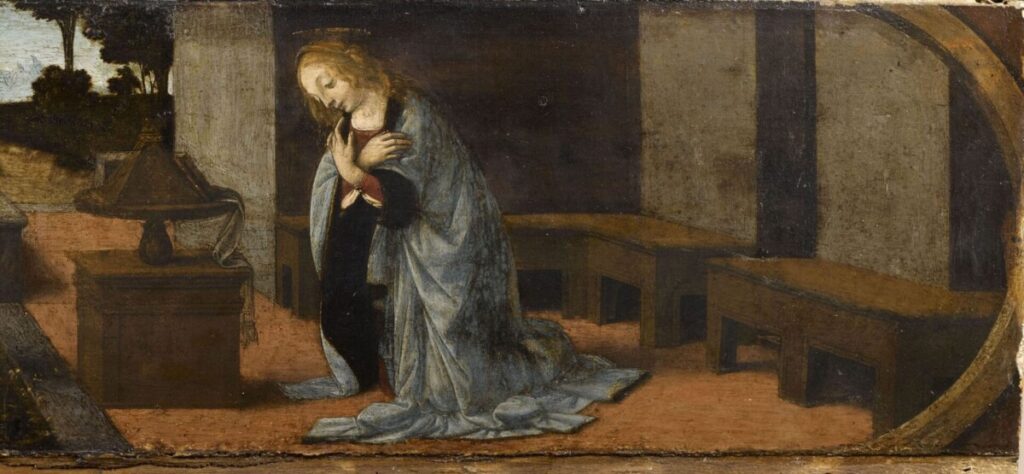
The veiled village corresponds to the prayerful gesture of Mary, bowed in prayer, which is a commentary on and an echo of the scene in the changeability of the shadows, in the mists of dawn that steal the contours from our sight.
Postgraduate Program in Mariology
Would you like to deepen your formation in Mariology? Discover the Postgraduate Program in Mariology of Locus Mariologicus, an academic formation that unites theological rigor, spiritual life, and the living tradition of the Church.
Would you like to study Mariology seriously?
This article grows out of the works in the Locus Mariologicus library. The Postgraduate Program in Mariology takes you to the same source, with academic guidance: Scripture, the Fathers of the Church, and the Magisterium, from the first dogma to contemporary questions.





Responses