Leonardo Da Vinci, Painter of Symbolic Mariology
By Prof. Dr. Daniel C. Afonso · Updated
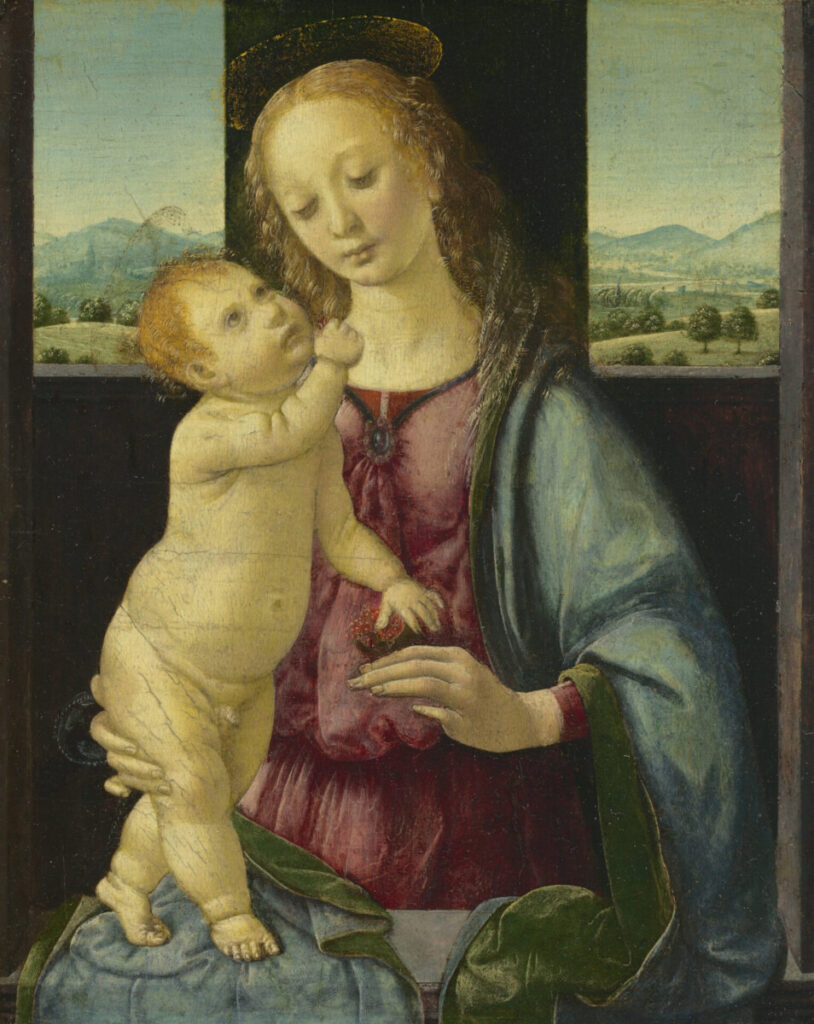
In the work “Madonna of the Pomegranate, or Dreyfus Madonna,” Leonardo seeks a new concept of lighting, the fruit of careful study.

Also attributed by critics to Lorenzo di Credi, it reinforces the idea that it was common practice in a workshop to use the same studies to make paintings, which became test benches to verify the pupil’s abilities.
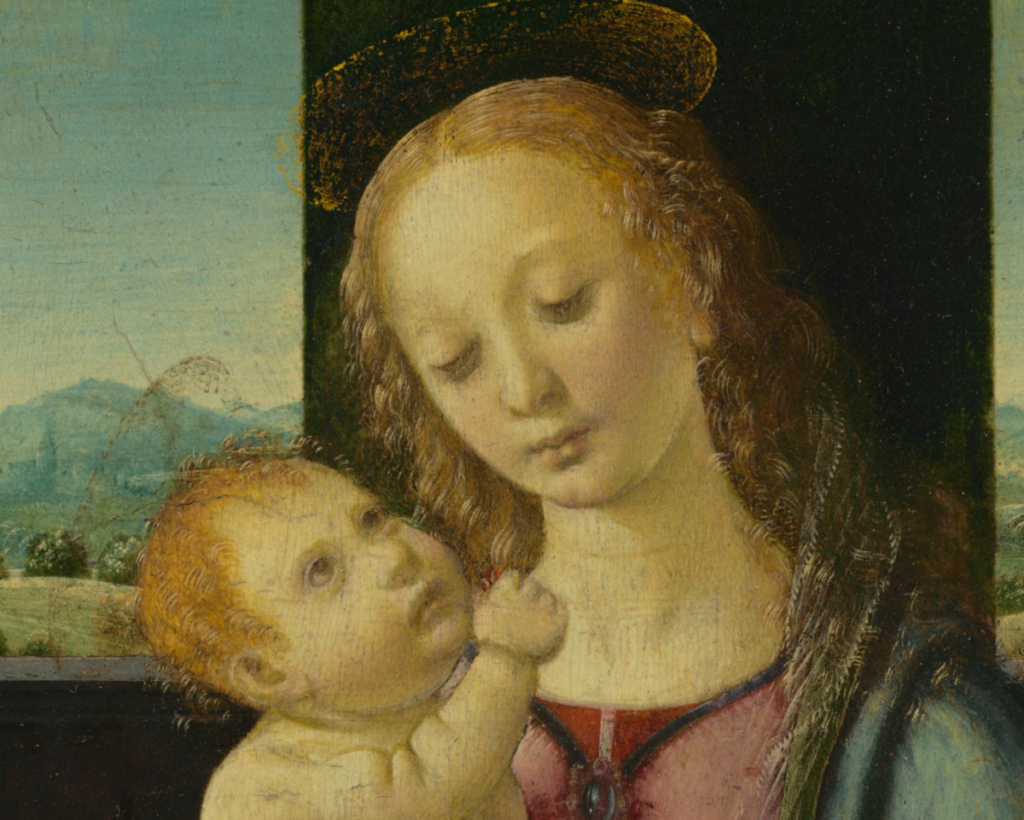
The two figures, although they show great sweetness and loving intentions, do not yet seem well related to each other.
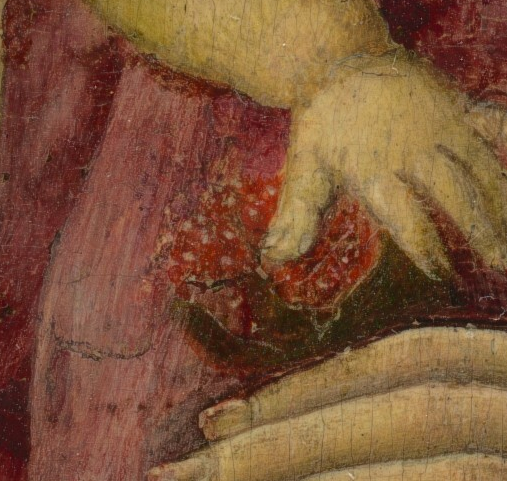
The Virgin seems to look at the pomegranate, and the Child hands the Mother a part of the fruit He has just picked. The chromatic accord is harmonious: a variant of red that goes well with a soft blue.
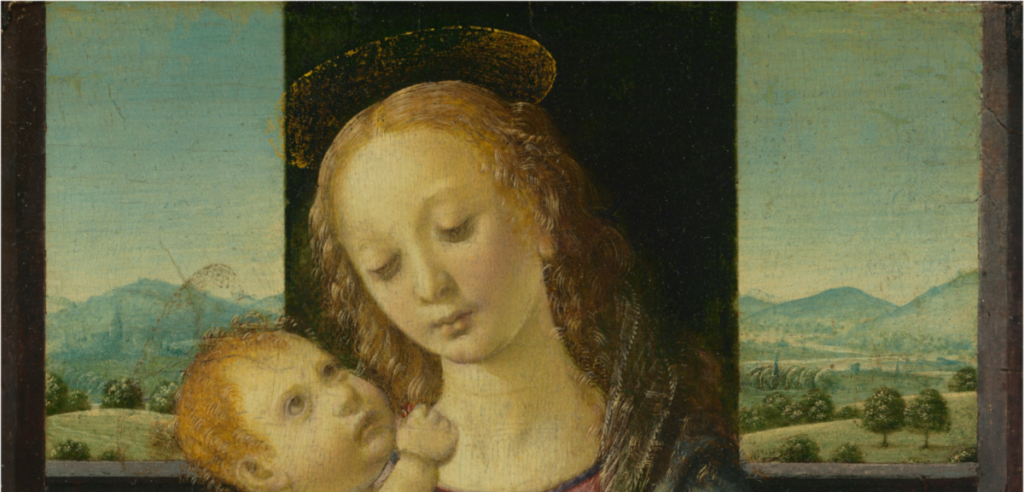
The Virgin’s face emerges from a dark background, probably a wall, between two rectangular windows that open onto a typically Leonardesque landscape.

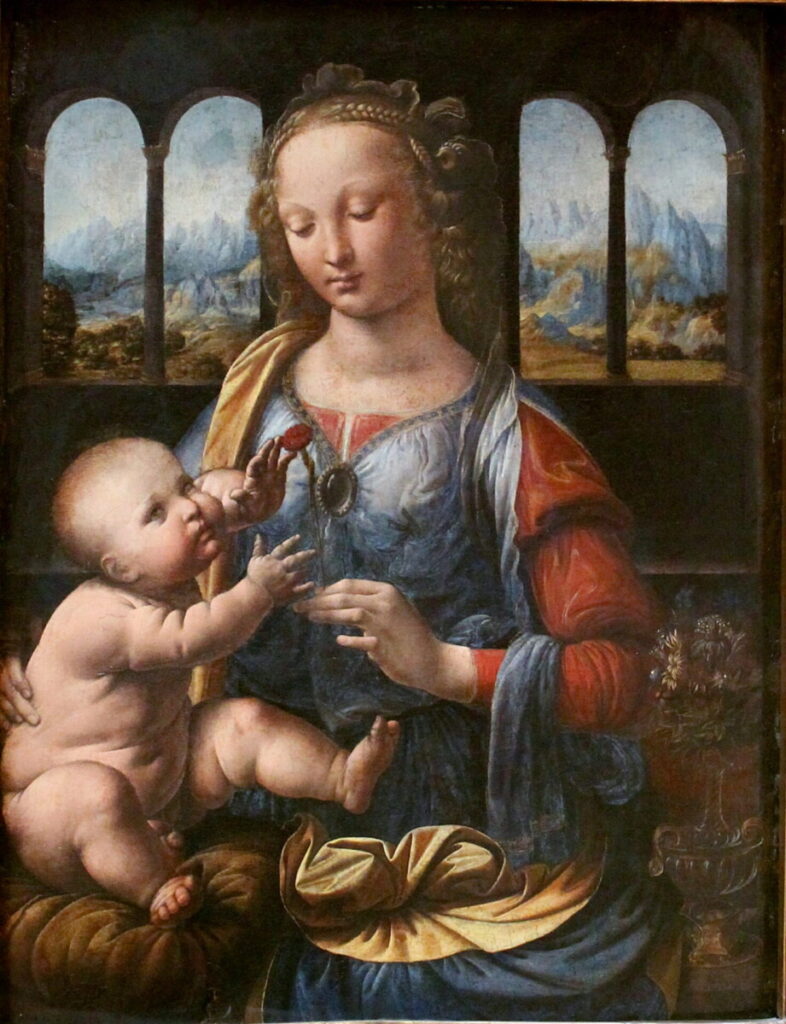
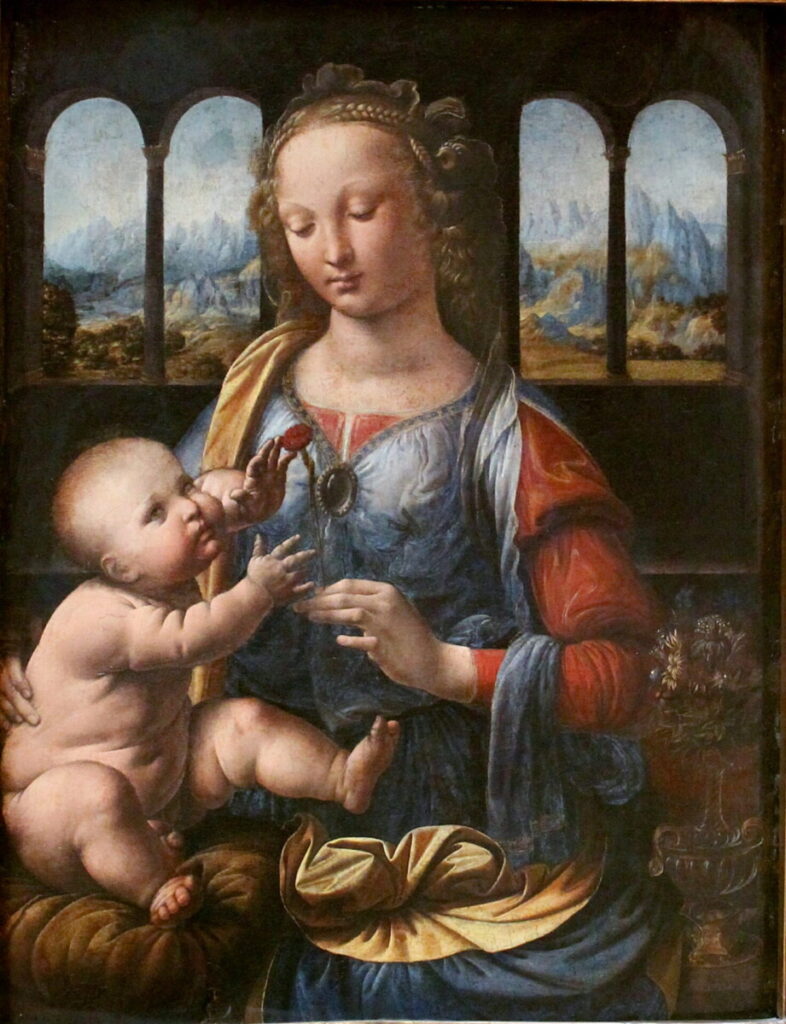
In the work “Madonna of the Carnation,” painted in the years when the artist collaborated actively with Verrocchio, a light enters through the two mullioned windows in the background, enveloping the Virgin and the Child in a warm chromatic embrace.
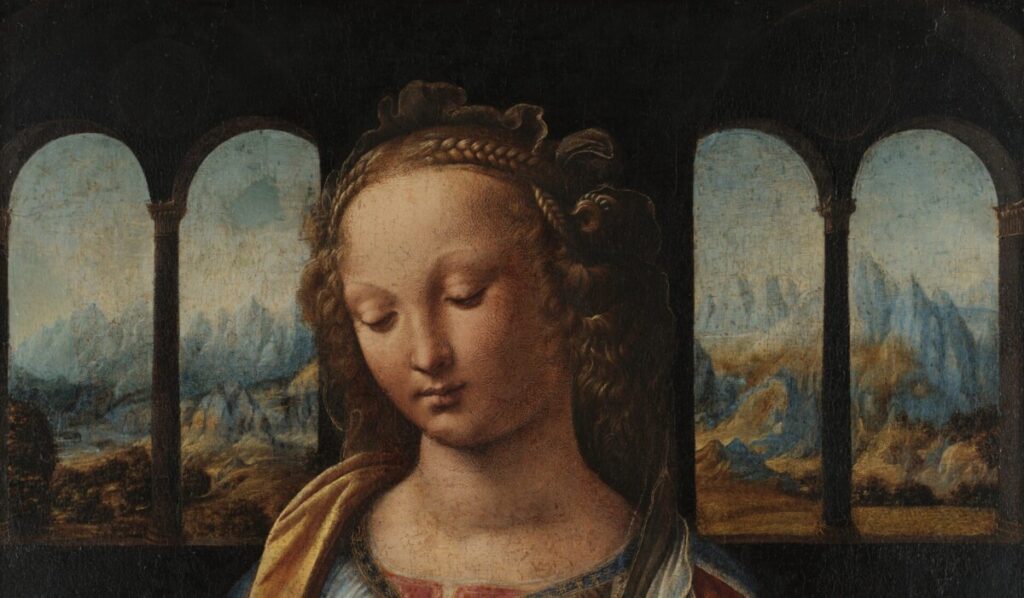
The architectural space is well orchestrated, and the elegant mullioned windows show a landscape whose mountains are arranged on three levels of depth, receding into the distance thanks to the skillful use of color and of “aerial perspective.”
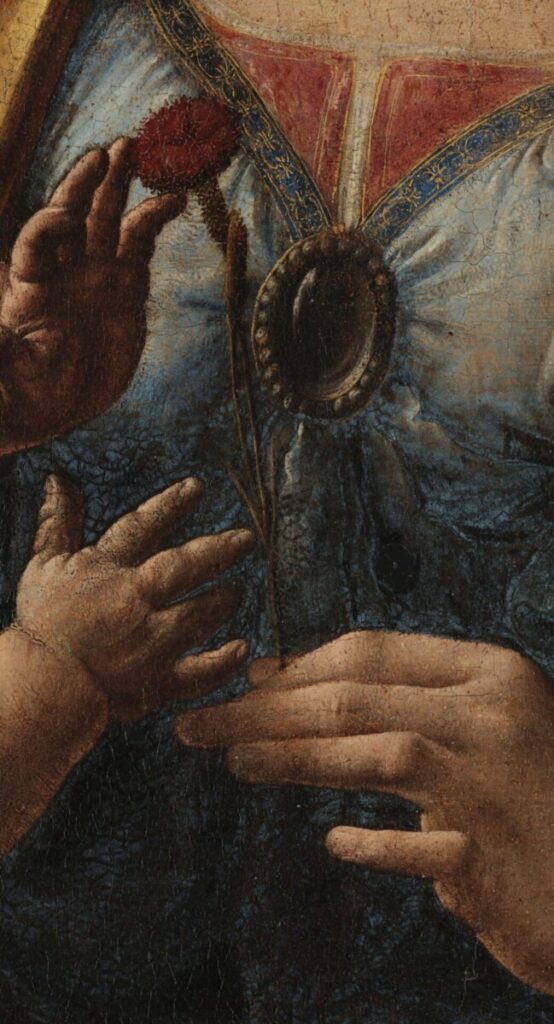
The Mother offers a carnation to the Child Jesus. This work was painted for the Florentine pope Clement VII, nephew of Lorenzo the Magnificent.
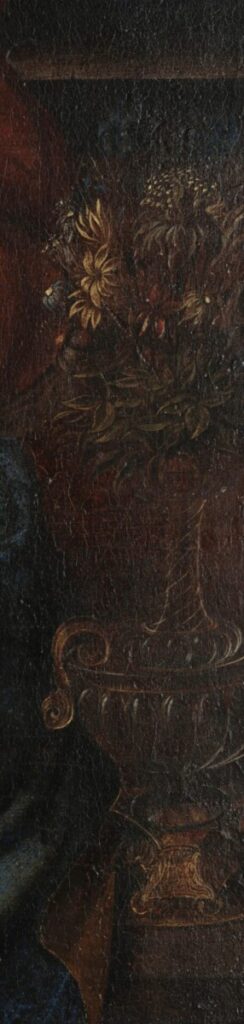
Leonardo created a jug full of water with some flowers in it. Besides the wonder of its liveliness, he had imitated the dew of the water on top, so that it seemed more alive than life itself.

The two figures of the Mother and the Son in the Benois Madonna, built on oblique and opposing spatial lines, are skillfully connected to each other by that small flower which serves as a gestural link.

The liveliness of the Child raising His leg, giving a sense of animation, the exquisite depiction of the hands of both, the contented smile of the Virgin, are elements of truth that make the scene intimate and familiar. The use of color, played out in modulated tones, and the warm light create a subtle and soft outline for the figures, which are made lively and mobile in the atmospheric space that contains them.

It is the Child’s face that bears the absorbed expression of silent wonder. His attentive eyes carefully observe not so much the flower that the Mother hands Him (the cruciferous flower, symbol of the Passion), but rather, on the same stem, the shiny berries that He already holds between His chubby fingers and that are reflected in the Mother’s oval, brooch-shaped clasp, with the heraldic suggestion of the coat of arms of the Medici.
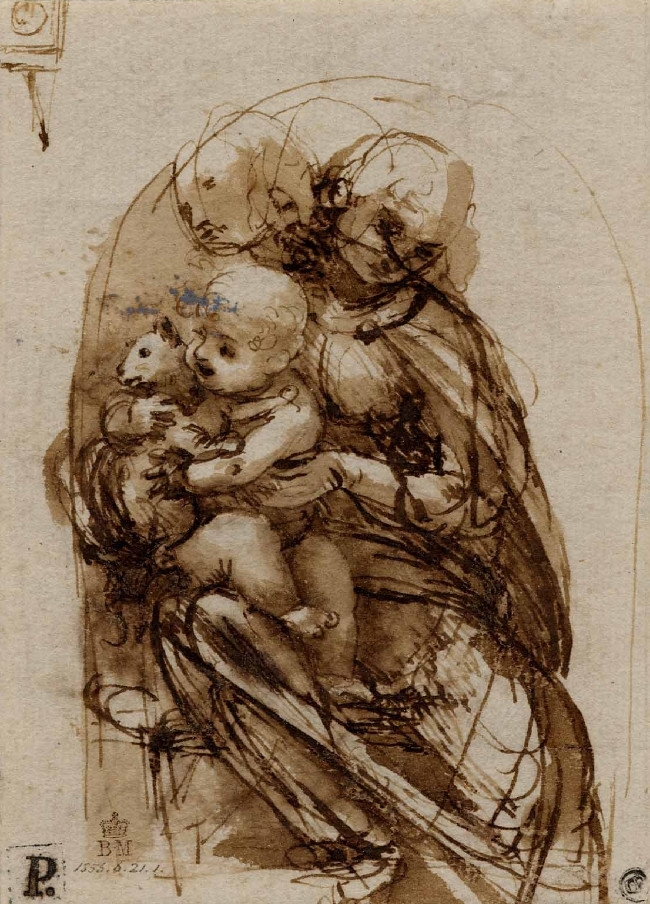
It is likely that Leonardo painted the work “Madonna of the Cat” at the same time, so close is the compositional correlation of his drawings with the Madonna of the Carnation. Both were conceived within a vaulted space with a small arched window high up in the background. Dominated by a melodic sense of line and executed at a quick pace, these studies find their happiest expression in the delightful drawing of a girl standing, seen in profile, walking with a child in her arms.
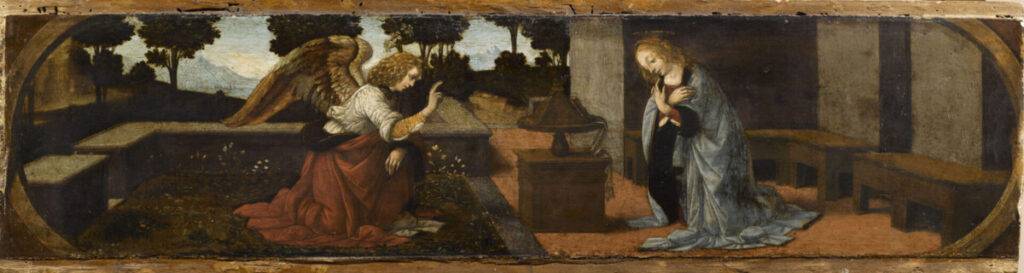
A small Annunciation, now in the Louvre, has often been attributed to Lorenzo di Credi, a gentle disciple of Verrocchio, enclosed in an always delicate religious silence in the monotonous purity of his paintings, far from the inquisitive restlessness of Leonardo’s spirit.

But the artist’s hand can be seen in the misty backgrounds of the landscape and in the meticulous depiction of the small flowers, whose stamens and pistils he investigates.
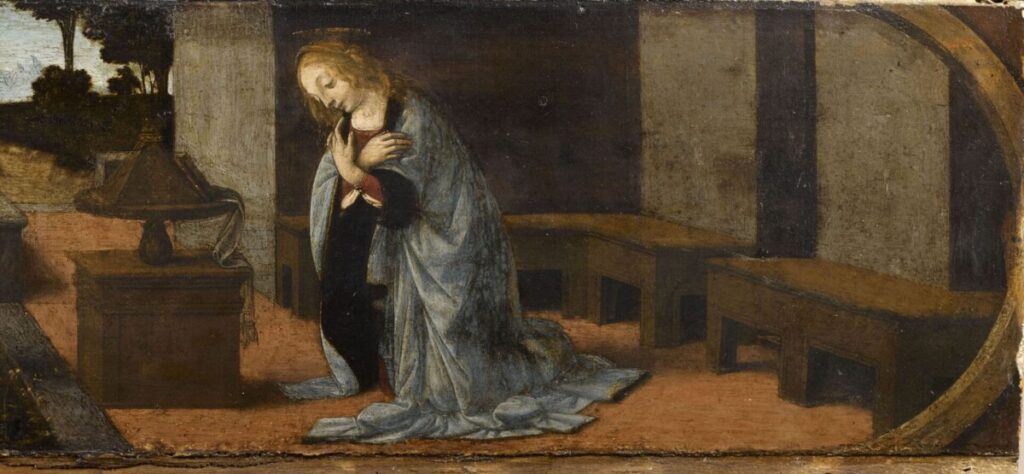
The veiled village corresponds to the praying gesture of Mary bowed in prayer, which is a commentary on and an echo of the scene in the changeableness of the shadows, in the mists of dawn that take the outlines away from us.
Postgraduate Program in Mariology
Would you like to deepen your formation in Mariology? Discover the Postgraduate Program in Mariology of Locus Mariologicus, an academic program that unites theological rigor, spiritual life, and the living tradition of the Church.
Would you like to study Mariology seriously?
This article is born from the works in the library of Locus Mariologicus. The Postgraduate Program in Mariology takes you to the same source, with academic guidance: Scripture, the Fathers of the Church, and the Magisterium, from the first dogma to contemporary questions.
Responses