Leonardo da Vinci and the Virgin Pregnant with Hope
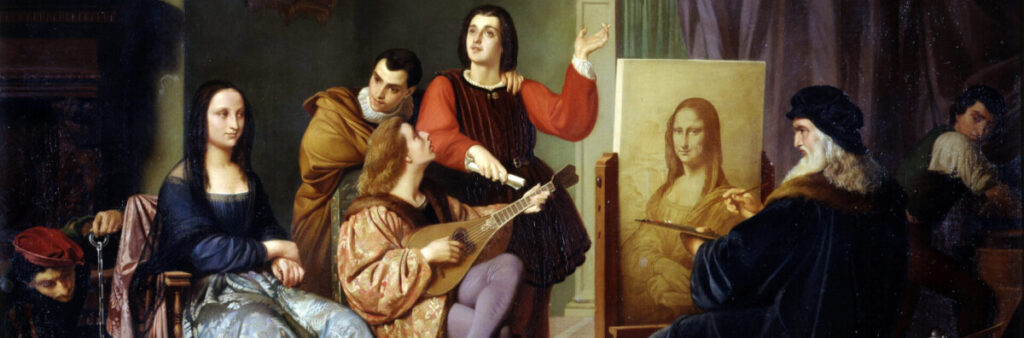
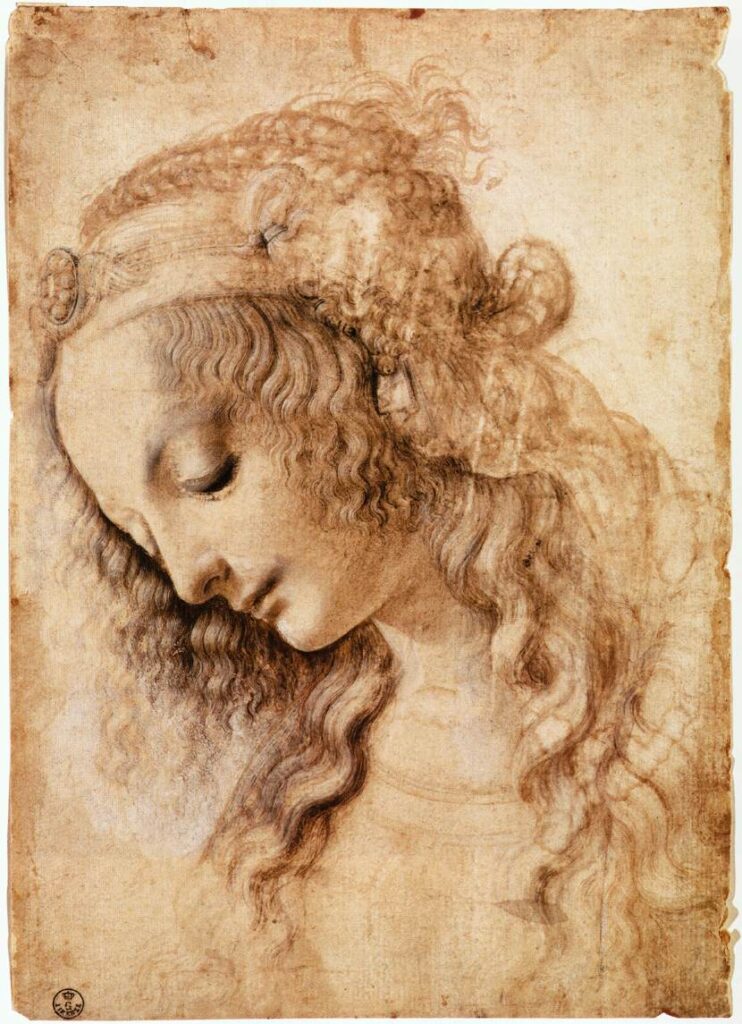
In the Uffizi Gallery in Florence, there is a drawing attributed to the master Leonardo, depicting a female head that has evident affinities with the painting of the Virgin of the Rocks, so much so that it can be considered preparatory to it.
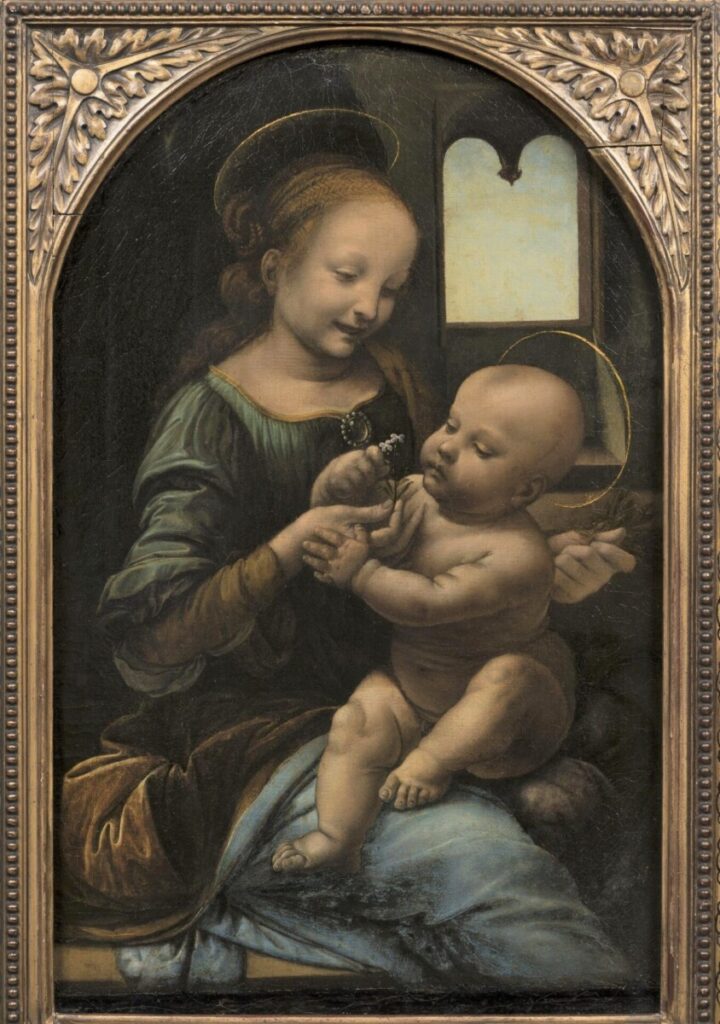
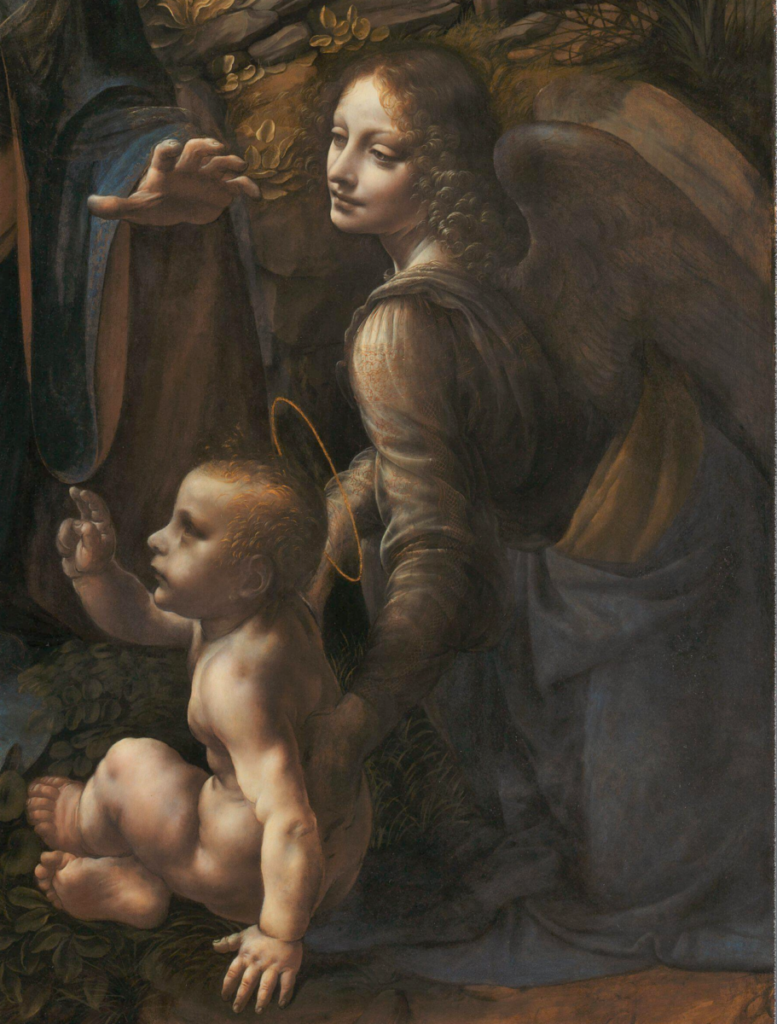
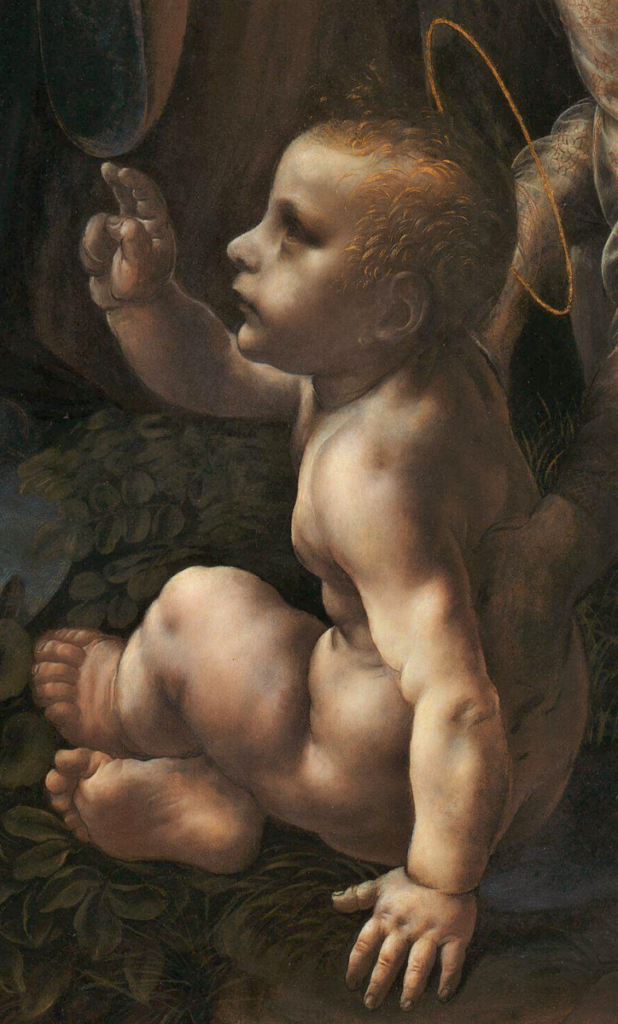
Compared with the “Benois Madonna,” this composition shows a greater separation between the figures and the background, and a chiaroscuro that is less diffuse and more direct, with lights and shadows that breathe especially in the faces without getting lost in the softly blended contours, modeling the forms with exceptional vigor until they seem three-dimensional and almost tangible. The gaze of the Child, turned toward a point outside the pictorial space, is an appeal to the viewer, who is drawn into the painting and involved in a relationship of direct communication with the sacred image.
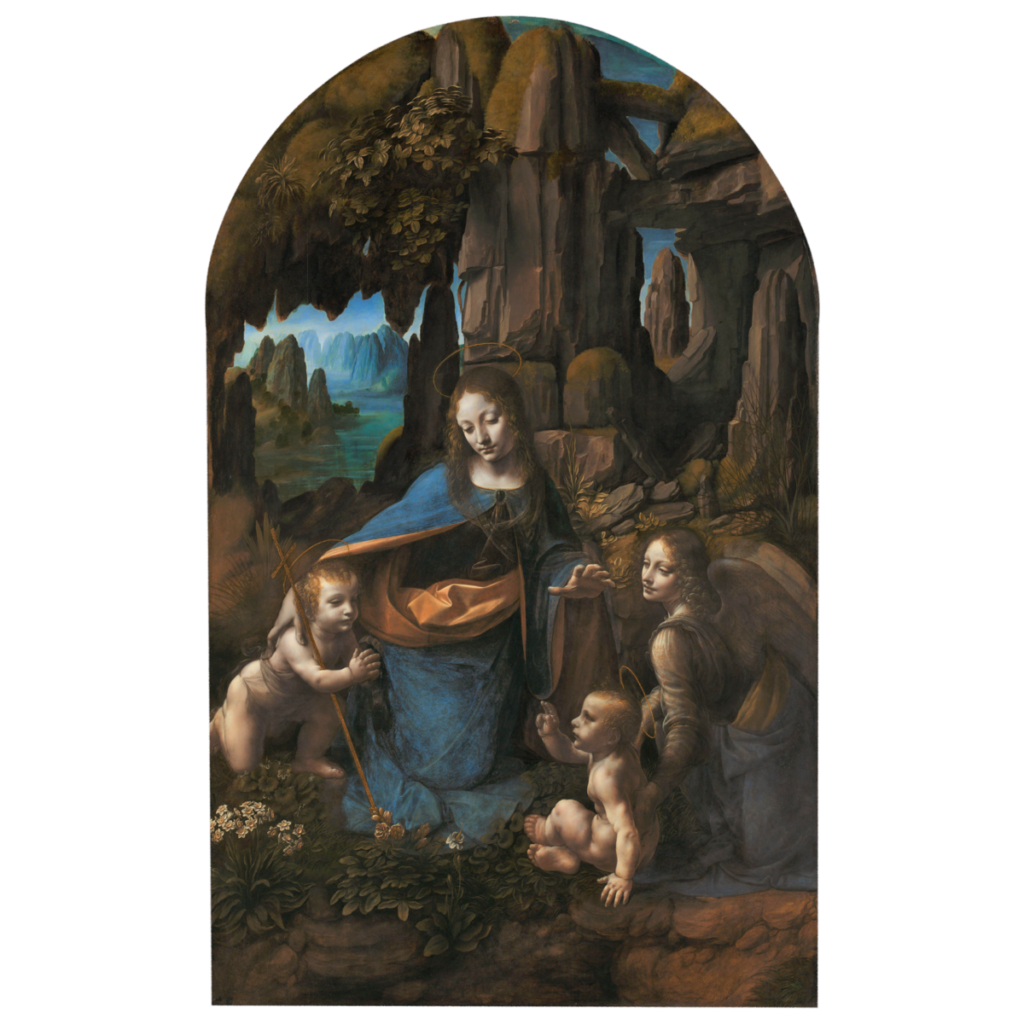
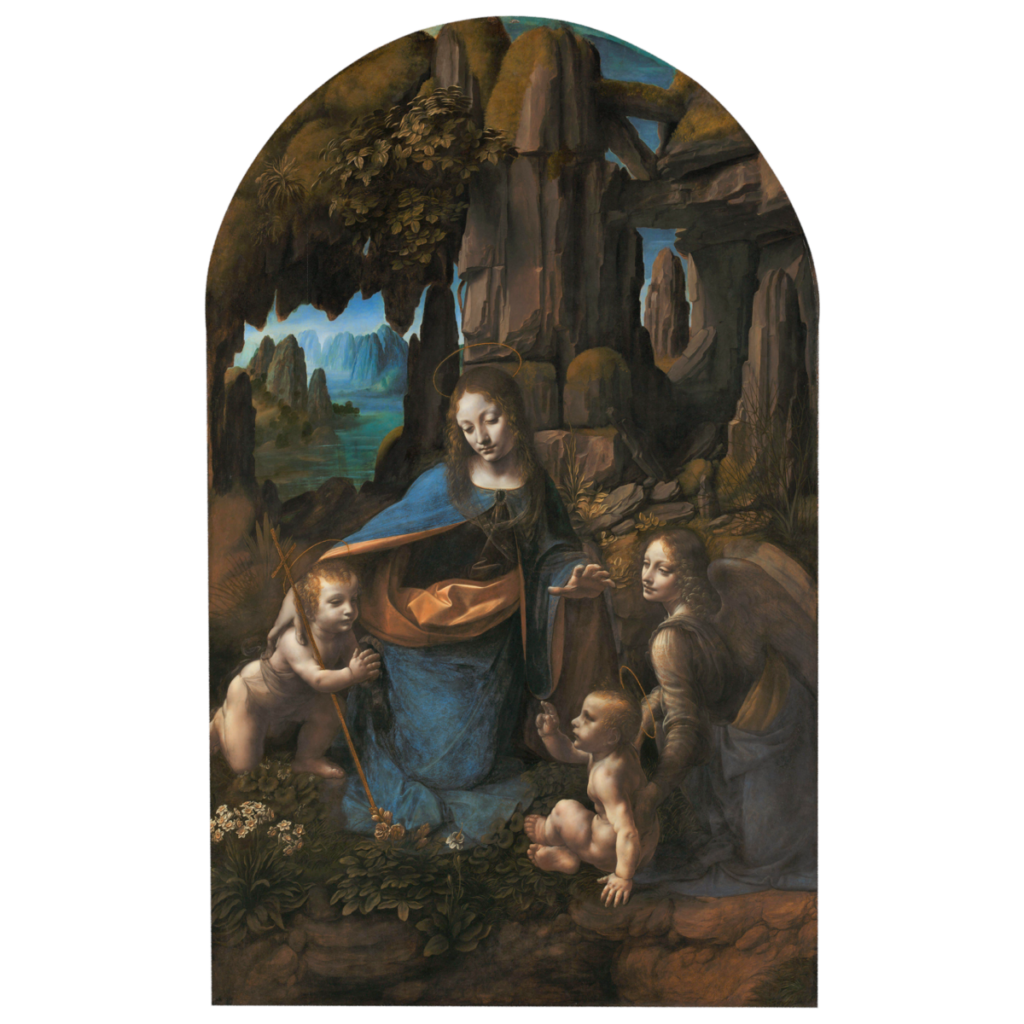
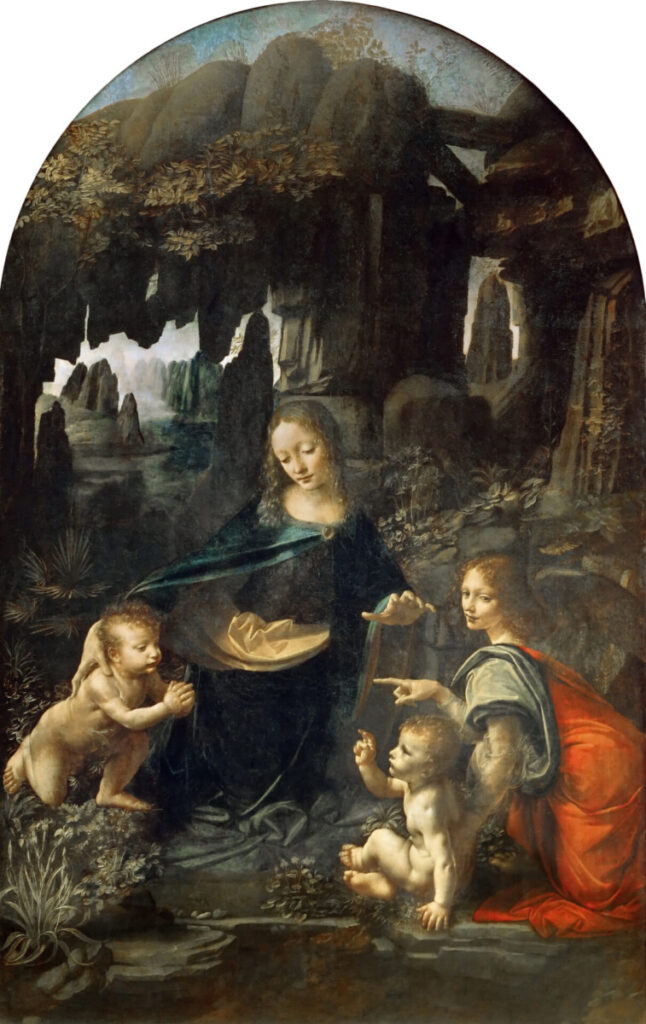
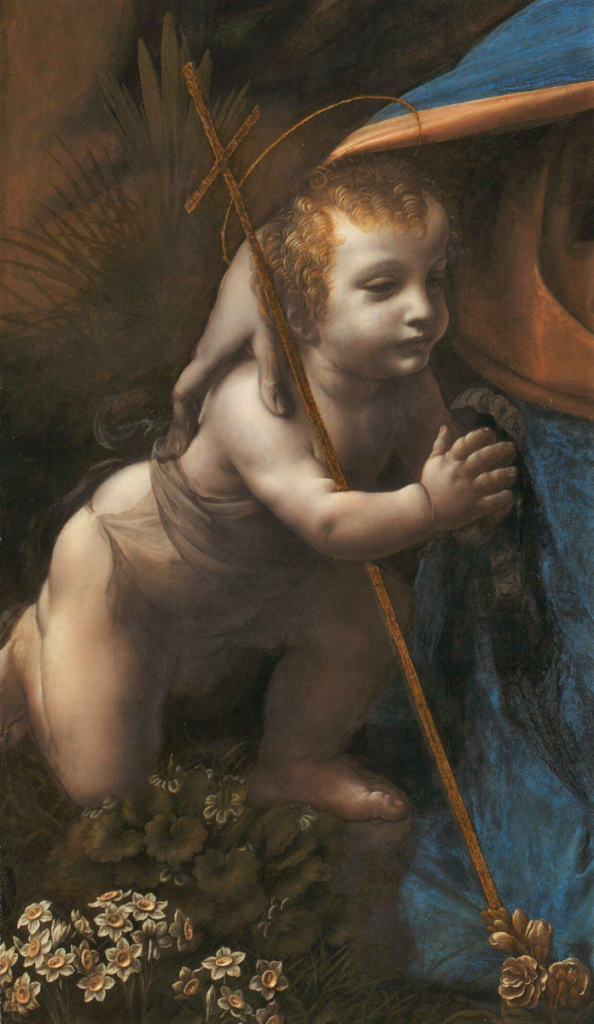
On April 25, 1483, the panel of the Virgin of the Rocks was commissioned from Leonardo and the de Predis brothers by the Confraternity of the Conception. The painting, now in the Louvre, shows the Virgin with Jesus, the infant Baptist, and an angel in a cave, a setting of shadows, a construction of stone slabs and stalactites, opened by clefts toward the distant light of the sunset.
In Milan, Leonardo had found a great art of painting in full development: from the lunettes of the Portinari Chapel to the frescoes of the Banco dei Medici, there stood before him the lofty creations of Foppa and the landscapes of Bergognone, which set the perspective, the light, and the space of Lombardy against the plastic principle of the Tuscans and the sovereign Florentine rhythm.
A different kind of painting, which confronted its own problems of light, of shadow, of distant spaces, of atmosphere. Numerous drawings, whether works in their own right or scattered throughout his writings, show that Leonardo follows direct observation and at the same time his dreams, with his precise, light, luminous stroke, a perfect evoker of forms, lights, shadows, and movements of the heart.
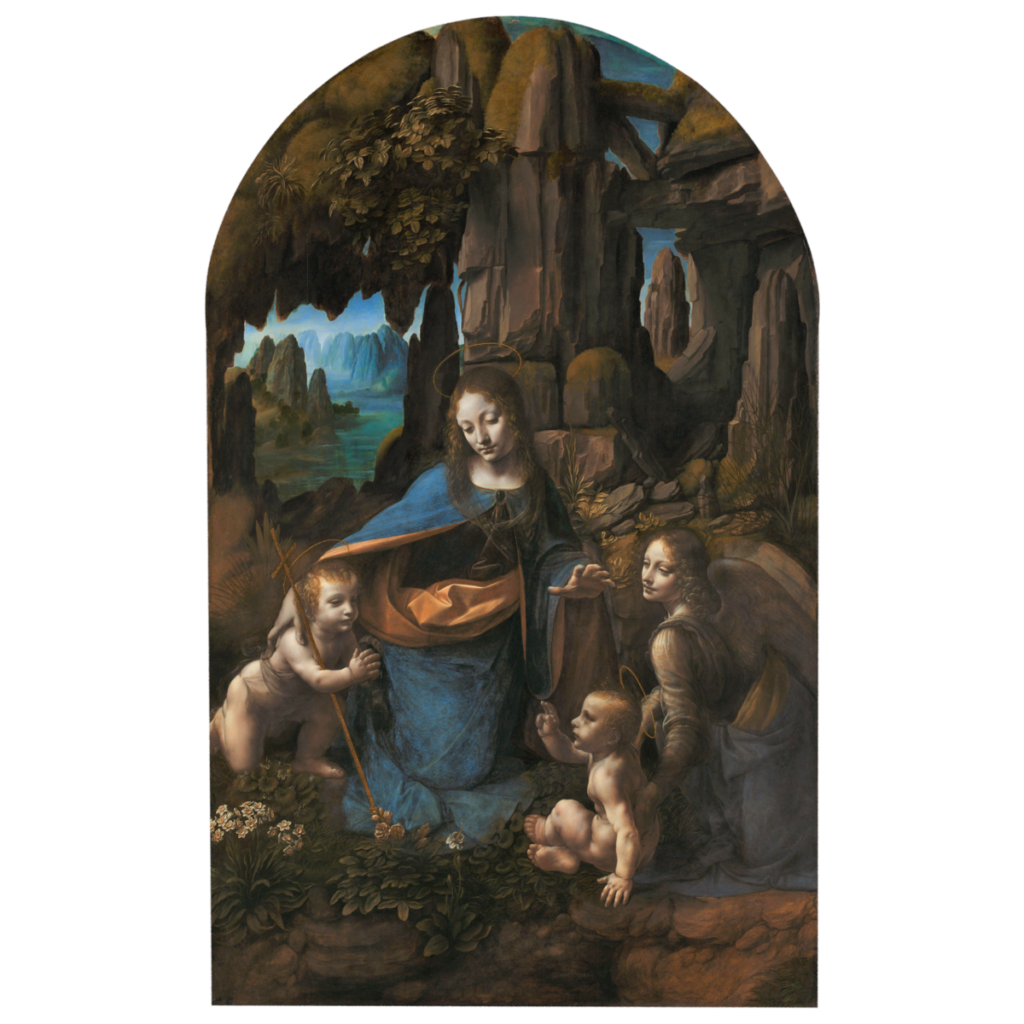
His figures are based on what can be defined as an idealized concreteness. Leonardo’s autograph Virgin of the Rocks was bought directly by the French through confidential and secret negotiations with the friars of Saint Francis, and was replaced in the church by another, almost identical one painted by Ambrogio de Predis, who is mentioned in the contract, with the help of Leonardo himself.
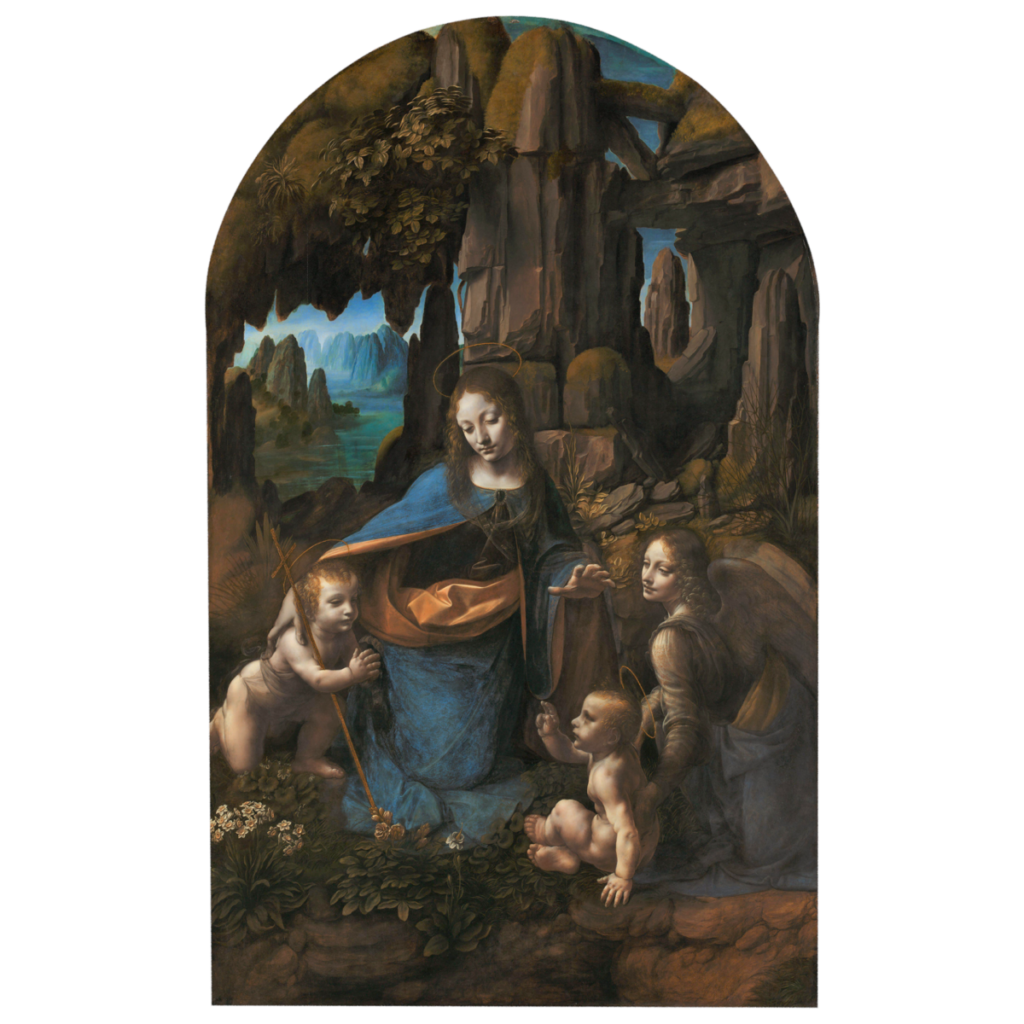
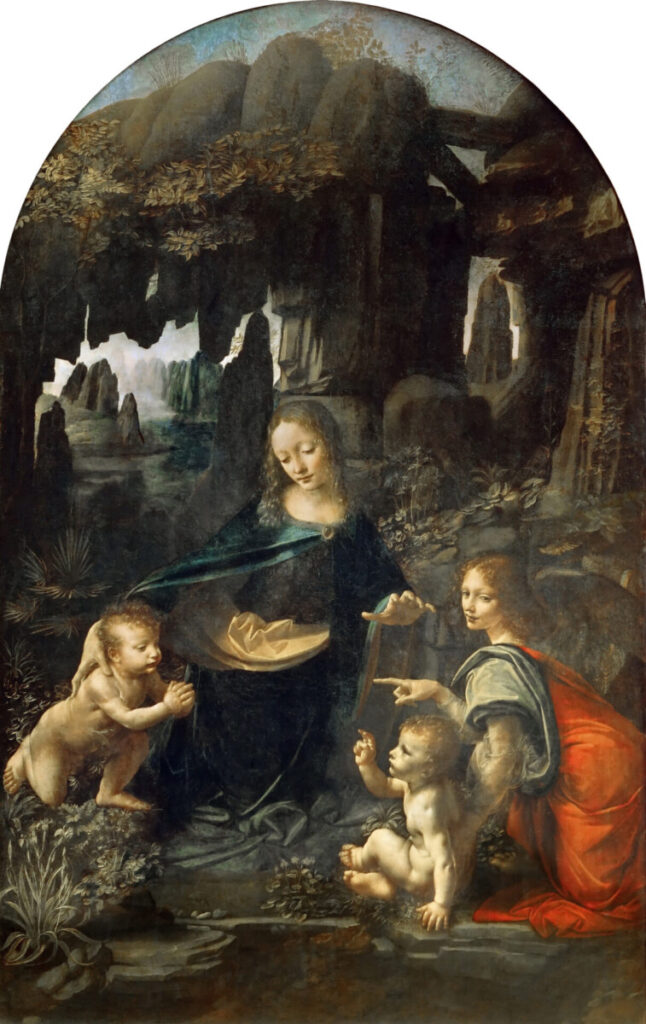
The two panels indeed modify the traditional scheme of the Immaculate Conception, with its music-making angels, the moon beneath her feet, and the crown of stars. Here the harmony comes above all from those elements of nature to which the artist gave such strong prominence and with which the human figures are so deeply attuned. The ultimate reason for the Marian privilege is the divine motherhood.
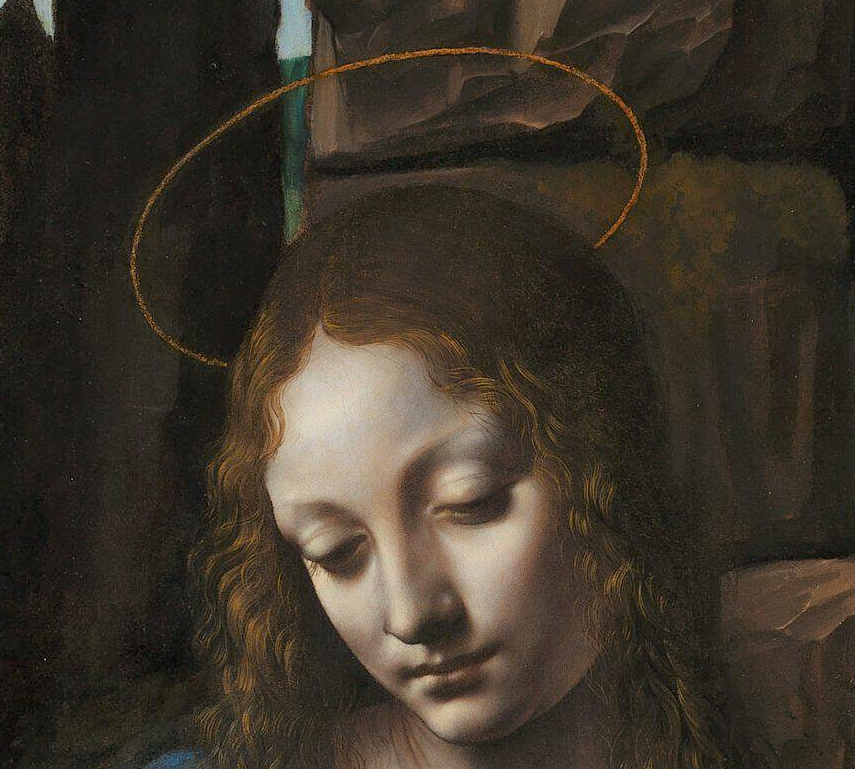
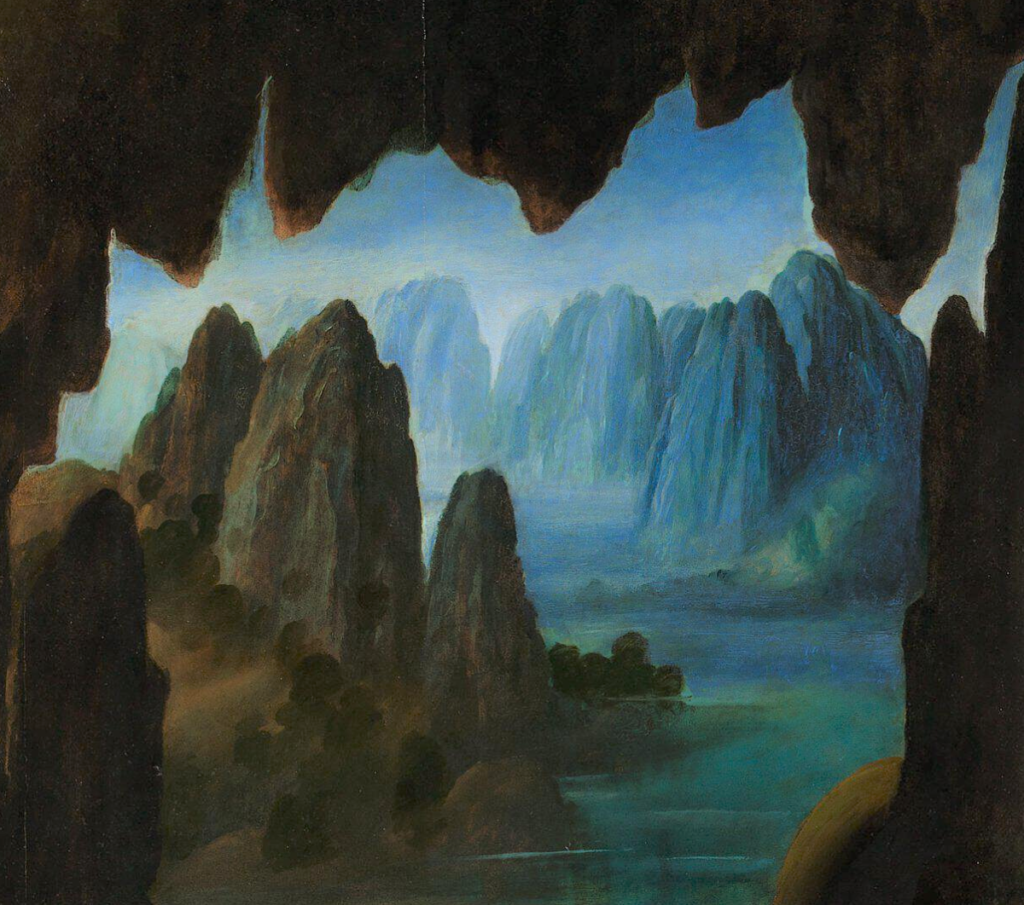
The rocks gather a veiled light around the group, while the light of the misty, greenish, watery sky recedes into the distance, over a world of peaks immersed in the mists. The melancholy spirit of the night penetrates the Virgin’s smile, vague, uncertain at the death of the day. Relief blossoms where the light touches things and vanishes where the shadow swallows them. The form, with its instantaneous and gentle movement, is assimilated to the fluid created by the shadow of the cave and by the golden flashes that pass through its veils. More and more, in Leonardo’s art, color loses importance amid the lights that penetrate the water and the sky.
Conclusion
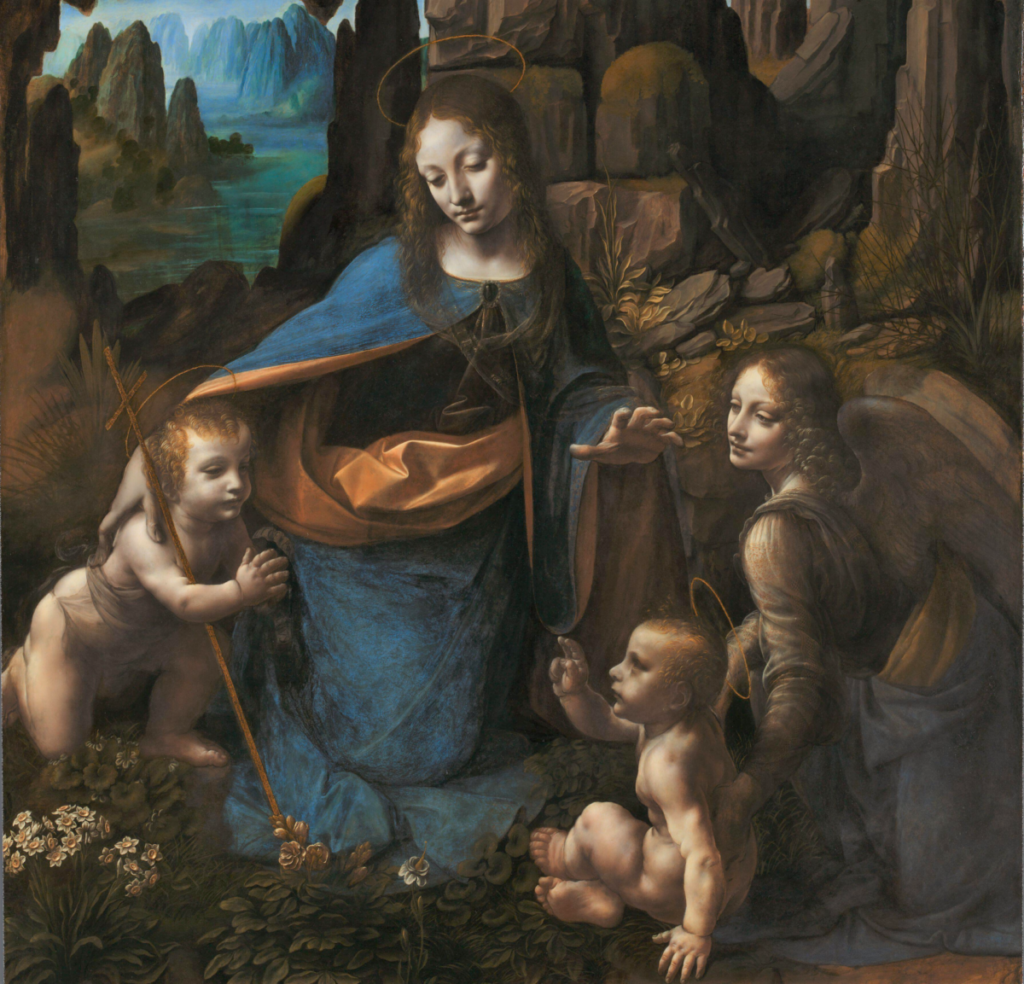
An epiphany of becoming, translated into moments of the highest suspension, yet supremely perfect moments, over which hovers the awareness of the ephemeral quality of reality. Moments halted at the point where the turning of the hour leads them to perish, exceedingly harmonious present moments, yet as if cracked by the sense of their unrepeatability.
O admirable science, says Leonardo of painting, in an outburst that holds the whole Renaissance dream of perfection but also all its fragility: you keep alive the transient beauties that have changed continually over time.
All of Leonardo’s painting is indeed moved by an awareness of the mutability of phenomenal reality, analogous to the very strong awareness the scientist had of the mutability of physical reality. And just as the scientist perceives that rivers, by carving out valleys, constantly change the landscape, or that nature delights in making continuous lives and forms, so the painter is highly sensitive to the infinite variety that the intervention of time brings to the appearance of the real.
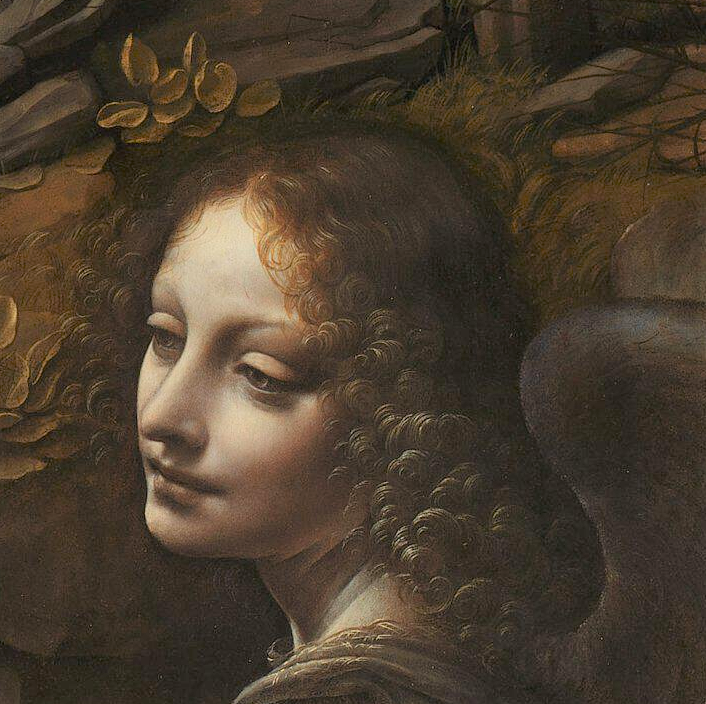
And it is precisely in this suspended vision, as if hovering between two blinks of an eye and about to wear away, that, as we approach Leonardo’s painting, we come to feel more often and more clearly the reason for the fleeting expression of his faces, for the soft shading and unfinished quality of his landscapes, for his explorations of shadow, and for his interest in gesture and in the state of mind, which already seem almost to be vanishing.
So too his predilection for twilight lights and for backgrounds shading into blue, and for the moments when the atmosphere becomes more indefinite and impalpable, and the indescribable essence of the world’s beauty and the lofty and transitory quality of the joy we receive from it become more evident: as if, by fixing the perfection of an hour that is cracking, one wished to preserve it from the snare of time, that swift predator of human things, which will soon have undone it.
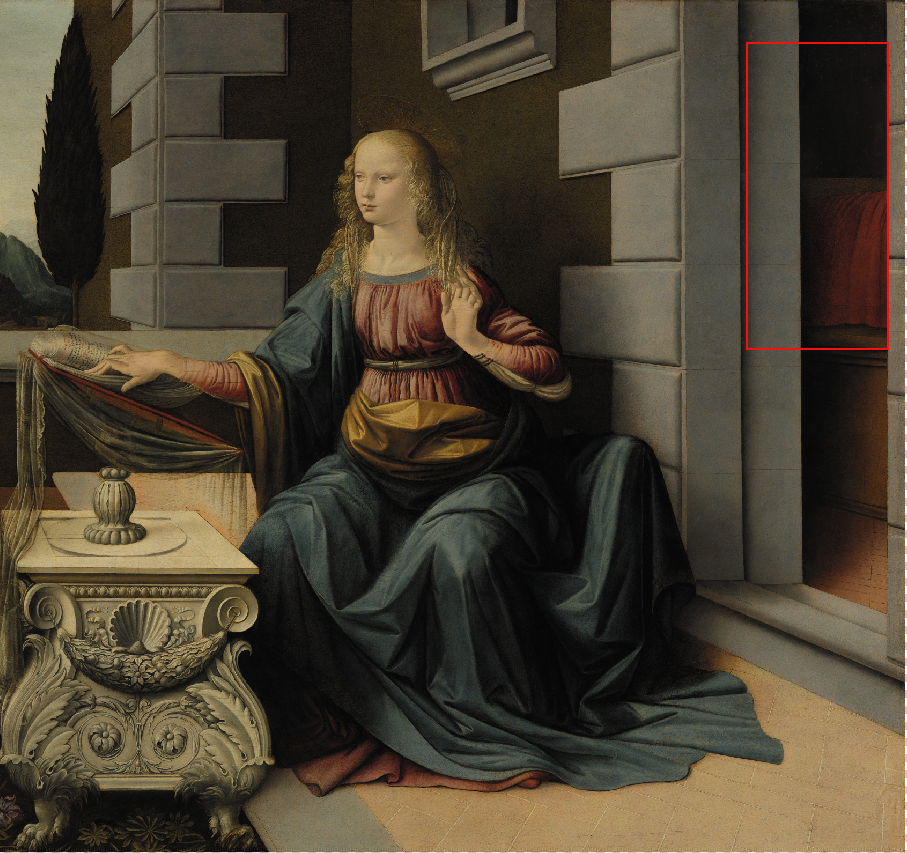
Leonardo is a man of faith, in that form typical of fifteenth-century Tuscany, certainly different from the Catholicism devoted to the Catholic Reformation, but an investigator of the divine Mystery and of its manifestation in human history.
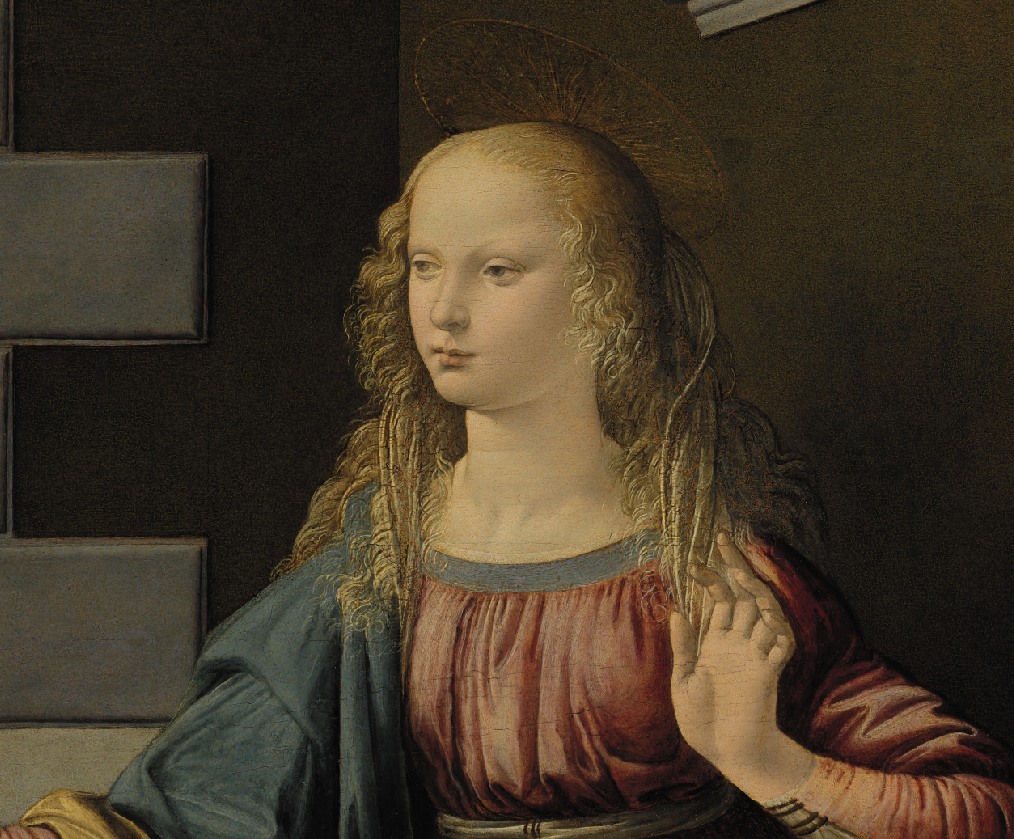
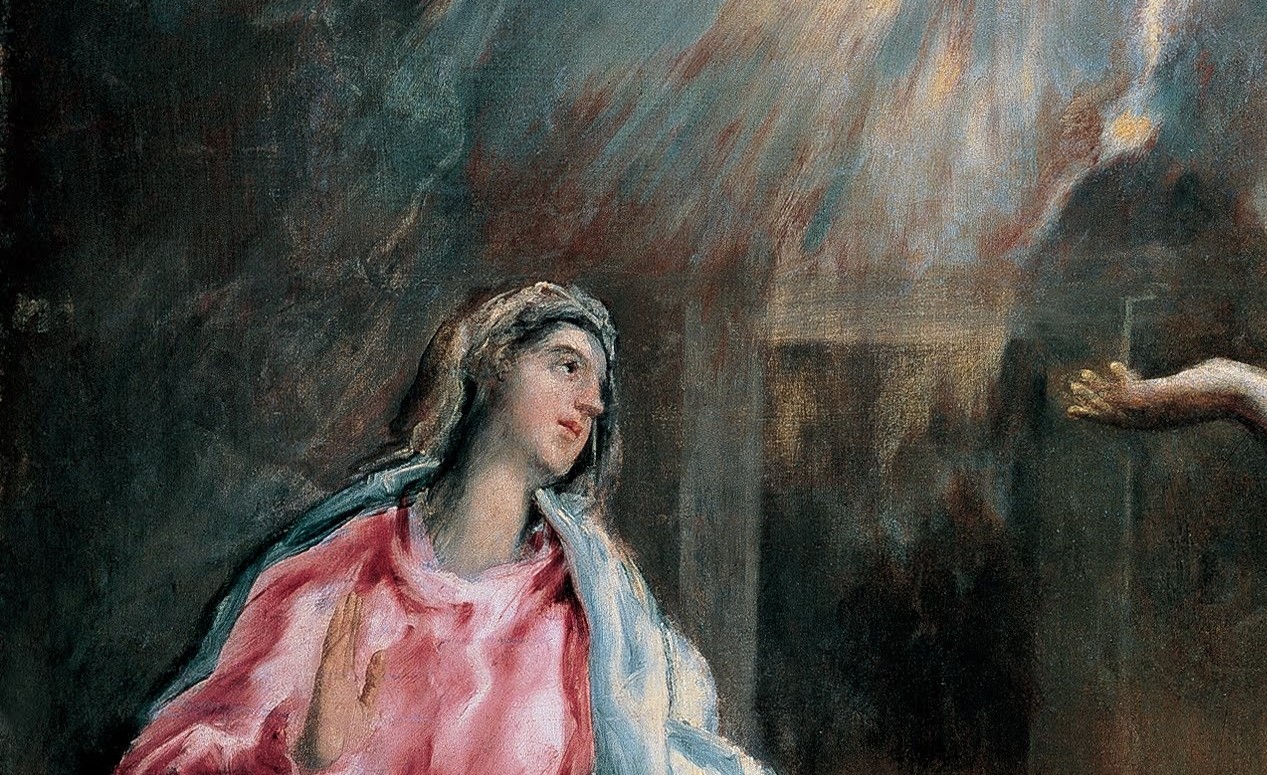
In the Annunciation, Leonardo placed the Virgin Mary at the edge of a hollow of shadow, touched by the oblique blade of light that comes from the background and illuminates her face together with the atmosphere surrounding her. That is, he had merged her with nature, with the morning breeze, with the light of dawn, but he had also impelled her to separate herself from it and transcend it by the grace of that yes. The feeling for nature, that by which we feel the rhythm of our life pulsing in unison with that of the cosmos, binds us to God, opens us to listening, and makes us touch the wounds of the Risen One.
Leonardo paints the Annunciation in a corner of the Renaissance palace, but in the forecourt of the garden. The Virgin of the Rocks is in a cave open to the world; the Madonna Litta and the Madonna of the Yarnwinder are in a sunlit landscape. The grand, luminous scenes tell us that the miracle of the Incarnation involves not only Mary but all of creation. The very clear morning light softens the contours of the figures, making the Virgins painted by Leonardo pregnant with hope.
Postgraduate Program in Mariology
Would you like to deepen your formation in Mariology? Discover the Postgraduate Program in Mariology of Locus Mariologicus – an academic formation that unites theological rigor, spiritual life, and the living tradition of the Church.
Would you like to study Mariology seriously?
This article grows out of the works in the Locus Mariologicus library. The Postgraduate Program in Mariology takes you to the same source, with academic guidance: Scripture, the Fathers of the Church, and the Magisterium, from the first dogma to contemporary questions.

Responses