King, Kingdom, and Reign of God in Mariology

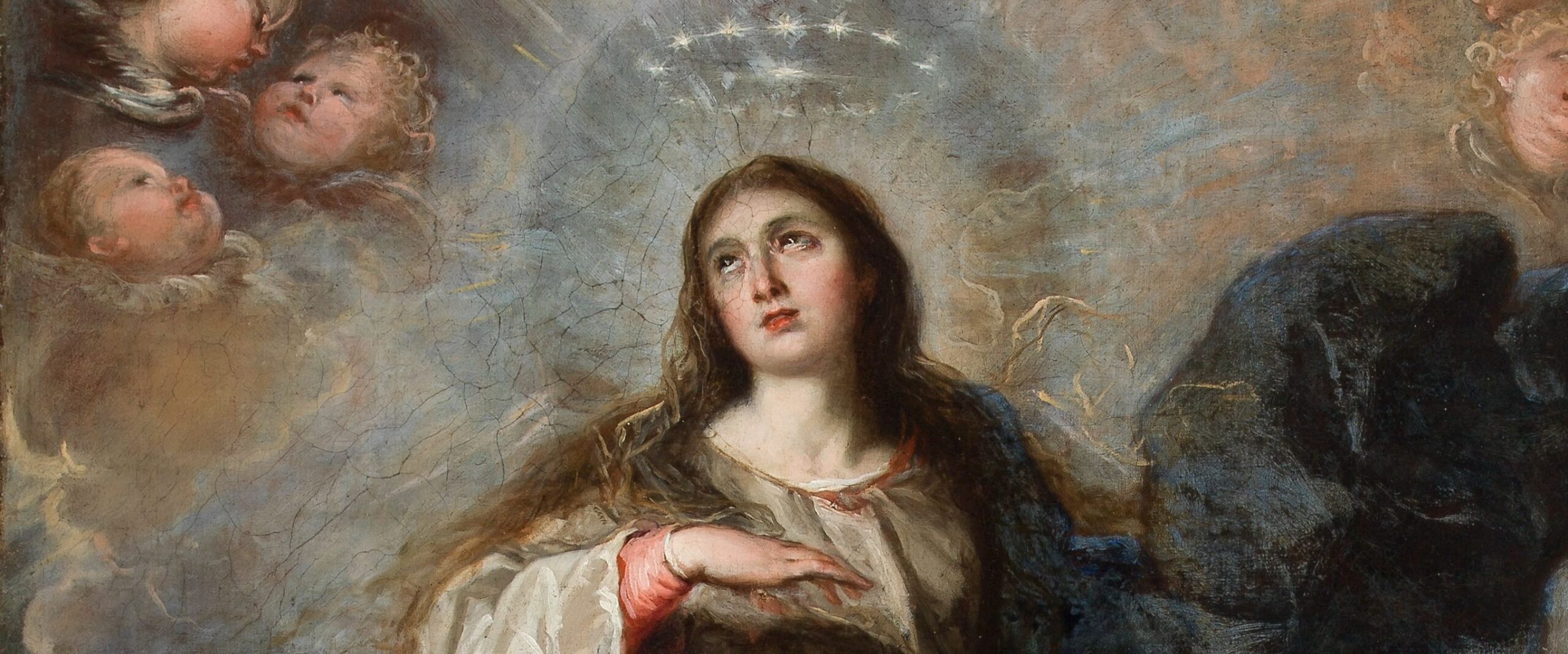
Queen of Angels
you appear to us living and true, Mary,
in the integrity of your wondrous and innocent being,
in the spiritual and bodily beauty
of all your immaculate humanity
in the vital and ecstatic triumph
proper to the resurrection of the purest,
kindest, ideal and most real woman
that the earth has ever brought forth
and that heaven will keep forever.Saints, orators, artists, poets
have given her images of incomparable lyricism.
The vision of you in glory and in the fullness of life,
while it fills the soul with joy and prayer,
reflects upon our world the wisdom that must guide us.If our destiny is different from your destiny,
the final destiny, which in you was immediately fulfilled
and anticipated for the day of final joy
when death will be conquered and human flesh will rise again,
like its heavenly Mother, is not different.It was the angels who carried you to heaven.
Saint Paul VI
Holy Mary, it will be the pure who will join you up there.
1. Reign of God
By the very fact that He is Creator, God is King of His creation; He possesses total power over it and enjoys an inalienable kingship over it.
Since this kingship flows necessarily from creation, both in the sense of bringing beings into being and in the sense of keeping them in existence, it cannot be delegated to anyone else. Our Lady, therefore, does not share in this kingship of the Creator.
But she is in the best position, as mother of the Creator, to understand, admire, and adore this kingship. She is its first adorer. And here we truly see one of the aspects of the Magnificat. Mary exalts God and rejoices in Him, because this eternal King deigned to look upon her despite her littleness, because He did great things in her, because He governs the universe with mercy and justice, because He took special care of His people Israel.
In the Old Testament, the kingship of God is an important theme, which inspires prophetic oracles and above all numerous psalms. Mary assiduously read, recited, and meditated on these magnificent texts. No one understood their unfathomable richness better than she did, and no one more than she let herself be carried by those texts into the great stream of adoration that the angels sing without end before the most perfect of creatures.
During her earthly existence, she was the first adorer of God’s kingship, and now in heaven, as Queen of Angels, she is the queen of the adorers of this kingship!
When the litanies say that Our Lady is:
- the Queen of Angels,
- the Queen of Patriarchs,
- the Queen of Prophets,
- the Queen of Apostles,
- the Queen of Martyrs,
- the Queen of Confessors,
- the Queen of Virgins,
- the Queen of All Saints,
The word “queen” is not meant in the strict sense, since it does not imply true queenship. It simply seeks to attribute to Mary the noblest term possible, to evoke her greatness and her holiness, which place her above the most perfect creatures of God and above the most venerable figures of humanity.
In what sense can it be said that Our Lady is queen?
The term “queen” is used in three different situations:
1) for a ruler who is a woman.
2) for the wife of a king.
3) for the mother of a king.
The first two meanings must clearly be excluded in the case of Our Lady, but the third suits her perfectly, since she is the mother of Jesus, King of creation and King of His spiritual kingdom. To call Our Lady queen means to recognize her divine motherhood and the kingship of Jesus, her Son, who is God.
The royal power of God
The royal power of God, that is, the action that God exercises upon the faithful in order to transform them and make them just, can be considered under two aspects:
- both from the side of God, who exercises this action, who justifies, who governs,
- and from the side of the believer, who accepts this action of God, who submits to it, who adheres with greater or lesser intensity to God’s will for him.
To express this twofold aspect clearly, one would need to be able to use the passive of the verb “to reign”: God reigns and the believer is “reigned”.
If we apply this distinction to Our Lady, she evidently has no direct role in the royal power with respect to God, but rather an indirect role. When we ask in the Our Father, “Thy kingdom come”, we implore God, with unprecedented boldness, to extend and intensify His action in our brothers and sisters.
Our Lady lived the Our Father fully, even before it was given by Jesus to the disciples as their official prayer. After Jesus composed it, she penetrated all its riches better than anyone. Moreover, if we, poor sinners, can pray that this sovereign action of God may come in us and in others, how much more and how much better does Our Lady make this prayer and never cease to offer it to heaven!
Our Lady is the first to implore God to reign in the faithful. Her role, however, is even greater when God’s royal power is considered from the aspect of the believer who receives it, who is “reigned.”
Because of His infinite respect for the freedom of human creatures, God does not wish to impose His sovereignty and forcibly subject the faithful to His action. The old adage is well known: Quidquid recipitur, ad modum recipientis recipitur (whatever is received takes the form of the recipient). God’s sovereign action in each believer depends, in fact, on the believer’s receptivity.
What woman was more receptive than Mary?
In her God had, so to speak, a free hand. Never did the slightest resistance of any kind halt God’s action in the Heart of the Immaculate Conception. Mary was the masterpiece of God’s royal power and the most beautiful of His works.
Her intellect always accepted, without the slightest resistance, all the light that God wished to pour out upon it. Her intellect was wholly illumined by that light, and it surrendered to it without constraint, without the obstacle of those personal judgments from which we cannot free ourselves. Already on earth God reigned in her intellect, as He now reigns in heaven. Our Lady is the mother of faith, in the words of Elizabeth: “Blessed is she who believed what the Lord told her” (Lk 1:45).
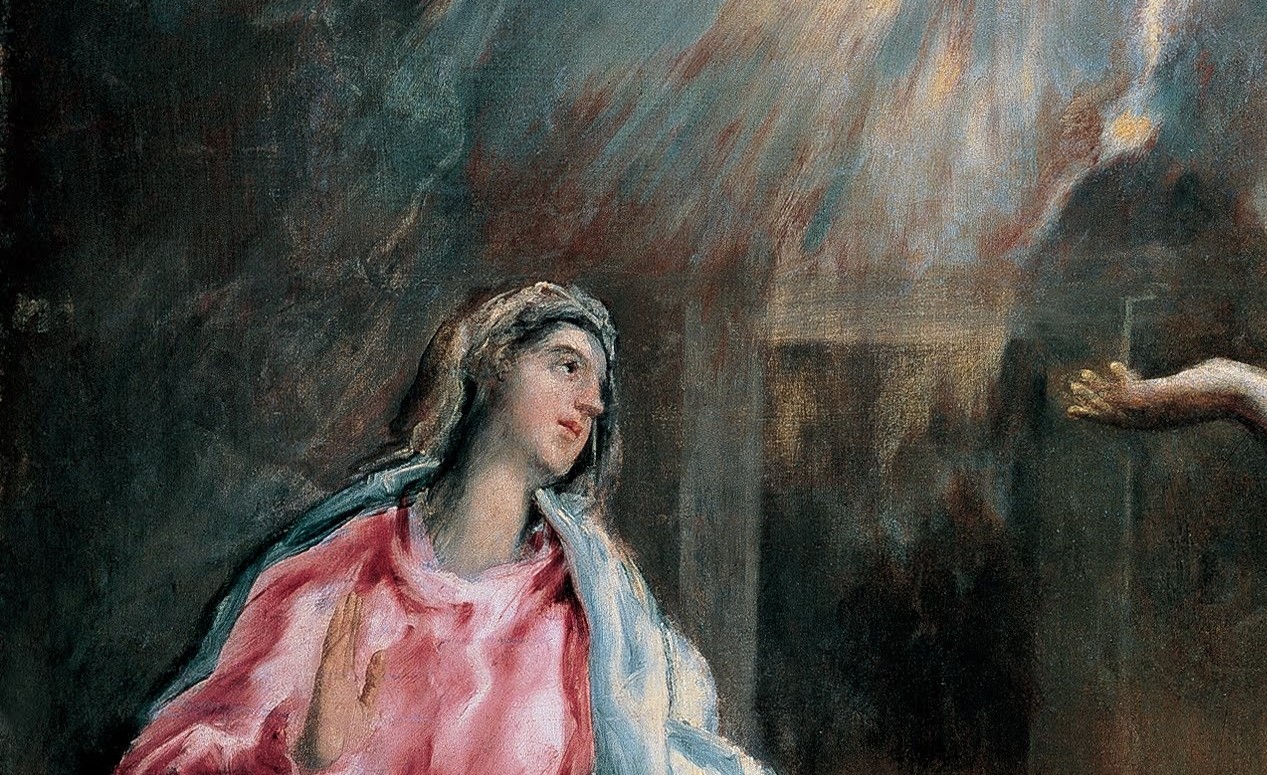
Her will never wished to have an object of its own, because she desired God’s will too intensely to be able to scatter herself among other things. The fiat of the Annunciation does not have the sense of resignation that we so often give it: “Since such a trial cannot be avoided, my God, fiat!”.
In Hebrew it is the third person of the imperative of the verb “to do”; it is a command given for something to be done. Our Lady did not resign herself to the Incarnation; she positively willed it, because God willed it and because God willed that she should will it. And this adherence to His will was the invariable disposition of her person in all the circumstances of her life, in the most important as well as in the insignificant ones.
This perfect fusion of Mary’s intellect and will with the intellect and will of God remained perfectly free; it was not as if it had been petrified beforehand in God’s hands; it let itself be led by His impulses.
It is this royal power of God in Mary, with her full consent, that devotion to the Immaculate Heart of Mary venerates and seeks to imitate.
Kingdom of God
Nowadays we tend to refer the Kingdom of God to the end of the world; yet clear texts, on the other hand, affirm that the Kingdom of God already existed in the time of Jesus and the apostles. It is enough to recall Jesus’ invectives against the followers of the law
- Lk 11:52 “Woe to you, doctors of the law, for you have taken away the key of knowledge. You yourselves did not enter, and you hindered those who were entering”
- Mt 23:13 “Woe to you, scribes and Pharisees, hypocrites! You shut the Kingdom of Heaven against men. You yourselves do not enter, nor do you allow those who wish to enter to go in”
All the verbs are in the past. So too in Saint Paul: “be glad and give thanks to the Father, who has made you worthy to share in the inheritance of the saints in light. He has rescued us from the power of darkness and brought us into the Kingdom of his beloved Son” (Col 1:12-13). Again, all the verbs are in the past tense. So too in the Letter of James 2:5: “Has not God chosen the poor of the world to make them rich in faith and heirs of the kingdom”?. And also in Revelation: “him who loves us and has freed us from our sins by his blood, who has made us a kingdom of priests for our God” (1:5-6). And in almost the same terms: “You were slain, and by your blood you ransomed for God those of every tribe, tongue, people, and nation, and you made them a kingdom of priests for our God” (Rev 5:9-10).
As we can see, all the verbs are in the past tense. Certainly, elsewhere, other verbs are also in the present or the future, but this proves that the Kingdom of God, like the Church, is not simply a reality of the past, but continues in the present and will continue in the future unto eternity.
Having thus recognized the identity between the Kingdom of God and the Church, we arrive at the same definition for both: both the Kingdom and the Church are Jesus and those who form His people or His body. Saint Paul specifies that Christ is the head of the Church (Eph 5:23) or that He is “the head of the body (which is) the Church” (Col 1:18). If we take the image, also biblical, of the people of God, this people cannot be separated from its leader, from its king, and therefore it forms a kingdom. Of course, although the objective reality of the kingdom is identical to that of the Church, the two concepts are by no means identical and have different connotations.
The kingdom is a Semitic notion, which emphasizes the presence of the king. The Church is the Greek notion, which especially highlights the people who live in this community. But beyond this difference of viewpoint in our subjective concepts, we are always dealing with the same reality seen from two different angles.
What, then, is Mary’s place in this kingdom of God, that is, in the Church?
It is commonly said that the Church began both on Calvary and at Pentecost. But the Gospel explicitly relates the Kingdom of God to the preaching of John the Baptist: “From the days of John the Baptist until now, the kingdom of heaven (= of God) suffers violence, and the violent take hold of it. For the law and all the prophets prophesied until John” (Mt 11:12-13).
Thus, it appears that the Kingdom of God, which already existed in the time of John the Baptist, truly came together at the Incarnation. Now, as we have seen, what is said of the kingdom concerns the Church. By answering “yes” at the Annunciation, Our Lady allowed God to accomplish the Incarnation and at the same time to inaugurate His kingdom. The title “Mother of the Church,” officially conferred on Our Lady by Pope Paul VI, is therefore fully justified.
Mary is the first creature to be part of the Church, and all of us are her distant successors. In giving Jesus His physical body, she also gave Him His spiritual body, which is the Church, to which she is the first to belong and to which we belong after her, like her, and with her.
All the subsequent events of Jesus’ life, including His Passion, His Resurrection, and His Ascension, are part of the development of this kingdom and, therefore, of the flourishing of the Church.
Likewise, all the events of Our Lady’s life, including the Purification, the finding in the Temple, the intervention at Cana, and the presence beside the Cross, are part of the life of the Church and constitute the first stitches of the embroidery that God continues to weave through us.
This belonging of Mary to the Kingdom of God and to the Church, to which we too belong, reveals between her and us a communion, a kinship, of which we are perhaps not fully aware.
Just as she could call the Church to which she belonged “my Church,” we too can say with her “our Church.”
This is how we should view the coming events that will mark the future of the Kingdom of God: the Parousia, the general resurrection, the Last Judgment, the offering to the Father. All these events will also be ecclesial.
The Parousia, or return of Jesus, will continue His first coming: Mary’s fiat made the first possible and also made the second possible, by the very fact that she pronounced it once and for all in the name of all humanity.
As for the general resurrection, if Our Lady rose before her Assumption, she became the first living stone of the Church, the first daughter of the Kingdom of God to triumph over death, going before us in following Jesus.
Regarding the Last Judgment, our ideas run the risk of being distorted, because in modern languages the term “judgment ” is often taken in a pejorative sense: it presupposes a possible culprit and is exercised from the top down, in the sense that the judge has an authority superior to that of the one being judged.
None of this exists in the Hebrew language, where to judge means “to make a decision”, which can be either favorable or unfavorable. It is in this sense that, according to Saint Paul, we will judge the angels: that is, we will all be associated with the manifestation of God’s eternal design, with the wonders of His grace, mercy, and justice, toward the angels as well as toward men and other creatures. And since we, mere humans, will applaud this wonderful action of God, this mystèrion, as Saint Paul would say, it is clear that Our Lady too will take part in it.
We will sing with her the canticle of Revelation (15:34; 16:5-7; 19:1-8). And among the triumphs of grace, we will especially admire those relating to the Immaculate Conception, the Kekaritomene, the Virgin of the Incarnation, the Theotokos, the Mother standing beside the Cross, the first human creature prostrate in body and soul in eternal adoration.
The offering to the Father, of which Saint Paul speaks to us (1 Cor 15:22-28), will be the solemn entrance of all the just, with their souls and their bodies, into their definitive vocation, into the perpetual alleluia for which they were created.
Our Lady, for her part, has already been wholly immersed in this adoration since the Assumption. But, since she is the Mother of the Church, she will then be able to offer to the Father, in union with Jesus, the spiritual body of Christ, which has finally reached its fullness (“Until we all attain to the unity of the faith and to the knowledge of the Son of God, to the perfect man, to the measure of the full stature of Christ” Eph 4:13).
And this offering will not be only that of the fruits of her initial fiat, but also that of the fruits obtained through her mediation. Indeed, at the moment of this offering to the Father, which will represent the advent of the Kingdom of God in full flower, the royal power and the Kingdom of God will be found united. The royal power of God, which is His sanctifying action in souls, is accomplished in all men of good will, Christian or not.
The Kingdom of God, which is the Church, includes both the just and sinners, as the parables of the weeds, of the miraculous catch of fish, and of the ten virgins show, and, even more clearly, the description of the universal judgment in Mt 25:31-46. So it is that, at the end of the world, all the good pagans, all the children of God’s sovereign power, all the sanctified or justified faithful will find themselves in the Kingdom of God, while all the wicked children of the Church, impenitent sinners, will be excluded from this same kingdom (Mt 13:39-42; 25:46; Rev 21:8). And this offering will continue for all eternity!
Those who link the founding of the Kingdom of God with the end of the world, in an imaginary eschatology, cut Our Lady off, and exclude us as well, from a vital continuity with these essential accomplishments.
Saint Paul, on the contrary, tells us: “As all die in Adam, so all will receive life in Christ. But each in his own order: first Christ, who is the first fruits. Then, at his Parousia, those who belong to Christ. Then will come the end. When he hands over the kingdom to God the Father” (1 Cor 15:22-24). It is the whole Kingdom of God, and therefore the whole Church, that will take part in these great events: immediately after Christ, His Mother, and little by little all of us.
It is a theology of hope that could be seen in a new way if one underscored the organic continuity of the Kingdom and of the Church, founded at the moment of the Incarnation, developing until the Parousia, and opening out into the glory of the Father. Mary would be intimately associated with this hope, because she would be the source of the vast river that flows into eternity, and of which each of us is a drop.
All these points deserve deeper reflection, in order to draw from them all their possible potential. But they are indications that would at least let us see that the perspectives on the fulfillment of the Kingdom, like those on its foundation, are profoundly renewed if one is willing to recognize the equation: Kingdom=Church. Mary, then, who took part in the birth of the Church, also comes to share in its heavenly crowning as Queen of Angels. Just as we, the members of the Church, will share in it.
To delve deeper into the relationship between the reign of God and Mary’s role in Mariology, consult John Paul II’s encyclical Redemptoris Mater, on Mary and the Kingdom of God.
Deepen your studies: explore Mariology, Marian Theology, Marian apparitions, and the Postgraduate Program in Mariology.
Postgraduate Program in Mariology
Would you like to deepen your formation in Mariology? Discover the Postgraduate Program in Mariology of Locus Mariologicus, an academic formation that unites theological rigor, spiritual life, and the living tradition of the Church.
See our complete guide to Catholic Angelology.
Would you like to study angelology and demonology in depth?
This article comes from the Locus Mariologicus library. The postgraduate specialisation in Angelology and Demonology (360 hours, fully online) studies angels and demons in Scripture, the Fathers and the Magisterium, with a whole area on practical demonology, exorcism and deliverance prayer. The new class begins on 18 January 2027. Classes are taught in Portuguese.


Responses