Vae tibi Corozain: the lament over the cities and Maria causa nostrae laetitiae
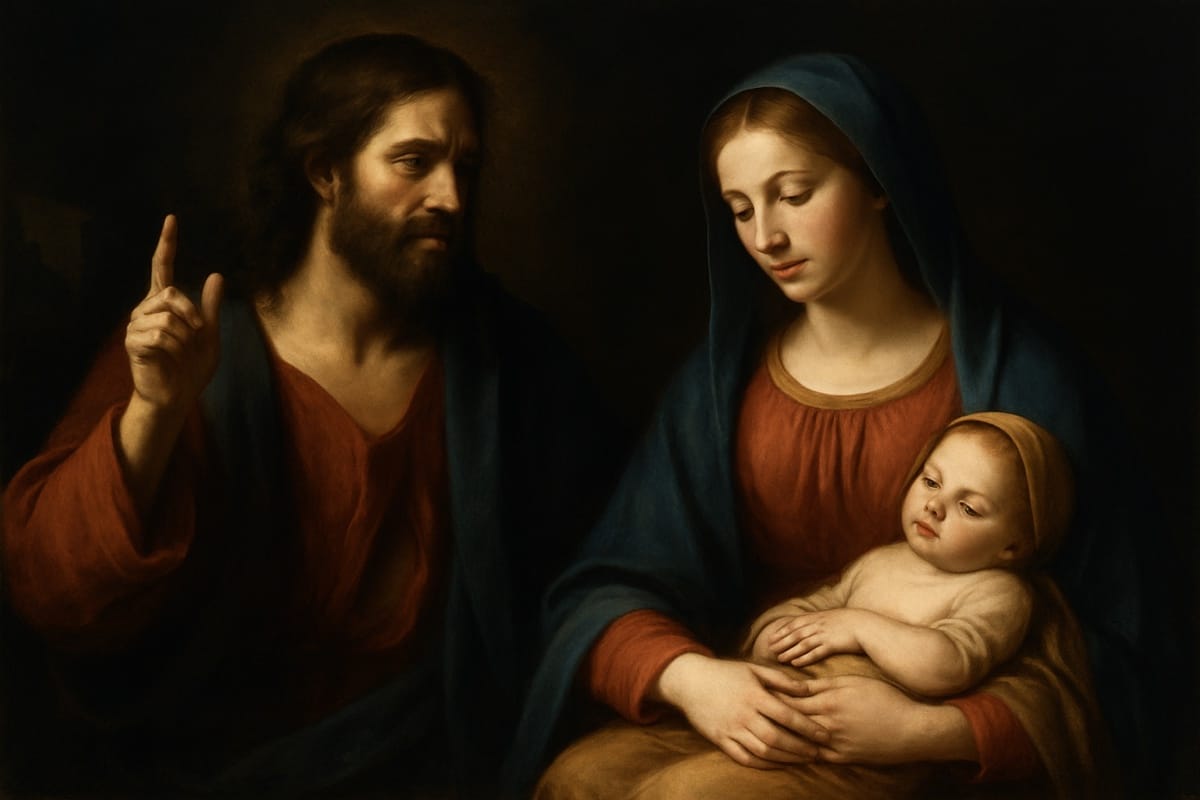
Vae tibi, Corozain! Vae tibi, Bethsaida! Quia si in Tyro et Sidone factae fuissent virtutes quae factae sunt in vobis, olim in cilicio et cinere paenitentiam egissent.
Mt 11:21
Mt 11:20-24 is one of the darkest passages of the Gospel of Matthew: Jesus “began to reproach the cities in which the greatest number of His miracles had been worked, because they had not done penance” (Mt 11:20). This “woe,” the Greek “ouaí,” equivalent to the Hebrew “hoy,” the classic prophetic lament, is Jesus’ lament over the refusal: the miracles were worked, the Kingdom was proclaimed, and the cities did not convert. Jesus’ sorrow over the refusal of the gift is one of the most explicit expressions of divine vulnerability in the Gospels: God offers, and the offer can be refused.
Chorazin, Bethsaida, and Capernaum were the cities of Galilee where Jesus worked most of His public miracles. They were cities that had “seen,” that had been eyewitnesses of Jesus’ works of power, and they did not convert. Jesus’ “a contrario” argument is devastating: if the miracles that were worked in you had been worked in Tyre and Sidon (pagan Phoenician cities), they would have done penance. The refusal of the Israelite cities is graver than the refusal of the pagan cities, because the Israelite cities had more light and refused more light.
I. “If the miracles worked in you had been worked in Tyre”: the logic of responsibility
“If the miracles worked in you had been worked in Tyre and Sidon, they would have done penance” (Mt 11:21), Jesus’ counterfactual argument establishes the principle of responsibility proportionate to the gift received. The guilt of Chorazin and Bethsaida is not the guilt of having done something terrible, it is the guilt of not having corresponded to what they received. “Non-conversion” in the face of the miracles is in itself an act of refusal: to see the signs of the Kingdom and not change one’s life is a choice, not a neutral passivity.
The logic of responsibility proportionate to the gift is consistent with Matthew’s theology: “To whom more was given, more will be required” (Lk 12:48, parallel). The cities that received Jesus’ personal presence, the miracles, the direct preaching, have a greater responsibility than those that did not have that access. Jesus’ “woe” over the Galilean cities is not cruelty but honesty: the gravity of the refusal is proportionate to the greatness of the gift refused.
The application of this logic to the history of the Church is uncomfortable but necessary: the cultures that had centuries of deep evangelization, the families that grew up with the faith, the individuals who received a solid religious education, all have a greater responsibility than those who never had access to the Gospel. Jesus’ “vae” over the Galilean cities is also a warning to the Christian cultures that have become secularized: “olim in cilicio et cinere paenitentiam egissent,” the pagan cities would have done penance had they received what you have received.
Mary was born and lived in Nazareth, one of the cities of Galilee in Jesus’ time, close to Chorazin and Bethsaida. The same geographical region that was the stage of the refusals was also the place that raised the woman who spoke the most radical “fiat” of sacred history. The geographical contrast is also a spiritual contrast: in the same region where the cities refused, a woman welcomed, with all that she had and was.
II. “Capernaum, you will be cast down to Hades”: the fall of pride
“And you, Capernaum, will you perhaps be lifted up to heaven? To Hades you will be cast down” (Mt 11:23), Capernaum was the “city of Jesus” during the Galilean ministry: the place where He dwelt, where He worked numerous miracles, where He preached in the synagogue. The fall of Capernaum is the fall of the most privileged city, the one that had the greatest closeness to Jesus and refused with the greatest obstinacy. The allusion to Is 14:13-15 (the lament over the king of Babylon who wanted to “raise himself up to heaven” and was “cast down to Sheol”) is intentional: the pride of the city that thinks itself special for having had Jesus in its midst is the road to ruin.
“For if the miracles that were worked in you had been worked in Sodom, it would have remained to this day” (Mt 11:23), the counterfactual argument reaches its climax: Sodom, the biblical symbol of total corruption that deserved destruction by fire and brimstone (Gen 19), would have survived had it received what Capernaum received and rejected. The comparison is deliberately hyperbolic, but the point is clear: the refusal of the light one has received is graver than the corruption of those who never received that light.
Jesus’ lament over Capernaum is one of the sharpest expressions of the “sorrow of God” in the Gospels. God is not indifferent to human refusal, Jesus’ “vae” is the expression of the pain of unrequited love. This dimension of the “sorrow of God” in the face of human refusal is one of the theological foundations of the devotion to the Sacred Heart: the heart of Jesus that suffers from human indifference is the same heart that laments over Chorazin and Bethsaida and Capernaum.
III. Mary “Causa nostrae laetitiae”: the contrast with the city that refused
“Causa nostrae laetitiae,” “cause of our joy,” is one of the most beloved invocations of the Litany of Loreto. Mary is called “cause of our joy” because she was, through her response to the angel, the cause of the Incarnation, which is the source of all Christian joy. Mary’s “yes” was the response that the Galilean cities refused to give: the welcoming of God’s gift that turns the sorrow of the “vae” into joy.
The contrast between the “vae tibi Corozain” of Mt 11:21 and the “ave gratia plena” of Lk 1:28 is the contrast between refusal and welcome, between the city that did not correspond and the woman who corresponded with her whole being. The angel did not say “vae tibi Maria,” he said “Ave” (χαῖρε, “rejoice”). The angel’s greeting is the antidote to the prophetic “vae”: where refusal deserves lament, welcome deserves joy. Mary is the “cause of our joy” precisely because she did not refuse, because she said “fiat” where the cities said “no.”
Marian devotion as “joy” has its roots in this contrast: to contemplate Mary is to contemplate the possibility of the human “yes” to the divine gift, the proof that refusal is not inevitable, that grace can be welcomed, that the “vae” of the Galilean cities is not the last word on the human capacity to respond to God. Mary is the “cause of our joy” because her response shows that the “fiat” is possible, that the human heart can say “yes” to God without reservation.
IV. Jesus’ lament as prayer: “I confess to You, Father”
Immediately after the lament over the cities (Mt 11:20-24), Matthew places one of the most beautiful prayers of Jesus: “I confess to You, Father, Lord of heaven and earth, because You have hidden these things from the wise and the understanding and have revealed them to the little ones” (Mt 11:25). The transition from the “vae” to the “confiteor” is surprising: Jesus passes from the lament over the refusal to thanksgiving for the revelation made to the “little ones.”
Jesus’ “confiteor” reveals the paradoxical logic of the Kingdom: those who “did not see” (the “little ones,” the simple, those who have no pretensions to wisdom) understood what the “wise and understanding” of the privileged cities refused. The refusal of the cities is not the last word, there are “little ones” who welcomed what the cities refused. Mary is the model of the “little ones” who welcome: an unknown young woman from an obscure town (Nazareth, about which Nathanael asked, “can anything good come out of Nazareth”?), with no pretensions to wisdom or power, she speaks the “fiat” that the great cities refused.
Mary’s “fiat” and Jesus’ “confiteor” have the same structure of thanksgiving for the revelation made to the little ones: where the proud cities refuse, the humble welcome. Where those wise in their own eyes reject, the simple receive. The liturgy of the Church, by placing the “confiteor” of Mt 11:25 in the Office of Friday and by associating the Marian memorial with Saturday, reveals the theological coherence of the devotion: Mary the “little one” who welcomed is the antithesis of the cities that refused, and her joy is the joy of one who received what the others refused.
Postgraduate Program in Mariology
Would you like to deepen your formation in Mariology? Discover the Postgraduate Program in Mariology of Locus Mariologicus, an academic formation that unites theological rigor, spiritual life, and the living tradition of the Church.
Would you like to study Mariology seriously?
This article draws on the works in the Locus Mariologicus library. The Postgraduate Program in Mariology takes you to the same source, with academic guidance: Scripture, the Fathers of the Church, and the Magisterium, from the first dogma to contemporary questions.




Responses