Venite ad me: “Come to Me” and Our Lady of Mount Carmel
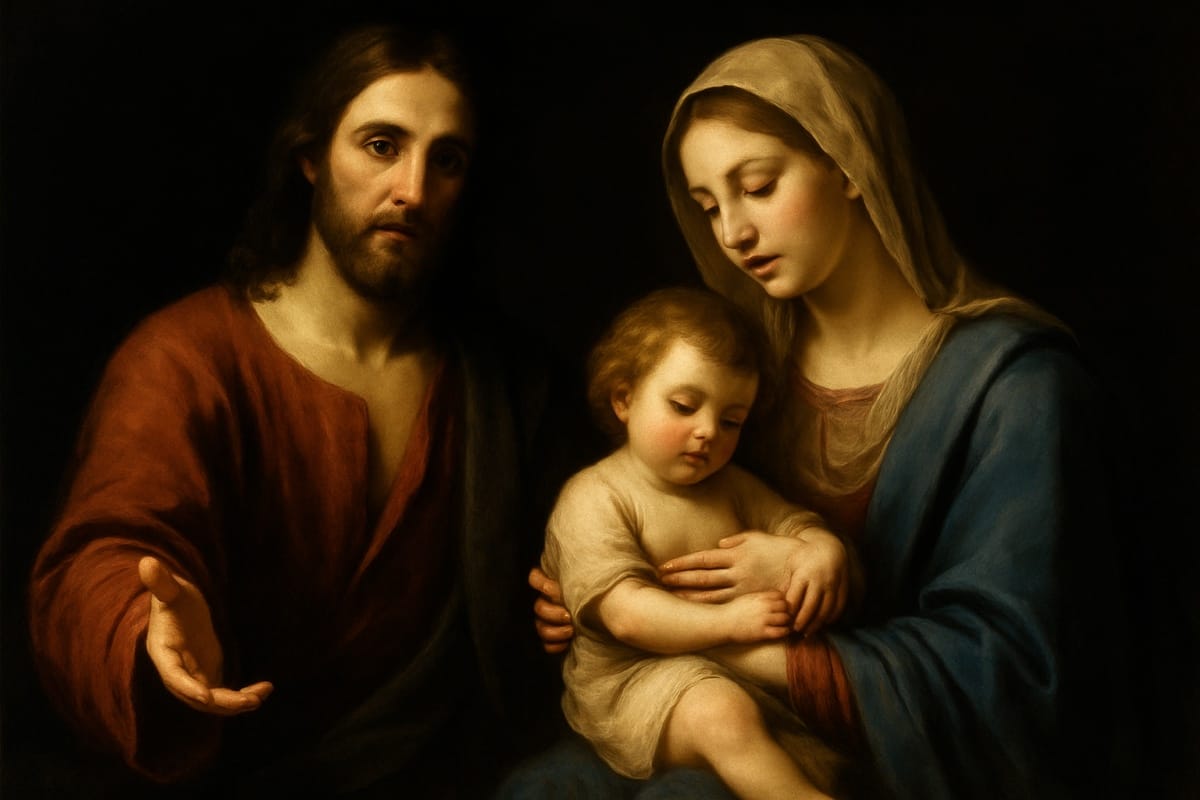
Venite ad me omnes qui laboratis et onerati estis, et ego reficiam vos. Tollite iugum meum super vos et discite a me quia mitis sum et humilis corde: et invenietis requiem animabus vestris.
Mt 11:28-29
The feast of Our Lady of Mount Carmel, celebrated on July 16, coincides this year with the weekday in Ordinary Time whose Gospel is Mt 11:28-30, Jesus’ invitation to rest. This coincidence is not merely a matter of the calendar: there is a deep affinity between Jesus’ “Come to Me, all you who are weary” and Carmelite spirituality, which is essentially a spirituality of rest in God. As a contemplative tradition, Carmel has been marked from its origins by the search for the “place of rest,” Mount Carmel being the place where Elijah found God not in the wind nor in the fire but in the “voice of gentle silence” (1 Kgs 19:12).
Mt 11:28-30 concludes Jesus’ “hymn of jubilation” (Mt 11:25-27): after praising the Father for the revelation to the “little ones” and affirming the unique intimacy between Father and Son, Jesus extends the invitation: “Come to Me.” The invitation is universal (“all”) and specific in its condition: “you who are weary and burdened.” The “weariness” (κοπιῶντες) is the weariness of physical labor and sustained effort. The “burden” (πεφορτισμένοι) is that of an excessive load. Jesus invites the exhausted, those who no longer have any reserves of their own, to a rest that He Himself gives.
I. “I will give you rest”: the rest that Jesus gives
“I will give you rest” (ἀναπαύσω ὑμᾶς): the Greek verb “anapauo” means rest, repose, restoration after effort. It is the same verb used for God’s rest on the seventh day of creation (Gen 2:2-3 LXX) and for the eschatological rest promised to the people of God (Heb 4:1-11). The “relief” that Jesus promises is not superficial; it is not the elimination of all difficulties, but the interior restoration that makes it possible to carry on, the rest that is born not from the absence of work but from a change in who carries the burden.
“Take My yoke upon you” (Mt 11:29): the paradox of the invitation is that Jesus proposes a “yoke” as the remedy for the weariness of carrying a burden. But “My yoke” is different from the yoke that wears one out: “My yoke is easy, and My burden is light” (Mt 11:30). In the Jewish context, the “yoke of the Torah,” the obligation to fulfill the precepts of the Law, was proverbially heavy, especially in the Pharisaic interpretation, which multiplied obligations. Jesus proposes replacing the heavy yoke of the Law, understood as a burden, with the easy yoke of discipleship, understood as a relationship of love.
Carmelite spirituality grasped this paradox with precision: the contemplative who “rests in God” is not inactive but engaged in a deeper activity, the activity of prayer that sustains everything else. Teresa of Avila described the “degrees of prayer” as progressive ways of “letting God work,” from discursive prayer (in which the effort is on the part of the one praying) to the prayer of quiet and the spiritual marriage (in which God is the agent and the one praying rests). Jesus’ “venite ad me” is the invitation to this transfer of agency: to stop carrying the burden by one’s own strength and to let Jesus carry it with us and for us.
II. “Learn from Me, for I am gentle and humble”: the school of the heart
“Learn from Me, for I am gentle and humble of heart” (Mt 11:29): Jesus does not offer a doctrine to be learned but a disposition of the heart to be imitated. “Gentleness” (πραθύς) and “humility of heart” (ταπεινὸς τῇ καρδίᾳ) are the attitudes that make the yoke easy: the gentleness of one who does not resist what God asks, and the humility of one who knows he is not the center of the universe. The disciple who learns these attitudes finds the promised “rest,” not because life has become easier but because he has stopped struggling against what God wills.
The “school of the heart” that Jesus describes is the core of Carmelite spirituality: not the accumulation of theological knowledge but the transformation of one’s interior disposition. John of the Cross described the process as an “emptying,” the noche oscura in which God withdraws the sensory and intellectual supports so that the soul may learn to rest in Him and not in its consolations. This “emptying” is precisely the path of gentleness and humility that Jesus describes: learning not to depend on one’s own strength, resources, and consolations.
Mary lived this “school of the heart” throughout her whole life: the gentleness of the “fiat” at the Annunciation, the humility of the “Magnificat,” which attributes everything to God, the disposition of one who “kept all these things, pondering them in her heart” (Lk 2:19). Mary’s contemplation of Scripture, the Gospel’s “pondering,” is the model of Carmelite spirituality: not intellectual analysis but the meditation of the heart that allows the Word to act within.
III. Our Lady of Mount Carmel: mother of the exhausted
The feast of Our Lady of Mount Carmel has its origin in the Carmelite tradition of the thirteenth century: the first Carmelite friars, settled on Mount Carmel (Palestine) in the twelfth and thirteenth centuries, had a strong devotion to Mary as their patroness and model. When the Order was forced to migrate to Europe (after the Muslim invasion of the Holy Land), it brought this devotion with it, and the devotion took the form of the Brown Scapular, the reduced habit granted (according to tradition) to Saint Simon Stock in 1251 as a sign of Marian protection.
In Carmelite devotional theology, the Brown Scapular is a “sign of consecration” to Mary, the visible expression of a relationship of trust and protection. Whoever wears the Scapular takes on the commitment to pray the Office of the Blessed Virgin (or the Rosary) and to keep the chastity proper to his or her state of life. In return, tradition associates with the Scapular the promise of Mary’s special protection. This “spiritual contract,” however much modern theology may need to present it with care, expresses something profound: the confidence that Mary intercedes in a particular way for those who entrust themselves to her protection.
“Come to Me, all you who are weary”: Jesus’ “venite ad me” finds a Marian echo in Our Lady of Mount Carmel. Our Lady of Carmel is invoked as the mother of the exhausted, of those who have no strength left, of those who carry burdens they cannot carry alone. The tradition of the Scapular promises, which includes the famous “Sabbatine Bull” (of disputed authenticity, but significant in popular devotion) associating Mary’s protection with release from purgatory on the first Saturday after death, expresses this confidence: Mary does not abandon those who have entrusted themselves to her protection, even when they no longer have the strength for anything more than the act of trust.
IV. Carmel and Marian contemplation: learning to rest
Carmelite spirituality is, in its essence, a spirituality of “friendship with God,” the expression Teresa of Avila used to describe prayer: “it is nothing other than an exchange of friendship, being often alone with Him who we know loves us.” This “friendship with God” has its model in Mary: Mary, who “kept these things in her heart,” was the friend of God who rested in the relationship more than in activity.
The “rest” that Mt 11:28-30 promises is not passivity but the quality of presence that is born of a relationship of total trust. The worker who “rests” on Sunday is not inactive; he is recovering his strength for the work ahead, and that recovery comes precisely from “ceasing to work,” from trusting that the world does not stop if he stops. The spiritual rest that Jesus promises has this same structure: trusting that God sustains what the disciple can no longer sustain by his own strength.
Our Lady of Mount Carmel is the mother of this trust: she who said “fiat” without understanding its implications, who “kept” all things without needing to resolve them, who “stood” on Calvary unable to change what was happening, lived the rest of total trust in God in every circumstance. The Brown Scapular, as a sign of this trust, is an invitation to “learn from Mary” what Jesus promises to teach: the gentleness and humility of heart that make it possible to find rest for our souls, even in the midst of tribulations that do not cease.
Postgraduate Program in Mariology
Would you like to deepen your formation in Mariology? Discover the Postgraduate Program in Mariology of Locus Mariologicus, an academic formation that unites theological rigor, spiritual life, and the living tradition of the Church.
Would you like to study Mariology seriously?
This article draws on the works in the Locus Mariologicus library. The Postgraduate Program in Mariology takes you to the same source, with academic guidance: Scripture, the Fathers of the Church, and the Magisterium, from the first dogma to contemporary questions.




Responses