Mary and the laity: Mary’s lay condition and its meaning
Mary and the laity, Mary’s lay condition and its meaning
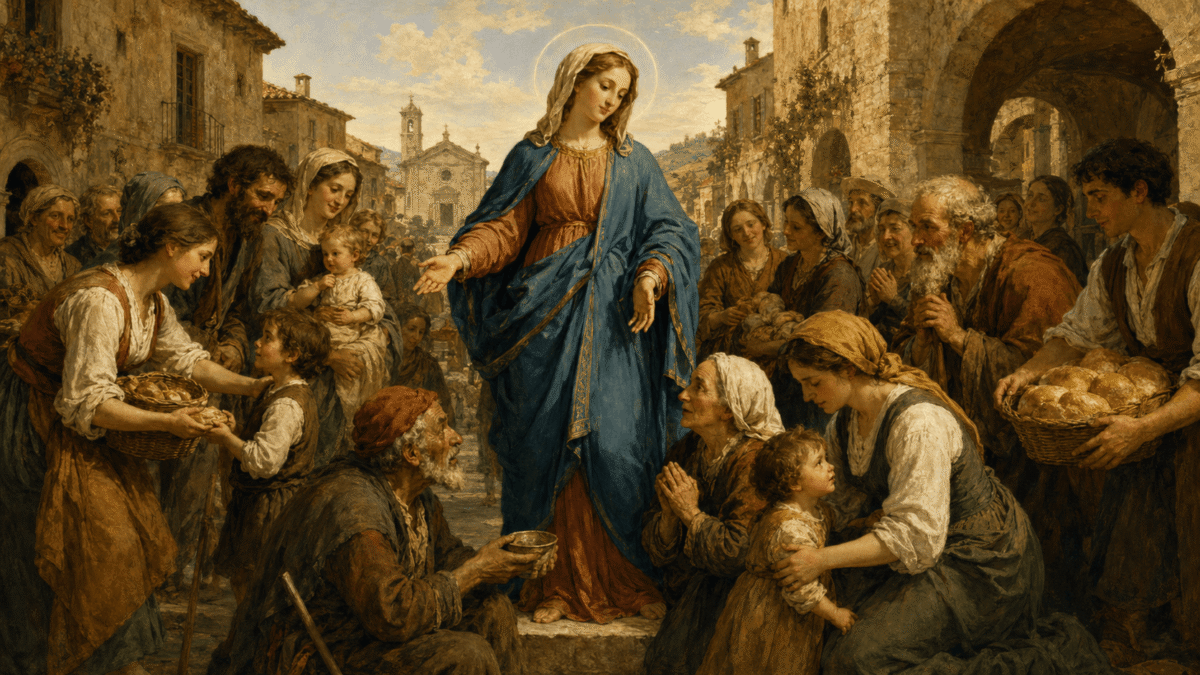
The relationship between Mary and the laity is a theme developed above all after the Second Vatican Council. If one wishes to situate Mary in a state of life, according to the canonical categories of the Church, it must be said that she belongs to the lay state, even though in a strongly consecrated condition of life. She belongs neither to the ministerial priestly order nor to the religious state in the technical sense. Hence Mary is proposed as an example and type of Christian existence in a way that is especially pertinent for the laity.
The Marian dogmas as a paradigm of lay salvation
The two Marian dogmas subsequent to the Council of Nicaea illuminate Christian salvation in its integrity. The Immaculate Conception shows that the grace of God precedes and enfolds human existence from its first instant, before any response or merit. The Assumption shows that salvation is integral, not angelic but human: it embraces the bodily and the spiritual dimension of man. Mary assumed into heaven is “the concrete demonstration of what Christianity thinks about the destiny of man”: man is called to an eternal experience of salvation that does not exclude a genuine humanism. Mary’s hope is at once a hope of the present and of the future anticipated in the present.
Mary as a type for the whole people of God
Mary can and must be proposed as a type of the sequela Christi to all the members of the laos (people) of God, because “she was the first and the most perfect follower of Christ.” No one can “appropriate” Mary in an exclusive way: her mystery is a spring able to satisfy every state of life, every group, the whole Church. The imitation of Mary is possible in respect for the vocational originality of each Christian and in the creativity of the personal response to God. The Christian before Mary is like the artist who draws inspiration without copying. Beyond the typological bond, Mary is present in the life of the Church with her prayer and maternal protection (LG 62), so that all Christians find in her support, help, and comfort.
Mary and the prophetic mission of the laity
The prophetic dimension of Mary is particularly rich for the laity. Mary is the first evangelized: to her, the daughter of Zion destined to be the mother of the Messiah, the announcement of the coming of the Savior is given first of all (Lk 1:26-38). Mary is also the first evangelizer: the word received becomes proclamation. Overshadowed by the Spirit, she announces the “great things” done by the Almighty (the Magnificat) and carries the incarnate Word to the bosom of Elizabeth (Lk 1:39-56). At Cana, Mary teaches that the word is received in obedience: “Do whatever he tells you” (Jn 2:5). Three prophetic attitudes shed light especially on the laity: the contemplation of events in the heart (Lk 2:19, 51), which enables one to find the overall meaning of history; persevering patience (makrothymia), which sustains hope in the long struggle against evil; and prophetic silence, the necessary premise for receiving and proclaiming the Word effectively.
Mary and the priestly and royal mission of the laity
Mary does not belong to the ministerial priesthood, but she shares, in a singular way, in the common priesthood of all the faithful (1 Pet 2:9). Her salvific activity is founded on her maternal consent to the Redeemer, on her docility to the redemptive initiative of the Son: she acts “in the name and in the person of the Church, in union with Christ.” The laity can look to Mary as an example of how to transform their whole life into spiritual worship, and of how to stand beside the Cross of the Son and, consequently, beside the cross of men (cf. AA 4). In the royal dimension, Mary shows by example how to lead the “kingdom of men” to become the “kingdom of God”: she illuminates human values with the light of Christ, she proposes the way of beauty, the option for the poor, and the promotion of the feminine as a dimension of salvation.
Deepen your studies: explore Mariology, Marian Theology, Mary and Evangelization, and the Postgraduate Program in Mariology.
Magisterium of the Church
Maria, in humili conditione vivens, est exemplar laicorum qui in mundo et per mundum sanctificationem suam persequuntur.
Second Vatican Council, Dogm. Const. Lumen Gentium, n. 65
📚 Literal translation: Mary, living in a humble condition, is the model of the laity who in the world and through the world seek their sanctification.
Postgraduate Program in Mariology
Would you like to deepen your formation in Mariology? Discover the Postgraduate Program in Mariology of Locus Mariologicus, an academic formation that unites theological rigor, spiritual life, and the living tradition of the Church.
Learn what the Church teaches about Mary, Mediatrix of All Graces.
Would you like to study Mariology seriously?
This article grows out of the works in the Locus Mariologicus library. The Postgraduate Program in Mariology takes you to the same source, with academic guidance: Scripture, the Fathers of the Church, and the Magisterium, from the first dogma to contemporary questions.




Responses