Mary’s presence in the life of the Church
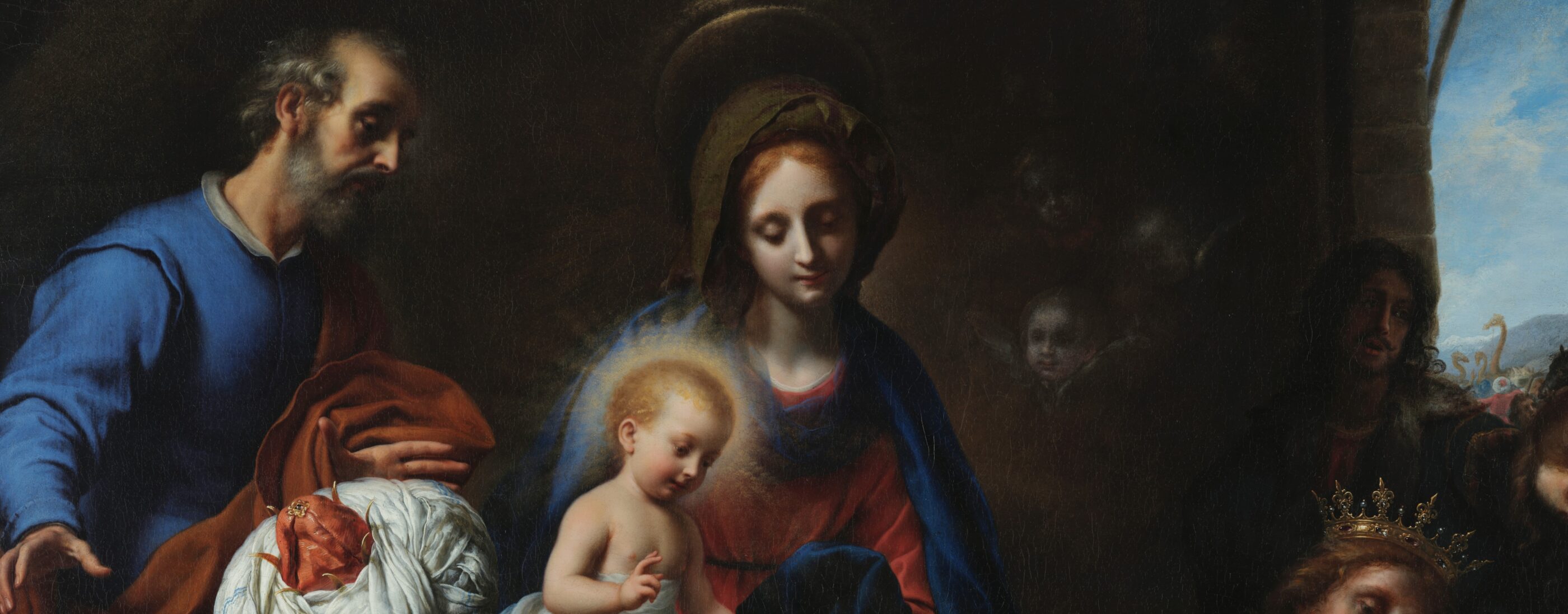
When reflecting on the relationships between Mary and the Church, the first truth that strikes us is the ecclesial value of Mary’s life: everything given to this unique woman was granted for the sake of the Church. Everything given to Mary was granted for the sake of redemption and, through her, for the sake of the Church: a bond indissoluble that binds Mary to the life and destiny of the community of the saved by the Redeemer. Therefore, there is an indissoluble bond that binds Mary to the life and destiny of the Church.

It is this bond that we seek to delve into, first by considering the title and role of Mary as “Mother of the Church” and then by specifying these in three considerations: Mary as “Mother in the Church”, Mary as “Mother with the Church”, Mary as “Mother for the Church”. This is because Mary, “Mother of the Church”, continually solicited by the Spirit for her maternal role, acts and intervenes without cease and in a multifaceted way in the life of the Church, to guide it, always more in accordance with Christ the Head, towards its supreme escatological end.
Mary “Mother of the Church”
The dogmatic constitution Lumen gentium of the Second Vatican Council, after proclaiming Mary “most excellent member”, “type” and “model” of the Church, states: “The Catholic Church, guided by the Holy Spirit, with filial piety venerates her as most loving Mother” (Second Vatican Council, Lumen gentium Dogmatic Constitution, 21 November 1964, in Enchiridion Vaticanum EDB, Bologna 1971, vol. 1, 284-445. Lumen gentium53).
The conciliar text does not explicitly attribute the title of “Mother of the Church” to the Virgin. However, it undeniably conveys its meaning, echoing a statement made in 1748 by Benedict XIV, who, describing the filial feelings of the Church towards Mary, recognized as the most loving Mother, indirectly proclaims her “Mother of the Church” (Benedict XIV, Bullarium Romanum Series 2, t. 2, n. 61, p. 428).
The use of this appellation was rare in the past but has become more common in recent times in the teachings of the Church’s Magisterium and in the piety of the Christian people. The faithful have invoked Mary primarily with titles such as “Mother of God”, “Mother of the Faithful”, or “our Mother”, emphasizing her personal relationship with each of her children. Subsequently, due to greater attention to the mystery of the Church and Mary’s relations with it, the invocation of the Virgin as “Mother of the Church” has become more frequent.
The expression, prior to the Second Vatican Council, is present in the teachings of Pope Leo XIII, who stated that Mary was “truly Mother of the Church” (Acta Leonis XIII 15, 302). It was subsequently used several times in the teachings of Pope John XXIII and Pope Paul VI.
Pope Paul VI himself desired that it be the Second Vatican Council that proclaim: “Mary, Mother of the Church, that is, of the whole People of God, both of the faithful and of the Pastors”. He did so in his closing speech at the third session of the Council on November 21, 1964 (A. Grasso,
The Mother of God and Peace in Some Magisterial Documents of Paul VI, a doctoral thesis in Theology with a specialization in Mariology, Pontifical Theological Faculty «Marianum», Rome 2005, pp. 137-139). He further requested that «from now on, with such a sweet title, the Virgin be honored and invoked even more by the whole Christian people», thus explicitly enunciating a doctrine already contained in Chapter VIII of the Dogmatic Constitution on the Church Lumen Gentium officially promulgated on the same day, and desiring that the title «Mother of the Church» acquire an even more prominent place in the liturgy and piety of the Christian people, (Paul VI, Closing Speech of the Third Session of the Second Vatican Council, November 21, 1964, in Acta Apostolicae Sedis 56 [1964], 1015-1016).
Biblical, Patristic, and Theological Foundation
Although attributed to Mary later, the title «Mother of the Church» expresses the Virgin’s maternal relationship with the Church, as already illustrated in some texts of the New Testament:
a) Since the Annunciation, Mary is called upon to give her consent to the coming of the messianic kingdom, which will be fulfilled with the formation of the Church.
b) In Cana, when asking the Son to exercise His messianic power, she plays a fundamental role in the establishment of faith in the first community of disciples and cooperates in the instauration of God’s Kingdom, which has its «seed» and «beginning» in the Church, (Lumen Gentium 5).
c) On the Cross, joining her son’s sacrifice, she offers her maternal contribution, which takes the form of a painful birth, the birth of a new multitude. Addressing Mary with the words «Wife, behold your Son», the Crucified proclaims her motherhood not only to the apostle John but also to every disciple. The same evangelist, stating that Jesus had to die «to gather into one the children of God who were scattered», points to the birth of the Church as the fruit of the redemptive sacrifice to which Mary is maternally associated, (John 11:52).
d) The evangelist Luke, referring to Mary’s presence in the early Jerusalem community, highlights the maternal role of Mary towards the nascent Church, akin to her role in the birth of the Savior. The maternal dimension becomes thus a fundamental element in Mary’s relationship with the new people of the redeemed, (Acts 1:14).
Following Sacred Scripture, patristic doctrine also attests to Mary’s motherhood in relation to Christ’s work and, consequently, the Church, albeit not always explicitly:
a) According to St. Irenaeus, Mary «became the cause of salvation for all humanity», and her pure breast «regenerates men in God», (St. Irenaeus, Against Heresies 3, 22, 4. Patrologia Graeca).
7, 959. Idem, Adversus haereses 4, 33, 11. Patrologia Graeca 7, 1080.
b) It echoes Saint Ambrose, who states: “A virgin gave birth to the salvation of the world, a virgin gave life to all things,” and other Fathers who call Mary “Mother of Salvation,” (Saint Ambrose, Epistula 63, 33. Patrologia Latina 16, 1198. Severian of Gabala, Oratio 6 De mundi creatione 10. Patrologia Graeca 54, 4. Faustus of Riez, Maxima Bibliotteca Patrum VI, 620-621).
c) In the Middle Ages, Saint Anselm addresses Mary thus: “You are the mother of justification and the justified, the mother of reconciliation and the reconciled, the mother of salvation and the saved,” while other authors attribute to her the titles of “Mother of Grace” and “Mother of Life” (Saint Anselm, Oratio 52, 8. Patrologia Latina 158, 957).
The title “Mother of the Church” thus reflects the deep conviction of believing Christians, who see in Mary not only the mother of Christ’s person, but also of the faithful. She who is recognized as mother of salvation, life, and grace, mother of the saved and mother of the living, is therefore rightly proclaimed “Mother of the Church” (John Paul II,
Mater EcclesiaeLet us now delve into the ways in which the Virgin lives in the Church, with the Church, and for the Church, her role as the “Mother of the Church.”
Mary, “Mother in the Church”
The Presence and Face of Mary
If what we affirm is true, Mary is not merely a memory of a distant creature from the past, who lived over two thousand years ago on this earth, involved in the mystery of the Incarnation, who virginally gave birth to the Savior, who obtained her first miracle, who participated in the drama of Calvary, becoming the mother of the beloved disciple, who was among the first disciples on the day of Pentecost. For Christians, she is the universal mother, actively present in the current life of the Church, to such an extent that everything she received in the past, she makes available today and always to those she loves, serves, and assists as her daughters (A. Serra,
Maria di Nazaret. Una fede in cammino
Its presence is, therefore, much more important and significant than the sparse biblical texts at first glance would suggest. The Angel of the Annunciation, gazing in wonder at Mary, called her Kekaritomene, “the one who is filled with grace.” The immaculate splendor of the Virgin of Nazareth was intended to illuminate the Church, a Church that was to face a world of sin and was itself composed of sinners. Mary’s spiritual perfection appears as a light that reveals the wonders of divine grace. She is a model for Christians who, though recognizing their inability to attain her, know they must strive for perfection. The Church looks upon the immaculate splendor of Mary and rejoices in knowing that she has a mother of perfect purity, whose heart has always been free from deceit and animated by sincere and wholehearted love. Her fullness of grace is certainly a unique and exceptional privilege, but, like the privilege of a mother, it enriches all her children and draws Mary closer to each of us and to the Church, for if grace fully opened her heart, it also united her most completely to all humanity.
By her excellent holiness, which derives from an unwavering reception of grace, Mary presents herself to the Church as the embodiment of that perfection to which all Christians are called to aspire. In her, the love of God and the love of one’s neighbor, which form the essence of the law, have developed in full measure. When, during his earthly life, Jesus declared that the whole law and the prophets are summed up in the two commandments of love, he was expressing what he had always seen in his mother’s behavior (Mt 22:40). All of Christian morality is concretely represented in Mary’s immaculate and holy face.
In the moral teaching of Christ there is a simplification, the love of God and the love of one’s neighbor, which reduces the old law of the fathers to its essential purposes, stripping it of a great many particular prescriptions. At the same time, there is an unlimited expansion of the fundamental commandment of love. This simplification and expansion of genuine holiness had already been realized in Mary, by the grace of God, even before they were proclaimed by the authority of the Master. They continue present in one who, conscious of grace, represents to the Church an ideal fully lived out. (A. M. Canopi, Ecco tua madre. Maria nella Scrittura e nella vita della Chiesa, Piemme, Casale Monferrato 1992, pp. 23-42).
Christ and the Virgin Mother
Someone might object: is this place given to Mary not in competition with the unique role we should recognize for Christ our Lord? Is Christ not the model to be contemplated and followed by all Christians? Should he not therefore be exclusively in focus? The objection, often made to Marian devotion, tends to relegate Mary to the shadows, to concentrate all attention and all attachment on him who is the sole Savior.
But if we consider well the divine plan of salvation devised by the Father, we find here the answer to these objections. The Father who presented his Son to humanity as Redeemer and supreme model of human perfection, willed that he come to us as the Son of Mary, the Virgin conscious of grace. He inaugurated the work of salvation, granting to Mary a fullness of holiness. It was he who, in the message of the Annunciation, made us understand his own admiration for the perfection with which he had cumulated the young woman of Nazareth, in order to thus introduce us to the understanding of the excellence of the Savior, conceived by the power of the Spirit in her immaculate womb.
Theology has not failed to show how the privilege of the Immaculate Conception was due to an anticipatory application of the merits of the Redeemer. Through his sacrifice, Jesus obtained for his Mother the preservation from all stain. Not only is the exceptional holiness of Mary a free gift of divine grace, but it is the result of the theological generosity of Calvary. She therefore tends to make even more apparent the wonderful effects of Christ’s work, (S. De Fiores,
The immaculate one, in the New Dictionary of Mariology [original: Italian], Edizioni Paoline, Cinisello Balsamo, pp. 679-708, shows another significant aspect of Mary’s solidarity with Christ: her full association with the mystery of the Incarnation. St. Paul had already expressed his wonder at this aspect of the Incarnation, saying: “When the fullness of time had come, God sent his Son, born of a woman…” (Gal 4:4). The fact that a young woman is the mother of God clearly testifies to the supreme contribution of women to the mystery of salvation (J. Galot, Maria, la donna nell’opera di salvezza Roma [Università Gregoriana] 1984). To be called “Mother of God” is not simply a title; it signifies that Mary, with all the reality of human motherhood, is the Mother of God: the woman contributed fully and truly to the Incarnation, and it was through her that the Son of God became similar to us. Inseparable from Christ through this maternal mission, Mary is present with him in the Church. Through the fullness of grace she received, she serves as a model for Christians, both as a woman and in her complementary role to Christ, who is the essential model of all Christian life. It is important to remember that she receives her perfection from the Savior, but this perfection takes on a female face in her. Mary is the perfect woman, fully realized, of unshadowed beauty in the eyes of God, as the term kekaritomene (C. Militello, Maria con occhi di donna Piemme, Casale Monferrato 1999. A. Decedei, “The figure of Mary in the education of women,” in Il posto di Maria nella nuova evangelizzazione Centro di Cultura mariana “Madre della Chiesa,” Roma 1992, pp. 166-182. I. Siviglia, “The woman of our time confronts Mary,” in Maria e la cultura del nostro tempo a trent’anni dalla Marialis cultus AMI, Roma 2005, pp. 173-183. G. Colzani, Maria mistero di grazia e di fede San Paolo, Cinisello Balsamo 1996, pp. 218-230). When Church doctrine defines Mary as the “New Eve,” it recognizes her as the ideal woman. The woman attains such perfection in Mary that she casts into the shadows the imperfection of the first woman.
The fullness of her faith
Mary is the first example of pure and authentic faith, proper Christian faith, which is faith in Jesus. The Virgin of Nazareth was the first to believe. Believing the angel’s message, she gave her faith to the mysterious child announced to her. She then developed her faith, recognizing Jesus as the Son of God, a faith that inspired her to ask for her first miracle. Her faith preceded the miracle, while the faith of the disciples followed it (John 2:11). She who triggered the first public revelation of Jesus and caused the faith of the disciples continues to draw the whole Church along in the wake of her faith. Mary remains, in our eyes, the supreme model of the closest union with Jesus. Her virgin altar over Jesus serves as a model for contemplation. Her attachment to him in faith, hope, and love continued to develop, remaining an example that the Church is invited to meditate upon and follow (S.M. Perrella,
Mary, the Virgin Mother. The Fertile Virginity of Mary Between Faith, History, and Theology (San Paolo, Cinisello Balsamo 2003, especially pp. 273-294; G. Colzani, Mary, Mystery of Grace and Faith (San Paolo, Cinisello Balsamo 1996, pp. 161-183). In the Virgin’s total faith in Christ, in her complete and intimate union with Him, in her painful and loving cooperation with His work of salvation, we have before us a perfect and complete example. This example, which guides us on the path of faith, of total adherence to Christ and His work, is not only given to us through doctrinal exhortations, but effectively proposed as a model to be imitated, through the simple and attractive personality of Mary (A. Serra, Mary at Cana and at the Cross (Centro di Cultura Mariana «Madre della Chiesa», Rome 1991: for the Cana event, pp. 7-78; Mary at the Cross, pp. 79-118).
Mary, «Mother with the Church»
Christ and Mary with the Church
Mary is not merely in the Church; she is with the Church. To fully grasp this statement, one must recall that Jesus told His apostles that He would remain with His Church. His most comforting and encouraging words come from the Gospel of Matthew, in which, on the eve of His ascension, the Risen Lord gives His disciples a mission to evangelize all nations, with the definitive assurance of His continuous assistance: «Behold, I am with you always, to the end of the age» (Mt 28:20). At the moment of His return to the Father, Jesus affirms that His presence will remain, a presence in every moment: He will remain with His disciples in an invisible solidarity, guide them in their struggles, accompany them in all their apostolic activities, share in their trials, sustain them in their difficulties, endure the persecutions they will suffer, to the point that later He will tell Saul on the road to Damascus: «I am Jesus, whom thou persecutest» (Acts 9:5). In formulating His promise, Jesus implied that He would be as God in remaining with His disciples everywhere and always. «I am with you» echoes the divine name «I am», a name Jesus would attribute to Himself on several occasions during His public life. He establishes an indissoluble alliance with His Church, as (J. Galot, Do You Know Him, the Christ?** (Florence [LEF], 1984, 3rd ed., p. 160).
With what title can we admit that Mary is equally with the Church? As Mother of God, she is inseparable from her Son, the Savior, who accompanies his disciples as God made man. As Mother of mankind, she could not abstain from being with the Church throughout its development. We see Mary with the disciples in the assembly awaiting Pentecost (Acts 1:14). She participates in the communal prayer that ascends to heaven in anticipation of the coming of the Holy Spirit. She too receives the Spirit at Pentecost and can proclaim once more the wonders of God. This outpouring of the Holy Spirit testifies that, far from concluding, Mary’s role in the work of salvation continues as a renewal and further development, now consisting in accompanying the initial expansion and life of the Church. Mary, who had been united to the Son and sustained him in his mission, is now united to the nascent Church and to all who are called to spread the Good News, supporting them with her help and encouragement (A. M. Canopi,
The Compassion of Mary
The first Byzantine theologian to enunciate an explicit doctrine of Mary’s compassion was John, the Geometer, who lived in the 10th century. He spoke of Mary’s intense participation in the initial apostolic impulse of the Church, emphasizing the solidarity and compassion aspect, which he saw as an extension of the compassion on the Cross. He writes, among other things:
«What was most notable about her was that she suffered anew, as she had once with her Son, now with her preachers and disciples, and this above all because of her Son, by whom they spoke and suffered. Thus she already behaved as a universal Mother, whose heart was consumed with affection for all, not only for those who suffered, but even more for their tormentors, whose situation was much more perilous, since for the disciples, suffering was not a danger, but salvation,» (J. Galot, «The Earliest Affirmation of Marian Co-redemption,» in Recterctes de Science Religieuse 45 [1957], p. 205. Vita di Maria by John, the Geometer, cited according to a manuscript from the Bollandist Library [Brussels], copy of a manuscript from Genoa: f. 151v-152r).
This painful participation of Mary in the vicissitudes of the Church is described by the theologian in the most vivid and concrete terms:
«Thus, she was chained with the chained, whipped with the whipped. She fought with all who were in battle and, by her will, surpassed herself in the battles of all. In these struggles, she offered words of encouragement and, as an example, presented to the combatants the Passion of the Master, for whom they should suffer,» (Ibidem, 206. Vita di Maria, f. 152r).
With these incisive expressions, John, the Geometer, sought to make us aware of the reality of Mary’s painful participation in the severe trials to which the primitive Church was subjected. He helps us understand better Mary’s solidarity with the Church of our time. Today, the Mother of Jesus enjoys the happiness of heaven in the glory of her Assumption. She no longer needs to walk the path of the cross as she did during her earthly life. However, the maternal love that animated her on earth has not faded in her celestial state. On the contrary, it unfolds in fullness and involves her heart in all human situations, especially the most painful ones.
The faithful recognize in Mary the most moving face of compassion. With her maternal presence, she is the sign of divine compassion for humanity. God has revealed himself as a compassionate and merciful God. In the Old Testament, the term used to express divine mercy was that which designated maternal entries, rechamim (Cf. J. Galot, «The Face of the Father and Christian Life,» in La Civiltà Cattolica 135 [1984] III, p. 116. G. Colzani, Maria: Mystery of Grace and Faith, pp. 275-287. C. M. Martini, Mary Still Suffers, Gribaudi, Milan 1997. O. Musumeci, The Arcane Language of Those Tears: Reflections on the Madonna of Tears).
Being with the Church, for Mary, means participating in the existence of all the members of the Church and of all those called to enter the Church. Since this call extends to all, Mary’s maternal tenderness is open to all. No maternal pain leaves indifferent one who Christ has constituted the universal Mother. The smallest afflictions, as well as the most tragic trials, resound in her maternal heart. In her sorrows, the faithful find consolation when they turn to Mary, knowing that they are welcomed, understood, and assisted (Cf. A. M. Canopi, “…E c’era la Madre di Gesù,” pp. 36-40).
Communion with Church life
Being with the Church, Galot asserts, is not merely being with those who live on earth, sharing in their difficulties and sympathizing with their sufferings. It is also being with all to help them integrate into Church life. Mary has all the tenderness of a mother who accompanies her children on the path of earthly existence, but she never loses sight of the ultimate goal of this existence. She does not merely offer love and comfort, but encourages each one to live more sincerely and deeply a life in the Church, a life in union with Christ and fraternal charity, a life in accordance with the precepts of the Gospel. Therefore, one can affirm that, by being with each one of us, Mary is truly with the whole Church. Her attention to the Church does not detract from the affection she bears to each individual. With each one of us, she seeks to recreate that intimate communion that existed between her and her Son on earth. She makes herself entirely for all, without reserving anything from her heart.
Mary and the social mission of the Church
Being with the Church and for the Church, Mary guides us to focus our efforts more on the great problem of world history, the propagation of the good news, the reception of Christ, the conversion of each one and of all, the establishment of a Christian civilization of love and peace. This is the mission of the Church, an ancient and always new mission that requires renewed and continuous efforts (cf. A. Grasso, “La Madre di Dio e la pace in alcuni documenti magisteriali di Paolo VI,” pp. 181-199; C. Boff, “Mariologia sociale,” Pontificia Facoltà Teologica “Marianum,” Roma 1999; Idem, “Mariologia sociale nei documenti del Magistero,” in AA.VV.,
Maria e l’impegno sociale dei cristiani
In the Church, Mary walks and even invites us to walk hand in hand with her, leading us as the Star of the new evangelization of the world (cf. P. Giglioni, «The new evangelization in the face of Mary», in AA.VV., The place of Mary in the new evangelization, Marian Cultural Center «Mother of the Church», Rome 1992, pp. 7-34).
The maternal role of Mary is not dedicated exclusively to the development of apostolic activity. It concerns all aspects of human and Christian existence, but it is particularly exercised in promoting all forms of apostolate (cf. A. Serra, Marian dimensions of the paschal mystery, Paoline, Milan 1985, pp. 13-37).
The long-standing experience of the Church attests to the fertility of apostolic activity that develops in collaboration with Mary. This allows us to see how much Mary works for the Church. This fertility is explained by the fact that, by asking for Mary’s special action, the apostolate finds itself in the continuation of the event that inaugurated the work of salvation: the coming of the Savior into this world, made possible thanks to Mary’s collaboration with the Holy Spirit. The wonderful fertility that followed Mary’s intervention in the Annunciation tends to repeat itself throughout the history of the Church. The Holy Spirit delights in performing miracles where Mary is invoked and called to assist in the apostolic work. That is why Mary is recognized as the star of the new evangelization of the Church (Cf. P. Giglioni, «The new evangelization in the face of Mary», pp. 7-34).
Mary, «Mother of the Church»
She who is in the Church and with the Church is also for the Church. It could not be otherwise.
«Yes» to Christ and «No» to the Church
Many contemporaries, as Galot states, describe their religious position with a «yes» to Christ and a «no» to the Church. They claim to accept the Jesus of the Gospel, but reject the Church that presents itself in his name. Many criticize those who hold authority in the Church, or the faithful in general, arguing, for example, that they are no better than others. Many of them do not grasp the demands of a church life and remain distant from liturgical expressions. The Church is often oppressed by reproaches and abandoned by those who claim to love and follow Christ’s teachings.
In Mary, the «
“The ‘yes’ to Christ has always been united with the ‘yes’ to the Church, from the consent given at the Annunciation, where accepting motherhood also meant collaborating in the establishment of a kingdom that would never be destroyed. Pentecost marked the moment when all that Mary had given to Jesus before was then put at the service of the Church. In Mary’s love and life, there could be no dissociation between the person of Jesus and his work, between him and his Church.
Mary is, therefore, for the Church with all her heart and all her strength. She is not united only to an ideal Church, but to the Church as it lives concretely on earth, for it is this Church that is Christ’s work and that spreads the good news of the Gospel. Her attachment is clear, complete, and conscious, because she does not ignore the failings and shortcomings in the life of the members of the Church, but sees them with greater clarity and justice than those who pass severe judgments. She knows that the Church is a community of sinners, but she also knows that it is the path chosen by Christ to communicate his holiness to the world (Cf. E. Ribet, ‘La Marialis cultus: una lectura evangelica’, in AA.VV., Maria e a cultura do nosso tempo, pp. 75-86).
Mother of the Church
Mary is for the Church to a greater extent because she acts as its Mother. If she is the true Mother of the Church, then one understands better how much she is for the Church. To condemn, reject, or neglect the Church, writes Galot, is to offend the one who generated her and who maternally watches over her. Mary is never discouraged by the difficulties the Church faces in its efforts towards holiness. She persists in seeing the Church as the great spiritual force that acts in the world to make it better, and as the community that received from Christ the guarantee of its existence and development.”
If we were to describe her reaction to the shortcomings she observes in the Church today, we could recall her intervention at the wedding of Cana. She herself had warned Jesus: “They have no more wine” (Jn 2:3). This is a sign of her attentiveness to the proper functioning of the nuptial feast. While the directly concerned parties, the bride and groom, were unaware of the situation, Mary had noticed the lack of wine and entrusted everything to the Son. The Church never has enough wine to ensure, as it should, the Messianic banquet. It lacks sufficient faith and charity, and thus is unable to give the world all it should expect. With her maternal compassion, Mary continually presents these deficient situations to Jesus. She is constantly in a state of intercession with the Son, and knows she can count on the abundance of wine, life of faith, and love, granted in response to her prayers (Cf. E. H. Stillebeeckx, Maria madre della Redenzione, Edizioni Paoline 1965, pp. 172-176. G. Colzani, Maria mistero di grazia e di fede, pp. 64-66).
Mother of Charity and Unity
As Mother of the Church and Mother of Men, Mary dedicates her solicitude to the widest diffusion of the values of interior life that constitute the wealth of the Church. Among these values, charity has essential importance, as it summarizes and contains all the others, since the Church lives from God’s love and love for the neighbor. Mary, who in her earthly life gave a constant example of perfect charity, uses all her maternal resources to strengthen the kingdom of love. She is the first to spread a spirit of sweetness that renounces all violence and a disposition of universal sympathy that overcomes exclusions and discriminations. Mary gives herself generously so that the love brought by the Savior to humanity is concretely translated into social relations with greater justice, sincere mutual aid, benevolence, compassion, forgiveness, and peace (Cf. S. De Fiores, «
La figura liberatrice di Maria e l’impegno sociale dei cristiani“, in AA.VV., “Maria e l’impegno sociale dei cristiani
Mother of the Church, she is more precisely the mother of the unity of all who adhere to the Son. Jesus’ prayer to the Father that “all may be one” is perpetually etched in her maternal heart. A mother desires the union of her children. This natural desire is reinforced by the deeply unifying guidance of redeeming grace. On the Cross, Mary suffered for the reconciliation of humanity with God and for the reconciliation of hearts among themselves. In her celestial role, she strives to penetrate this reconciliation into every human heart.
Mother of unity, Mary sustains everything that contributes to unity within the Catholic Church. She works for harmony between shepherds and the faithful, and in conflicts, she seeks to prevail the will for good understanding. She also favors all ecumenical approaches, contributing to grow, among Christians from various Churches, a higher desire for unity. Even among non-Christians, she encourages, as much as she can, what most unifies people among themselves, with a grace that secretly operates in all and that, in reality, is the grace of the Saving and Reconciling Christ (Augustinus, Sermo 192, 2. Patrologia Latina 38, 1013: «
Mater est unitatis». See M. Triaca, «Maria vergine madre dell’unità» in La Tteotokos nel dialogo ecuménico, Rivista litúrgica 2-3 [1998], pp. 171-208. S. M. Perrella,Non temere di prendere con te Maria[Mt 1:20]. Mary and Ecumenism in the Post-Modern Era (San Paolo, Cinisello Balsamo 2004), especially the postfation by I. Calabuig, pp. 213-231. H. W. Taja, «The Blessed Virgin Mary as a Sign of Unity Among Christians», in [AA.VV.,]Maria e l’impegno sociale dei cristiani
We can conclude by affirming that all the riches accumulated by the Holy Spirit in Mary are intended to enrich the Church and do enrich it truly and continuously. Everything in her is for the Church. A Church without Mary would not be the Church we know and love. An essential trait would be missing from its motherly face. There would be no true Church without Mary. The Mother of Jesus, made our mother, is forever Mother of the Church and will always be in the Church, with the Church, for the Church, until its final and complete fulfillment.
Conclusion
In the light of the path traveled, it becomes clear that the title “Mother of the Church” is not a devotional ornament nor a late formula of piety, but the organic synthesis of a reality inscribed in God’s design. Everything the Spirit accomplished in Mary, from the fullness of grace that prepared her for the “yes” of the Annunciation to her painful association with the offering of the Son on the Cross, was granted in view of the generation and building up of the People of God. The virginity of her divine motherhood, by its very nature, opens up into ecclesial motherhood: she who gave the world the Head cannot fail to be linked, in a singular and permanent way, to the Body.
Therefore, the three modalities considered here do not add up as independent aspects, but illuminate each other. Mary is “Mother in the Church” as a living presence and face of sanctity that the Church contemplates to recognize the primacy of grace, the beauty of faith, and the demand of love. She is “Mother with the Church” as communion, compassion, and care that accompany the concrete journey of the faithful, supporting them in trials, guiding them to interior life, strengthening perseverance, and animating apostolic zeal. She is “Mother for the Church” as intercessor and educator, committed to the maturation of charity and the gift of unity, always in favor of the evangelizing mission and the testimony of peace that the Church is called to offer the world.
The centrality of Christ, far from being obscured, shines even more brightly. Mary’s relationship with the Church is entirely Christological: she does not replace the Lord, but refers to Him. She does not retain, but gives. She does not scatter, but gathers. Her “do whatever he tells you” remains as a permanent form of her maternal service, helping the Church to recognize, welcome, and obey the Word, to live from the sacraments, to persevere in prayer, and to configure itself, ever more, to the Crucified-Ressurected.
From this flows a decisive pastoral consequence. True love for Mary does not lead to an intimate spirituality or to a devotion disconnected from ecclesial life, but to a full “yes” to both Christ and the Church. To take Mary with us, to the likeness of the beloved disciple (Jn 19:26-27), means to embrace her faith pedagogy, to enter into the logic of the Gospel, to embrace communion and to serve the mission. Where Mary is received as Mother, the Church finds, with greater clarity, its own maternal face, learns to have compassion, to reconcile, to educate, to gather, and to evangelize.
Therefore, we can conclude with the affirmation that permeates this entire study: everything in Mary is for the Church, and everything in the Church finds in Mary a singular maternal aid. There is no true Church without Mary, not as a parallel condition to Christ, but as a gift from Christ to his Bride. Until the full escatological fulfillment, the Mother of Jesus remains, without ceasing, in the Church, with the Church, and for the Church, so that she may be, in every time, more faithful to her Lord and more transparent to the grace that constitutes her.
For further magisterial insight, consult Chapter VIII of
Lumen Gentium is the foundational document of the Second Vatican Council on Mary: Lumen Gentium Chapter VIII, Mary Mother and Model of the Church.
Deepen your studies: explore MariologyMarian theologyMarian apparitions and the Postgraduate Program in Mariology.
To deepen theological reflection on Mary’s role in the life of the Church and in the history of salvation, consult the Encyclical Redemptoris Mater of Pope John Paul II.
Postgraduate Program in Mariology
Would you like to deepen your formation in Mariology? Get to know the Postgraduate Program in Mariology from Locus Mariologicus, an academic formation that joins theological rigor, spiritual life, and the living tradition of the Church.
Would you like to study Mariology seriously?
This article arises from the works in the Locus Mariologicus library. The Postgraduate Program in Mariology takes you to the same sources, with academic guidance: Scripture, the Fathers of the Church, and the Magisterium, from the first dogma to contemporary issues.



Responses