Our Lady of Kibeho, Mother of the Word
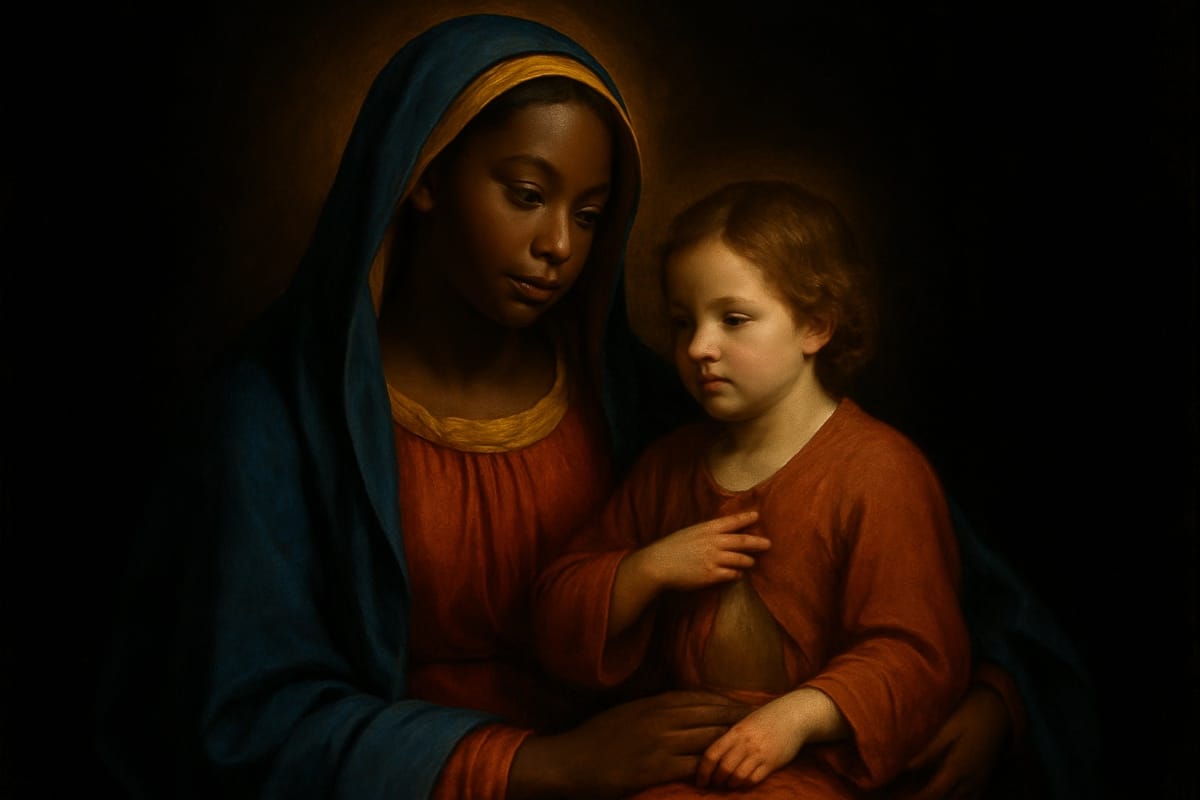
By Prof. Dr. Daniel C. Afonso · Updated
“Arise, shine, Jerusalem, for your light has come, and the glory of the Lord is risen upon you” (Isaiah 60:1), “Rise up, shine, Jerusalem, for your light is coming, and the glory of the Lord will be revealed upon you” (Is 60:1)
I. Arise, Shine: The Oracle of Light Coming to All Nations
Isaiah 60 is one of the brightest and most universalist pages in the entire Old Testament. The prophet addresses Jerusalem, exiled and diminished, announcing to her a destiny far beyond all expectation: “Arise, shine, for your light has come, and the glory of the Lord is risen upon you” (Is 60:1-3). The theology of this promise is as vast as the world: God’s light shining on Zion does not stay in Zion; it radiates to all peoples. It was precisely this universality of divine light that manifested itself at Kibeho, in the heart of Africa, when the Mother of the Word chose a Rwandan hill to speak to a continent that had suffered centuries of marginalization and theological silence. Kibeho is the sanctuary of Isaiah’s promise fulfilled in Africa: the light that came to Zion did not forget any people on earth.
II. Kibeho, 1981-1989: The Mother of the Word in the Heart of Africa
On November 28, 1981, at the Catholic secondary school in Kibeho, southwest Rwanda, student Alphonsine Mumureke, age sixteen, saw for the first time “a Lady of incomparable beauty” who identified herself as “Nyina wa Jambo,” in Kinyarwanda, “Mother of the Word.” In the following weeks and months, other students began to see the same Lady: Anathalie Mukamazimpaka, Marie Claire Mukangango, and several other young people. The apparitions continued for years, totaling dozens of encounters, with diverse content: invitations to prayer and conversion, teachings on the Seven Sorrows Rosary of the Virgin, messages directed to the Church in Africa, but also tragic visions that the visionaries could not interpret at the time: rivers of blood, decapitated bodies, entire mountains burning. In 1994, thirteen years after the first apparitions, Rwanda experienced the genocide that killed approximately one million Tutsis in just over a hundred days, and the Kibeho visionaries recognized their previous visions as a painful anticipation of that horror. Bishop Augustin Misago of Gikongoro officially recognized the apparitions of the three main visionaries on June 29, 2001, making Kibeho the first and so far only approved Marian sanctuary in Africa with formal canonical recognition. In 2003, the Holy See elevated the site to International Sanctuary status, and it became a pilgrimage center for faithful from across Africa.

III. The Magnificat: Divine Inversion as Marian Pedagogy
The Gospel of Luke accompanying this celebration is the canticle Mary sang in Elizabeth’s house, the Magnificat. “My soul magnifies the Lord and my spirit rejoices in God my Savior, for he has looked upon the humble state of his servant” (Luke 1:46-48). And then follows that passage that became the program for all Marian theology of liberation and divine preference for the small: “He has brought down the mighty from their thrones and exalted those of low degree; he has filled the hungry with good things and sent the rich away empty” (Luke 1:52-53). This inversion is not a poetic metaphor: it is God’s logic that runs throughout Scripture, from Abraham to Mary, culminating on the Cross of Christ. Kibeho is a historical manifestation of this inversion. When Mary chose a remote hill in Africa to manifest herself as “Mother of the Word,” she was confirming, through geographical language, what the Magnificat asserts through theological language: the eternal Word has no preference for the visible centers of the world. He prefers the places the world despises, the faces the world does not see, the voices the world does not hear. The Rwandan students who saw the Mother of the Word were precisely the type of people that nobody considered qualified to receive a private revelation of such great importance. And it was precisely them that Mary came to speak to.
IV. Kibeho and African Marian Theology: From Theological Silence to Own Voice
African Marian theology, for centuries, was a silent echo of European Marian theology. Devotions to Mary brought by European missionaries were established in Africa with European names, forms, and iconography. Kibeho silently but decisively changed this situation. For the first time in the history of the Church in Africa, Mary chose to identify herself with a local title: Nyina wa Jambo, Mother of the Word, in Kinyarwanda. She appeared to Africans dressed in colors that resonate with the continent’s sensitivity, spoke in Rwandan to girls who knew their culture intimately, and asked for a form of devotion (the Seven Sorrows Rosary, a medieval Christian heritage) that organically merged with African spirituality of shared suffering. Vatican II Council paved the way for evangelization that respects local cultures and seeks inculturation of the Gospel (cf. Ad Gentes, 22). Kibeho is the Marian version of this inculturation: Mary is not a foreign mother that Africa must accept, but the Mother of the Word who chose to visit a Rwandan hill and speak in Kinyarwanda to her African daughters. This seemingly modest theological gesture is one of the most significant contributions of the apparitions at the end of the 20th century to Marian theology of the universal Church: the reminder that the Word became flesh in Nazareth, but his Mother speaks all the languages of the peoples her Son came to save.
Postgraduate Program in Mariology
Would you like to deepen your formation in Mariology? Discover the Postgraduate Program in Mariology from Locus Mariologicus – an academic formation that combines theological rigor, spiritual life, and the living tradition of the Church.
Responses