Marian Dogmas: The 4 Dogmas of Mary and What Each One Teaches
By Prof. Dr. Daniel C. Afonso · Updated
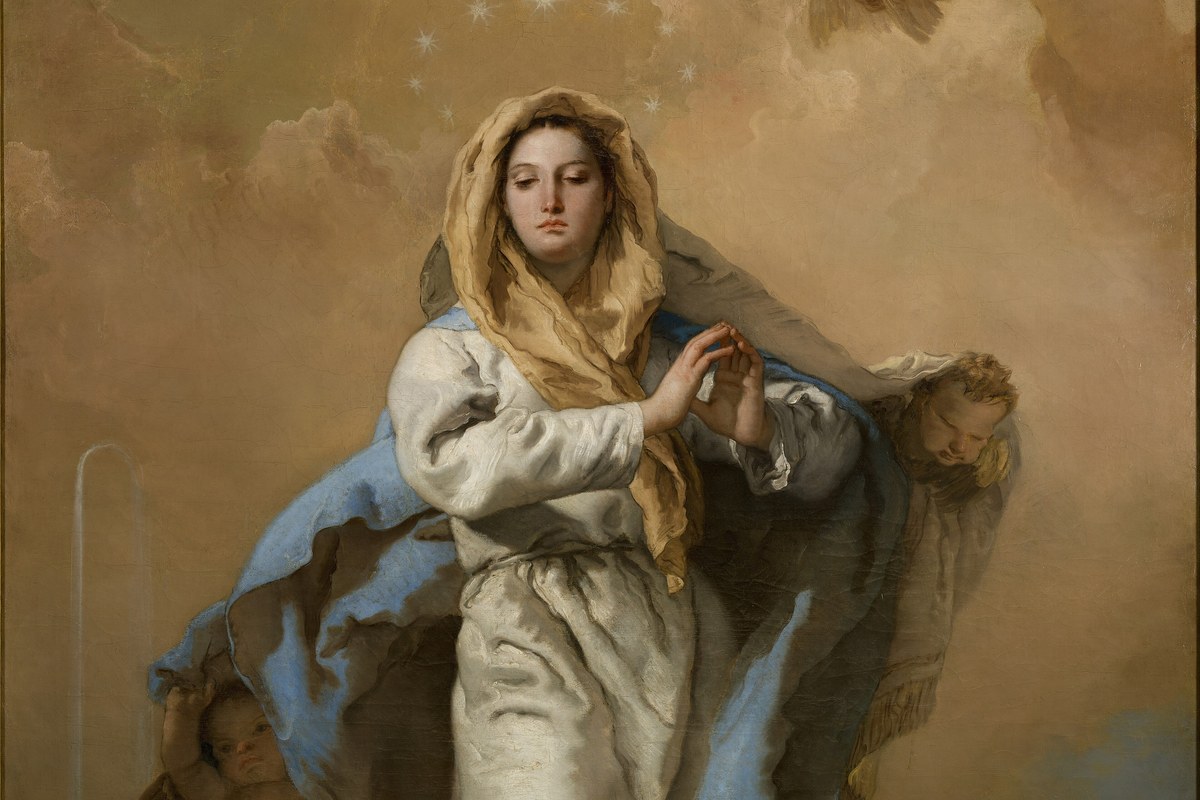
The Marian dogmas are four truths of faith about the Virgin Mary defined by the Catholic Church: the divine motherhood (Mother of God, Council of Ephesus, 431), the perpetual virginity (Lateran Synod, 649), the Immaculate Conception (Pius IX, 1854) and the Assumption into heaven, body and soul (Pius XII, 1950). There is no fifth Marian dogma.
The first two arose from the great controversies about Christ in the early centuries. The last two were proclaimed by solemn papal definition. All of them speak of Mary in order to say something about Jesus: who He is, how He came into the world, how He redeems, and what destiny He promises to those who believe.
Table of Contents
The 4 Marian dogmas at a glance
| Dogma | What it affirms | When and where | Liturgical feast |
|---|---|---|---|
| 1. Divine motherhood (Theotokos) | Mary is truly the Mother of God, because the Son she bore is the divine person of the Word | Council of Ephesus, 431 | Mary, the Holy Mother of God (January 1) |
| 2. Perpetual Virginity (Aeiparthenos) | Mary was a virgin before, during and after the birth of Jesus | Lateran Synod, 649, canon 3 (with the Second Council of Constantinople, 553) | No feast of its own. Celebrated in all the Marian feasts |
| 3. Immaculate Conception | Mary was preserved from original sin from the first instant of her conception, by the merits of Christ | Pius IX, bull Ineffabilis Deus, December 8, 1854 | Immaculate Conception (December 8) |
| 4. Assumption | At the end of her earthly life, Mary was taken up body and soul into the glory of heaven | Pius XII, constitution Munificentissimus Deus, November 1, 1950 | Assumption of the Blessed Virgin Mary (August 15) |
What is a dogma
A dogma is a truth contained in divine Revelation (Scripture and Tradition) that the Church proposes in a definitive and binding way for the faith of all Catholics. The Catechism of the Catholic Church explains:
“The Church’s Magisterium exercises the authority it holds from Christ to the fullest extent when it defines dogmas, that is, when it proposes, in a form obliging the Christian people to an irrevocable adherence of faith, truths contained in divine Revelation […]”
Catechism of the Catholic Church, n. 88
A dogmatic definition does not create a new truth. It recognizes with authority what already belongs to the faith received from the Apostles. That is what happened with Mary: the Church prayed to the Theotokos before Ephesus and celebrated the Conception and the Dormition of Mary centuries before 1854 and 1950. For this reason the Marian dogmas are also a classic example of the development of dogma: the faith does not change, but its understanding deepens.
1. Divine motherhood: Mary, Mother of God (Ephesus, 431)
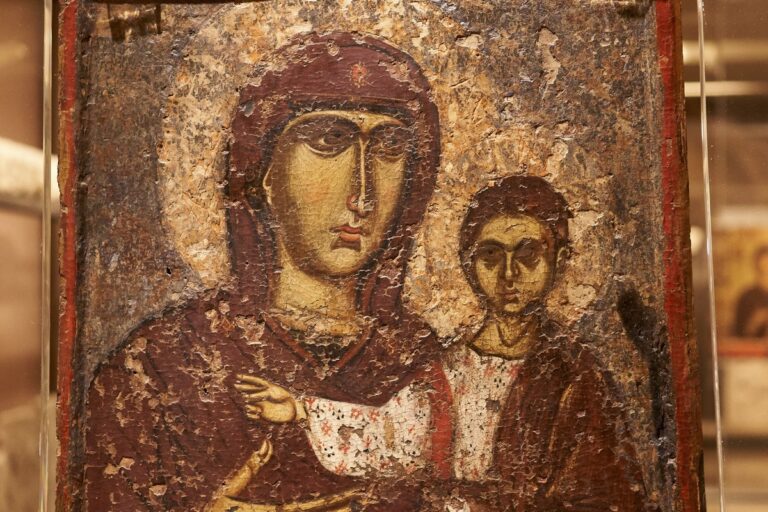
It is the first and the foundation of all the others. At the beginning of the fifth century, Nestorius, patriarch of Constantinople, refused Mary the title Theotokos (in Greek, “she who gives birth to God”) and preferred Christotokos, Mother of Christ. Behind the question of words lay a question about Jesus: if Mary is not the Mother of God, then the one born of her would not be the very Son of God, but a man united to Him. Saint Cyril of Alexandria defended the unity of the person of Christ, and the Council of Ephesus, in 431, confirmed that Mary is truly the Mother of God (DS 251).
The biblical root lies in Elizabeth’s greeting: ἡ μήτηρ τοῦ κυρίου μου (hē mētēr tou kyriou mou), “the mother of my Lord” (Lk 1:43), and in Saint Paul: ἐξαπέστειλεν ὁ θεὸς τὸν υἱὸν αὐτοῦ, γενόμενον ἐκ γυναικός (exapesteilen ho theos ton huion autou, genomenon ek gynaikos), “God sent forth his Son, born of woman” (Gal 4:4). The Catechism sums up the faith of the Church:
“the Church confesses that Mary is truly “Mother of God” (Theotokos)”
Catechism of the Catholic Church, n. 495
The dogma is Christological before it is Mariological. Mary is not the “mother of the divinity,” which would be absurd, but the mother of the divine person of the Word, who took his human nature from her. Learn more in Theotokos: what Mother of God means.
2. Perpetual Virginity: Mary, ever virgin
The Church professes that Mary remained a virgin before giving birth (she conceived Jesus without the intervention of a man), in giving birth and after giving birth (she had no other children). That is why the liturgy calls her Aeiparthenos, “ever virgin” (Catechism, n. 499).
Where Scripture speaks of the virginal conception
At the angel’s announcement, Mary asks: Πῶς ἔσται τοῦτο, ἐπεὶ ἄνδρα οὐ γινώσκω; (Pōs estai touto, epei andra ou ginōskō?), “How can this be, since I do not know man?” (Lk 1:34). And the angel answers: Πνεῦμα ἅγιον ἐπελεύσεται ἐπὶ σέ (Pneuma hagion epeleusetai epi se), “The Holy Spirit will come upon you” (Lk 1:35). Matthew confirms it to Joseph: τὸ γὰρ ἐν αὐτῇ γεννηθὲν ἐκ πνεύματός ἐστιν ἁγίου (to gar en autē gennēthen ek pneumatos estin hagiou), “for that which is conceived in her is of the Holy Spirit” (Mt 1:20), and reads in the event the fulfillment of the prophecy: Ἰδοὺ ἡ παρθένος ἐν γαστρὶ ἕξει (Idou hē parthenos en gastri hexei), “Behold, the virgin shall conceive” (Mt 1:23).
Which council defined the Perpetual Virginity
Unlike the Immaculate Conception and the Assumption, the Perpetual Virginity has no single bull of definition. It is a faith professed since the earliest creeds and affirmed by the Magisterium at various moments:
- The Second Council of Constantinople (553), an ecumenical council, calls Mary, in its anathemas, the holy and glorious Mother of God and ever virgin (DS 422, 427).
- The Lateran Synod of 649, presided over by Pope Saint Martin I, declares in canon 3 condemned anyone who does not confess Mary as the holy, ever-virgin and immaculate Mother of God, who conceived the Word “absque semine […] ex Spiritu Sancto” (“without seed [of man], by the Holy Spirit”), gave birth to him without corruption and preserved her virginity also after giving birth (DS 503, quoted in the Catechism, n. 496).
- The Catechism gathers these sources (n. 499, which refers to DS 291, 294, 427, 442, 503, 571 and 1880) and concludes that the Church confesses “Mary’s real and perpetual virginity”.
The Lateran Synod was a Roman synod, not an ecumenical council, but it was presided over by the pope and its canon on Mary expresses the faith of the whole Church. That is why it is the date usually given for this dogma. See the study Aeiparthenos: the Perpetual Virginity of Mary as dogma.
And the “brothers of Jesus”?
The Gospels speak of the “brothers” of Jesus (Mk 6:3, Mt 13:55). The Church has always understood that they are not other children of Mary: James and Joseph, called “brothers of Jesus,” are the sons of another Mary, whom Matthew calls “the other Mary” (Mt 28:1). They are close relatives, according to a common usage in the Old Testament (Catechism, n. 500). Saint Jerome defended this reading against Helvidius in the fourth century.

3. Immaculate Conception: Mary without original sin (1854)
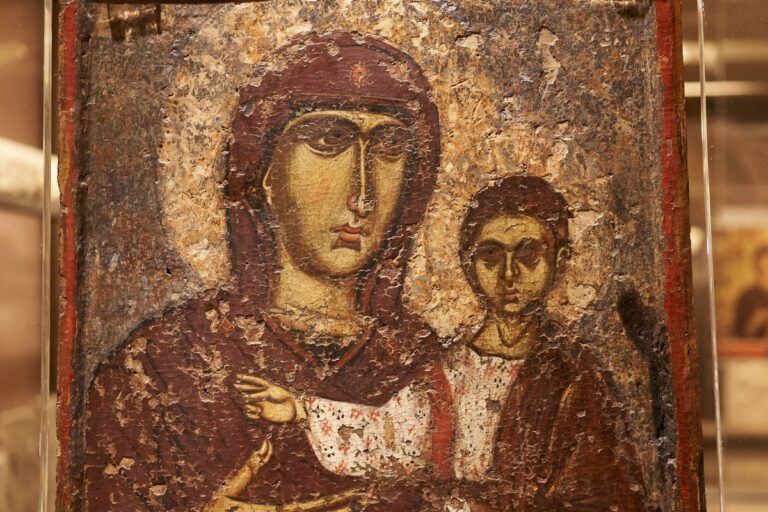
On December 8, 1854, Blessed Pius IX defined in the bull Ineffabilis Deus that Mary was preserved from original sin. The Latin text of the definition, checked against the Latin Catechism (n. 491), reads:
“beatissimam Virginem Mariam in primo instanti suae conceptionis fuisse singulari omnipotentis Dei gratia et privilegio, intuitu meritorum Christi Iesu Salvatoris humani generis, ab omni originalis culpae labe praeservatam immunem”
Pius IX, Ineffabilis Deus (DS 2803)
In the translation of the Catechism: “The most Blessed Virgin Mary was, from the first moment of her conception, by a singular grace and privilege of almighty God and by virtue of the merits of Jesus Christ, Savior of the human race, preserved immune from all stain of original sin” (Catechism, n. 491).
Note: the Immaculate Conception is not the virginal conception of Jesus. It refers to the conception of Mary herself in the womb of her mother, Saint Anne. Nor does it place Mary outside the redemption: she was redeemed in a more sublime way, preserved rather than purified, in view of the merits of Christ. The angel’s greeting, Χαῖρε, κεχαριτωμένη (Chaire, kecharitōmenē), “Rejoice, full of grace” (Lk 1:28), is the biblical starting point of this reflection.
The road to 1854 was long. Saint Bernard and Saint Thomas Aquinas had reservations, because they feared placing Mary outside the universal redemption of Christ. Blessed John Duns Scotus showed the way out with the idea of preservative redemption. Four years after the definition, on March 25, 1858, at Lourdes, the Lady introduced herself to Saint Bernadette as the Immaculate Conception. Go deeper in Immaculate Conception: what it is and the meaning of the dogma.
4. The Assumption of Mary into heaven (1950)
On November 1, 1950, Venerable Pius XII defined the Assumption in the apostolic constitution Munificentissimus Deus. It is the only papal ex cathedra definition made after the First Vatican Council (1870). The formula, in n. 44 of the document, reads:
“we pronounce, declare, and define it to be a divinely revealed dogma: that the Immaculate Mother of God, the ever Virgin Mary, having completed the course of her earthly life, was assumed body and soul into heavenly glory”
Pius XII, Munificentissimus Deus, n. 44 (official text on vatican.va)
Notice that the definition itself gathers the three earlier dogmas: Mother of God, immaculate, ever virgin. And notice also what it does not say: it does not define whether Mary died before being taken up into heaven. The Eastern tradition speaks of the Dormition (Koimēsis), and many theologians teach that Mary passed through death, like her Son, but without the corruption of the tomb. The question remains open. The Catechism sees in the Assumption “a singular participation in her Son’s Resurrection and an anticipation of the resurrection of other Christians” (n. 966). Read more in The Assumption of Mary.
The four dogmas in the original texts
Mother of God: “of Mary and of God”
Long before Ephesus, around the year 110, Saint Ignatius of Antioch, on his way to martyrdom, wrote to the Christians of Ephesus that the same Jesus Christ comes from Mary and from God:
“ἐν σαρκὶ γενόμενος Θεός, ἐν θανάτῳ ζωὴ ἀληθινή, καὶ ἐκ Μαρίας καὶ ἐκ Θεοῦ, πρῶτον παθητὸς καὶ τότε ἀπαθής, Ἰησοῦς Χριστός, ὁ Κύριος ἡμῶν”. “God made flesh, true life in death, both of Mary and of God, first passible and then impassible, Jesus Christ our Lord” (Ignatius of Antioch, Ad Ephesios 7.2, PG 5, 652).
This is the core of the faith that Ephesus would confess in 431: the incarnate Word is one single subject, who comes from God and comes from Mary. That is why she is truly the Mother of God.
Ever virgin: the canon of 649 and the Fathers
The Lateran Synod of 649 formulated the Perpetual Virginity in a single canon:
“Si quis secundum sanctos Patres non confitetur proprie et secundum veritatem Dei genitricem sanctam semperque virginem et immaculatam Mariam, utpote ipsum Deum Verbum specialiter et veraciter, qui a Deo Patre ante omnia saecula natus est, in ultimis saeculorum absque semine concepisse ex Spiritu Sancto, et incorruptibiliter eam genuisse, indissolubili permanente et post partum eiusdem virginitate, condemnatus sit”.
“If anyone, following the holy Fathers, does not confess properly and truly that the holy, ever-virgin and immaculate Mary is the Mother of God, since she conceived properly and truly, in the last ages, without seed, by the Holy Spirit, God the Word himself, born of God the Father before all ages, and gave birth to him without corruption, her virginity remaining indissoluble even after giving birth, let him be condemned” (Lateran Synod, canon 3, DS 503).
The Greek title that the table above renders as “ever virgin,” ἀειπάρθενος, was already current among the Fathers of the fourth century. Saint Epiphanius of Salamis, answering those who denied Mary’s virginity after giving birth, speaks of “τῆς ἁγίας Μαρίας τῆς ἀειπαρθένου”, “holy Mary, the ever virgin” (Epiphanius, Panarion 78.5, PG 42, 705), and the Second Council of Constantinople, in 553, calls her “ἁγίας ἐνδόξου θεοτόκου καὶ ἀειπαρθένου Μαρίας”, “holy and glorious Mother of God and ever-virgin Mary” (DS 422).
Saint Jerome, writing against Helvidius, went even further and also defended the virginity of Joseph:
“Tu dicis Mariam virginem non permansisse: ego mihi plus vindico, etiam ipsum Joseph virginem fuisse per Mariam, ut ex virginali conjugio virgo filius nasceretur”. “You say that Mary did not remain a virgin. I claim more: that Joseph himself was a virgin for Mary’s sake, so that from a virginal marriage a virgin Son might be born” (Jerome, Adversus Helvidium 19, PL 23, 203).
Immaculate Conception: Eadmer’s chestnut
The Latin treatise generally considered the first devoted to the defense of the Immaculate Conception is by the English monk Eadmer of Canterbury, a disciple of Saint Anselm, at the beginning of the twelfth century. To show that God could preserve Mary from sin, he uses the image of the chestnut, which forms inside its burr without being wounded by the spines:
“Si Deus castaneae confert ut inter spinas remota punctione concipiatur, alatur, formetur, non potuit haec dare humano quod ipse sibi parabat templo in quo corporaliter habitaret, […] ut licet inter spinas peccatorum conciperetur, ab ipsis tamen spinarum aculeis omnimode exsors redderetur? Potuit plane, et voluit: si igitur voluit, fecit”. “If God grants the chestnut to be conceived, nourished and formed among thorns without being pricked, could he not grant this to the human temple he was preparing for himself, in which he would dwell bodily […], so that, although conceived among the thorns of sins, it would be rendered entirely free from their stings? He clearly could, and he willed it. If, then, he willed it, he did it” (Eadmer, Tractatus de conceptione sanctae Mariae, PL 159, 305).
Here is the root of the adage that the article quotes further below, “potuit, decuit, ergo fecit”. Eadmer does not yet give the literal formula: his reasoning is “he could, he willed, therefore he did.” The triad with “decuit” is usually attributed to Duns Scotus, but, according to Stefano Cecchin’s study of the Franciscan school, it appears around 1300 in William of Ware, a Franciscan master at Oxford, in his commentary on the Sentences.
Assumption: the 1950 definition and Saint John Damascene
The definition of Pius XII, in the official Latin:
“pronuntiamus, declaramus et definimus divinitus revelatum dogma esse: Immaculatam Deiparam semper Virginem Mariam, expleto terrestris vitae cursu, fuisse corpore et anima ad caelestem gloriam assumptam”. “We pronounce, declare, and define it to be a divinely revealed dogma: that the Immaculate Mother of God, the ever Virgin Mary, having completed the course of her earthly life, was assumed body and soul into heavenly glory” (Pius XII, Munificentissimus Deus, AAS 42 (1950) 770).
Among the witnesses of Tradition, the constitution highlights Saint John Damascene, of the eighth century, and quotes his argument from fittingness (AAS 42 (1950) 761). In the Greek of his homily on the Dormition:
“Ἔδει τῆς ἐν τῷ τίκτειν φυλαξάσης τὴν παρθενίαν ἀλώβητον, ἀδιάφθορον τηρηθῆναι τὸ σῶμα, καὶ μετὰ θάνατον. Ἔδει τὴν ἐγκόλπιον ὡς βρέφος τὸν Κτίστην βαστάσασαν, τοῖς θείοις ἐνδιατρίβειν σκηνώμασιν”. “It was fitting that she, who had kept her virginity intact in childbirth, should keep her own body free from all corruption even after death. It was fitting that she, who had carried the Creator as a child at her breast, should dwell in the divine tabernacles” (John Damascene, Homilia II in Dormitionem 14, PG 96, 741).
The Damascene presupposes Mary’s death (“after death”). The 1950 definition, however, did not wish to decide this point and limited itself to saying “having completed the course of her earthly life,” as the article explains above.
The dogmas in the prayer of the Church
The liturgy prays what the Church has defined. On the solemnity of January 1, the collect unites motherhood and virginity: “Deus, qui salutis aeternae, beatae Mariae virginitate fecunda, humano generi praemia praestitisti”, “O God, who through the fruitful virginity of Blessed Mary bestowed on the human race the rewards of eternal salvation” (Missale Romanum 2002, January 1). And on the Assumption the Church repeats the 1950 definition almost word for word: “qui immaculatam Virginem Mariam, Filii tui Genetricem, corpore et anima ad caelestem gloriam assumpsisti”, “who assumed the Immaculate Virgin Mary, the Mother of your Son, body and soul into heavenly glory” (ibid., August 15).
How the four dogmas are related
The four form a unity. The divine motherhood is the principle: because Mary is the Mother of God, it was fitting that she be prepared without sin (Immaculate Conception), that she belong entirely to God in body and soul (Perpetual Virginity) and that she be the first to share in her Son’s victory over death (Assumption). Theology calls this the argument from fittingness. Tradition summed up this reasoning in the adage potuit, decuit, ergo fecit (he could, it was fitting, therefore he did), from the Franciscan school: it is usually attributed to Duns Scotus, but its root is in Eadmer of Canterbury and the complete formula in William of Ware (see above).
In each dogma, the center is Christ: Ephesus defends the unity of his person, the virginity shows that salvation is God’s initiative, the Immaculate Conception shows the anticipated power of his redemption, the Assumption shows the end He promises to the whole Church.
Is there a fifth Marian dogma?
No. There are four Marian dogmas. For decades some movements have been asking for a “fifth dogma” that would proclaim Mary Co-redemptrix, Mediatrix of all graces and Advocate. The Holy See has never accepted the request, and in 2025 it explained why.
The 1996 opinion
On February 21, 1996, asked whether the petition of the movement Vox Populi Mariae Mediatrici for this dogma was acceptable, the then Cardinal Joseph Ratzinger, Prefect of the Congregation for the Doctrine of the Faith, answered in his votum:
“Negative. The precise meaning of the titles is not clear, and the doctrine contained in them is not mature.”
Quoted in Dicastery for the Doctrine of the Faith, Mater populi fidelis, n. 19
In 1996, the theological commission of the International Mariological Congress of Częstochowa likewise considered it inappropriate to proceed with this dogmatic definition (quoted in the same note, footnote 47).
The doctrinal note Mater populi fidelis (2025)
On November 4, 2025, the Dicastery for the Doctrine of the Faith published the doctrinal note Mater populi fidelis, “on some Marian titles regarding Mary’s cooperation in the work of Salvation,” signed by Cardinal Víctor Manuel Fernández and approved by Pope Leo XIV on October 7, 2025. On the title of Co-redemptrix, the note concludes:
“Taking into account the necessity of explaining Mary’s subordinate role to Christ in the work of Redemption, it is always inappropriate to use the title of Co-redemptrix to define Mary’s cooperation.”
Mater populi fidelis, n. 22
On Mediatrix, the note recalls the words of Saint Paul: εἷς καὶ μεσίτης θεοῦ καὶ ἀνθρώπων ἄνθρωπος Χριστὸς Ἰησοῦς (heis kai mesitēs theou kai anthrōpōn anthrōpos Christos Iēsous), “there is also one mediator between God and men, the man Christ Jesus” (1 Tim 2:5). For this reason it asks for “particular prudence” with the title (n. 24), admits it in a subordinate sense, as cooperation and intercession (n. 25), and says that the expression Mediatrix of all graces has limits, since Mary, the first of the redeemed, “cannot have been the mediatrix of the grace that she herself received” (n. 67). It prefers the conciliar title of “mother in the order of grace” (n. 71).
What remains Catholic doctrine
The note does not diminish Mary. The Church continues to teach that she cooperated in a unique way in the work of the Savior and is our Mother in the order of grace. The Catechism, quoting the Second Vatican Council, says that “the Blessed Virgin is invoked in the Church under the titles of Advocate, Helper, Benefactress, and Mediatrix” (n. 969) and that this function “in no way obscures or diminishes this unique mediation of Christ” (n. 970). What the Church refuses is to turn this cooperation into a dogma or to use titles that obscure the fact that Christ alone is the Redeemer. Go deeper in Mary Co-redemptrix: the current theological debate and Mary, Mediatrix of all graces.
The documents and studies on each dogma
To study each definition in depth in the sources, from the councils to the complete papal texts:
1. Mother of God (Theotokos)
- Theotokos: what Mother of God means
- Theotokos: Mary, Mother of God (Ephesus, 431)
- Council of Ephesus (431): the definition
- Mother of God in the Mariological Dictionary
2. Perpetual Virginity
- Lateran Council (649): aeiparthenos, ever Virgin
- Semper Virgo: what it is and what it means
- Toledo XI and Constantinople III: the conciliar confession
- The Virginity of Mary in the Mariological Dictionary
3. Immaculate Conception
- Ineffabilis Deus (1854): complete text
- Immaculate Conception: the meaning of the dogma
- “Santa Maculada”: what it means
4. Assumption
- Munificentissimus Deus (1950): complete text
- The Assumption of Mary
- The Dormitio Mariae: the archaeology of the Assumption
For an overview, read the encyclical Redemptoris Mater (Saint John Paul II, 1987) and explore Mariology, Marian theology and the Marian Encyclopedia.
References
CECCHIN, Stefano M. Scoto dottore dell’Immacolata: alcune questioni. In: La «Scuola Francescana» e l’Immacolata Concezione: atti del Congresso Mariologico Francescano. Città del Vaticano: Pontificia Academia Mariana Internationalis, 2005. (Studi mariologici). p. 256-259.
DENZINGER, Heinrich and HÜNERMANN, Peter (ed.). Enchiridion symbolorum definitionum et declarationum de rebus fidei et morum. Edizione bilingue. Bologna: EDB, 1996. DS numbers cited: 503 (Lateran Synod of 649, canon 3) and 422 (Second Council of Constantinople, 553).
EADMER OF CANTERBURY. Tractatus de conceptione sanctae Mariae. In: MIGNE, Jacques-Paul (ed.). Patrologia Latina. Paris: J.-P. Migne, 1854. v. 159, col. 305.
EPIPHANIUS OF SALAMIS. Panarion 78.5. In: MIGNE, Jacques-Paul (ed.). Patrologia Graeca. Paris: J.-P. Migne, [1857-1866]. v. 42, col. 705.
IGNATIUS OF ANTIOCH. Ad Ephesios 7.2. In: MIGNE, Jacques-Paul (ed.). Patrologia Graeca. Paris: J.-P. Migne, [1857-1866]. v. 5, col. 652.
JEROME. Adversus Helvidium 19. In: MIGNE, Jacques-Paul (ed.). Patrologia Latina. Paris: J.-P. Migne, 1845. v. 23, col. 203.
JOHN DAMASCENE. Homilia II in Dormitionem 14. In: MIGNE, Jacques-Paul (ed.). Patrologia Graeca. Paris: J.-P. Migne, [1857-1866]. v. 96, col. 741.
MISSALE ROMANUM. Editio typica tertia. Città del Vaticano: Typis Vaticanis, 2002. Formularies for January 1 and August 15.
PIUS XII. Munificentissimus Deus. Acta Apostolicae Sedis, Città del Vaticano, v. 42, p. 761 and 770, 1950.
Frequently asked questions about the Marian dogmas
What are the 4 Marian dogmas?
The four Marian dogmas are: the divine motherhood, Mary Mother of God (Council of Ephesus, 431), the Perpetual Virginity (Lateran Synod, 649), the Immaculate Conception (Pius IX, bull Ineffabilis Deus, 1854) and the Assumption of Mary into heaven, body and soul (Pius XII, constitution Munificentissimus Deus, 1950).
What was the first Marian dogma?
The first was the divine motherhood, proclaimed at the Council of Ephesus in 431 against Nestorius. It affirms that Mary is Theotokos, “she who gives birth to God,” because the Son she bore is the divine person of the Word made man. It is the foundation of all the other Marian dogmas.
Is there a fifth Marian dogma?
No. There are four Marian dogmas. Movements have asked for Mary to be defined as Co-redemptrix, Mediatrix of all graces and Advocate, but the Holy See has not accepted this. In 1996 Cardinal Ratzinger answered “Negative,” and in 2025 the doctrinal note Mater populi fidelis, approved by Leo XIV, explained the limits of these titles.
Is Mary Co-redemptrix a dogma?
No. The doctrinal note Mater populi fidelis, from the Dicastery for the Doctrine of the Faith (November 4, 2025), states that it is always inappropriate to use the title of Co-redemptrix to define Mary’s cooperation, because it can obscure the unique mediation of Christ (n. 22). The Church continues to teach that Mary cooperated in a singular way in the work of salvation.
What is the difference between the Immaculate Conception and the virginal conception?
The Immaculate Conception refers to the conception of Mary in the womb of her mother, Saint Anne: she was preserved from original sin from the first instant, by the merits of Christ. The virginal conception refers to Jesus, conceived in the womb of Mary by the Holy Spirit, without the intervention of a man (Lk 1:34-35).
Did Mary die before the Assumption?
The 1950 definition does not settle the question: it says only that Mary, having completed the course of her earthly life, was assumed body and soul into heavenly glory. The Eastern tradition celebrates the Dormition of Mary, and many theologians teach that she died like her Son, but without the corruption of the tomb.
Is a Catholic obliged to believe in the Marian dogmas?
Yes. A dogma is a revealed truth that the Church proposes in a form obliging the Christian people to an irrevocable adherence of faith (Catechism, n. 88). The four Marian dogmas belong to the Catholic faith. Titles and devotions that have not been defined, however, such as Co-redemptrix, are not objects of obligatory faith.
Postgraduate Program in Mariology
Would you like to study the Marian dogmas in the sources, from Scripture to the Fathers and the Magisterium? The 2026/2027 class of the Postgraduate Program in Mariology has already begun and enrollment is closed. Join the waiting list to be the first to know.
To study this subject systematically, discover our Postgraduate Program in Mariology.
Responses