Stabat Mater – The Liturgical Sequence Approved by Pius IX (Doctrina Pontificia IV, n. 320)
The Stabat Mater is the most celebrated Marian poem in Christian history, and one of the texts of greatest theological, contemplative, and poetic density in all of Western religious literature. The history of its liturgical recognition culminates with Pius IX, who in 1876 definitively approved it as the official sequence of the feast of Our Lady of Sorrows (September 15). This is document n. 320 of the Doctrina Pontificia IV.
| Collection | Doctrina Pontificia IV: Documentos Marianos, n. 320 |
| Pope | Pius IX (1846-1878) |
| Document | Decree of the S. Congr. Indulg., June 18, 1876 |
| Topic | Approval of the Stabat Mater as the official liturgical sequence |
The Stabat Mater: Latin Text (Excerpts)
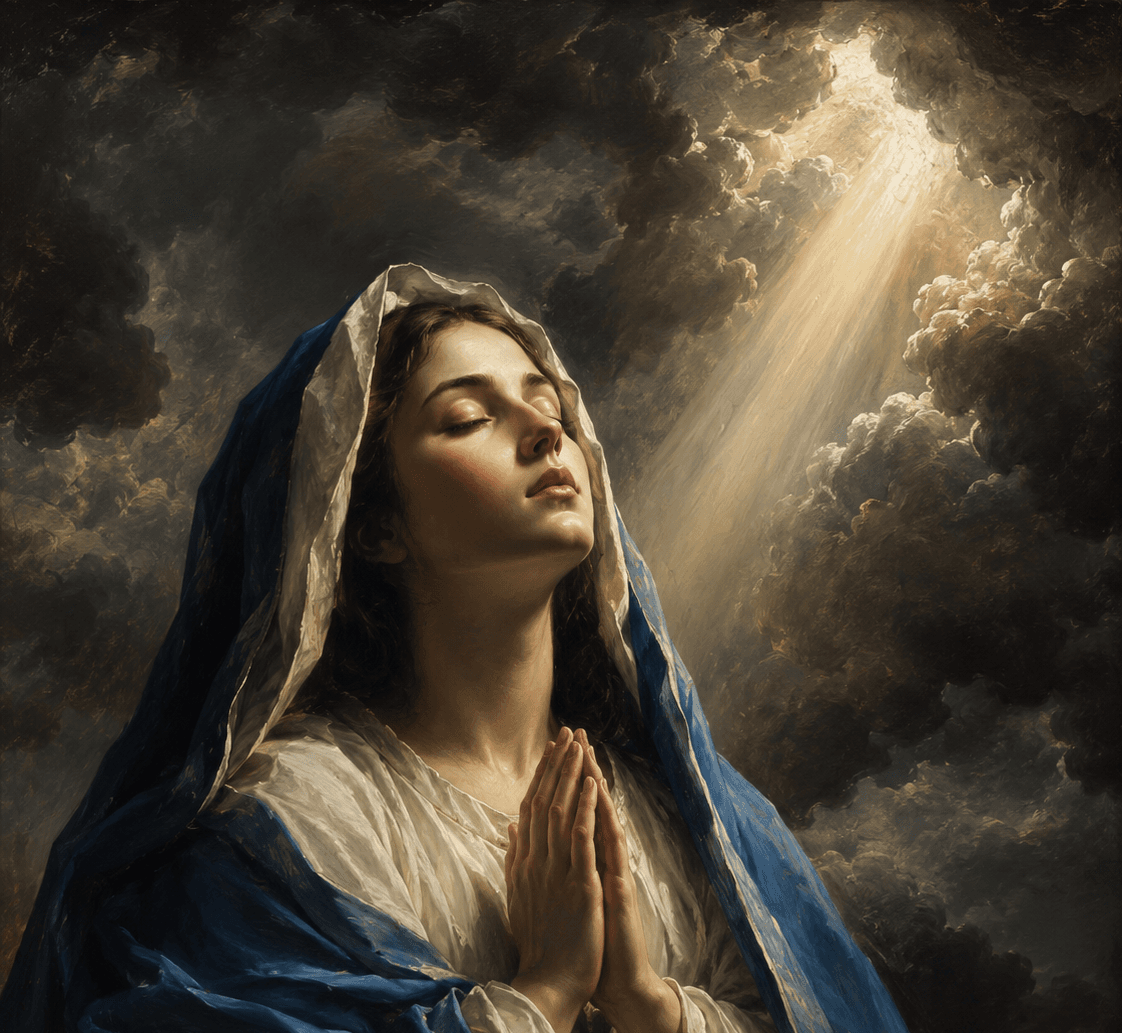
Stabat mater dolorosa / iuxta crucem lacrimosa, / dum pendebat Filius.
The sorrowful Mother stood / beside the tearful Cross, / while the Son was hanging.
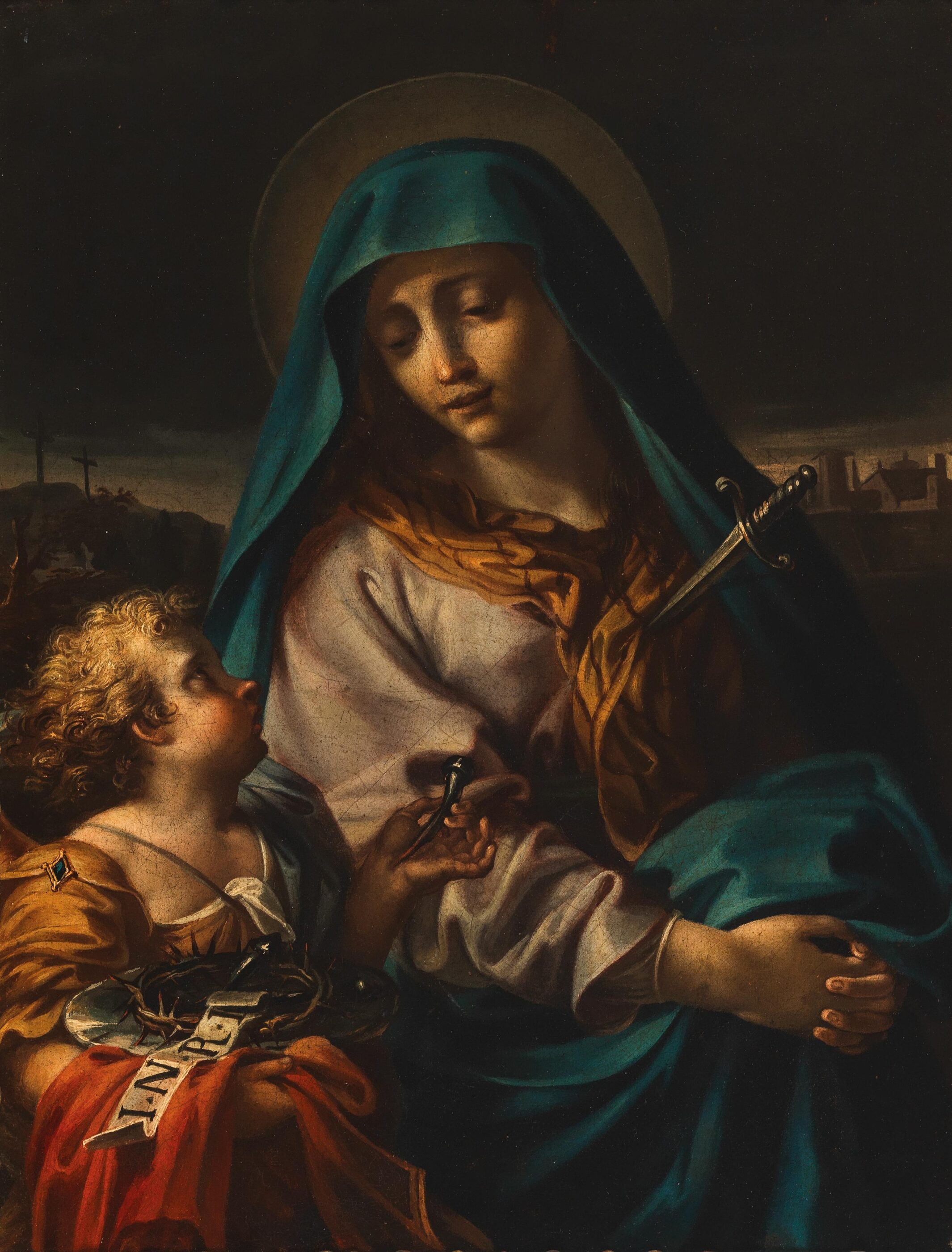
Cuius animam gementem, / contristatam et dolentem / pertransivit gladius.
Whose soul, groaning, / saddened and suffering, / a sword pierced through.
O quam tristis et afflicta / fuit illa benedicta / Mater Unigeniti!
Oh, how sad and afflicted / was that blessed / Mother of the Only-Begotten!
Quae maerebat et dolebat, / pia Mater dum videbat / nati poenas inclyti.
She who wept and suffered, / pious Mother, as she saw / the sufferings of the glorious Son.
Fac, ut ardeat cor meum / in amando Christum Deum / ut sibi complaceam.
Make my heart burn / in the love of Christ God, / so that in Him I may take delight.
Authorship and History
The authorship of the Stabat Mater is uncertain. The most probable attribution is to Jacopone da Todi (c. 1230-1306), an Umbrian Franciscan friar. The poem is written in rhymed iambic trimeters (in reality, in the so-called Sapphic-Franciscan verse), with a sequence of 20 stanzas of three lines each, forming a total of 60 lines.
The liturgical history of the Stabat Mater is a long one: forbidden as a sequence at Mass by the Council of Trent (which restricted the sequences to only four), it was gradually reintroduced until it was definitively approved by Pius IX in 1876 for the feast of Our Lady of Sorrows.
Mariological Significance
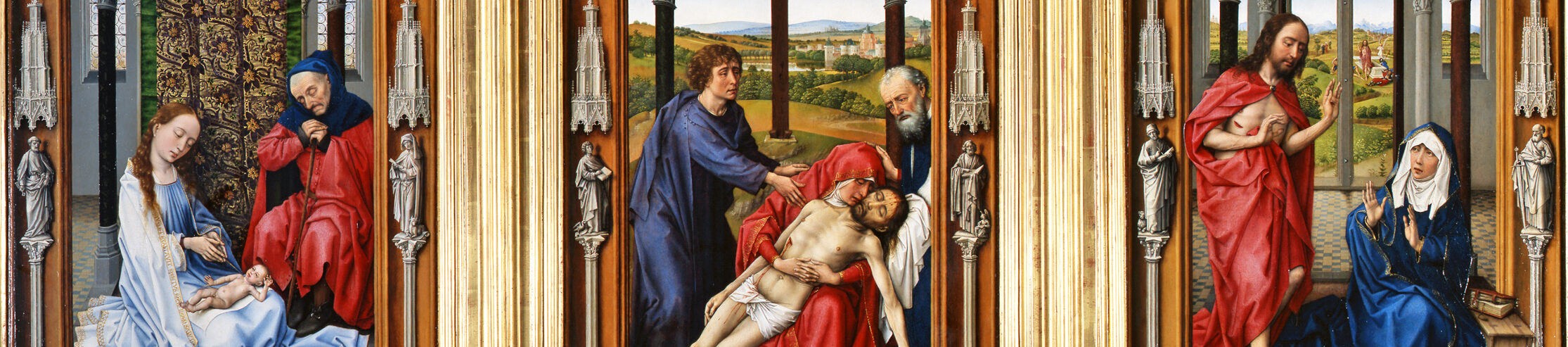
The Stabat Mater is the most perfect expression of the theology of Marian compassion, Mary’s co-passion with Christ on the Cross. This doctrine, developed by Saint Bernard, Saint Bonaventure, and Saint Thomas Aquinas, affirms that Mary was not a passive spectator of the Passion: she suffered with Christ in a singular way, participating spiritually in His redemptive offering. The Stabat Mater is, before being poetry, theology.
The expression “iuxta crucem lacrimosa” (beside the tearful Cross) refers to the Johannine text of Jn 19:25: “stabant autem iuxta crucem Iesu mater eius”, “there stood by the Cross of Jesus His Mother.” The poem is a meditation on this verse, developing what it means for Mary to stand “beside the Cross” of her Son.
The Stabat Mater in Music
The Stabat Mater is the most frequently set Marian text in history: Palestrina, Pergolesi, Haydn, Schubert, Rossini, Dvořák, Poulenc, Verdi, and dozens of other composers have written music for this poem. Pergolesi’s setting (1736), composed in the last days of the composer’s life, is considered one of the most perfect works of sacred music of all time.
Further reading
Explore Mariology, the Mulieris Dignitatem (which treats Mary at the foot of the Cross), Lumen Gentium chap. VIII, and the Postgraduate Program in Mariology.
Postgraduate Program in Mariology
Would you like to deepen your formation in Mariology? Discover the Postgraduate Program in Mariology at Locus Mariologicus – an academic formation that unites theological rigor, spiritual life, and the living tradition of the Church.


Responses