Marian Shrines: History, Meaning, and Mission Today
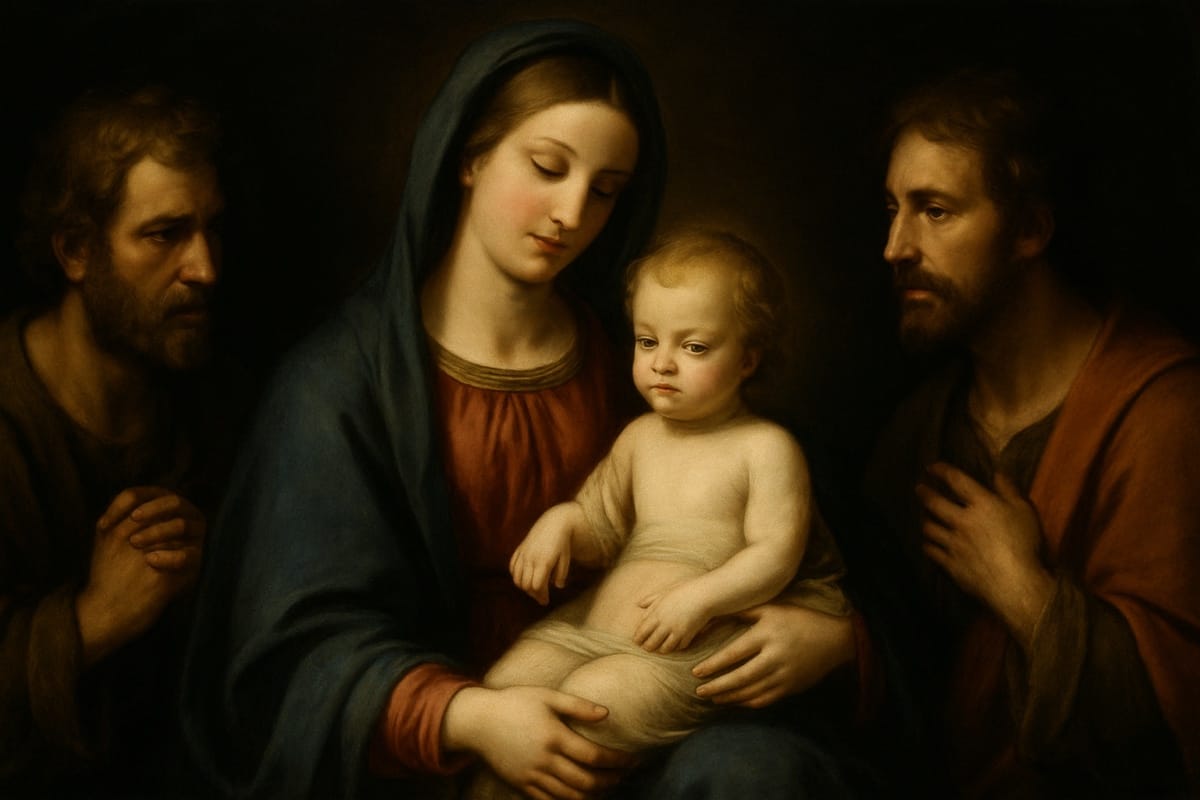
Marian shrines are, throughout the whole history of the Church, privileged places of encounter between faith and culture, between the Church and society. More than monuments, they are spaces where the people of God experience Mary’s maternal presence and, with her, are led to Christ. This guide traces their historical evolution – from the Catholic Reformation to the Second Vatican Council – and their role in the third millennium.
What a Marian shrine is
A Marian shrine is a place of pilgrimage dedicated to Our Lady, where the celebration of the sacraments, pastoral authority, and the piety of the people converge. Its identity is not autonomous: the Marian sign is iconic – it always refers back to the Trinitarian mystery. The shrine “is not of value as such, but because it refers back to the life of God”: it is domus Mariae, the house of Mary within the domus Ecclesiae, the house of the Church.
From the Catholic Reformation to the Enlightenment
At the beginning of the modern era, shrines became a field of confrontation. For the Protestant Reformers, above all Luther, supernatural power belonged to Christ alone, and attributing it to creatures wounded the authority of God. The Church responded with the Council of Trent (1545-1563), reinforcing the Queenship of Mary and requiring that the authenticity of supernatural phenomena be submitted to the discernment of the Roman Pontiff.
A key figure was Saint Charles Borromeo (†1584), who applied the Tridentine reforms to the Marian cult, giving devotio a modest and penitential character bound to the sacraments. Later, faced with the secularization of the Enlightenment and the French Revolution of 1789, shrines took on an apologetic role – visible signs of resistance. The proclamation of the dogma of the Immaculate Conception by Pius IX (1854) presented Mary as the one who “crushed the head of the serpent” and as a bulwark of the Church against heresies.
The turn of the Second Vatican Council
Vatican II represented a decisive turning point. The traditional pairing of patronage-consecration was no longer enough. The Council proposed a new key: Mary’s cooperation does not belong to the order of supernatural necessity, but to the order of grace, having as its core her spiritual motherhood.
- Mater Ecclesiae – Paul VI proclaimed Mary “Mother of the Church” on November 21, 1964, a sure model for all the faithful.
- Peregrinatio fidei – Mary is presented as the disciple who walks in faith, even in the night of Calvary (cf. Our Lady of Sorrows).
- Sign of hope – the Queenship of the Virgin is no longer expressed in the “power to intervene,” but in her condition as the creature in whom the promise of the resurrection has already been fulfilled, through the Assumption.
Mary ceased to be thought of only under schemes of power and patronage, and came to be understood as Mother of the Church, model of faith, and eschatological image of the Church to come.
The Marian shrine in the third millennium
Today, in the face of secularization and religious pluralism, the shrine is called to develop multiple diaconias (services):
- Diaconia of the Word – prayerful listening, inspired by Mary’s silence.
- Eucharistic Diaconia – Mary as “woman of the Eucharist” (John Paul II).
- Vocational Diaconia – discernment in the style of the obedience of faith.
- Diaconia of Charity – welcoming the poor and the sick, a concrete expression of the Magnificat.
- Cultural Diaconia – Mariological study and diffusion, the via pulchritudinis.
- Ecumenical Diaconia – presenting Mary as a reason for unity, not for division.
Frequently Asked Questions
What distinguishes a shrine from a parish church?
A shrine is a place of pilgrimage, approved by ecclesiastical authority, to which the faithful flock for a particular motive of devotion – frequently bound to an apparition, an image, or a grace.
Do shrines still make sense today?
Yes. In the light of Vatican II, they ceased to be “bastions” against the modern world and became places of evangelization, dialogue, and hope, always centered on Christ.
See also
Would you like to study Mariology seriously?
This article grows out of the works in the Locus Mariologicus library. The Postgraduate Program in Mariology takes you to the same source, with academic guidance: Scripture, the Fathers of the Church, and the Magisterium, from the first dogma to contemporary questions.





Responses