The Nativity of Mary: The Birth of Our Lady (September 8)
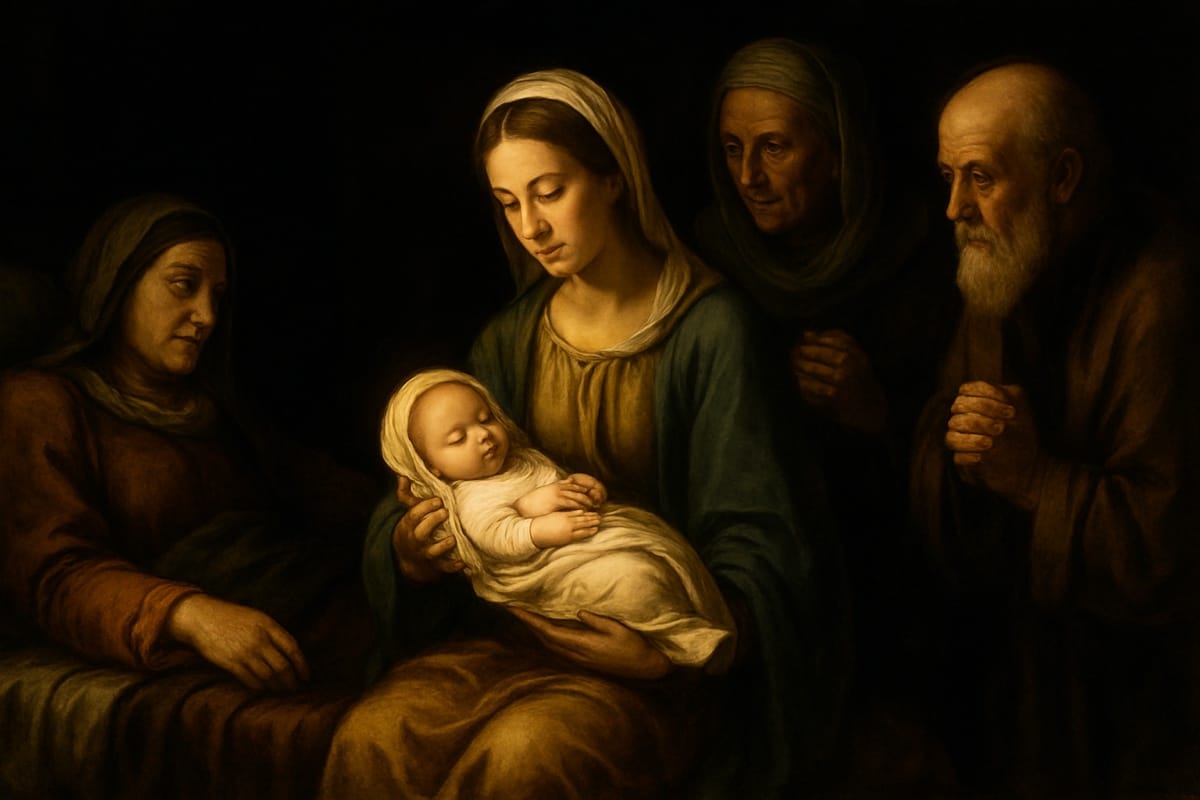
The Nativity of Mary – the birth of Our Lady – is celebrated on September 8 and is one of the oldest Marian feasts. The canonical Gospels say nothing about the birth of Mary; tradition receives it from an ancient writing, the Protoevangelium of James (second century), which presents her parents – Saint Joachim and Saint Anne – and the birth of Mary after a long barrenness. This guide explains the feast and its meaning.
The origin of the feast
The birth of Mary is, together with that of Jesus and that of Saint John the Baptist, one of the only three births celebrated in the liturgy of the Church – a sign of Mary’s singular dignity. The feast arose in the East and passed to the West around the seventh century. The date of September 8 is in harmony with that of the Immaculate Conception (December 8): exactly nine months earlier.
Joachim and Anne
According to the Protoevangelium of James, Joachim and Anne were a devout couple who suffered from childlessness. In response to their prayer, God grants them Mary – a birth that prefigures the gratuitous action of God in the history of salvation. Although these accounts have no historical-canonical value, they express the faith of the Church in the holy origin of her who would be the Mother of God.
The meaning: the dawn of salvation
Tradition sees in the birth of Mary the dawn that announces the Sun who is Christ. As the liturgy sings, the birth of the Virgin “proclaimed joy to the whole world, for from her was born the Sun of justice.” The birth of Mary is the first ray of the light of the Redemption that is drawing near.
Frequently Asked Questions
When is the birth of Our Lady?
On September 8.
Who were the parents of Mary?
According to tradition, Saint Joachim and Saint Anne, whose memorial is celebrated on July 26.
Is the birth of Mary in the Bible?
Not in the canonical Gospels; tradition receives it from the Protoevangelium of James.
See also
Would you like to study Mariology seriously?
This article grows out of the works in the Locus Mariologicus library. The Postgraduate Program in Mariology takes you to the same source, with academic guidance: Scripture, the Fathers of the Church, and the Magisterium, from the first dogma to contemporary questions.





Responses