Mary’s Listening and Contemplative Gaze

Mary’s Attentive Listening: Meditation in the Heart (Lk 2:19), the Grotto of Bethlehem, and the Visit of the Shepherds in the Hermeneutic of Faith
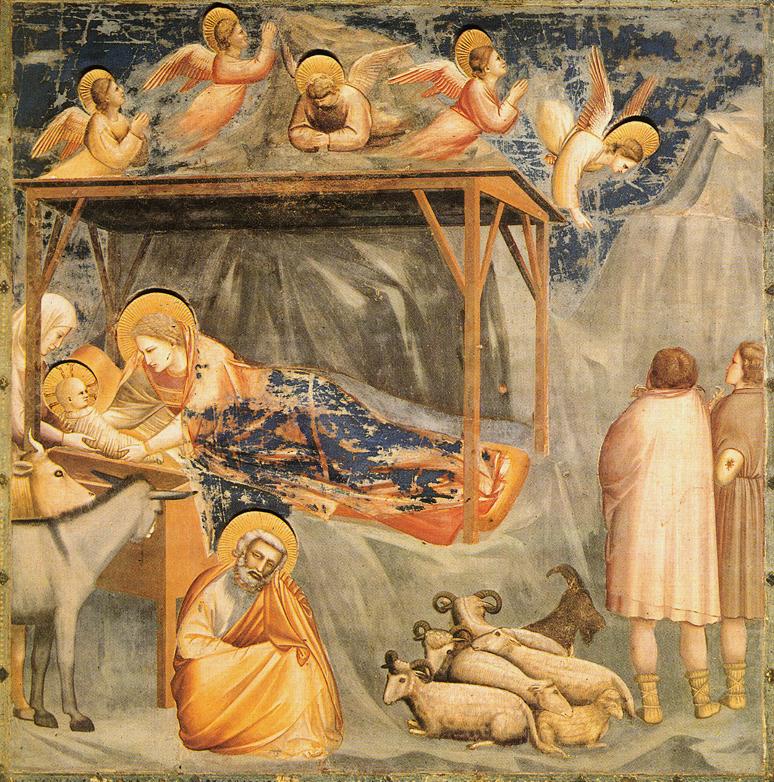
To understand the depth and breadth of Mary’s listening, we must go down into the grotto of the Nativity in Bethlehem and relive the shepherds’ visit to the crib of Jesus.
The shepherds came and told of many wonderful things that had happened that night while they were keeping watch over the flock: And all who heard it marveled at what the shepherds were saying.
Mary, for her part, kept all these things, meditating on them in her heart (Lk 2:18-19).
Here Mary’s listening is meditation. And to understand this attitude, it is important to know that “to meditate” translates a characteristic Greek verb, which means to put together, to gather. Mary practiced meditation on the Sacred Scriptures and then meditated on everything, because she gathered in her heart everything she heard and understood of God: thus she joined word to Word, knowledge to Knowledge, decision to Decision, love to Love.
In this way, the Mother of Jesus entered ever more deeply into the mystery of God and into the understanding of His Word. All this work of meditation is marked by great discernment:
Mary knows what to take up and what to leave aside. We find this gift of hers precisely in the account of the Annunciation (Lk 2:26-38).
Mary hears and sees truly extraordinary things. And she is a devoted woman, a worshiper of the Lord. She finds herself called full of grace. An angel assures her that the Lord is with her and that she has been chosen to be the mother of the Messiah, who will sit on the throne of David.
Yet Mary does not let herself be carried away. One might say that none of this goes to her head; instead, she steps back and puts the angel to the test: “How is this possible? I do not know man”. The angel answers her precisely and gives her all the explanations she seeks, concluding that the one who will be born of her will be conceived through the intervention of the Spirit of God. Then Mary brings her discernment, her meditation, to a close by answering the angel: if it is a matter of giving consent to the Holy Spirit, there is no problem, for I am the handmaid of the Lord. So let what you yourself have said be fulfilled in me!
Mary does not need much: she is able to reconstruct everything at once, the whole psalm from a single verse, the whole episode from a single detail. And this is because the Word of God is familiar to her. By meditating slowly, Mary reaches the Word of God: she conceives Him in her heart and not in her womb. The Mother of God is attentive to what is in the heart of her Son: Mary and Jesus share a profound understanding. Only in this way can we understand the episode of the wedding at Cana, Jesus’ reaction to Mary’s remark about the lack of wine.
I believe that Mary did not hasten the time of Jesus’ miracles, but that, in her prophetic spirit, she saw it coming and therefore prepared everything so that the changing of water into wine would be welcomed as a moment of divine mercy. The miracle of the wedding at Cana reveals in a disconcerting way Mary’s spirit of prophecy, deepened in the Scriptures and wholly oriented toward the revealing Word. Faced with Jesus’ admonition:
My hour has not yet come (Jn 2:4),
Mary does not answer, but turns to the servants, saying: Do whatever he tells you. Mary, therefore, knows that the hour is about to come. And this knowledge comes to her from her spirit of prophecy.
Thus we understand how attentive our listening to the Word of God becomes: we mean the parables, the words with collateral meanings that serve to clarify them (for those who adhere to Jesus) and also to conceal them (from those who do not adhere to Him), and then words and gestures are combined until the one Word and the one gesture are discovered: the Cross, the revelation and gift of God’s love. It seems that Mary listens to the words and understands the parables through silence and vigilance, which make the Word audible, through wonder at understanding together with the announcement, and through memory, which keeps the journey with the Parable in personal intimacy.
Therefore, meditation brings about a profound conversion of our freedom, which is the reason of our reason, orienting us entirely toward the Word of life. Meditation on the Word slowly turns into a relationship with the One who speaks and into contemplation with the One who, while remaining hidden, lets Himself be found and seen by His friends: attentive listening to the Word gives rise to a gaze capable of penetrating the mystery.
Mary’s Contemplative Gaze on Calvary: Luke’s θεωρία, Jn 19:25, and the Contemplation of Divine Agape beneath the Cross
To understand Mary’s gaze, her capacity to enter with the eyes of faith into the mystery of God’s love, we must go up with her to Calvary, to the foot of the Cross of Jesus. Here Mary sees what others do not see:
her prophetic gaze, a penetrating gaze (Num 24:3),
discerns the presence of every supreme manifestation of divine Agape.
Indeed, we read that
“all the crowds who had come to see that event, recalling what had happened, went back beating their breasts. But the friends of Jesus and the women who had followed him from Galilee stood at a distance and watched everything that was happening” (Lk 23:48-49).
Luke calls the event of Jesus’ death theoria, a Greek term of profound meaning: theoria was the supreme explanation of everything. Luke finds this explanation of everything in the Cross. And with Luke, so does Mary, who sees what others do not see, because her eyes are washed by tears and torn by sorrow.
To penetrate the mystery of God’s love with the gaze, the mystery must first penetrate the gaze, softening the heart. Prayer carried out through the gaze, both outward and inward, springs from the supreme manifestation of God’s love for man. The Cross thus becomes the heart of the contemplative life, because it is the place where Love is poured out upon us. The Cross is the icon of God’s charity, the full gift of God’s love to man, according to a beautiful expression of Saint Maximus the Confessor. We can thus understand what the Second Council of Nicaea (787) affirms in its dogmatic definition, when it specifies the kind of veneration reserved for sacred icons. According to our faith, this is not a true cult of latria, which is reserved to the divine nature alone, but a cult similar to the one paid to the image of the precious and life-giving Cross, to the holy Gospels, and to other sacred objects, honoring them with the offering of incense and lights, as was the custom among the ancients. Indeed, the honor given to the image passes to the one it represents. And whoever venerates the image venerates the person depicted in it.
At this point it seems clear to us that, if we want to mature in prayer, in the contemplation of the mystery of the Cross, which is the throne of the Lamb around which the Church gathers, we need to discover, perhaps to rediscover, the iconographic tradition of the Church. There is an iconography in both the Eastern and the Western Churches: the former is more representational and reaches its most characteristic expression in the painting (or rather, the writing) of icons. The latter is more abstract and reaches its most characteristic expression in architecture (I am referring above all to the Gothic).
However, even today, unique opportunities are offered: the cross, the crucifix, the paschal candle, and the altar are images to be deciphered and interiorized, which enter into the liturgical action as sacred images. Then there is a rediscovery of the art of icons, both Latin and Byzantine, which offer a unique opportunity for prayer. Nevertheless, a method is needed to read these images; otherwise one may end up in sentimentalism or in completely free attributions of meaning, something that does not foster wise contemplation in harmony with the living tradition of the Church and in harmony with the liturgy.
If an icon is understood, receiving its service of reference to the archetype, then it makes lectio divina possible, with greater depth and clarity than a text of Sacred Scripture can. A positive method of reading icons can be condensed into five operations: theme, narration, stimulus, distance, and labyrinth.
Discovering the theme, including with the help of the inscription, means identifying the text of Scripture to which the icon refers. Indeed, every icon must make visible, through drawing and colors, what the Scriptures proclaim in words.
The theme is re-expressed in the icon in visual language. And this creates a kind of narration, a sequence of images that make the icon a visible equivalent of the invisible reality that it leads us to think of and believe in.
Stimulus recalls the function of colors, since color is a psycho-emotional stimulus. A correct reading of the icon makes it possible to identify its central color and its secondary colors, which harmonize like the notes of a piece of music. The chromatic aspect and its implicit symbolism are the source of the therapeutic power of icons, which are capable of healing the imagination and freeing it from the aggressiveness of perverse images.
However, we must also distance ourselves from the chromatic stimuli, since man is not only imagination (nocturnal) but also rationality (daylight). We are led to this operation through the discovery of the icon’s perigraphy, its subliminal geometric and abstract symbolism.
Each icon has its mystery and offers its own treasure, beyond what is immediately seen. And this treasure suggests the symbol of the labyrinth, for reading the icon is like a path that leads precisely to the treasure chamber, to the heavenly Jerusalem, as in the labyrinths we find on the floors of certain ancient churches, which penitents traversed on their knees in place of the pilgrimage to the Holy Land.
Each icon thus presents itself as a small iconostasis, which hides and reveals the mystery of faith to penetrating eyes. It is like a labyrinth that must be traveled slowly, on our knees, until we discover the point of radiance that burns our gaze so as to make us think with love about what is real but invisible. The fire that burns the gaze, once introjected, illumines the heart and warms prayer and contemplation. If an icon does not burn the gaze, it remains an external surface, perhaps so beautiful that it can be looked at, until it becomes respectable. Thus the idol would be born, an impious manipulation of the icon, incapable of communicating the mystery contemplated. If the icon does not lead the one who contemplates it to participate in the reality contemplated, it will be just one more image representing a reality, like a photograph of the past.
In Mary’s penetrating gaze we see iconography taking place. Mary saw beyond the colors, the moments, the voices, and she gradually entered into a mystery that revealed itself while veiling itself, and she went on reading these marks of a history that was being saved at every moment. The mystery is not outside us; we are within it, and by looking at what surrounds us we become aware of its presence. Such was Mary’s road, on which the transcendent Absolute, before whom one covered one’s face because He could not be seen, became man in our midst, touchable, reachable, yet did not lose His mystery or the power of revelation. Now we have a history that saves, narrated in the continuous icon of life… which never stops flowing. Time to learn to read this icon by learning from Mary.
To explore more deeply the reflection on Mary’s contemplative listening, consult the encyclical Redemptoris Mater by John Paul II, which presents Mary as a model of faith, listening, and spiritual pilgrimage.
Deepen your studies: explore Mariology, Marian Theology, Marian apparitions, and the Postgraduate Program in Mariology.
Postgraduate Program in Mariology
Would you like to deepen your formation in Mariology? Discover the Postgraduate Program in Mariology at Locus Mariologicus – an academic formation that unites theological rigor, spiritual life, and the living tradition of the Church.
Would you like to study Mariology seriously?
This article grows out of the works in the Locus Mariologicus library. The Postgraduate Program in Mariology takes you to the same source, with academic guidance: Scripture, the Fathers of the Church, and the Magisterium, from the first dogma to contemporary questions.




Responses