The Iconographic Mariology of Piero della Francesca (Part 3)
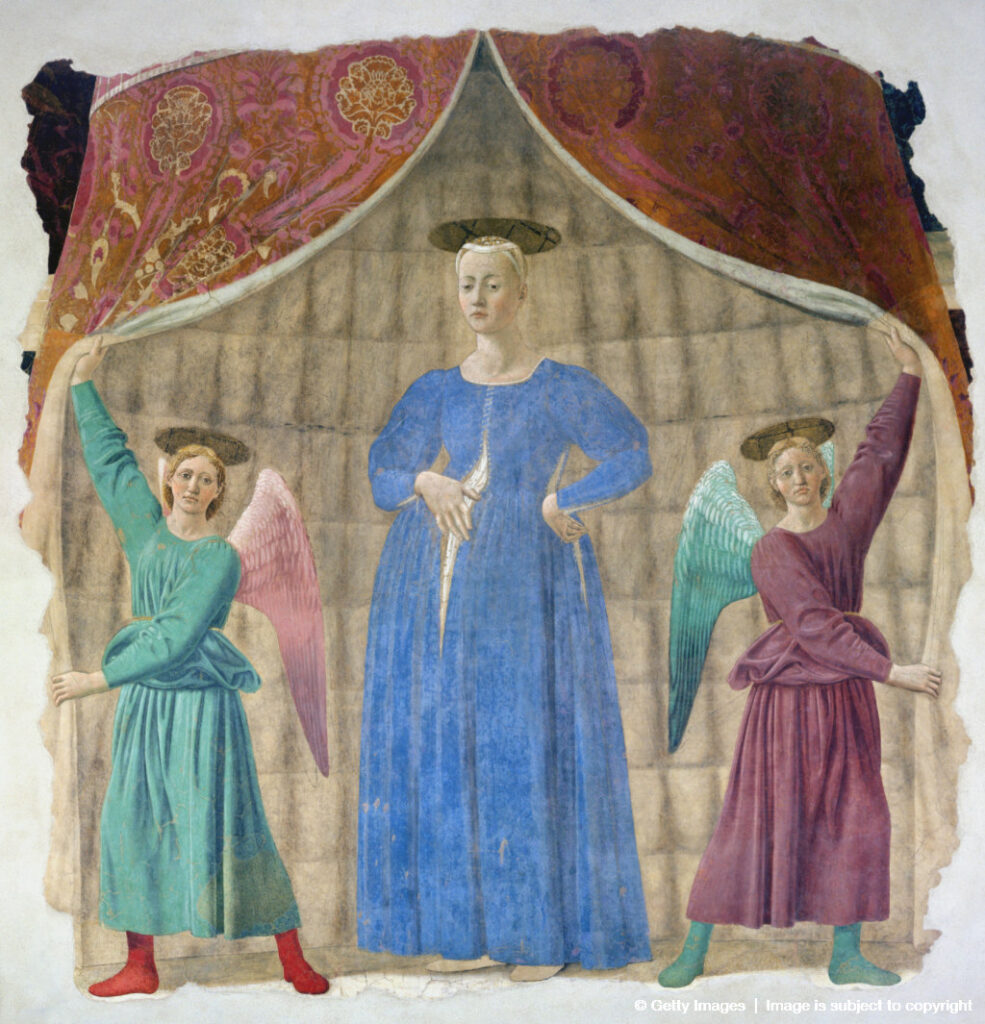
The Madonna del parto of Monterchi is like all the pregnant women of the world. She is like them, anxious and happy, exhausted and proud. All her imaginings and all her thoughts are for the unborn Child; for Him her body grows heavy and swells. There are two levels of representation: on the one hand, the image of a pregnant woman so plausible and at the same time so idealized that it becomes the emblem of an eternal condition: motherhood and human generation. On the other, the figure of an unfathomable mystery. Everything is spatial and human balance. Slowness, silence, sobriety, and composure: this is monumentality in a time that does not pass, but is eternity.
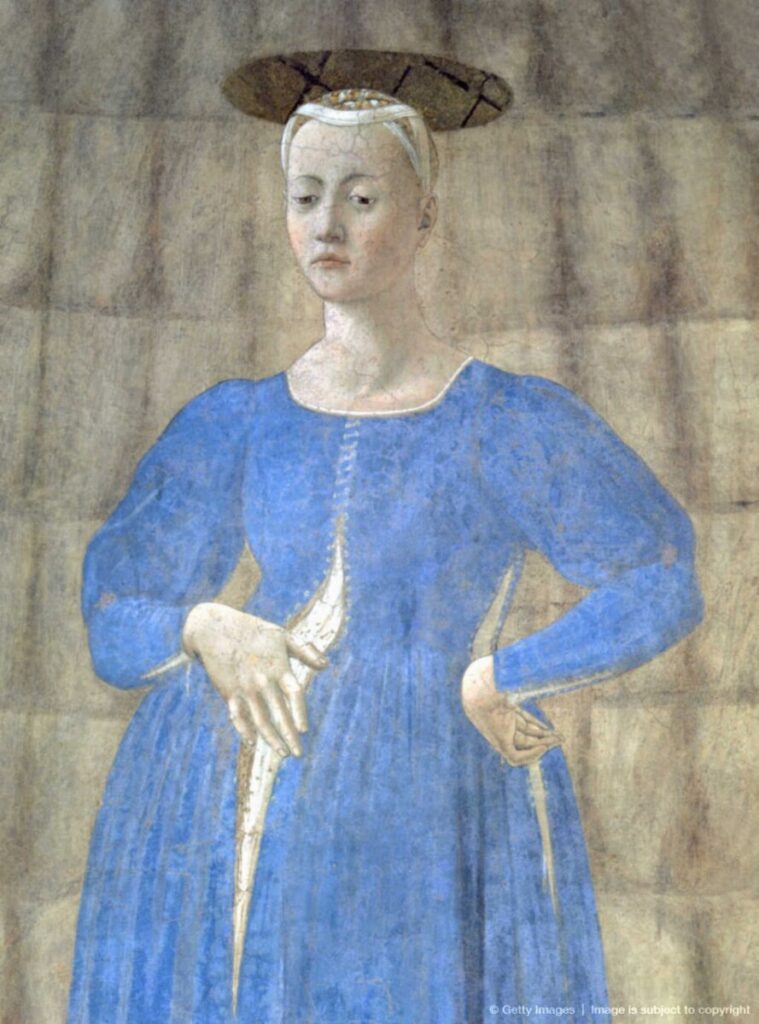
Piero’s greatness lies in having found the point of synthesis between the two levels of representation under the sign of a sublime, almost didactic naturalness. To meet the viewer’s gaze, her eyes are delicately lowered upon the destiny of the Son.
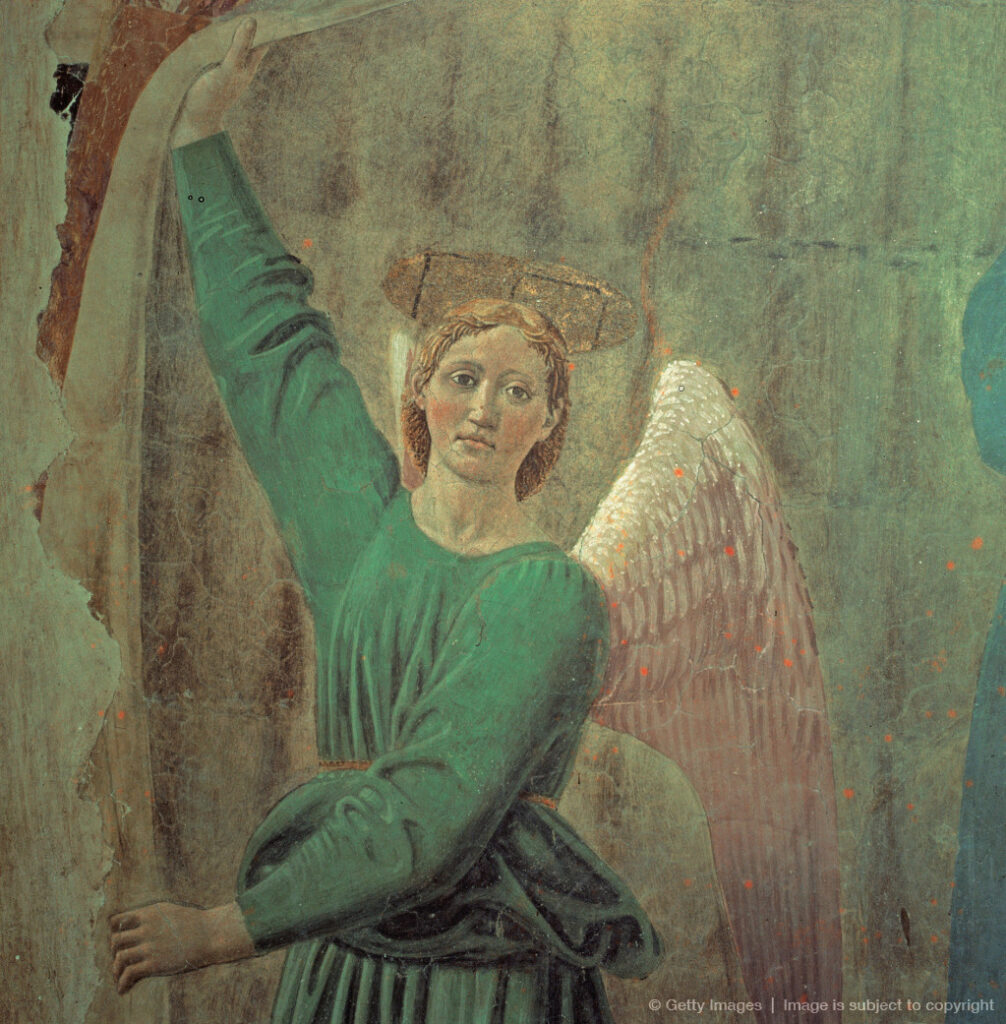
It is the angels who show us the miracle taking place. The two angels who raise the curtain of the military tent (the goose-skin lining indicates that this is a captain’s tent) show us not a commander, but a peaceful young woman about to give birth.
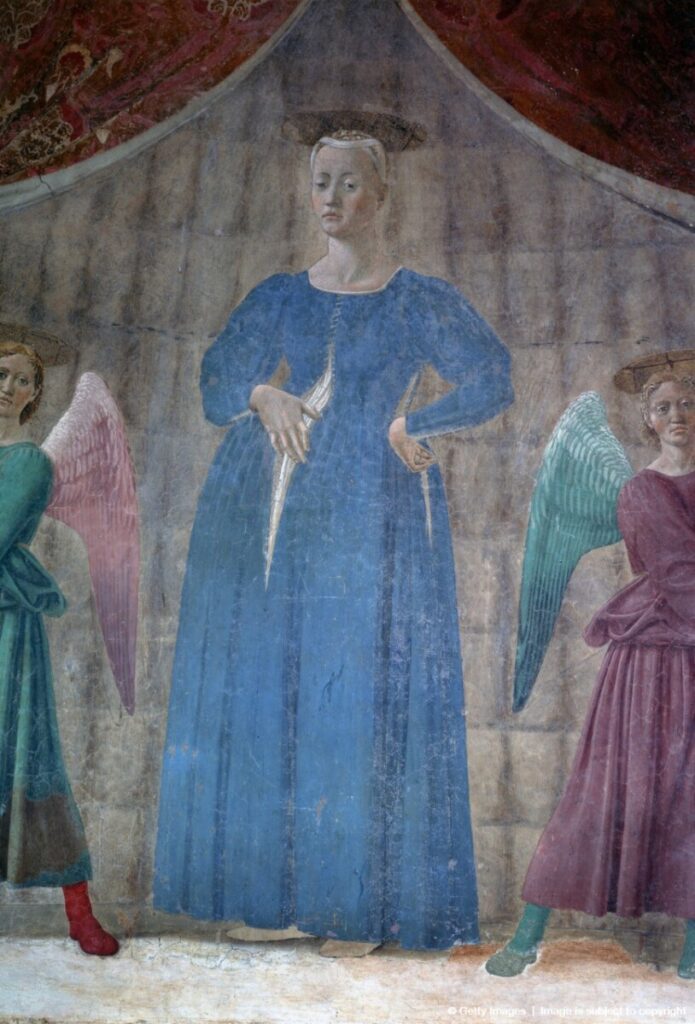
Our Lady, pensive yet serene, who looks no one in the face, who modestly opens her dress and shows its white inside, pure and innocent. The image of peace appeals for good sense between hostile parties; it makes us reflect on the future that lies in the womb of a woman, a woman of the people, surrounded by a small halo that makes her sacred in the thoughts of all, the peace of all and of many.
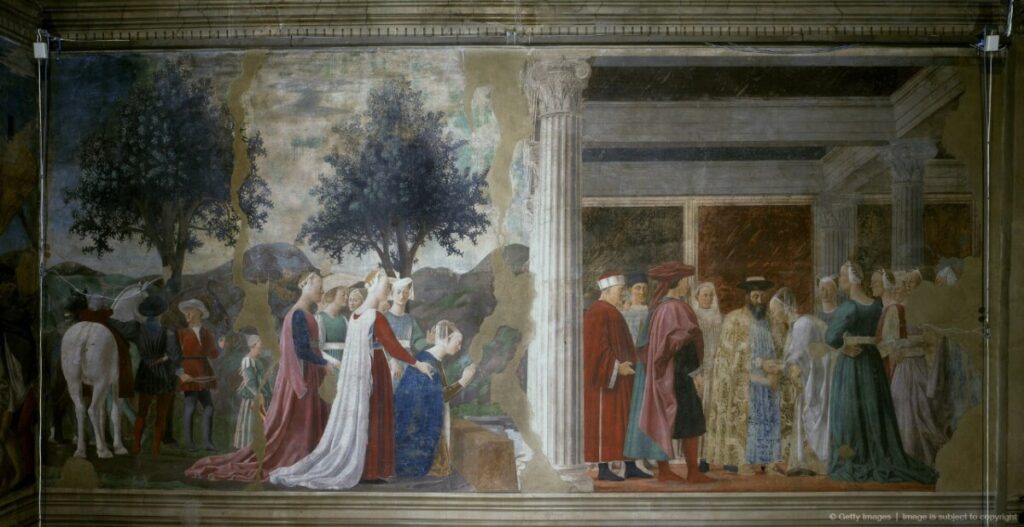
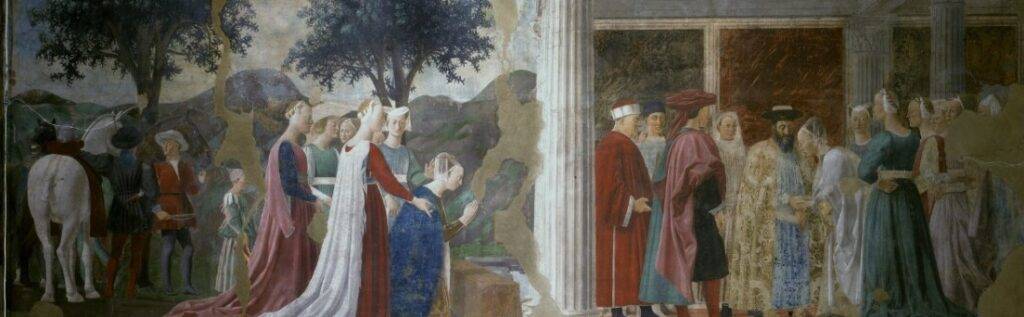
In 1452, on the death of the Florentine painter Bicci di Lorenzo, Piero accepts the task of continuing his work in the great apse of the church of San Francesco in Arezzo, commissioned by the Bacci family. The Legend of the True Cross, reworked in the thirteenth century by Jacobus de Voragine in the Golden Legend, on the triumph of the Cross which, from the death of Adam onward, guides man to salvation, was a subject of great complexity. But in the choir of the church Piero paints its fanciful details in some of the most solemn and serene images in Western art.
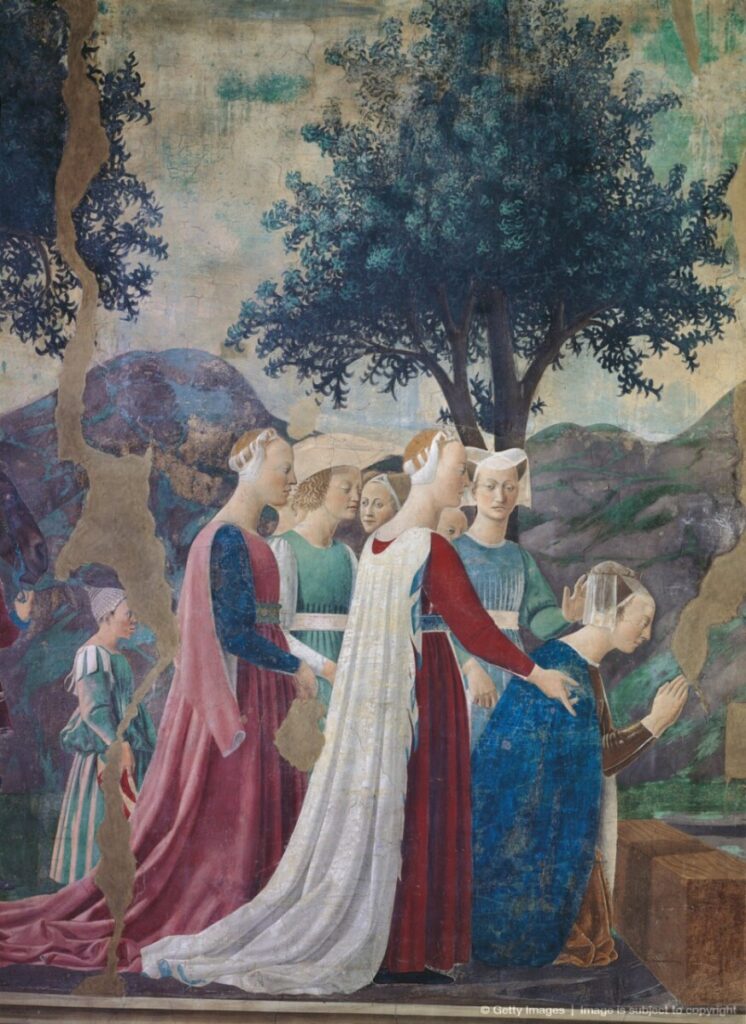
Unforgettable is the scene of the adoration of the Holy Wood by the Queen of Sheba and the women of her retinue, supremely elegant in dress and bearing.
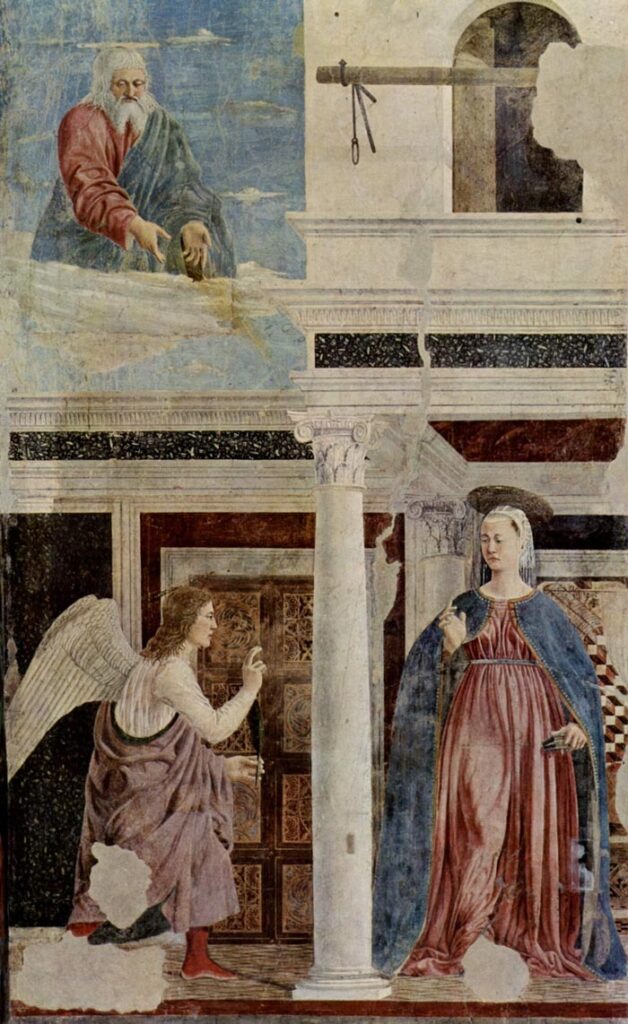
The Legend does not include the Annunciation, which was nevertheless inserted at the wish of the Franciscan Order, so that the Dream of Constantine and the Annunciation face each other as interventions of heaven in the one history of salvation.
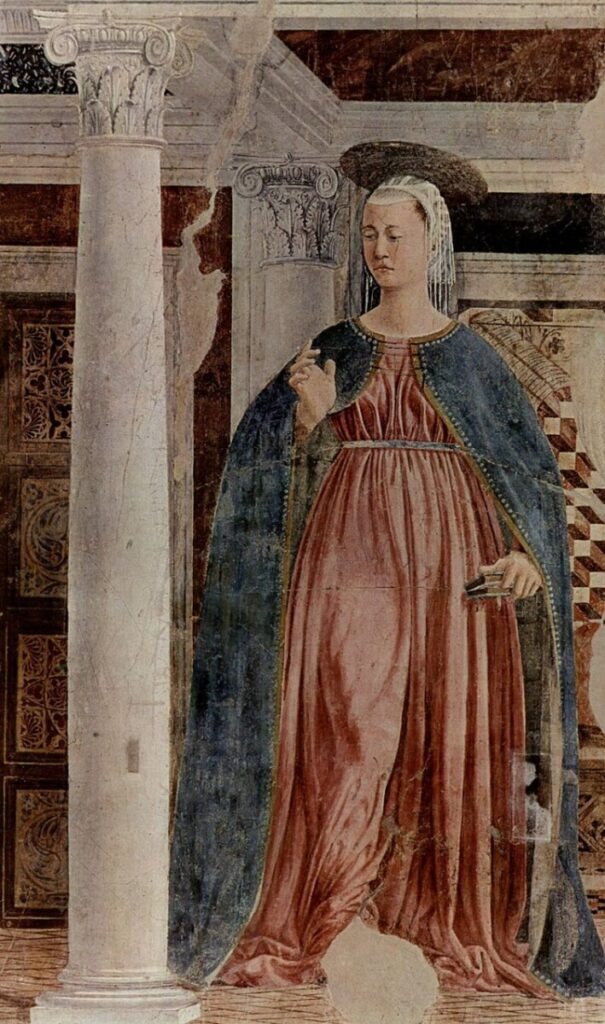
This monumental Our Lady differs from the classical iconography of the Church of the Annunziata. In fact, she does not passively undergo the Angel’s announcement, but welcomes it in an imposing and serene manner.
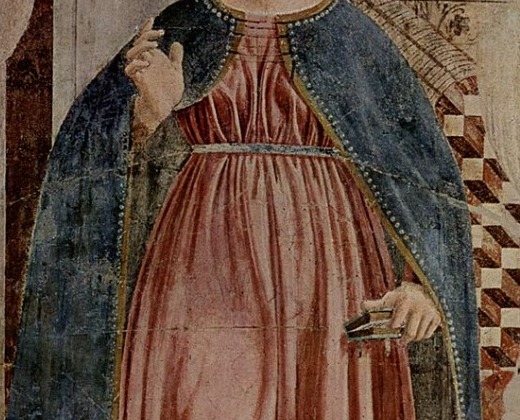
The Virgin is found reading her prayer book, in which she keeps her place with her finger so as to resume at the end of the visit, in an extremely realistic interpretation.
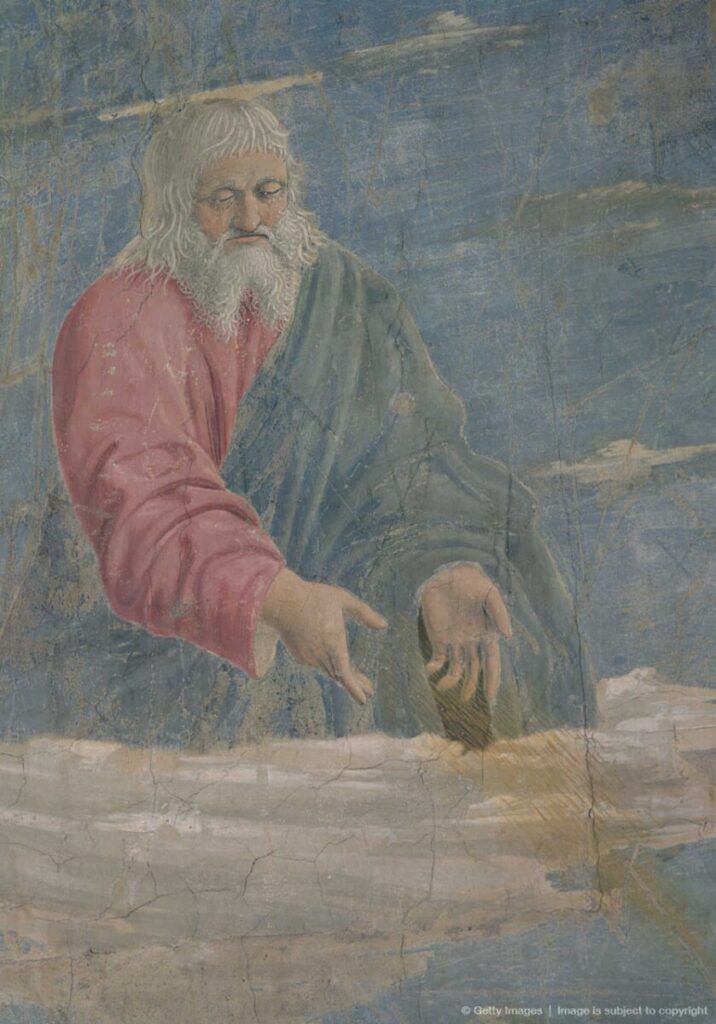
From on high, the Eternal Father appears in half-length and, above a cloud, stretches out His hands, sending the Holy Spirit to the Virgin in the form of rays of golden light, through which the Incarnation will be accomplished.
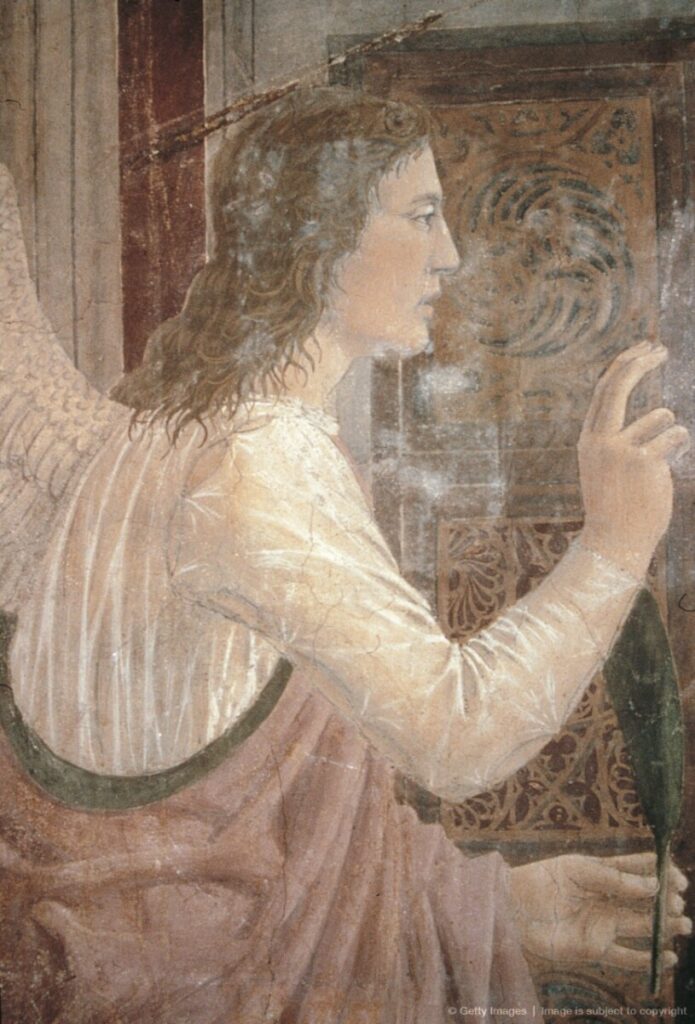
God the Father and the Virgin are solid volumes of color, while the Angel Gabriel, in his profile pose, recalls the fourteenth-century tradition.
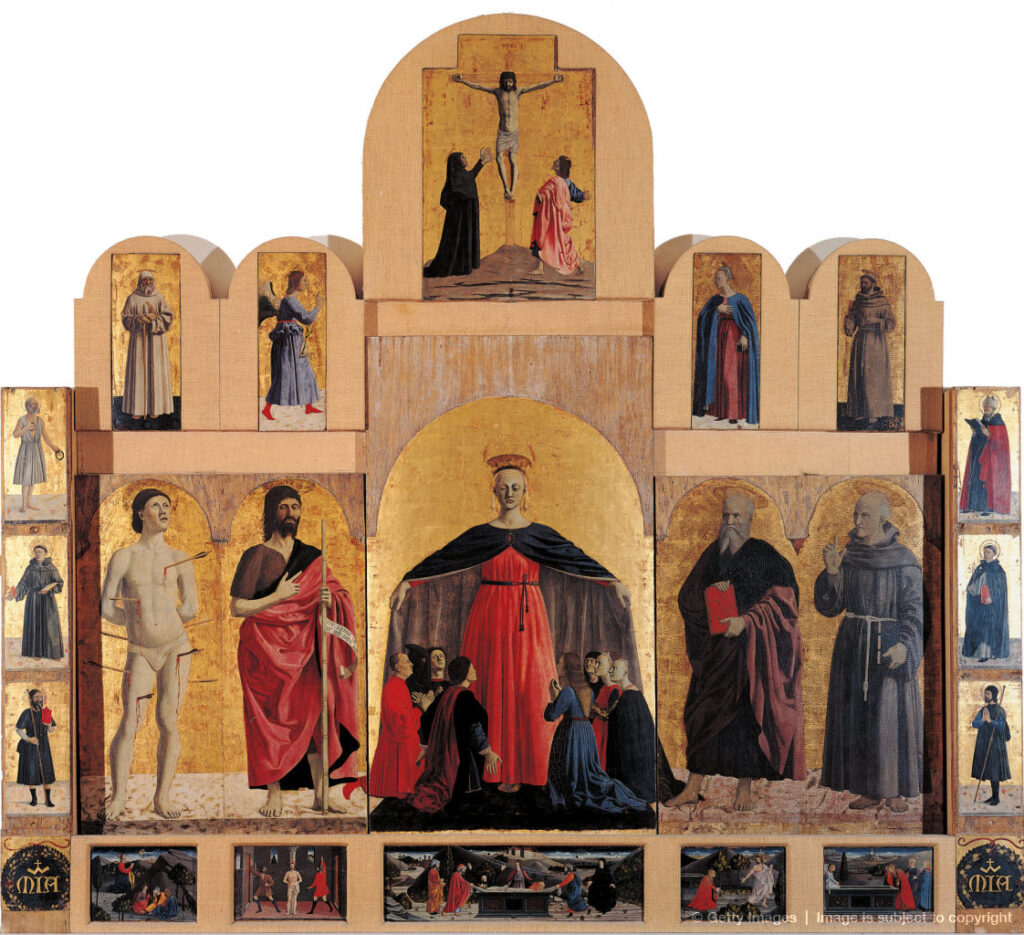
Our thoughts turn to Piero’s first Annunciation, painted on two panels of the Misericordia Polyptych, where the Archangel Gabriel

resembles the heavenly beings of Blessed Angelico, but with a strong and vigorous body, alive and concrete.
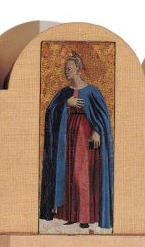
The Virgin of the Annunciation, with her billowing mantle, is also portrayed in a very realistic attitude, her fingers serving as a bookmark in the prayer book.

From the mid-1450s to 1468, Piero worked on a polyptych for the convent of Sant’Antonio alle Monache in Perugia. The composition includes an Annunciation in the cusp, four saints at the sides of the Virgin, and three miracle stories in the predella. The Mother with the Child is at the center of the composition, on a rich throne against a gold background, with a silk damask hung on the wall. The faces of the Mother and of the Child Jesus are absorbed, pensive, almost sad, and recall the intensity of Masaccio and the lofty silence of Domenico Veneziano.
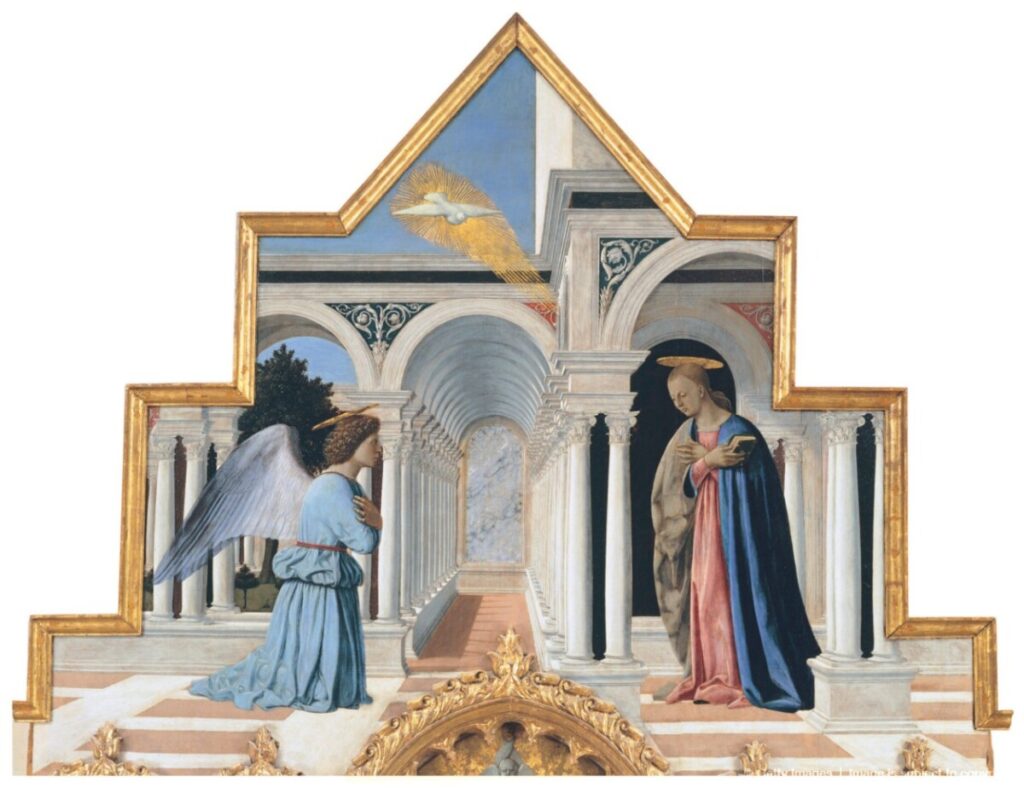
But it is the Annunciation in the cusp that stands out for its highly controlled perspective. The colonnade opens into a clear, airy, and luminous perspectival recession and separates the figure of the Angel from that of the Virgin Annunciate. This outlines her profile against the black background, which gives it depth. The finger in the book holds the place of a suddenly interrupted prayer. Here too the Virgin returns, attentive in listening, ready to respond, who keeps the Word in her heart and assiduously meditates on it.
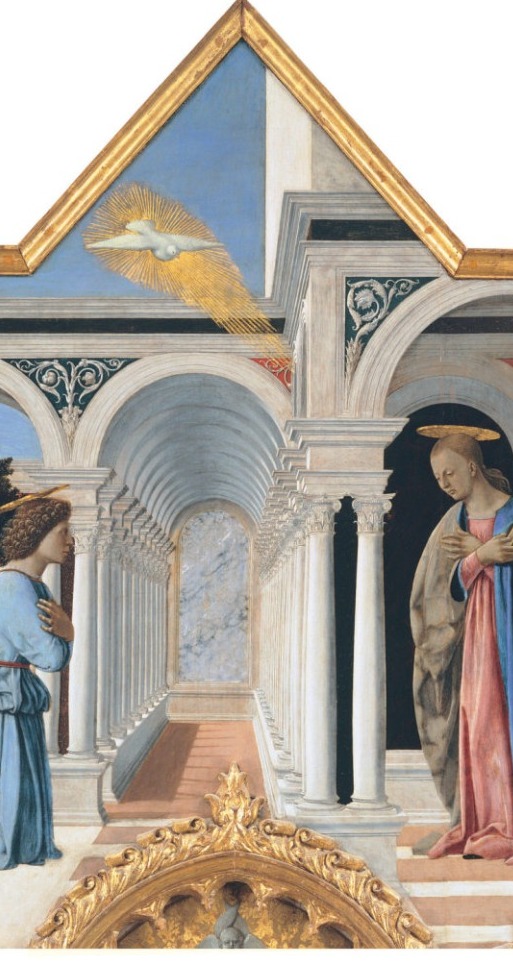
Once again the artist overcomes the limits imposed by patrons of old-fashioned artistic taste and, thanks to the use of oil paints, depicts a sunlit portico, extraordinarily elongated in its series of capitals toward the vanishing point. Each architrave and each column casts a thin band of shadow across the splendid cloister, which seems to go beyond any architectural inspiration.
Postgraduate Program in Mariology
Would you like to deepen your formation in Mariology? Discover the Postgraduate Program in Mariology of Locus Mariologicus — an academic formation that unites theological rigor, spiritual life, and the living tradition of the Church.
Would you like to study Mariology seriously?
This article grows out of the works in the Locus Mariologicus library. The Postgraduate Program in Mariology takes you to the same source, with academic guidance: Scripture, the Fathers of the Church, and the Magisterium, from the first dogma to contemporary questions.


Responses