How we must, with Mary, open ourselves to Christ, so as to go out to meet God.
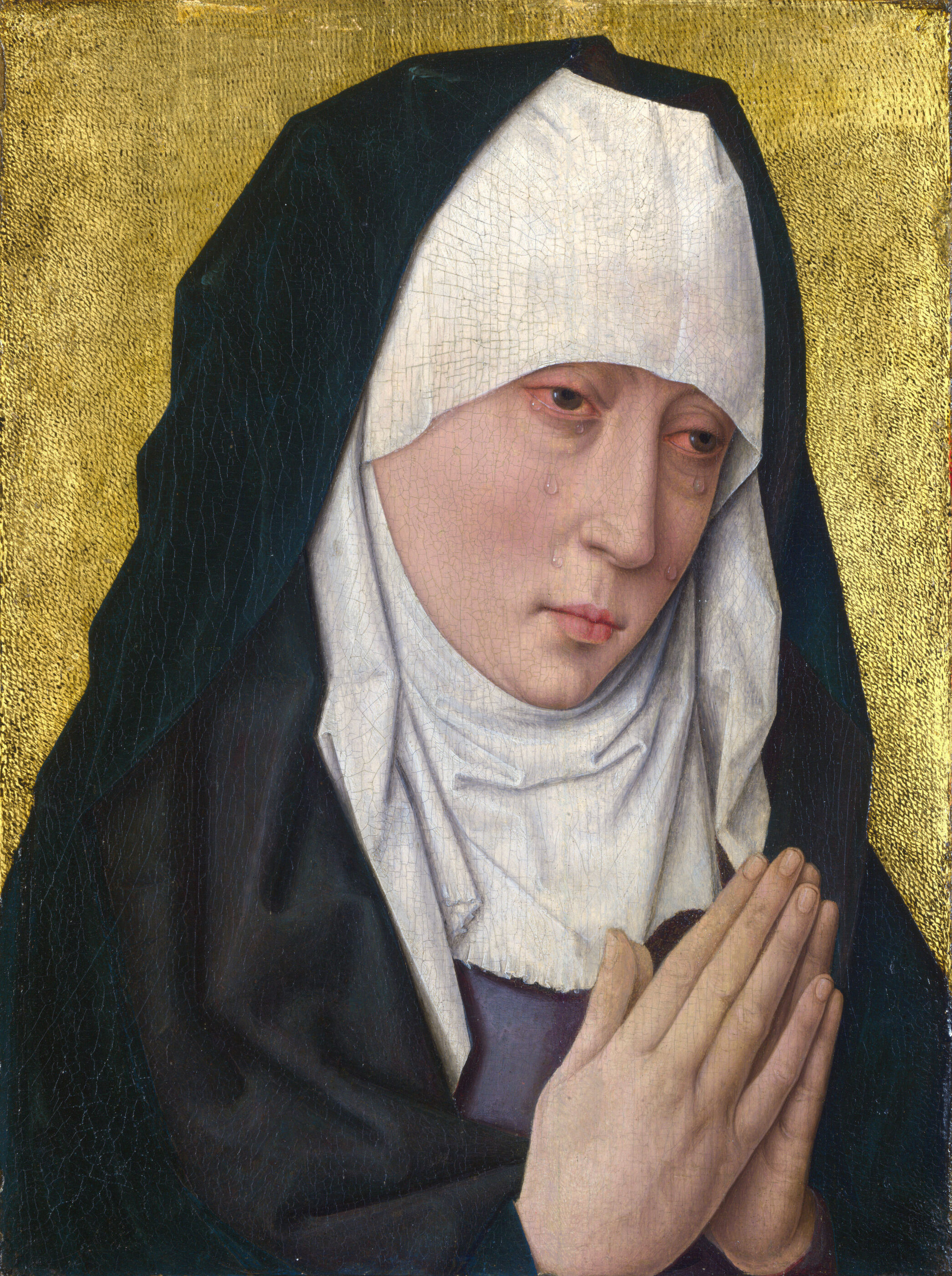
Yes, we rejoice to call her blessed. But we are also bound to attune ourselves to her and to relive in ourselves, as far as possible, the way in which she opened herself, in faith and in poverty, to God, in order to receive Jesus Christ and, with her, to become a new reconciled people, that is, to become Church for the world. These points must be meditated on in detail: we must say the Magnificat not only with our voice, but also with our life, above all with our life.

To open ourselves, with Mary, to Christ, in whom God reconciles us to Himself. What does this entail spiritually?
First of all, to see historical reality, both total and personal, in the biblical vision. God guides history, and it is necessary to have faith in God: to believe in God, to believe God.
To believe in God. I do not think that we should speak here of atheism on principle: it is to be rejected. Whoever adheres to such atheism does not even remotely imagine the possibility of attuning himself to Mary. For him, Mary is, at most, a simple woman like any other. But there is a certain practical agnosticism that can also touch those who are Christian. Secularism, so widespread today, can foster this agnosticism: people live as though God and Christ did not exist. At most, recourse is had to Christ in extreme cases, as when death is about to put an end to our history. In such cases, there can be forms of recourse to Christ and to the saints that have something magical about them. Much more than that is needed. But God’s mercy, in reconciling man, has no limits.
To believe God. Elizabeth said to Mary, alluding to her faith: “Blessed is she who believed that all that was said to her would be fulfilled”. Besides believing in God, one must also believe in the Word of God, place one’s trust in Him and be governed by the Word of God.
This is a fundamental and decisive attitude for reconciliation. Jesus, in His preaching, continually affirmed the necessity of this faith in God. I recall two moments of this teaching: one, when He speaks of reconciliation; another, when He speaks implicitly, precisely, of Mary.
Of reconciliation as the conversion of the whole person to God, Christ spoke, as the Gospel of Mark tells us, precisely at the beginning of His preaching: (Mt 4:17) “Draw near, then, and listen: everything foretold by Isaiah the prophet is fulfilled in you. The Spirit of the Lord is upon me, because He has anointed me to bring the good news to the poor. He has sent me to proclaim liberty to captives and sight to the blind, to set the oppressed free and to proclaim the year of the Lord’s favor”.
Exegetes note that, in practice, the Gospel was Christ Himself. And it should also be noted that Jesus makes a direct appeal to time, kairós, as the intense and supreme moment of the history of salvation, which coincides with the moment of the calling of the People of God to reconciliation. But the people did not believe, except for the little “Remnant”, as He Himself will say: (Lk 10:21) “I praise You, Father, Lord of heaven and earth, because You have hidden these things from the wise and the learned and have revealed them to little ones”.
The wise and the learned here are those who, instead of converting themselves according to the Word of God, convert the Word of God and Christ Himself to themselves, according to their own categories and cultural models. And here too it must be noted how Jesus exalts the faith of the “poor of YHWH”, who constituted the “Remnant” of Israel, those who were becoming the true new People of God. They believe in the Gospel and change their mentality: they open themselves to the reconciliation that God was working in Christ.
Another time, Jesus referred to this faith in the Word of God, believed with fidelity, implicitly alluding to Mary’s faith. Here is the episode. Saint Luke writes: (Lk 11:28) “While Jesus was speaking, a woman from the crowd raised her voice and said: Blessed is the womb that bore You and the breasts that nursed You. But Jesus said: Blessed, rather, are those who hear the Word of God and keep it”.
That is, they keep it in its authenticity, meditating on it and putting it into practice. This was Mary’s way, as the same Luke says: to meditate on the events of Jesus, laden with teaching, and on His words: (Lk 2:19) “Mary, for her part, kept all these words and events, meditating on them in her heart”.
With the silence of MaryIn order to open ourselves, with Mary, to Christ, in whom God reconciles us to Himself, besides attuning ourselves to Mary’s faith, it is necessary that we too become little, simple. It is necessary that we too, as far as possible, be able to say with Mary: God looks upon our lowly condition, upon our accepted poverty, far from any veil of pride, of selfish self-possession, of ostentation, content to be passed over, making silence our habitual word.
The whole Gospel speaks of Mary’s silence. She lets the other women serve Jesus and give Him of what is theirs, as Luke himself attests (Lk 8:3).
I recall here a reflection made some forty years ago, in a lecture, by the lawyer Carnelutti. He said: what must Mary’s inmost sorrow have been when she heard that Jesus had said to one who wished to follow Him: (Lk 9:58) “Foxes have their dens and the birds of the air their nests, but the Son of Man has nowhere to lay His head”. For a mother, not to be able to give her son a dwelling is a great sorrow. Now, this sorrow she accepted in her state of poverty, of need, not so much material as spiritual: Respexit humilitatem ancillae suae. And the cause of this isolation of the Son, and therefore of His inability to have a house, was the discrimination to which those responsible in Israel condemned the poor, the simple, the “Remnant”, of which Mary was a part together with her Son.
Is a state of discrimination against those who wish to be faithful to the Word of God, to friendship with God, possible today, in our time? Not only is it possible, but it exists and becomes ever more widespread and painful. Great is the multitude of those who find themselves in the condition of having to live in themselves the Beatitudes proclaimed by the Lord.
Certainly God does not want discrimination to exist: He wants everyone to say, Our Father who art in heaven, and all to be brothers. Certainly He encourages and rewards those who work so that discrimination may cease. But, in fact, the “poor folk” who must suffer being ridiculed for their very honesty, as though they were incapable people, such people will always exist, through the malice of men. For this reason, one must always have the courage to remain faithful to true honesty, even when one is in a condition of discrimination, of socially despised poverty. This is a difficult message to deliver today. Dominant, and ever more insistent, is a culture that preaches and imposes a conversion contrary to the conversion preached by Christ. But, in spite of everything, one must be faithful to Christ and preach true conversion, true reconciliation, without violence, in the style proper to Christ and to His Mother.
Contemplating Jesus ever more intimatelyA third thing is necessary in order to open ourselves, with Mary, to Christ, in whom God reconciles us to Himself: to contemplate and to recognize Jesus. And the most decisive reason that concerns us here is this: only Jesus can reveal to us who God is, only Jesus can help us to be reconciled with God.
Christ reveals to us who God really isThe Prologue of the Gospel of John ends with this statement: (Jn 1:18) “No one has ever seen the Father. The only Son, who is in the bosom of the Father, He has revealed Him”.
The same Gospel of John recounts that Jesus, at the Last Supper, replied to the apostle Thomas, who had said to Him: “Lord, we do not know where You are going”: (Jn 14:5-7) “I am the way, the truth and the life. No one goes to the Father except through me. If you know me, you will know my Father also. Now you do know Him and you see Him”.
The apostle Philip must have thought that, in spite of everything, it did not seem that they saw the Father. And so he said to Jesus: “Lord, show us the Father, and that is enough for us”. Jesus replied: (Jn 14:8-10) “Philip, have I been with you so long, and you do not know me? Whoever sees me sees the Father. How then do you say: Show us the Father? Do you not believe that I am in the Father and that the Father is in me? The words that I say to you I do not say on my own. The Father, who dwells in me, accomplishes His works”.
These last statements are the key to understanding the Lord’s discourse: all the words He spoke and all the works He did are words and works of the Father, in Christ, His Minister, in full union of life. This means that the book for coming to know God the Father, who reconciles us to Himself, is the Gospel. Every page of the Gospel speaks of God the Father. Every work of Jesus is a work of the Father.
What, then, is the life of Jesus? He Himself says it, speaking with Nicodemus: it is the manifestation of the love of God the Father for the world: (Jn 3:16) “God so loved the world that He gave His only Son, so that everyone who believes in Him may not perish, but may have eternal life”.
To be freed from perdition, to have eternal life, which is the very life of God, is nothing other than the work of reconciliation. “It was God who reconciled the world to Himself in Christ, not counting men’s trespasses against them”, Paul has already told us (2 Cor 5:19).
What was Jesus’ conduct toward sinners? The Gospel of Luke says: (Lk 15:1-2) “The tax collectors and sinners were drawing near to Him to listen to Him. The Pharisees and the doctors of the law murmured, saying: This man welcomes sinners and eats with them”.
And, after saying these words, He spoke of the shepherd who goes in search of the lost sheep and then of the father of the prodigal son. These are the pages that, two thousand years ago, revealed to the world who the God of Jesus Christ is, thanks to whom, although the world is contaminated by sin, man can still hope to be forgiven and to recover friendship with God.
One more reflection on this most important point, which reveals how far Christ’s mercy went in reconciling the sinner with God. I evoke a solemn moment of that reconciliation, at which Mary too was present, intimately united to her Son in that hour. I refer to the conversion of the repentant thief on the cross, beside Jesus.
I said that it is necessary to know and to recognize Jesus, who comes to us to reconcile us and to open us to Himself. Let us observe the conduct of the thief who afterward repents. When he arrived, dragged to Calvary, he did not know Jesus. And it is difficult to think that he was religiously prepared, even though Mark’s statement that both thieves insulted Jesus (Mk 15:32) extends to the two of them what belonged only to the impenitent thief, as some exegetes think. He, therefore, though suffering on the cross, is touched by Jesus’ conduct, begins to know Him, compares his own conduct with that of Jesus, repents, opens himself to God who comes to him with His love. Here is the repentance and the prayer: “Remember me in Your Kingdom”. And Jesus gives him His friendship and that of the Father, opening His Kingdom to him: (Lk 23:39-43) “Today you will be with me in Paradise”.
And Mary is there, suffering and praying.
Christ helps us to be reconciled with GodThe Gospel of John tells us that, on the evening of Easter day, the risen Jesus, while the apostles were shut in the house out of fear, came through closed doors, and great was the joy of the apostles. Then Jesus gave them peace a second time, breathed on them and said: (Jn 20:21-23) “Receive the Holy Spirit. Those whose sins you forgive, they are forgiven them. Those whose sins you retain, they are retained”.
Thus, as the Council of Trent affirms, He instituted the sacrament of penitential reconciliation.
Note how both the last act of Jesus on the cross and His first act as the Risen One are reconciliation with the forgiveness of sins. And it must also be noted that, in communicating the Holy Spirit to the apostles, He underscores what the true dynamism must be that generates new life in the soul, blotting out sins, which are no longer imputed to the sinner. Certainly it is the priest who absolves, but the priest is a simple ministerial instrument of the redeeming power that flows from the risen Christ. And the humanity of Christ, dead on the cross and risen, Saint Thomas teaches, acts in turn as the principal minister of God, the only one who can forgive sins, because He is the only one from whom the Holy Spirit proceeds and, therefore, sanctifying grace (Saint Thomas Aquinas, Summa Theologiae III, 62, 1; 64, 1).
It is Jesus, therefore, as risen, who, by the power of His death on the cross, victorious over sin and over our death, takes hold of the sinner from within, through baptism and through the divine impulse of the Holy Spirit, and transforms him from sinner into penitent. Thus, through absolution, He sanctifies him and brings him back into the communion of His mystical body, which is the Church.
It is Saint Thomas Aquinas who teaches all this with truth. And in this sense I was saying that Jesus helps us to be reconciled with God: He helps us by transforming us from within into the new life of true friends of God.
Uniting ourselves ever more to the charity of Mary, who cooperates in the birth of the faithful in the ChurchI said that, on Calvary, while Christ was reconciling the penitent thief with God, Mary was present. Passively? Sound theology tells us that she was in absolute harmony with her Son’s love for humanity. And love, in that hour, led Jesus to accept the death they inflicted on Him, not passively, but taking it up in order to transform it into the death of sin and of man’s own death, and thus to reconcile the whole of humanity with God. It is clear that Mary’s love for her Son suffered and, at the same time, accepted His death with the same intensity as the fiat spoken at the moment of the Incarnation. Deep down, in the death of her Son, she felt herself dying too. And, with her Son, she made the same prayer to the Father: “Father, forgive them, they do not know what they are doing”.
It is Saint Augustine who sees, in Mary’s love of charity, this intention of ecclesial and salvific cooperation of her whole life with her Son.
Saint Alphonsus takes up these words of the celebrated Nicole: “Since it was properly on Calvary that Jesus Christ formed His Church, it is clear that the holy Virgin cooperated in an excellent and singular way in that formation. Thus she began, on Calvary, to be in a particular way Mother of the whole Church” (Nicole, Theological and Moral Instructions on the Lord’s Prayer, the Angelic Salutation, etc., third instruction, chap. 2).
And Saint Alphonsus concludes: “Thus, to say everything in a few words, the Most Holy God, in order to glorify the Mother of the Redeemer, determined and ordained that her great charity should pray for all those for whom her divine Son paid and offered the superabundant price of His precious blood, in which is our salvation, life and resurrection” (Saint Alphonsus Liguori, The Glories of Mary, “Notice to the Reader”).
ConclusionTo open ourselves to Christ with Mary, in order to go out to meet God, is not to add a path parallel to the one Mediator, but to enter, with spiritual realism, into the concrete way in which God Himself willed to guide the history of reconciliation. Mary’s faith is not a devotional ornament: it is a model and, still more, an ecclesial way of welcoming God’s kairós, the fullness of time in which the Kingdom draws near and calls to conversion (Mt 1:20-21). For this reason, to call Mary blessed is not enough if blessedness does not become a demand: to hear the Word, to keep it and to live it, as Christ declares to be the true greatness of His disciples, and as Mary’s own life confirms (Lk 1:28. Lk 2:19). Reconciliation begins, then, in the place where the Gospel always sets it: in obedient faith, which believes in God and believes God, and which conforms life to the Word, without converting the Word to our own categories.
This openness, however, is not achieved without silence, that is, without the interior poverty that accepts being little before God. Mary’s silence is not absence, but consent, availability and humility without ostentation. It is the space in which a person ceases to possess himself in order to be possessed by God, and thus can receive the reconciling Christ. In a time when the dominant culture frequently pushes toward a conversion contrary to that of Christ, Marian silence becomes evangelical resistance: fidelity without violence, firmness without arrogance, perseverance without bitterness. It is in this humility that the Beatitudes cease to be an abstract ideal and become a way of existing: the serene courage to remain humble, faithful, simple, even when this entails discrimination and loss of prestige.
But the decisive point, without which everything would dissolve into moralism, is this: to open oneself to Christ requires knowing Him and recognizing Him. Only He reveals who God is, because in Him the words and the works are those of the Father. The Gospel, therefore, is not merely a text to be read, but the living book in which God makes Himself known as the mercy that reconciles, as the Father who seeks, forgives and restores friendship. This is why reconciliation is not only an interior feeling, but a real passage from death to life: the sinner, touched by Christ’s presence, learns to say the prayer of repentance and receives the promise of definitive communion (Lk 23:39-43). In the same way, the Risen One makes reconciliation the first paschal gesture for the Church, communicating the Holy Spirit and entrusting to her the ministry of forgiveness (Jn 20:21-23): forgiveness is not an isolated human act, but an action of the risen Christ who, from within, recreates the heart and reintegrates the faithful into the communion of His Body, the Church.
Within this horizon, one understands why Mary’s charity, united to the charity of her Son, is not a passive presence on Calvary. It is full harmony with redeeming love, maternal consent to the Son’s oblation and, for this reason, ecclesial cooperation: there, where Christ forms the Church, Mary enters, in a singular way, into the spiritual motherhood of the reconciled people. Thus, Marian openness to Christ does not end in a private experience, but flows into a communal and missionary reality: to become a new people, that is, Church for the world. And the Magnificat, then, ceases to be merely a canticle and becomes a program: to proclaim, with one’s life, that God casts down the idols of pride and raises up the little ones, making accepted poverty the place where reconciliation begins to generate a new history.
In sum, reconciliation with God, in Christ, asks of us what shone first in Mary: faith that abandons itself, silence that welcomes, living knowledge of Jesus, and charity that offers itself. Whoever enters upon this path discovers that reconciliation is not only a return to the past, but a birth toward the future: new life in the Spirit, ecclesial communion, and the courage to live, in the midst of the world, as a true friend of God.
Continue this reflection on Mary and reconciliation: Mary in Christ reconciles us with ourselves and With Mary for a reconciled Christian community. To explore more deeply the role of Mary in the Christian faith, consult the encyclical Redemptoris Mater: Mary, the way to Christ.
Mary opens us to Christ because she is the way God chose in order to come into the world and the way she herself walked in order to go to God. Her whole life is a radical openness: the “fiat” of the Annunciation (Lk 1:38) is the model of how the human being opens himself to the divine, not with resignation, but with full trust. The spiritual tradition, from Saint Louis Marie Grignion de Montfort to the Second Vatican Council, proposes going to Christ “with Mary, through Mary and in Mary”: she is not a detour, but the surest and most loving way to God.
When Elizabeth proclaims “Blessed are you who believed” (Lk 1:45) and when the Magnificat foretells that “all generations will call me blessed” (Lk 1:48), the word “blessed” (makaria/beata) is not merely praise: it is a theological proclamation. Mary is blessed because she believed before seeing, because she welcomed the Word and made it bear fruit (Lk 8:21). Marian spirituality invites the faithful to imitate this beatitude: not to admire Mary from afar, but to follow her example of active faith and openness to God.
Marian devotion can be reduced to exterior practices (praying the Rosary, wearing the scapular, celebrating feasts). The path with Mary toward God is deeper: it involves assimilating Mary’s interior attitudes, listening to the Word, the obedient “fiat”, ready service (as at the Visitation), fidelity in adversity (as on Calvary). Authentic Mariology proposes an integral Marian spirituality, in which devotion nourishes life and life expresses devotion, in a constant movement of openness to Christ through Mary.
Deepen your knowledge of Mariology: If you wish to study Mariology with academic rigor, apply to our Postgraduate Program in Mariology. Learn more about Marian Theology and the Marian apparitions approved by the Church.
Postgraduate Program in Mariology
Would you like to deepen your formation in Mariology? Discover the Postgraduate Program in Mariology of Locus Mariologicus, an academic formation that unites theological rigor, spiritual life and the living tradition of the Church.
Would you like to study Mariology seriously?
This article is born of the works in the library of Locus Mariologicus. The Postgraduate Program in Mariology takes you to the same source, with academic guidance: Scripture, the Fathers of the Church and the Magisterium, from the first dogma to contemporary questions.




Responses