Dixit dominus domino meo: Mary, daughter of David and mother of the Lord
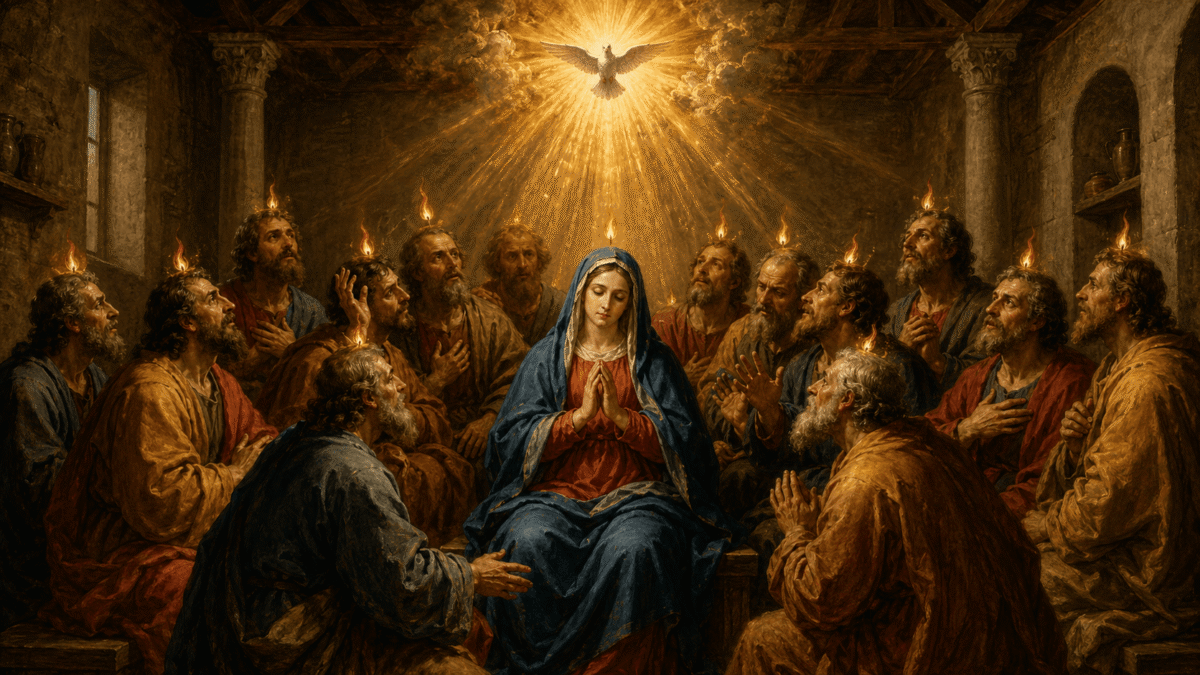
Dixit Dominus Domino meo: Sede a dextris meis, donec ponam inimicos tuos scabellum pedum tuorum.
Mk 12:36, citing Ps 110:1
After a series of questions that His adversaries put to Him, Jesus takes the initiative and formulates His own question: “How do the scribes say that the Messiah is the son of David? David himself said, moved by the Holy Spirit: Dixit Dominus Domino meo… David himself calls Him Lord. How, then, is He his son”? (Mk 12:35-37). The question of Jesus, the “Dixit Dominus” of Psalm 110, does not deny the Davidic sonship of the Messiah; it raises the deepest paradox of Christological identity: how can the Messiah be at the same time the son of David (human origin) and the Lord of David (divine origin)? Mariology finds in this paradox the foundation of the title Mater Domini, Mother of the Lord, which Elizabeth addressed to Mary: she who was a daughter of David begot the Lord of David.
I. Dixit dominus: Psalm 110 and the King-Priest Messiah
Psalm 110 is the most quoted psalm in the New Testament; it appears in Mk 12:36; Mt 22:44; Lk 20:42-43; Acts 2:34-35; Heb 1:13; 5:6; 7:17, etc. It is a royal psalm, probably composed for the enthronement of the king of Jerusalem, but one that the Jewish and Christian traditions interpreted messianically and eschatologically. The opening formula, “The Lord (YHWH) said to my Lord (Adonai)”, presents a twofold Lordship: the God of Israel who addresses His word to someone whom David also calls “my Lord”.
The point of Jesus’ question is that, if David calls the Messiah “Lord”, the Messiah cannot simply be his descendant in the human sense. A descendant is not the “lord” of an ancestor; he is subordinate to him in patriarchal logic. For David to call his descendant “Lord”, this descendant must have a dignity that transcends human origin. Jesus leaves the question open without resolving it explicitly, but the early Church recognized in it the implicit affirmation of the divinity of Christ.
Verse 2 of Psalm 110, “The Lord will stretch forth the scepter of Your power: rule in the midst of Your enemies”, and verse 4, “You are a priest forever according to the order of Melchizedek”, unite the two messianic dimensions that Hebrews will develop: the Messiah as King (who rules) and as Priest (according to Melchizedek). This twofold royal-priestly dimension of the Messiah has direct Mariological implications: the Mother of the Messiah-King is the “Queen Mother” (Gebirah), and the Mother of the Messiah-Priest shares in His priestly work.
The Letter to the Hebrews (Heb 5:6, 10; 7:1-28) developed the priesthood of Christ “according to the order of Melchizedek” in great detail. The priesthood of Jesus is not the levitical priesthood (which comes from the line of Aaron); it is an eternal, superior priesthood that comes directly from God. Mary, as Mother of the eternal High Priest, shares in this priesthood in a unique way: not as a priestess (which she is not and could not be), but as the one who begot the Priest and who “offered” her Son to the Father at the Presentation in the Temple (Lk 2:22-24) and on Calvary.
II. Mary, daughter of David: the royal lineage of Israel in the light of the dixit dominus
The genealogy of Jesus in Matthew (Mt 1:1-17) and Luke (Lk 3:23-38) establishes the Davidic sonship of Jesus. In Matthew, the genealogy runs from Abraham to David and from David to Joseph. In Luke, from Jesus back to Adam. In both cases, the genealogy is that of Joseph, the “legal father” of Jesus, who is explicitly of the house of David (Lk 1:27). But is Mary also of the Davidic line? The New Testament does not affirm it explicitly, but tradition and the apocryphal protogospels (in particular the Protoevangelium of James) do affirm it, and many Fathers and theologians presuppose it.
The greeting of the angel in Lk 1:27, “sent to a virgin (…) of the house of David”, can refer to Mary as well as to Joseph. St. Ambrose and other Fathers read the verse in this sense. And the typological connection with Ps 45:13-14, the “daughter of the King” whom the nuptial announcement awaits, was applied to Mary as “daughter of David” in the medieval exegetical tradition. The paradox of the “Dixit Dominus Domino meo” implies that this “daughter of David” begets the “Lord of David”.
The “Mother of the King”, in the tradition of the Old Testament, had a specific institutional role: the Gebirah (“Great Lady”, “Queen Mother”) was a royal figure recognized at the court of Jerusalem. When Bathsheba intercedes with Solomon (1Kgs 2:19-20), Solomon has her sit at his right hand and says: “Ask, my mother, for I will refuse you nothing”. This model of the Queen Mother who intercedes with her son the King and whose petition is granted is the Old Testament background of the doctrine of Mary’s intercession with Jesus.
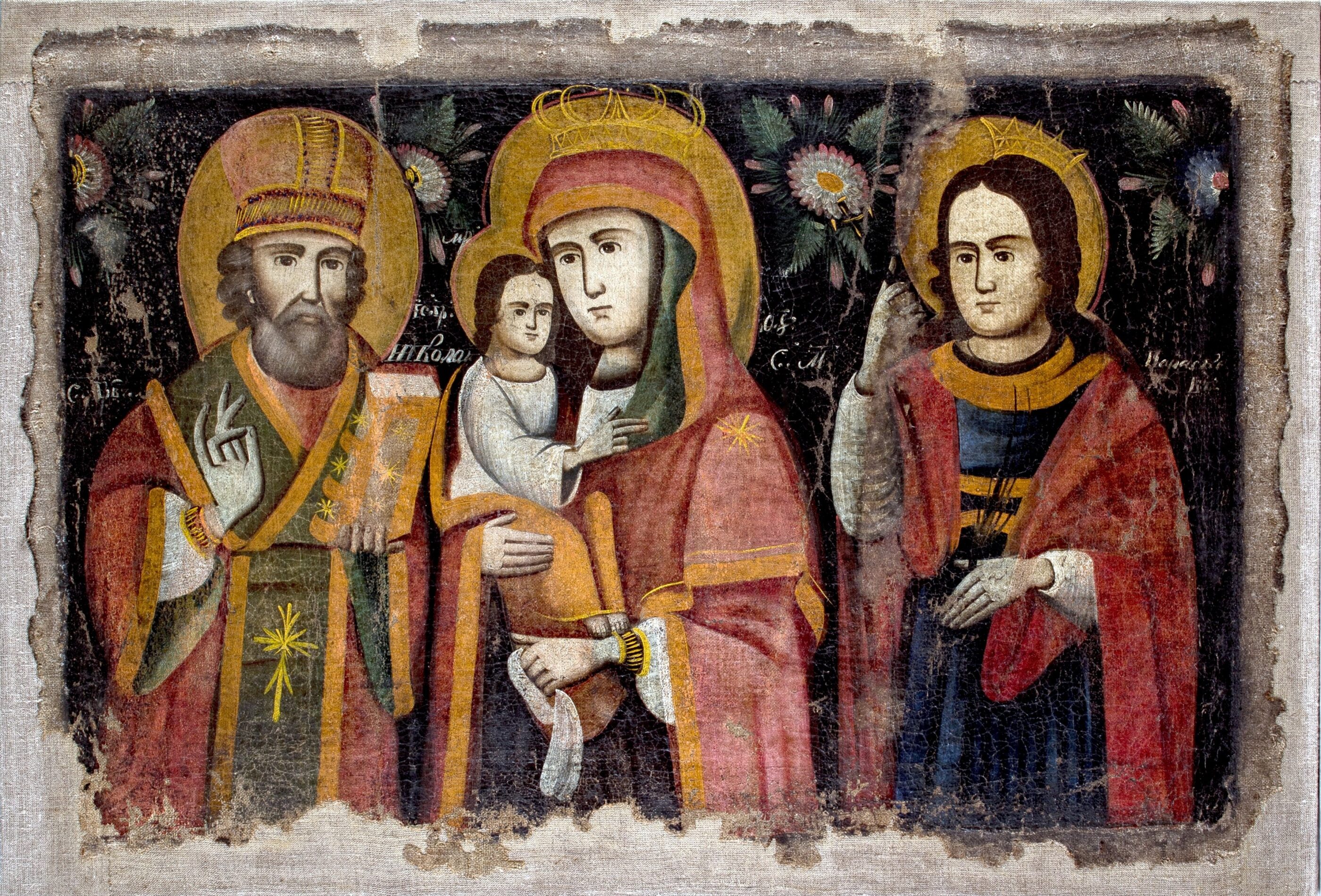
Mary as Gebirah, Queen Mother in the Kingdom of David that the Son establishes, has her most beautiful expression in her heavenly coronation (Rev 12:1): the “woman clothed with the sun, with the moon under her feet, and on her head a crown of twelve stars”. This crowned Queen is at the same time the daughter of David and the Mother of the King whom David called “my Lord”. Royal Mariology, which contemplates Mary as Queen of the Universe, is not devotional exaggeration: it is the theological consequence of her Davidic descent and of the divine motherhood.
III. “Mater domini”: dixit dominus and the recognition of Elizabeth
Lk 1:43: “How does this happen to me, that the Mother of my Lord should come to me”? Elizabeth is the first to recognize in Mary the “Mother of the Lord” (Mater Domini). This title presupposes exactly the paradox that Jesus will raise in Mk 12:35-37: Jesus is the “Lord” (as Psalm 110 anticipated), and Mary is the Mother of this Lord. David called the Messiah “my Lord”. Elizabeth calls the Son of Mary “my Lord”; they are the same recognition, from the Old Testament to the New. The “Dixit Dominus Domino meo” of Ps 110:1 resounds, in Lk 1:43, as the confession of the Mother of the Lord.
The title Mater Domini is what grounds the Theotokos, Mother of God, which the Council of Ephesus (431) defined. If Jesus is the “Lord” (YHWH in person, as Psalm 110 anticipates), then Mary is the Mother of God. The paradox of Mk 12:35-37, how can the Messiah be the son of David and the Lord of David?, has its answer in the Incarnation: because He is at the same time the son of David by His humanity (received from Mary) and the Lord of David by His eternal divinity. And Mary unites in herself the two poles of this paradox: she is the daughter of David (humanity) and the Mother of the divine Lord (the divinity of the Son).
Marian spirituality has found in this twofold reality, Mary daughter of David and Mother of the Lord, an inexhaustible source of contemplation. On the one hand, she is the most human of creatures: born of a concrete family, with a history, with a people, with her limits and her graces. On the other hand, she stands in a unique relation to the divine: Mother of the Lord, dwelling place of the Trinity, Queen of the Universe. This twofold reality is not a contradiction; it is the most perfect expression of the mystery of the Incarnation, where the human and the divine are united without confusion and without separation.
The Rosary, which meditates alternately on the joyful mysteries (the human life of Jesus and Mary), the sorrowful ones (the Passion), and the glorious ones (the Resurrection and glory), is the devotional form par excellence of this contemplation of the paradox: the same Son who was born in Bethlehem of Mary, who was crucified in Jerusalem, is the glorified Lord whom David anticipated in Psalm 110 and who is seated “at the right hand” of the Father. And Mary, who walked this whole path beside her Son, from Bethlehem to Calvary, from Calvary to the Assumption, is the most qualified guide for this contemplation.
IV. Dixit dominus: Mary the Queen at the right hand and the eschatological glory
Dixit Dominus: Ps 110:1: “Sit at My right hand”. This position of supreme honor, “at the right hand” of the Father, is the eschatological horizon of Christology: Jesus, risen and ascended, is “seated at the right hand of the Father” (Nicene Creed). And Mary, who shared more completely than any other creature in the life and the mission of the Son, also shares in His glorification: she who is “crowned” (Rev 12:1) reigns beside the Son who is “seated at the right hand of the Father”. The eschatological glory of Mary the Queen is the fulfillment of the “Dixit Dominus Domino meo” in the order of redemption.
The Coronation of Mary as the fifth glorious mystery of the Rosary is the devotional expression of this sharing in the glory of the Son. The medieval and Renaissance iconography of the “Coronation of Mary”, in which the Father, the Son, and the Spirit crown Mary in the glory of heaven, expresses visually the theological logic: the Son who is “seated at the right hand of the Father” places at His right hand the Mother who, of all creatures, most fully “remained in His love”.
This glory of Mary is not an autonomous power; it is the reflection of the glory of the Son. Just as David called the Messiah “Lord”, recognizing His superior glory, so the Church that proclaims Mary “Queen” recognizes that this Queen reigns by the grace of the King who is her Son. Royal Mariology does not compete with Christology; it expresses it: the Queen Mother who intercedes with the King her Son is the image of the Church that intercedes for humanity with the authority of one who stands beside the Son.
Ordinary Time, which extends over months, without the great Paschal or Christmas peaks, is the time in which the Christian is called to live “as one who is seated at the right hand”, that is, as one who has the dignity of divine filiation and the authority of intercession. Mary, who “is seated” in definitive glory, is the horizon that Ordinary Time contemplates: the dignity to which we are called is not an abstract future reality; it is a reality already present in Mary, already visible in her glorification, already guaranteed by the promise of the Son who said “where I am, there will My servant be also” (Jn 12:26).
Mary, daughter of David and Mother of the Lord, unites in herself the Christological paradox that Mk 12:35-37 raises: she who is of the royal lineage of Israel begot the Lord whom David acknowledged as greater than himself.
References
- Council of Ephesus, Acts (431).
- John Paul II, Redemptoris Mater, nos. 8-11 (1987).
- R. Brown, The Birth of the Messiah (1977).
- J. Gnilka, Das Evangelium nach Markus, vol. II (1979).
- A. Serra, Maria e la Parola di Dio (1984).
Postgraduate Program in Mariology
Would you like to deepen your formation in Mariology? Discover the Postgraduate Program in Mariology of Locus Mariologicus – an academic formation that unites theological rigor, spiritual life, and the living tradition of the Church.
Would you like to study Mariology seriously?
This article is born of the works in the library of Locus Mariologicus. The Postgraduate Program in Mariology takes you to the same source, with academic guidance: Scripture, the Fathers of the Church, and the Magisterium, from the first dogma to contemporary questions.


Responses