Mary in the Apostolic Letter “Desiderio desideravi”

“Desiderio desideravi” I: The Liturgy as an Event of Salvation History and the Real Presence of the Risen Christ
From the beginning, the Church was aware that this was not a representation, however sacred, of the Lord’s Supper: it would make no sense, and no one could have thought of staging that most exalted moment in the life of the Master, much less under the gaze of Mary, the Mother of the Lord. From the beginning, the Church understood, enlightened by the Holy Spirit, that what was visible of Jesus, what could be seen with the eyes and touched with the hands, His words and gestures, the concreteness of the Incarnate Word, all of Him had passed into the celebration of the sacraments.
“Desiderio desideravi” II: The Powerful Beauty of the Liturgy as a Place of Personal Encounter with the Risen One
- Here lies all the powerful beauty of the Liturgy. If the Resurrection were for us a concept, an idea, a thought; if the Risen One were for us the memory of the memory of others, however authoritative the Apostles might be; if we were not given the possibility of a true encounter with Him, it would be like declaring the newness of the Word made flesh to be exhausted. On the contrary, the Incarnation, besides being the only new event that history knows, is also the method that the Most Holy Trinity chose to open for us the way of communion. Christian faith is either an encounter with Him alive, or it is not.
- Our first encounter with His Pasch is the event that marks the life of all of us who believe in Christ: our baptism. It is not a mental adherence to His thought or the signing of a code of conduct imposed by Him: it is being plunged into His passion, death, resurrection, and ascension. It is not a magical gesture: magic is the opposite of the logic of the sacraments, because it claims to have power over God and therefore comes from the tempter. In perfect continuity with the Incarnation, we are given the possibility, by virtue of the presence and action of the Spirit, of dying and rising in Christ.
“Desiderio desideravi” III–V: The Church as Sacrament of the Body of Christ and the Liturgy as an Antidote to Spiritual Worldliness
- If Neo-Pelagianism intoxicates us with the presumption of a salvation earned by our own strength, the liturgical celebration of salvation purifies us by proclaiming the gratuitousness of the gift of salvation received in faith. Taking part in the Eucharistic sacrifice is not our own achievement, as if we could boast of it before God and before our brothers and sisters. The beginning of every celebration reminds me of who I am, asking me to confess my sin and inviting me to implore blessed Mary ever Virgin, the angels, the saints, and all the brothers and sisters to pray for me to the Lord: we are certainly not worthy to enter His house; we need His word in order to be saved (cf. Mt 8:8). We have no other boast than the cross of our Lord Jesus Christ (cf. Gal 6:14). The liturgy has nothing to do with ascetical moralism: it is the paschal gift of the Lord which, received with docility, renews our life. One enters the Upper Room only by being drawn by His desire to eat the Passover with us: Desiderio desideravi hoc Pascha manducare vobiscum, antequam patiar [I have earnestly desired to eat this Passover with you before I suffer] (Lk 22:15).
“Desiderio desideravi” VI–VIII: Wonder at the Paschal Mystery and the Need for Serious and Vital Liturgical Formation
- It is necessary to find the channels for formation as the study of the liturgy: since the Liturgical Movement, much has been done in this regard, with valuable contributions from many scholars and academic institutions. However, this knowledge needs to be spread beyond the academic sphere, in an accessible way, so that each of the faithful may grow in knowledge of the theological meaning of the Liturgy (this is the decisive and fundamental question for all liturgical knowledge and practice, as well as for the development of Christian celebrations), acquiring the capacity to understand the euchological texts, the ritual dynamics, and their anthropological value.
“Desiderio desideravi” XIX: The ars celebrandi and the Participation of the Christian Community in the Paschal Mystery
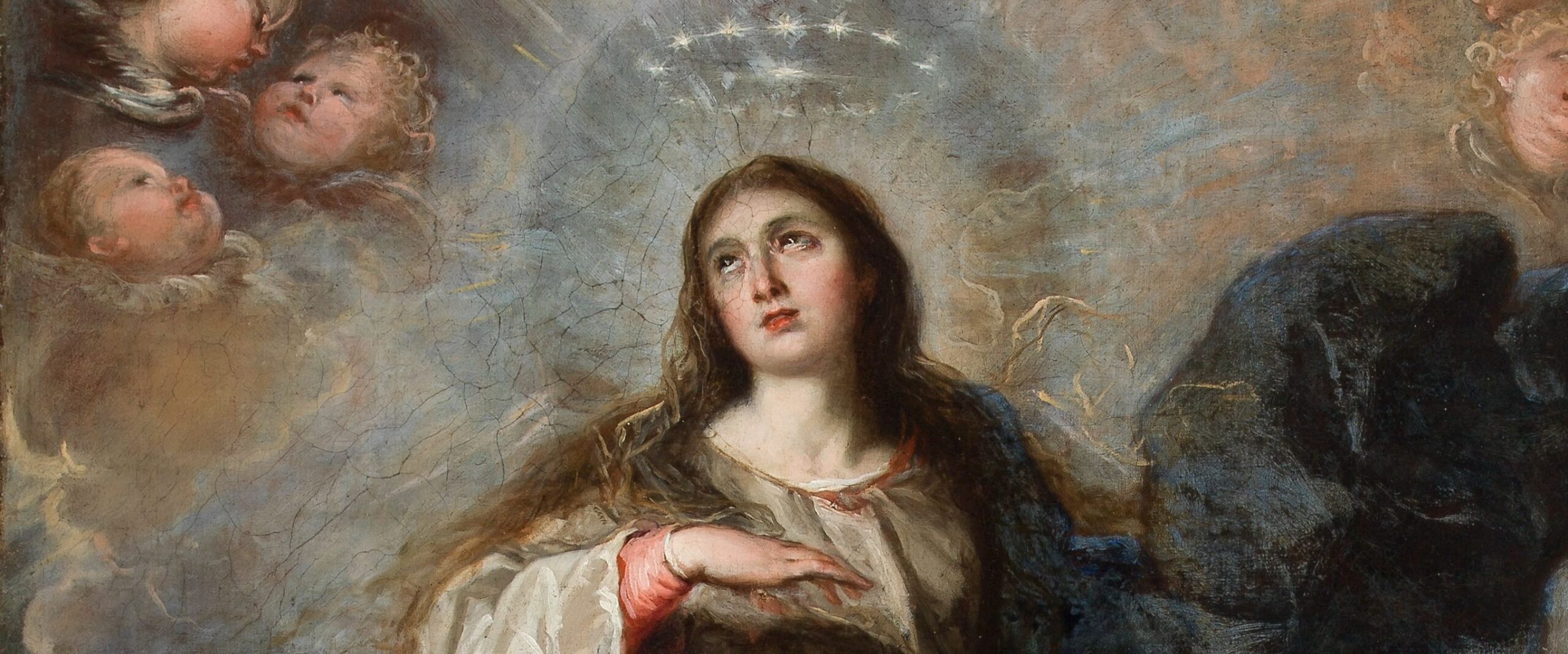
- When the first community breaks bread in obedience to the Lord’s command, it does so under the gaze of Mary, who accompanies the first steps of the Church: “they persevered with one accord in prayer, together with some women and Mary, the mother of Jesus” (Acts 1:14). The Virgin Mother oversees the gestures of her Son entrusted to the Apostles. Just as she kept in her womb the Word made flesh, after accepting the words of the angel Gabriel, so the Virgin once again keeps in the womb of the Church those gestures that make the body of her Son. The priest, who repeats these gestures by virtue of the gift received in the sacrament of Holy Orders, is kept in the womb of the Virgin. Do we still need a rule to tell us how to behave?
- Made instruments for kindling on earth the fire of His love, kept in the womb of Mary, the Virgin made Church (as Saint Francis sang), presbyters allow themselves to be worked upon by the Spirit, who wishes to complete the work He began at their ordination. The action of the Spirit offers them the possibility of presiding over the Eucharistic assembly with the fear of Peter, aware that he is a sinner (cf. Lk 5:1-11), with the strong humility of a suffering servant (cf. Is 42ff.), with the desire to be eaten by the people entrusted to them in the daily exercise of the ministry.
- Let us abandon controversy so as to listen together to what the Spirit is saying to the Church; let us safeguard communion; let us continue to marvel at the beauty of the Liturgy. The Pasch has been given to us; let us allow ourselves to be sheltered by the desire that the Lord continues to have to eat it with us. Under the gaze of Mary, Mother of the Church.
Postgraduate Program in Mariology
Would you like to deepen your formation in Mariology? Discover the Postgraduate Program in Mariology of Locus Mariologicus, an academic formation that unites theological rigor, spiritual life, and the living tradition of the Church.
Would you like to study Mariology seriously?
This article grows out of the works in the Locus Mariologicus library. The Postgraduate Program in Mariology takes you to the same source, with academic guidance: Scripture, the Fathers of the Church, and the Magisterium, from the first dogma to contemporary questions.




Responses