The Holy Name of Mary

The Holy Name of Mary
History of the feast
Devotion to the name of Mary arose in Spain in the sixteenth century, and the feast was introduced into the general liturgical calendar by Pope Sixtus V, to be celebrated on September 17, within the octave of the Nativity. In 1914, Pope Pius X transferred the feast to September 12, the anniversary of the liberation of Vienna from the Turks in 1683, which was attributed to Mary’s intervention. In the post–Vatican II renewal of the liturgical calendar, this feast was removed in 1969, during the pontificate of Saint Paul VI, and in 2001 Saint John Paul II restored it to the liturgical calendar as an optional memorial.
The mystery celebrated in the memorial of the Holy Name of Mary
On September 12 the Church traditionally commemorates the name of Mary, chiefly in the wake of an eminently biblical and salvation-historical motif. In the account of the Scriptures, the name indicates the person. Yet for Hebrew civilization the person is inseparable from the community to which he belongs. The name therefore represents a meeting place between the individual, the family that brought him forth, and the people to whom that family belongs.
In this sense, the name expresses a conception of the person diametrically opposed to modern and postmodern Western individualism. In our Western society the person makes a name for himself, whereas in biblical faith everyone is important because each is the fruit of a profound communion in which the past is a gift to be welcomed in order to live the future with justice and uprightness, not an irrational limitation on everyone’s freedom.
In choosing to call their daughter Mary, her parents wished to give her the greatest treasure of Israel’s faith: the Lord’s liberation from Egypt. Mary was, in fact, the name of the sister of Moses, the prophetess who, according to the Book of Exodus, led the women in giving thanks to God for the crossing of the Red Sea (cf. Ex 15:19-21). In the gift of such a treasure, expressed and made concrete by her name, Mary, the daughter of Joachim and Anne according to the apocryphal traditions, could discover and understand herself as a woman called to prophecy: a woman called to find life in God and to hope in Him in order to see the fulfillment of the definitive exodus and liberation, which would be accomplished in messianic times.
The name received from her parents is therefore, for Mary, a true vocation, because she commits herself to living in a manner worthy of that God who “spoke to Moses, saying: Speak to all the congregation of the people of Israel and say to them: You shall be holy, for I the Lord your God am holy” (Lev 19:1-2). It is that God who afterward promised the coming of Emmanuel, of the righteous Branch in the house of David (cf. Is 7:14; Jer 33:14-17).
The Gospel of Luke, proclaimed during the celebration, testifies that Mary responded with her whole self, freely and willingly, in the fullness of her humanity and in her femininity, to this vocation inscribed in the name received as a gift from her family: she is the one chosen to give a face, flesh, and form to the Holy One of God (cf. Lk 1:35), the one who will bear the name Jesus (cf. Lk 1:30) and whom the Church proclaims to be the Name “given to men, in which it is established that we are saved” (Acts 4:12).
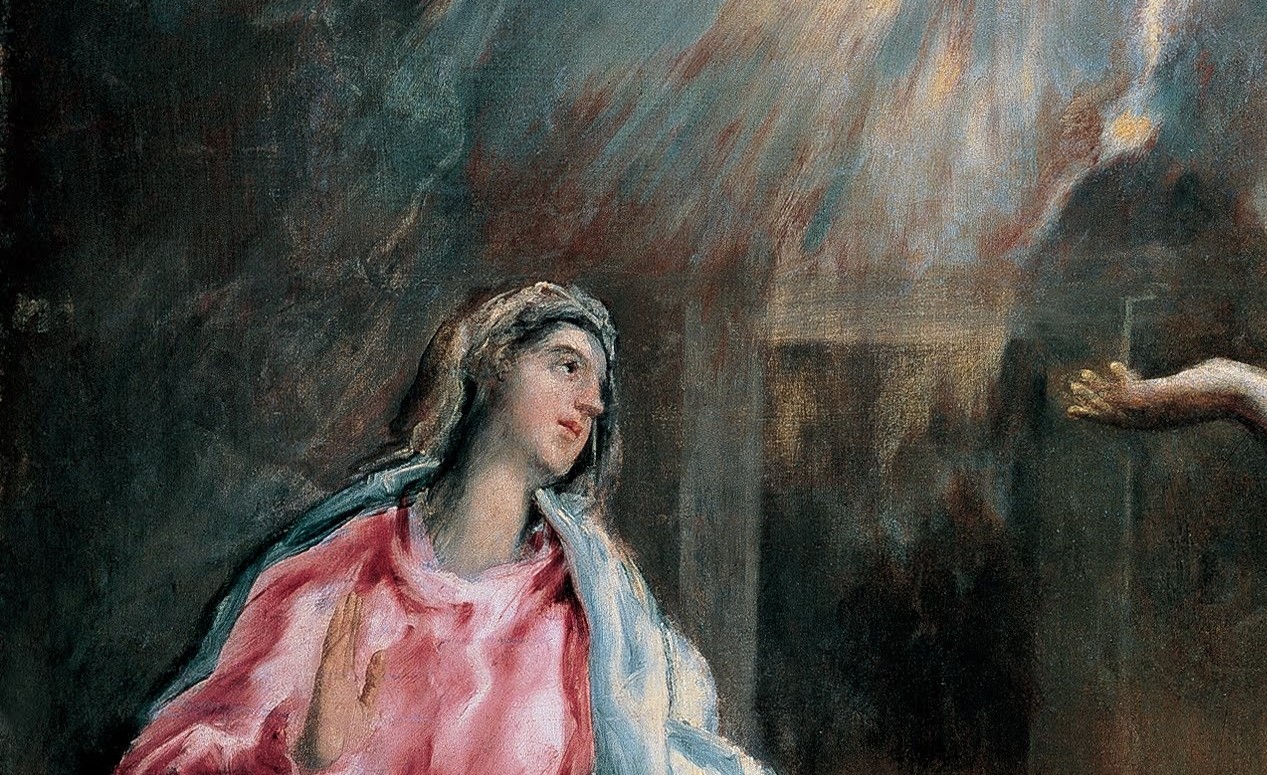
But so great is the fulfillment of the promise of the faithful God that Mary, as happened to Abraham and Sarah (cf. Gen 17:5, 15-16), in a certain sense needs to have her name changed, transformed, so that she may share in the work of Him who makes all things new (cf. Rev 21:5). Thus it is God who gives Mary a new name: in His eyes she is full of grace (Lk 1:28; cf. John Paul II, Redemptoris Mater, 8-10).
This new name points to the unprecedented and unthinkable reality of the virginal incarnation of Him who is the true Son of God (cf. Lk 1:35). The Gospel passage clearly affirms that at the center of today’s celebration stands the name of Jesus, because His Person is our salvation: by adhering to Him with one’s whole being, following the example of the Virgin Mary (cf. Prayer over the Offerings), whoever glories in the name of Christian can confirm with his whole life the renunciations and choices of Baptism (cf. Prayer after Communion).
Mary’s disquiet before the newness of God’s work—the virginal incarnation of the Son of the Most High by the work of the Spirit and her consequent new name, full of grace—marks the beginning of her journey of faith, which will lead her to become the Handmaid of the Lord (Lk 1:38), the wise woman described in the first reading of the Eucharistic celebration, our Mother in the order of grace (cf. Collect; Preface; Jn 19:25-27; Second Vatican Council, Lumen gentium, 61), whose name, blessed (cf. Entrance Antiphon; Lk 1:42) and proclaimed blessed (cf. Communion Antiphon; Lk 1:45), is present with love and gratitude on the lips and in the hearts of the faithful (cf. Preface).
The meaning of the name Mary
“Her name was Mary [Μαριάμ]” (Lk 1:27)
The Virgin then received a name: Mary. The name Mary perhaps derives from two roots, one Egyptian and the other Hebrew. In Egyptian myr means beloved, while in Hebrew jam is an abbreviation of YHWH, the God of revelation and of mercies. According to another etymology, Mary means she who was exalted or the sublime one.
Beyond the various interpretations, one fact remains: God looked upon Mary with the tenderest love and called her to be the Mother of the Savior. All this is also taken up in the preface of the votive Mass of the Holy Name of Mary, where, after giving thanks to the Father for Jesus Christ, in whose name lies all our salvation (cf. Acts 4:12), God is praised and blessed also for the name of Mary, for her person, and for her unique role in the history of salvation:
Mass
Entrance Antiphon Cf. Jdt 13:18-19
Blessed are you by the Lord, God Most High,
among all the women of the earth, O holy Virgin Mary.
The Lord has given such glory to your name
that all generations will sing your praises.
Collect
Grant, almighty God,
the gifts of your mercy
to all who celebrate the glorious name of the holy Virgin Mary,
Through our Lord Jesus Christ, your Son, who is God
and lives and reigns with you in the unity of the Holy Spirit,
for ever and ever.
Prayer over the Offerings
As we venerate the wondrous name of the holy Virgin Mary,
graciously receive our gifts, O Lord,
and transform us into an offering pleasing in your sight.
Through Christ our Lord.
Preface
In your providence
you willed that on the lips of the faithful there should resound
the name of Mary as well.
The Christian people look to her as a shining star,
they call upon her as Mother
and in danger they turn to her as a sure refuge.
Communion Antiphon Cf. Lk 1:48
All generations will proclaim me blessed,
for God has looked upon his humble handmaid.
Prayer after Communion
Pour out upon us, O Lord, the grace of your blessing,
through the intercession of the Virgin Mary, Mother of God,
so that, as we celebrate her venerable name,
we may receive her help in every need.
Through Christ our Lord.
To reflect more deeply on the Holy Name of Mary and its veneration in the tradition of the Church, consult the Apostolic Exhortation Marialis Cultus of Paul VI, which gives direction to authentic Marian cult, including devotion to the Name of Mary.
Deepen your studies: explore Mariology, Marian Theology, Marian apparitions, and the Postgraduate Program in Mariology.
Postgraduate Program in Mariology
Would you like to deepen your formation in Mariology? Discover the Postgraduate Program in Mariology of Locus Mariologicus – an academic formation that unites theological rigor, spiritual life, and the living tradition of the Church.
Would you like to study Mariology seriously?
This article grows out of the works in the Locus Mariologicus library. The Postgraduate Program in Mariology takes you to the same source, with academic guidance: Scripture, the Fathers of the Church, and the Magisterium, from the first dogma to contemporary questions.


Responses