Paul VI – closing address of Vatican II (December 8, 1965): Mary Immaculate, model of the post-conciliar Church.
On December 8, 1965, the feast of the Immaculate Conception, Paul VI solemnly closed the Second Vatican Council. The final address (paragraphs 474*-475* of Enchiridion Vaticanum vol. 1) culminates in an extraordinary Marian contemplation: Mary Immaculate as model of the post-conciliar Church and starting point of the work of applying the Council.
| Collection | Enchiridion Vaticanum vol. 1, paragraphs 474*-475* |
| Pope | Blessed Paul VI |
| Date | December 8, 1965 (feast of the Immaculate Conception, solemn closing of Vatican II) |
Original Italian text, n. 474*
Our greeting therefore becomes ideal. Does it become a dream? Does it become poetry? Does it become a conventional and empty hyperbole, as often happens in our customary outpourings of good wishes? No. It becomes ideal, but not unreal. One more moment of your attention. When we men drive our thoughts, our desires, toward an ideal conception of life, we find ourselves at once in utopia, or in rhetorical caricature, or in illusion, or in disappointment. Man preserves an inextinguishable aspiration for ideal and total perfection, but he cannot attain it by himself, not even in concept, much less in experience and in reality. We know it; it is the drama of man, of the king in decline.
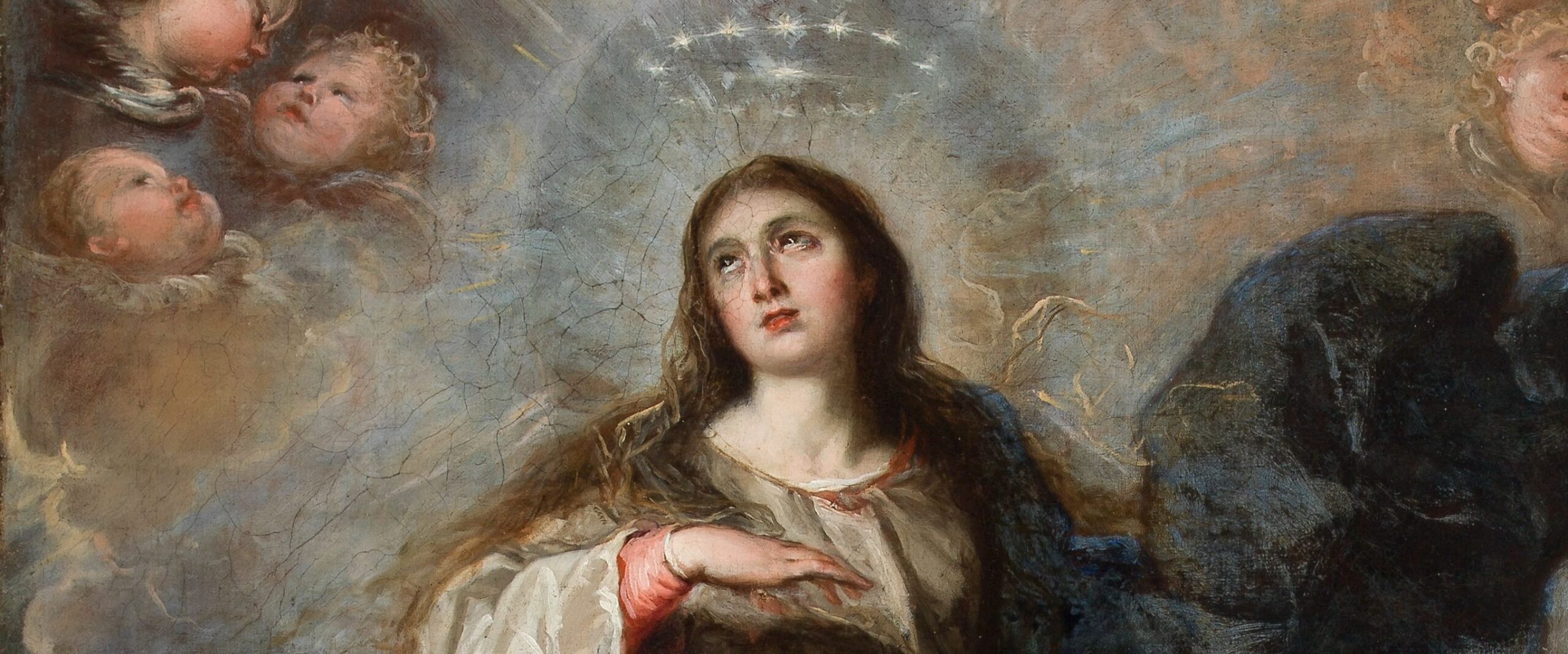
Observe what happens this morning: while we close the Ecumenical Council, we celebrate Mary Most Holy, the Mother of Christ, and therefore, as we have already said before, the Mother of God and our spiritual Mother. Mary most holy, we say, immaculate! That is, innocent; that is, marvelous; that is, perfect; that is, the Woman, the true Woman ideal and real at the same time; the creature in whom the image of God is reflected with absolute limpidity, without any of the disturbance that occurs in every human creature.
English translation, n. 474
Our greeting then becomes ideal. Does it become a dream? Does it become poetry? Does it become a conventional and empty hyperbole, as often happens in our customary outpourings of good wishes? No. It becomes ideal, but not unreal. One more moment of your attention. When we men carry our thoughts, our desires, toward an ideal conception of life, we find ourselves immediately either in utopia, or in rhetorical caricature, or in illusion, or in disappointment. Man preserves an inextinguishable aspiration toward ideal and total perfection, but he does not by himself come to attain it, not even in concept, and still less in experience and in reality. We know it: it is the drama of man, of the fallen king.
But consider what is taking place this morning: while we close the ecumenical Council, we celebrate Mary Most Holy, the Mother of Christ, and therefore, as we said on another occasion, the Mother of God and our spiritual Mother. Mary most holy, we say, immaculate! That is, innocent; that is, stupendous; that is, perfect; that is, the Woman, the true Woman ideal and real at the same time: the creature in whom the image of God is reflected with absolute limpidity, without any of the disturbance that occurs in every human creature.
n. 475*, the inspiring model
Is it not by fixing our gaze on this humble Woman, our Sister and at the same time our heavenly Mother and Queen, the limpid and sacred mirror of infinite Beauty, that our spiritual conciliar ascent and this final greeting can come to an end? And that our post-conciliar work can begin? Does this beauty of Mary Immaculate not become for us an inspiring model? A consoling hope?
English: Is it not by fixing our gaze on this humble Woman, our Sister and at the same time our heavenly Mother and Queen, the clear and sacred mirror of infinite Beauty, that our spiritual conciliar ascent and this final greeting can come to an end? And that our post-conciliar work can begin? Does this beauty of Mary Immaculate not become for us an inspiring model? A comforting hope?
Historical significance
The final address of Vatican II on December 8, 1965, is historically significant:
- Date: December 8, the feast of the Immaculate Conception, deliberately chosen to link the closing to the foundational Marian mystery of the dogma of 1854
- Conceptual triad: Mary as Mother, Sister, and Queen simultaneously, a synthesis of the ecclesial Marian relationship
- Post-conciliar program: Mary as the starting point of the “lavoro post-conciliare”; all the work of applying the Council will take place under her maternal protection
- Integral inclusion: the address concludes by referring to Mary as “Donna ideale e reale insieme,” Christian feminism avant la lettre
Connection with Mater ecclesiae
This address is the complement of the address of November 21, 1964 (see the post on Mater Ecclesiae). The two texts form a Marian diptych: in the 1964 proclamation, Mary is proclaimed Mother of the Church; in the 1965 closing, Mary is presented as the model of the post-conciliar work of application of the Church renewed by the Council.
Further reading
Lumen Gentium ch. VIII | Mater Ecclesiae Proclamation 1964 | Marialis Cultus | Ineffabilis Deus
Postgraduate Program in Mariology
Would you like to deepen your formation in Mariology? Discover the Postgraduate Program in Mariology of Locus Mariologicus – an academic formation that unites theological rigor, spiritual life, and the living tradition of the Church.
Learn more about the Immaculate Conception.
Would you like to study Mariology seriously?
This article grows out of the works in the library of Locus Mariologicus. The Postgraduate Program in Mariology takes you to the same source, with academic guidance: Scripture, the Fathers of the Church, and the Magisterium, from the first dogma to contemporary questions.




Responses