Post-conciliar rereading of the consecration to Mary
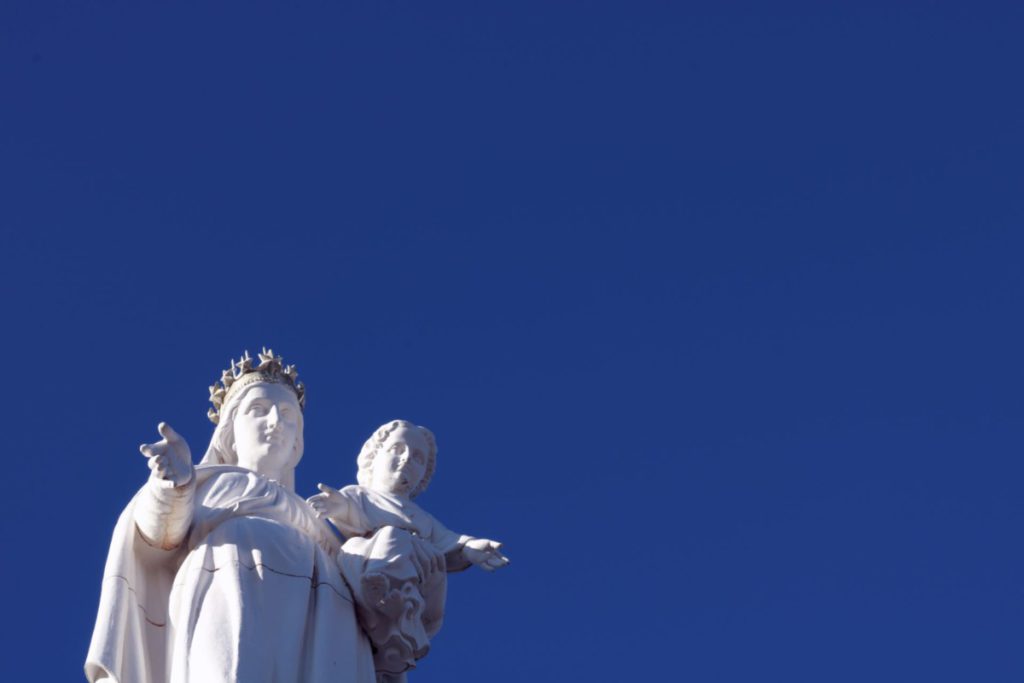
The consecration to Mary is one of the most profound expressions of Catholic spirituality. This consecration to Mary, renewed by Vatican II, is articulated with the method of Saint Louis Marie Grignion de Montfort and was lived in an exemplary way by Saint John Paul II. The post-conciliar rereading of the consecration to Mary recovers its most authentic theological meaning: to live the whole Christian life in a filial relationship with the Mother of God. Here we present the theological foundations and the current practice of the consecration to Mary in the light of Vatican II.
Post-conciliar rereading of the consecration to Mary: new horizons
Easter is the center of the Christian proclamation and is always the point of departure of Mariological thought. The dawn of the glorification of the Son takes place in the One who offers Himself to the Father and leaves us the Holy Spirit as witness, whom He poured out upon the nascent Church together with the giving of the Mother to the beloved disciple. In this context we also find the last words of the earthly life of Jesus: Behold your Mother (Jn 19:27). From that Hour onward, the history of Christianity became the reciprocal welcoming between the Mother of Jesus and the Community of the disciples.
Over the centuries the welcoming became consecration, owing to the great reform of biblical Mariology. And with the aim of remaining faithful to the Scriptures, we will use the word welcoming along our course. Christian worship, the liturgy, over the centuries appropriated the various scriptural elements, above all those linked to Easter. In this sense, Holy Mary began more and more to stand at the center of acts of veneration, including popular ones. Mary’s messianic motherhood developed in such a way that on the Cross we witness an extension of this motherhood to the whole Church, at Easter and in the Upper Room.
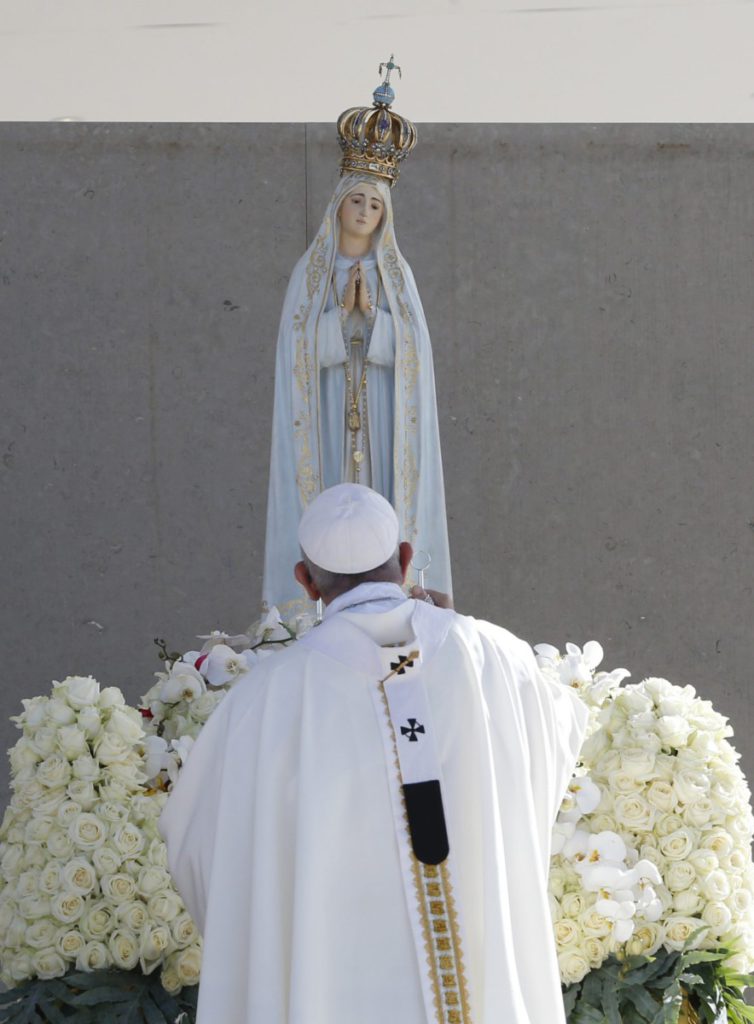
Looking at the root of Christianity, we cannot deny the relationship between the Virgin and the faithful with the Triune God, the source and goal of every act of faith. From this point of view, piety is then a response, in Christian spirituality, to the ecclesial and personal conviction of a relationship with Mary. Nations consecrate themselves to the Mother of God, confident of finding a maternal protection against the evils of daily life.
Historically, Ildephonsus of Toledo (d. 667) offers us an expression that has remained down to our own day: servants of the Handmaid of my Lord. Joining service to the Mater Domini, in Mary’s Queenship one recognized service to Christ, the awareness of the servant’s unworthiness, and Mary’s function as the one who points out the way to God in a merciful manner. Later we find John Damascene (d. 749), who in a homily offers us the first historical record of the use of the expression consecration as a total offering of oneself to Mary: “We too present ourselves to you, O Sovereign Lady, yes, I repeat it, O Sovereign Lady, Virgin Mother of God. We bind our souls to you, our hope, as to an anchor that cannot be broken, consecrating ourselves to you, soul, body, our whole being”. As a matter of linguistic precision, the author writes in Greek using the verb antitithemi, which indicates a consecration that, despite the necessary distances, stands at the same level as the one made to God.
Over the centuries the act of consecration to Mary was longed for, proposed, and esteemed by saints, popes, and pastors, and it gradually became a very popular practice in Catholic circles until the Second Vatican Council (1962-1965). Like all the other exercises of Christian piety, it underwent an eclipse after the Council because of the need for a process of revision. We cannot claim that the Council was against Mary: quite the contrary, never in the history of the Church has so much been written about Mary as at the Council. Nevertheless, the liturgical reform offered to the Church by Saint Paul VI had its time of maturation, and even in 1967, with Signum Magnum 5, we have the Holy Father’s call inviting the faithful to consecrate themselves to the Immaculate Heart of the Mother of the Church and “to live this most noble act of worship with a life ever more conformed to the Divine Will, and in a spirit of filial service and devout imitation of their heavenly Queen”.
Saint John Paul II relaunched on several occasions the consecration and self-surrender to Mary, beginning with his motto on his coat of arms, Totus tuus. The attitude of total abandonment to Mary after Vatican II met with hostility because of the difficulty of language: the word consecration is an expression that indicates the work of God, the mission of Christ, the ministry of the Church, the sacrament of salvation, the dedicatio of the faithful to God and to His Kingdom. We would note that it is common in theology to find expressions elaborated on the basis of analogy and metaphor.
There remains, then, the problem, from the Mariological point of view, of a clear revision of language that respects the identity and the mission of the Mother of God without obscuring the absolute transcendence and independence of the Son of God in His relationship with creatures and with the cooperation of His Mother. In its profound spiritual meaning, the welcoming of Mary derives from the one consecration to God and leads us to it.
The question remains: what, then, is the value of the welcoming, self-surrender, self-giving, consecration to Mary? Well, let us begin with a basic concept: this act is a “sacramental”, that is, contrary to the sacrament, which brings about what it signifies, the sacramental brings about its effect on the basis of the commitment of the faithful, who strive to imitate Mary in order to find, in her furrow, the spiritual lines for following Christ. The history of the Saints shows how greatly the co-responsibility and cooperation of the faithful with the promises of baptismal consecration, concerning the evangelization of the Church in the secular and globalized world, are broadened and strengthened by the welcoming of Mary into their life.
In order to continue with these questions we will have the Course on the post-conciliar rereading of the Consecration. And so that we may give shape to the course that will take place shortly, what are your questions regarding the consecration? Comment below!
To deepen the post-conciliar rereading of the consecration to Mary, consult the document of Paul VI: Marialis Cultus on devotion to Mary after the Second Vatican Council.
Deepen your studies: explore Mariology, Marian Theology, Marian apparitions, and the Postgraduate Program in Mariology.
Postgraduate Program in Mariology
Would you like to deepen your formation in Mariology? Discover the Postgraduate Program in Mariology of Locus Mariologicus, an academic formation that unites theological rigor, spiritual life, and the living tradition of the Church.
Would you like to study Mariology seriously?
This article is born of the works in the library of Locus Mariologicus. The Postgraduate Program in Mariology takes you to the same source, with academic guidance: Scripture, the Fathers of the Church, and the Magisterium, from the first dogma to contemporary questions.




Responses