Saint Joseph the Worker: Work and the Feast of May 1
Saint Joseph the Worker is the liturgical title with which the Catholic Church venerates the spouse of the Virgin Mary as model and patron of all workers. The day of Saint Joseph the Worker is May 1, and the reason is historical and precise: on May 1, 1955, speaking to the Christian Associations of Italian Workers gathered in Saint Peter’s Square, Pope Pius XII instituted the liturgical feast of “Saint Joseph the Craftsman” and fixed it exactly on the date that the world workers’ movement already celebrated as its own day. This is why May 1 is Saint Joseph’s day: the Church wished to show that the dignity of work, claimed in the squares and in the factories, has its highest icon in the carpenter of Nazareth (Mt 13:55).
The Institution of the Feast by Pius XII (1955)
May 1 was born outside the Church. Since 1889 the international workers’ movement had adopted the date as the world day of labor, in memory of the Chicago workers of 1886, and throughout the twentieth century it was frequently capitalized upon by socialist and Marxist currents as a day of demands and, not infrequently, of confrontation. The Church, however, did not look at the world of work from the outside: ever since the encyclical Rerum novarum of Leo XIII (1891), Catholic social doctrine had defended the just wage, rest, and the association of workers, a line continued by the Quadragesimo anno of Pius XI (1931).
It was in this context that Pius XII, a little more than ten years after the first audience granted to the ACLI (March 11, 1945), received the Italian workers in Saint Peter’s Square and announced, in the address of May 1, 1955, the creation of the new feast:
“amiamo di annunziarvi la Nostra determinazione d’istituire – come di fatto istituiamo – la festa liturgica di S. Giuseppe artigiano, assegnando ad essa precisamente il giorno 1° maggio” – it is dear to us to announce to you our determination to institute – as in fact we do institute – the liturgical feast of Saint Joseph the Craftsman, assigning to it precisely the day of May 1 (Pius XII, Address on the Solemnity of Saint Joseph the Craftsman, May 1, 1955).
The scope of the gesture is in the address itself. Welcomed by Christian workers, says the pope, “il 1° maggio, ben lungi dall’essere risveglio di discordie, di odio e di violenza, è e sarà un ricorrente invito alla moderna società per compiere ciò che ancora manca alla pace sociale” – May 1, far from being an awakening of discord, of hatred and of violence, is and will be a recurring invitation to modern society to accomplish what is still lacking to social peace. And the choice of the patron could not have been any other, “perchè l’umile artigiano di Nazareth non solo impersona presso Dio e la S. Chiesa la dignità del lavoratore del braccio, ma è anche sempre il provvido custode vostro e delle vostre famiglie” – because the humble craftsman of Nazareth not only personifies, before God and the Church, the dignity of the manual worker, but is also always the provident guardian of the workers and of their families.
In the current Roman calendar, the celebration of May 1 is an optional memorial, distinct from the solemnity of March 19, which celebrates Saint Joseph as the spouse of the Virgin Mary and patron of the universal Church. The two dates do not compete: the March one contemplates the person and the mission of the saint in the mystery of the Incarnation, the May one contemplates his work as a path of holiness.
The Carpenter of Nazareth (Mt 13:55)
The biblical basis of the title is a question from the incredulous crowd in the synagogue of Nazareth: is this not the carpenter’s son? (Mt 13:55). In the Nova Vulgata: Nonne hic est fabri filius? The Greek term used by the evangelists, tekton, designates the craftsman of wood and of building, the man of the skilled manual trade, who makes plows, doors, and beams. Mark applies the same term to Jesus Himself, whom the same crowd calls the carpenter, the son of Mary (Mk 6:3) – in the Nova Vulgata, faber, filius Mariae. Jesus was not only the carpenter’s son: He learned and practiced His father’s trade.
The Catechism draws from this a theological consequence of great scope: “During the greater part of His life, Jesus shared the condition of the immense majority of men: a daily life without apparent greatness, a life of manual work, a Jewish religious life subject to the Law of God, a life in the community” (CCC 531). And, quoting Paul VI, it calls Nazareth a school: “Nazareth is the school in which we begin to understand the life of Jesus, it is the school in which the knowledge of the Gospel begins […] A lesson of work, Nazareth, the home of the ‘Carpenter’s Son’!” (CCC 533).
The workshop of Nazareth is not, therefore, a picturesque detail of the hidden life. It is the place where the Son of God willed to spend almost the whole of His earthly years, under the authority and at the side of a worker. No theology of work can say more than this fact: God made man worked with His hands, and learned to work with Joseph.
Theology of Work: From the Workshop to the Redemption
John Paul II, in the apostolic exhortation Redemptoris custos (1989), condensed into a single sentence the theological value of Joseph’s trade:
“Thanks to his workbench, at which he plied his own trade together with Jesus, Joseph brought human work closer to the mystery of the Redemption” (Redemptoris custos, n. 22).
Human work, in the workshop of Nazareth, entered the orbit of the Redemption. It is neither a mere penalty imposed by sin nor a simple commodity: it is participation in the creative work of God and, ever since the incarnate Word took it up, matter of sanctification. We analyze the document in detail in the article devoted to Redemptoris custos: there one sees how this thesis is articulated with the whole mission of Joseph, guardian of the Redeemer.
Before John Paul II, Leo XIII had already, in the encyclical Quamquam pluries (1889), published two years before Rerum novarum, presented Joseph as the Christian answer to the workers’ question. Joseph, writes the pope in the official Spanish version on the site of the Holy See, “pasó su vida trabajando, y ganó con la fatiga del artesano el necesario sostén para su familia” – spent his life working and earned, by the toil of the craftsman, the necessary support for his family. And he concludes: “el trabajo del obrero no sólo no es deshonroso, sino que, si lleva unida a sí la virtud, puede ser singularmente ennoblecido” – the work of the laborer is not only not dishonorable, but, if it has virtue joined to it, can be singularly ennobled (Quamquam pluries, n. 4). The humble condition has nothing shameful about it: here, in 1889, is the principle that the feast of 1955 would turn into liturgy.
The Catechism sums up the fruit of that school of Nazareth for the whole Christian life: “By His submission to Mary and Joseph, as well as by His humble work in Nazareth during long years, Jesus gives us the example of holiness in the daily life of the family and of work” (CCC 564). Work and family, the two axes of ordinary existence, are the proper ground of the holiness of the Holy Family – and, through it, of every Christian family.
Joseph, Model of the Worker
Pope Francis, in the apostolic letter Patris corde (2020), devoted an entire section to Joseph as a “working father,” explicitly taking up again the feast of May 1:
“Saint Joseph was a carpenter who worked honestly to guarantee the support of his family. From him, Jesus learned the value, the dignity, and the joy of what it means to eat bread that is the fruit of one’s own work” (Patris corde, n. 6).
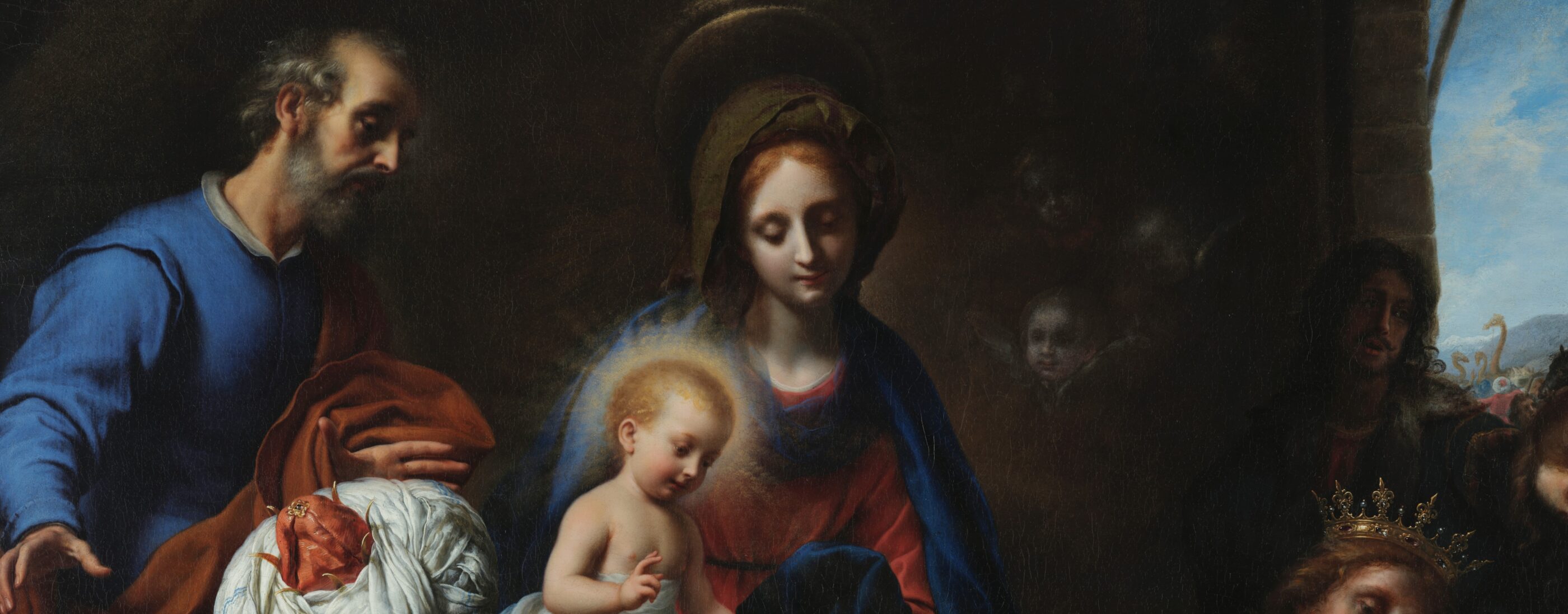
The complete commentary on the document is found in our article on Patris corde. Here what matters is to retain the essential: in Joseph, work is neither a career nor self-affirmation, it is service. He works so that Mary and Jesus may live. His trade is the concrete and daily form of his mission as guardian, and for this reason Josephology does not separate Joseph the worker from Joseph the spouse and father: he is the same just man (Mt 1:19), who answers God not with discourses, but with works.
For this reason Redemptoris custos can propose him to all vocations: “May Saint Joseph become for all a singular teacher in the service of Christ’s saving mission, which in the Church belongs to each and to all: to husbands and to fathers, to those who live from the work of their own hands and from any and every other work, to persons called to the contemplative life and to those who are called to the apostolate” (Redemptoris custos, n. 32).
The feast of May 1 is, at bottom, a thesis of social doctrine celebrated in the form of liturgy: work exists for man, and man for God. Whoever wishes to go deeper into the biblical, patristic, and magisterial foundation of the figure of Saint Joseph will find the complete picture in our pillar article on Josephology. And whoever wishes to carry this doctrine into the life of prayer can begin with the prayers to Saint Joseph, asking the carpenter of Nazareth to teach every worker to sanctify his own trade, day after day, in the hidden workshop of daily duty.
Frequently Asked Questions
What is the feast of Saint Joseph the Worker?
It is the liturgical celebration that venerates Saint Joseph as model and patron of workers, set for May 1. It was instituted by Pope Pius XII in 1955 and, in the current Roman calendar, has the rank of optional memorial.
Why is May 1 Saint Joseph’s day?
Because Pius XII wished to give Christian meaning to the world day of labor, celebrated on May 1 since 1889. On May 1, 1955, before the Italian workers in Saint Peter’s Square, the pope instituted the liturgical feast of Saint Joseph the Craftsman on exactly that date. Thus the dignity of work came to be celebrated under the patronage of the carpenter of Nazareth.
Was Saint Joseph really a carpenter?
Yes. The Gospel calls Jesus “the carpenter’s son” (Mt 13:55), and Mark applies the term “carpenter” to Jesus Himself (Mk 6:3). The Greek word tekton designates the craftsman of wood and of building, a trade that Joseph practiced in Nazareth and taught to Jesus.
What is the difference between March 19 and May 1?
March 19 is the solemnity of Saint Joseph, spouse of the Virgin Mary and patron of the universal Church, the principal feast of the saint. May 1 is the optional memorial of Saint Joseph the Worker, centered on his work as a model for all workers.
What does the Church teach about work on the basis of Saint Joseph?
That work is participation in the creative work of God and a path of sanctification, neither a punishment nor a commodity. John Paul II teaches that, at the workbench of Nazareth, Joseph “brought human work closer to the mystery of the Redemption” (Redemptoris custos, n. 22). Francis presents Joseph as the father from whom Jesus learned the value and the dignity of eating bread that is the fruit of one’s own work (Patris corde, n. 6).
Would you like to delve deeper into Josephology?
Locus Mariologicus is preparing its Josephology class—the scientific study of Saint Joseph in Scripture, Tradition, and the Magisterium. Join the waiting list and be notified when registration opens.



Responses