The Perpetual Virginity of Mary: What It Is and Its Meaning
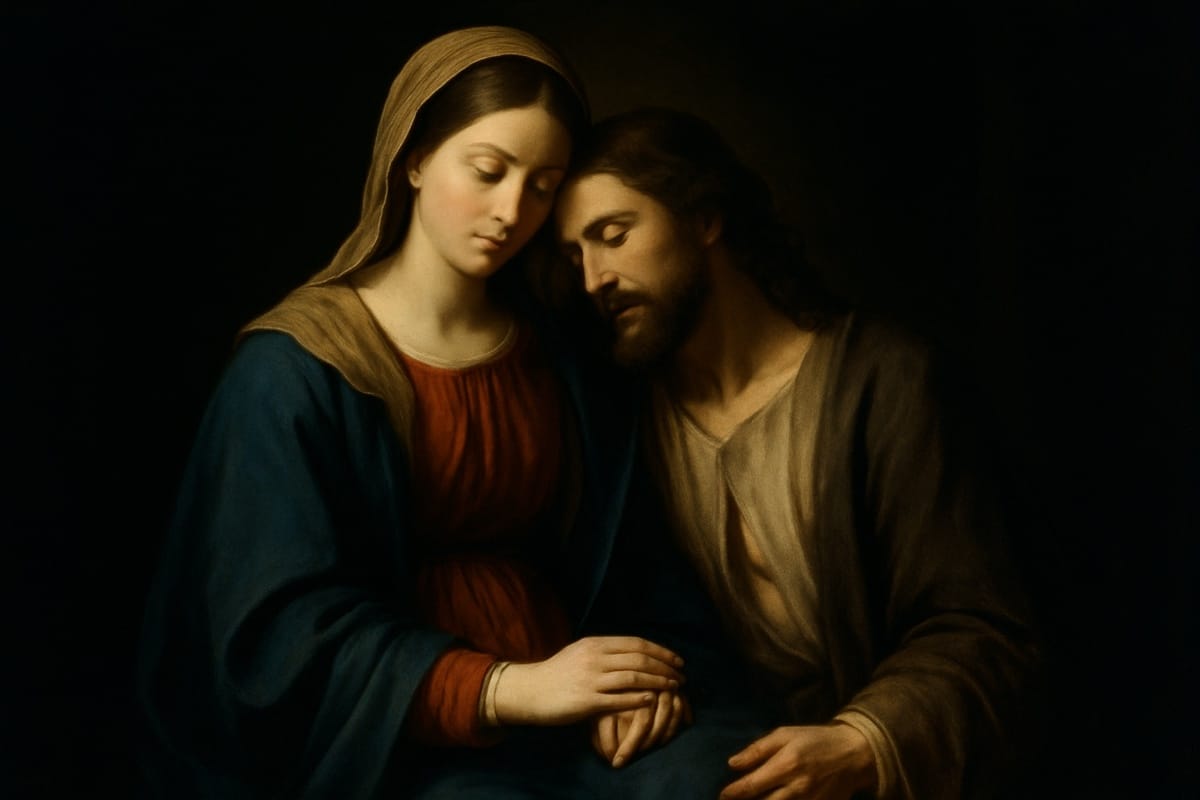
The Perpetual Virginity is one of the oldest truths of faith about Our Lady: the Church professes Mary “ever Virgin” – before, during, and after the birth of Jesus. This is not a biographical detail, but a sign: Mary’s virginity reveals that salvation is God’s free gift, and expresses her total consecration to the mystery of the Son.
What Does “Ever Virgin” Mean?
Tradition distinguishes three moments (ante partum, in partu, post partum):
- Before the birth: Mary conceives Jesus virginally, by the work of the Holy Spirit, without the agency of a man (Lk 1:34-35);
- In the birth: her virginity is preserved in giving birth;
- After the birth: Mary remains a virgin for her whole life.
And the “brothers of Jesus”?
The Gospel mentions “brothers” of Jesus (Mk 6:3). But the Greek word adelphós, in Semitic usage, also designates close relatives – cousins, nephews. This is how the Church has always understood it: already in the fourth century, Saint Jerome defended this interpretation against Helvidius. No text states that Mary had other children; on the contrary, on the cross Jesus entrusts His Mother to John (Jn 19:26-27), which would be strange if there were other brothers.
A Constant Faith of the Church
Perpetual virginity has been confessed from the Fathers onward and by the liturgy. It was solemnly reaffirmed by the Lateran Council (649), under Pope Saint Martin I, which professed Mary “semper virgo.” The Second Vatican Council took it up again (Lumen Gentium 57), and the Catechism sets it out in nos. 499-507.
The Theological Meaning
Mary’s virginity is not contempt for marriage or for motherhood – she is, at one and the same time, Virgin and Mother. It is a sign: her virginal motherhood shows that Jesus is God’s gift, and not the fruit of human will; and her perpetual virginity expresses that Mary belongs entirely to the mystery she bore. She is the image of the Church, virgin and mother in faith.
See also
Explore this theme more deeply through all our articles in the Virginity archive.
Frequently Asked Questions
What does Mary “ever Virgin” mean?
That she remained a virgin before, during, and after the birth of Jesus (ante partum, in partu, post partum).
Did Jesus have brothers?
The “brothers” mentioned in the Gospel are close relatives (cousins), according to the Semitic usage of the word. The Church has always professed that Mary had no other children.
Is perpetual virginity a dogma?
Yes. It is a truth of faith, confessed from the Fathers onward and solemnly reaffirmed by the Lateran Council of 649.
Text of the Locus Mariologicus Institute, founded in Rome. Scientific direction by Prof. Dr. Daniel Cerqueira Afonso (PhD, Marianum).
This truth is one of the Church’s four Marian dogmas.
See also
Would you like to study Mariology seriously?
This article grows out of the works in the Locus Mariologicus library. The Postgraduate Program in Mariology takes you to the same source, with academic guidance: Scripture, the Fathers of the Church, and the Magisterium, from the first dogma to contemporary questions.





Responses