Benedict XV: The Pope of Peace and of the Rosary

Historical and Biographical Context
Giacomo Della Chiesa, born in Genoa on November 21, 1854, ascended to the papacy as Benedict XV in 1914, a period marked by the outbreak of the First World War. This article explores his significant contributions and the complexity of his pontificate, frequently overshadowed by the turmoil of the global conflict.
The 1917 Code of Canon Law and the Diplomacy of Benedict XV: The Roman Question and the Reforms of Ecclesiastical Administration
One of the most notable achievements of Benedict XV was the promulgation of the Code of Canon Law. This document revolutionized ecclesiastical administration, establishing a unified and codified juridical system for the Catholic Church. This section will examine the implications and the impact of that promulgation.
The Roman Question: Diplomacy and Resolution
Benedict XV played a vital role in the mediation and resolution of the Roman Question, a historic conflict between the Papacy and the Italian State. This topic will examine his diplomatic strategies and the consequences of his actions for relations between the Church and the State.
Benedict XV (1914-1922) and Modernism: The Promotion of Biblical Exegesis, the Eastern Churches and the Balance between Tradition and Renewal
Confronting Modernism and Promoting Biblical Exegesis
This Pope directly addressed the crisis of modernism in the Church, seeking a balance between tradition and innovation. He promoted a renewed interest in biblical exegesis, emphasizing the importance of academic study in religious practices.
The Strengthening of the Eastern Churches and Mission
Benedict XV devoted significant efforts to the reconciliation and the strengthening of the Eastern Churches, recognizing the importance of diversity within the Catholic faith. This section will address his policies and initiatives in that area, including his support for missionary work.
The Mariology of Benedict XV: 68 Marian Documents, Mary Co-Redemptrix and Dispenser of Graces (1914-1922)
The Virgin Mary in the Theology of Benedict XV
Benedict XV had a strong Marian devotion, evidenced by his promotion of the Rosary and by the publication of 68 Marian documents. He brought new theological perspectives, such as the idea of Mary as co-redemptrix and dispenser of graces. This topic will explore how his views influenced Marian theology and devotional practice.
“Fausto appetente” (1921): The Rosary as a Spiritual Remedy in the Pontificate of Benedict XV in Times of War
In “Fausto appetente”, Benedict XV presented the Rosary as a spiritual remedy and a source of comfort. This section will analyze the importance of that devotional practice in his pontificate, especially in times of crisis.
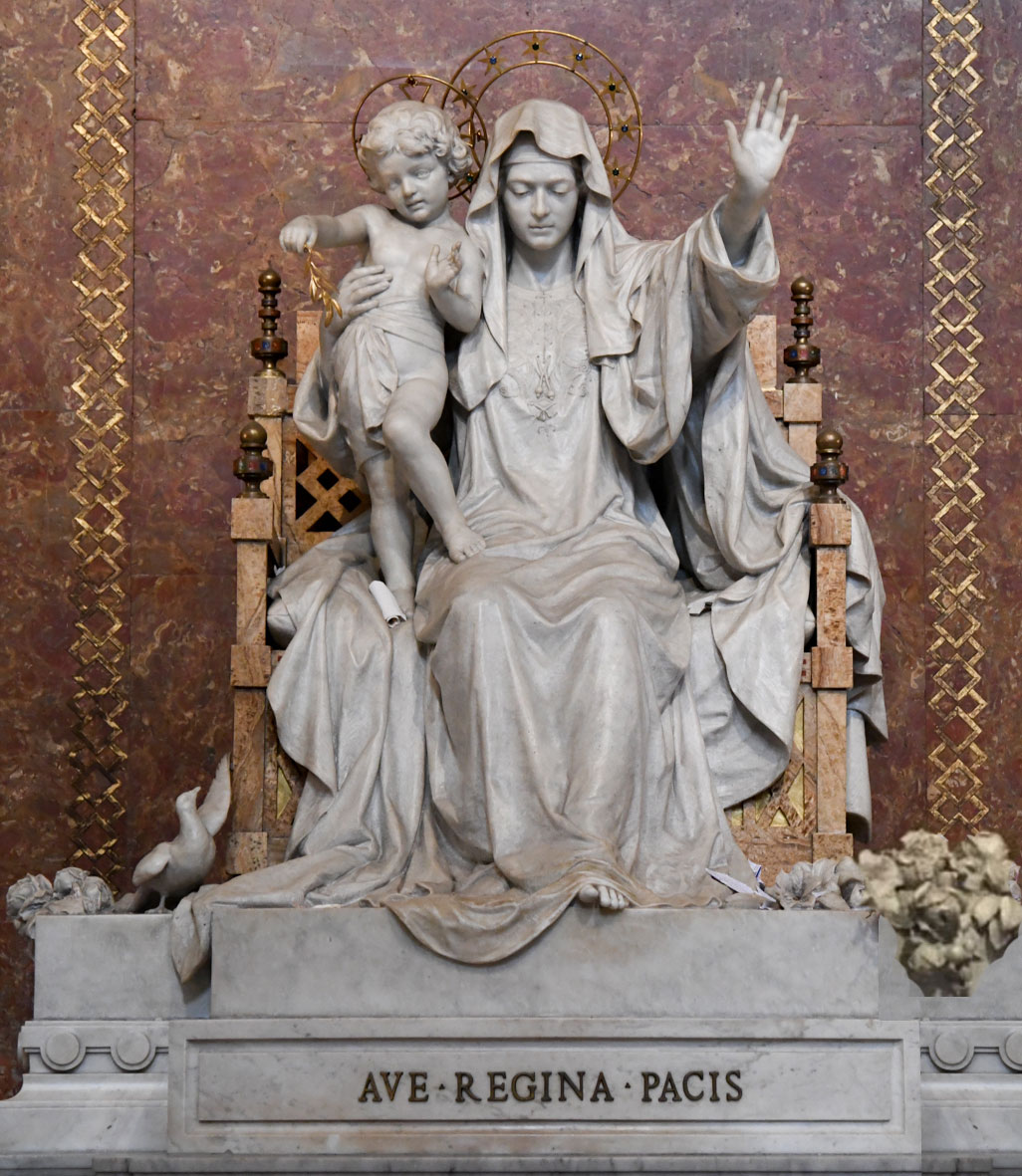
This final section will reflect on the lasting impact and the legacy of Benedict XV, not only as the “Pope of Peace”, but also as a reformer of canon law, a skilled diplomat and an innovative theologian. The discussion will highlight how his achievements continue to influence Catholic thought and practice in the twenty-first century.
The devotion of Benedict XV to Mary and to the Rosary is set within the great Marian tradition of the popes, synthesized in the apostolic exhortation Marialis Cultus (Paul VI), which guides Marian piety and the Rosary as the privileged prayer of the Church.
Deepen your studies: explore Mariology, Marian Theology, Marian apparitions and the Postgraduate Program in Mariology.
Postgraduate Program in Mariology
Would you like to deepen your formation in Mariology? Discover the Postgraduate Program in Mariology of Locus Mariologicus – an academic formation that unites theological rigor, spiritual life and the living tradition of the Church.
Learn to pray the Rosary in our guide: How to Pray the Rosary, Step by Step.
Would you like to study Mariology seriously?
This article is born of the works in the library of Locus Mariologicus. The Postgraduate Program in Mariology takes you to the same source, with academic guidance: Scripture, the Fathers of the Church and the Magisterium, from the first dogma to contemporary questions.



Responses