Marian apparitions: criteria and theological meaning
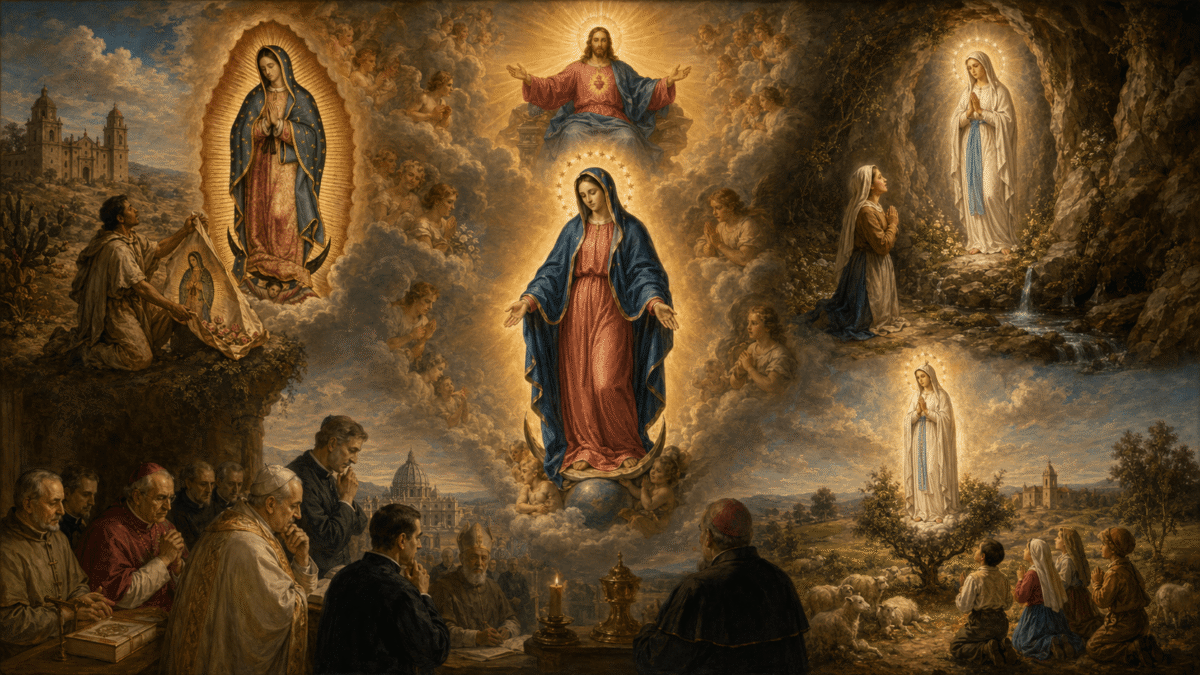
Marian apparitions, criteria and theological meaning
Marian apparitions are phenomena in which Mary becomes visible and communicates messages to one or more seers. The Catholic Church evaluates these experiences by rigorous criteria and may classify them as condigno (worthy of belief), always leaving adherence to private revelations to the freedom of faith of the faithful.
Criteria of discernment
In 2024 the Dicastery for the Doctrine of the Faith published new norms for the discernment of apparitions. The fundamental criteria include: conformity with Catholic faith and morals, the psychological health of the seers, spiritual fruits (conversions, vocations, peace), the absence of commercial interest, and the coherence of the messages with the Gospel.
Approved apparitions
Among the apparitions with ecclesiastical recognition, the following stand out: Fatima (1917), Lourdes (1858), Guadalupe (1531), Beauraing (1932-33), Banneux (1933) and La Salette (1846). Each has its own character and a specific message.
The nature of private revelations
Marian apparitions belong to private revelations: they add nothing new to the deposit of faith, but they can help one to live it more deeply in a particular historical age. Pope Benedict XVI wrote that private revelations are a “help” that faith offers, not a requirement.
Deepen your studies: explore Mariology, Marian apparitions, Marian Theology and the Postgraduate Program in Mariology.
Magisterium of the Church
Revelação pública, quam conclusam esse post mortem ultimorum Apostolorum, definitio dogmatica declarat; private revelationes seu apparitiones non accedunt ad eius rationem. Sed possunt fideles adiuvare ut uberius vivant de fede.
Congregatio pro Doctrina Fidei, Norma Theologica super Apparitionibus et Revelationibus (1978)
📚 Literal translation: Private revelations or apparitions do not have the same status as public revelation, which was closed with the death of the last Apostle. But they can help the faithful to live more fully by faith.
Postgraduate Program in Mariology
Would you like to deepen your formation in Mariology? Discover the Postgraduate Program in Mariology of Locus Mariologicus – an academic formation that unites theological rigor, spiritual life, and the living tradition of the Church.
See the complete list of Marian apparitions recognized by the Church.
Would you like to study Mariology seriously?
This article grows out of the works in the Locus Mariologicus library. The Postgraduate Program in Mariology takes you to the same source, with academic guidance: Scripture, the Fathers of the Church, and the Magisterium, from the first dogma to contemporary questions.





Responses