Mary Mediatrix: the mediation subordinate to the one mediation of Christ
“Unus enim Deus, unus et mediator Dei et hominum, homo Christus Iesus, qui dedit redemptionem semetipsum pro omnibus” (1 Tim 2:5-6), “There is one God, and one Mediator between God and men, the man Christ Jesus, who gave Himself as a redemption for all”
I. One sole Mediator: the Pauline confession and its absoluteness
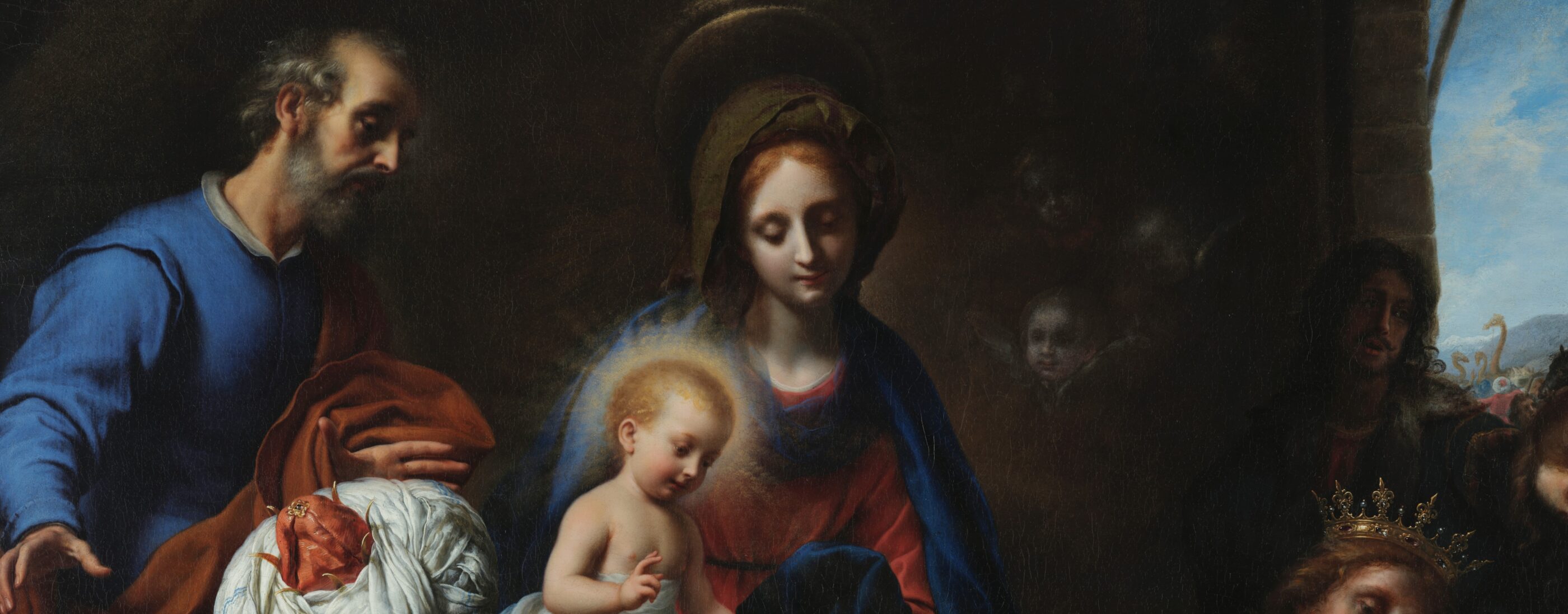
The First Letter to Timothy presents one of the most decisive and most delicate affirmations in all New Testament theology: “There is one God, and one Mediator between God and men, the man Christ Jesus” (1 Tim 2:5). This affirmation inscribes at the heart of the Christian faith the principle of the uniqueness of salvific mediation. There is no other universal mediator between God and humanity. Christ, the eternal Word made flesh, is at once God who came down to us and man who ascends to God, and in this twofold belonging is found the one source of all salvation. This doctrine excludes any rival or parallel mediation, but it does not exclude the participated and subordinate mediations that are anchored in the one mediation of Christ. And it is precisely in this space of subordinate mediation that Catholic theology situates, from the first centuries of the Church, the particular ministry of Mary as Mediatrix. It is not a matter of placing Mary alongside Christ as a second autonomous mediator, it is a matter of recognizing that, among the saints of heaven who intercede for the pilgrims of earth, Mary occupies a singular and eminent place, because she was the first historical cooperator in the redeeming work of the Son.
II. The Marian doctrine of mediation: from the Fathers to the Second Vatican Council
Reflection on Mary as mediatrix took shape progressively over fifteen centuries of Christian theology. The Greek Fathers, particularly Athanasius, Basil and the two Cyrils (of Jerusalem and of Alexandria), described Mary as “the Cooperator of our salvation”. Medieval Western theology, with Peter Damian, Bernard of Clairvaux and Anselm of Canterbury, systematically developed the title of Mediatrix. Bernard wrote a celebrated page on Mary as the “aqueduct” through which the grace of the Son descends upon humanity, and as the “neck” that joins the Head (Christ) to the Body (the Church). In the nineteenth century and in the first half of the twentieth century, Catholic Mariology sought a dogmatic definition for the title of Mary as “Mediatrix of All Graces”. Popes Leo XIII, Pius X and Benedict XV spoke in favor of it, and the International Marian Commission of 1923 drew up preparatory studies. But the dogmatic definition was never proclaimed, precisely in order to preserve the clarity of the uniqueness of the mediation of Christ. The Second Vatican Council, in Lumen Gentium, articulated the doctrine with particular precision: “This maternal function of Mary toward men does not obscure nor in any way diminish this unique mediation of Christ, but shows its efficacy. All the salvific influence of the Blessed Virgin on men… flows from the abundance of the merits of Christ, is founded on His mediation, depends entirely on it, and draws all its efficacy from it” (LG 60). This formulation, balanced and dense, became the definitive theological framework for contemporary Catholic Mariology on the title of Mediatrix.
III. Cana: the Gospel paradigm of Marian mediation
The Gospel of John presents in Cana the perfect narrative paradigm of what theology formulated as a concept. The wedding at Cana is the first sign of Jesus according to the Fourth Gospel, and in that sign Mary plays a decisive role. “As they had no wine, the mother of Jesus said to Him: They have no wine. Jesus answered her: What have I to do with you, woman? My hour has not yet come” (Jn 2:3-4). Mary does not force the will of the Son, does not demand the miracle, does not negotiate with Him. She only presents the need. And then, turning to the servants, she pronounces the words that became her spiritual testament: “Do whatever He tells you” (Jn 2:5). This dynamic is decisive for understanding Marian mediation. Mary does not replace Christ, she points to Him. She does not work the sign, she prepares the conditions for Him to work it. She does not impose her will, she disposes hearts to obedience. The grace that flows from the miracle does not come from Mary, but from the one Source. Nevertheless, Mary was the occasion without which the sign would not have happened at that moment. This cooperation, at once total and subordinate, is the model of all later Marian mediation. Mary continues, in the pilgrim Church, to do what she did at Cana: she perceives the needs of her children, presents them to the Son, disposes hearts to obey. Grace always flows from the one Source, but reaches us through the maternal channel that she chose to be.
IV. Subordinate mediation and what it excludes
Catholic doctrine on Mary as Mediatrix demands a precision that popular piety does not always articulate with clarity. Mary is not the source of grace: Christ is the source. Mary is not an autonomous salvific cause: the only salvific cause is the passion, death and resurrection of the Son. Mary is not one more mediator to be added to Christ: she is a subordinate cooperator in the one mediation. This clarification is decisive in ecumenical dialogue, particularly with the Reformed Christian communities that have seen, over the centuries, Catholic Mariology as a competitor of Christology. The Second Vatican Council was explicit in affirming that the Marian titles of “Advocate, Auxiliatrix, Adjutrix, and Mediatrix… are to be so understood that they take nothing away from, nor add anything to, the dignity and efficacy of Christ, the one Mediator” (LG 62). This conciliar sobriety is not a reduction of Marian devotion: it is its purification. The clearer the uniqueness of the mediation of Christ, the more luminous becomes the particular function of Mary as the total and perfect cooperator in that unique mediation. The Mediatrix does not compete with Christ; she is the most eloquent sign of His efficacy, because she is the first human being totally saved by that mediation, and she continues, in heaven, to intercede for those who are still pilgrims on earth. Sound Marian theology is not Mariological hypertrophy; it is Christological orthodoxy that recognizes in Mary its first fruit and its first witness.
Postgraduate Program in Mariology
Would you like to deepen your formation in Mariology? Discover the Postgraduate Program in Mariology of Locus Mariologicus – an academic formation that unites theological rigor, spiritual life and the living tradition of the Church.
Would you like to study Mariology seriously?
This article is born of the works in the library of Locus Mariologicus. The Postgraduate Program in Mariology takes you to the same source, with academic guidance: Scripture, the Fathers of the Church and the Magisterium, from the first dogma to contemporary questions.




Responses