Abscondisti haec a sapientibus: The Mystery Revealed to the Little Ones and Mary Sede Sapientiae
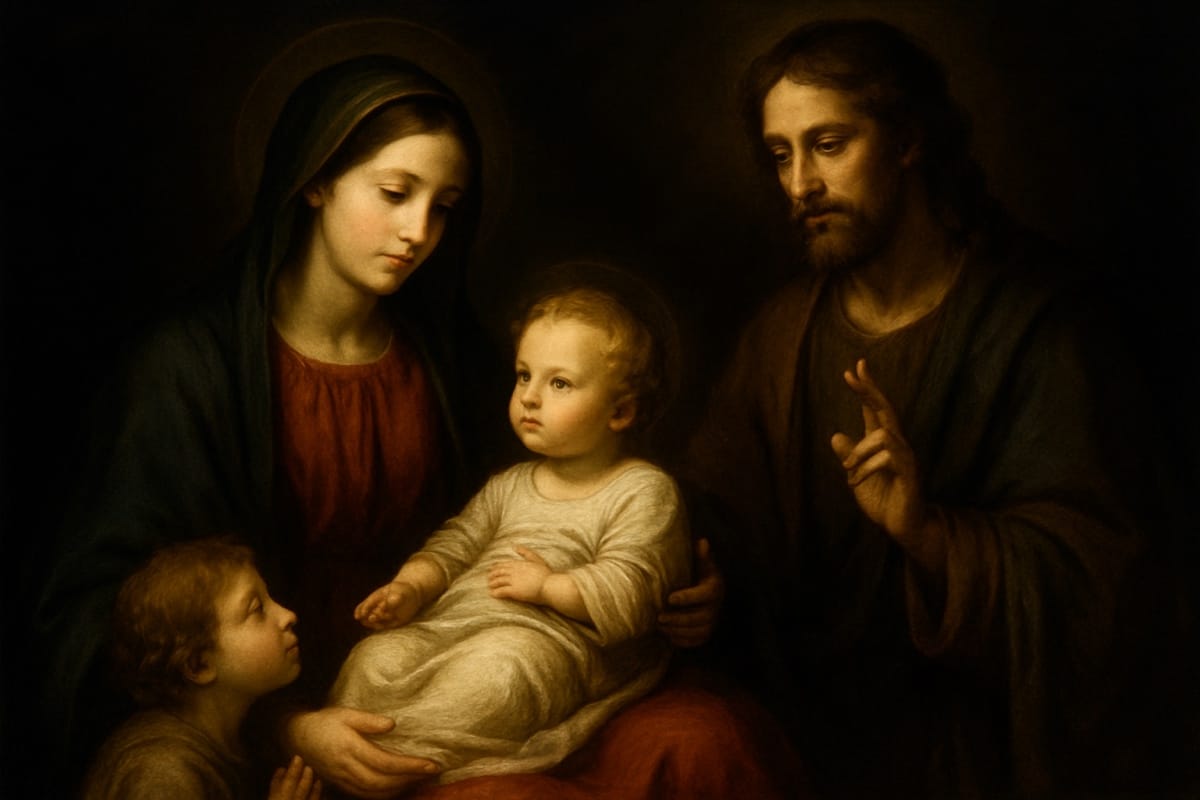
Confiteor tibi, Pater, Domine caeli et terrae, quia abscondisti haec a sapientibus et prudentibus et revelasti ea parvulis.
Mt 11:25
Mt 11:25-27 contains one of the densest Christological statements in the Gospel of Matthew, “All things have been delivered to me by my Father, and no one knows the Son except the Father, nor does anyone know the Father except the Son and anyone to whom the Son wishes to reveal him” (Mt 11:27), framed within a prayer of praise to the Father for the paradoxical logic of the Kingdom: what was hidden from the wise was revealed to the “little ones” (νήπιοι, “infantes,” those who do not have developed critical faculties). This prayer of Jesus is designated by exegetes as the “jubilant hymn,” one of the rare moments in which Matthew presents Jesus in explicit prayer of praise.
The immediate context is the lament over the Galilean cities (Mt 11:20-24): Jesus has just reproached the cities that did not convert despite the miracles. The transition to praise, “at that time Jesus spoke and said: I confess to you, Father” (Mt 11:25), is significant: Jesus moves from the lament over the refusal of the “wise” to the praise for the revelation to the “little ones.” The refusal of the privileged cities is not the last word. There are “little ones” who received what the cities refused, and God deserves praise for that.
I. “You Have Hidden from the Wise”: The Paradox of Revelation
“You have hidden these things from the wise and understanding and have revealed them to the little ones” (Mt 11:25), the paradox is not that God deliberately hid the truth from the wise in order to punish them. It is that the logic of human wisdom is, in itself, an obstacle to the reception of divine revelation. The “wise and understanding” of the Galilean cities, the scribes, the Pharisees, the doctors of the Law, had the whole intellectual apparatus for “understanding” the Messiah, and precisely for this reason they were incapable of receiving Him when He came in an unexpected way.
The “wisdom” that becomes an obstacle is not genuine wisdom but the wisdom that is sufficient unto itself, the wisdom that is not available to be surprised, that already knows what to expect and refuses what does not fit its expectations. The “little ones,” the νήπιοι, those who have no elaborate presuppositions about what God’s revelation ought to be, are available to receive what comes in an unexpected way. Availability to be surprised is the condition of possibility of faith.
This logic runs through the history of revelation: the prophets were rejected by the wise of their own time and received by the simple. Jesus was refused by the doctors of the Law and welcomed by fishermen and tax collectors. The paschal message was first received by the women (Mt 28:1-10), considered invalid witnesses in Jewish law, before being received by the apostles. The “logic of the little ones” is a constant of the history of salvation: God reveals Himself to those who are available to be surprised.
The contemplation of this paradox is part of Marian spirituality: Mary, a young woman of Nazareth without social prestige or intellectual reputation, was chosen to be the Mother of the Son of God precisely because she was “little” in the evangelical sense, available, without an agenda, able to say “fiat” without fully understanding what the “fiat” entailed. “For He has looked upon the humility of His handmaid” (Lk 1:48), God’s “looking” upon the “humility” of Mary is the same “hiding from the wise and revealing to the little ones” of Mt 11:25.
II. “All Things Have Been Delivered to Me by My Father”: The Intimacy of the Son
“All things have been delivered to me by my Father, and no one knows the Son except the Father, nor the Father except the Son” (Mt 11:27), this statement of mutual and exclusive knowledge between Father and Son is, in the synoptic Gospels, the statement closest to the Johannine vocabulary about the Father-Son relationship (cf. Jn 10:15: “as the Father knows Me and I know the Father”). The Christology implicit in this statement is high: Jesus claims a knowledge of the Father that is analogous to the knowledge the Father has of Him, a knowledge that goes beyond the prophetic and that can only be the knowledge of the eternal filial relationship.
“No one knows the Son except the Father,” the impenetrability of the Son is the theological foundation of Mariology: Mary is the “Mother of the Son of God” but does not “know” the Son in the absolute sense of Mt 11:27. The “knowledge” that Mary has of Jesus is maternal knowledge, intimate, real, experiential, but different from the knowledge of the Father. Mariology respects this distinction: Mary is the creature closest to the Son but she is not divine. Her knowledge of Jesus is the knowledge of faith, not the knowledge of consubstantiality.
“And anyone to whom the Son wishes to reveal him,” the revelation of the Father is neither automatic nor deserved. It is a gift of the Son, who chooses to reveal. Mary was the first recipient of this revelation in the full sense: she not only received the message of the angel but was constituted “Mother of the Son,” the most intimate relationship possible with the Revealer. The “revelation” that Mt 11:27 announces as a gift of the Son to the “little ones” has in Mary its most perfect realization: she who received the Revealer within herself knew the Father through the Son whom she bore.
III. Mary Sede Sapientiae: The Wisdom That Is Not Sufficient unto Itself
“Seat of Wisdom,” “Sedes Sapientiae,” is one of the oldest invocations of the Litany of Loreto, documented as early as the twelfth century. Mary is called “Seat of Wisdom” because she was the human throne on which the Wisdom of God (the Logos, the personified Wisdom of Prov 8) assumed flesh. The “seat,” the throne, is the place where the king sits to exercise authority. Mary as “Seat” is the place where divine Wisdom became present in the world in a definitive way.
The theological paradox of Mary as “Sede Sapientiae” is that she welcomed Wisdom precisely because she was “little” in the sense of Mt 11:25, because she did not have the wisdom that is sufficient unto itself, because she was available to be surprised, because her “fiat” was not preceded by an exhaustive analysis of its implications. The wise of Israel, with all their knowledge of Scripture and of tradition, did not recognize the Messiah when He came. Mary, without that apparatus of learning, recognized Him and welcomed Him. The “Seat of Wisdom” is paradoxically the “little one” who received what the wise refused.
Devotion to Mary “Seat of Wisdom” has a rich history in the medieval universities, Notre-Dame de Paris, Oxford, Bologna, the universities that chose Mary as the patroness of study, precisely because the medieval scholastics understood the paradox: academic wisdom is legitimate and necessary, but it must be ordered by the wisdom of faith that Mary represents. To study “sub patrocinio Mariae” is to recognize that human wisdom is at the service of divine truth, that the “Seat of Wisdom” guards the student from the error of confusing intellectual apparatus with knowledge of the truth.
IV. “Come to Me”: The Invitation That Closes the Paradox
Mt 11:25-27 is immediately followed by the invitation of Jesus: “Come to Me, all you who are weary and burdened, and I will refresh you” (Mt 11:28). The sequence reveals the logic of the text: the praise of the Father for the revelation to the “little ones” ends with the universal invitation; the revelation that was given to the little ones is available to all who approach as little ones, with the weariness of those who have no answers of their own, with the humility of those who need to be refreshed.
“Learn from Me, for I am meek and humble of heart” (Mt 11:29), Jesus describes Himself with the same attributes that characterize the “little ones” who received the revelation: meekness and humility of heart. The lesson that Jesus offers is not an academic lesson; it is a lesson in interior disposition: the meekness and the humility that make the heart receptive to divine revelation. To learn from Jesus is to learn to be “little” in the evangelical sense.
Mary is the model of this learning: “Behold the handmaid of the Lord” (Lk 1:38), the disposition of the handmaid is the disposition of the “little one” who receives what the wise refuse. Medieval Mariology insisted on the “humilitas Mariae,” the humility of Mary as the virtue that made her fit to receive the Word, precisely as a development of the paradox of Mt 11:25: it was because Mary was humble (little) that Wisdom chose her as its Seat. The “Sedes Sapientiae” is the “ancilla Domini,” the handmaid who received what the lords refused.
Postgraduate Program in Mariology
Would you like to deepen your formation in Mariology? Discover the Postgraduate Program in Mariology of Locus Mariologicus, an academic formation that unites theological rigor, spiritual life, and the living tradition of the Church.
Would you like to study Mariology seriously?
This article grows out of the works in the Locus Mariologicus library. The Postgraduate Program in Mariology takes you to the same source, with academic guidance: Scripture, the Fathers of the Church, and the Magisterium, from the first dogma to contemporary questions.


Responses