Marian associations: the movements of devotion to Mary
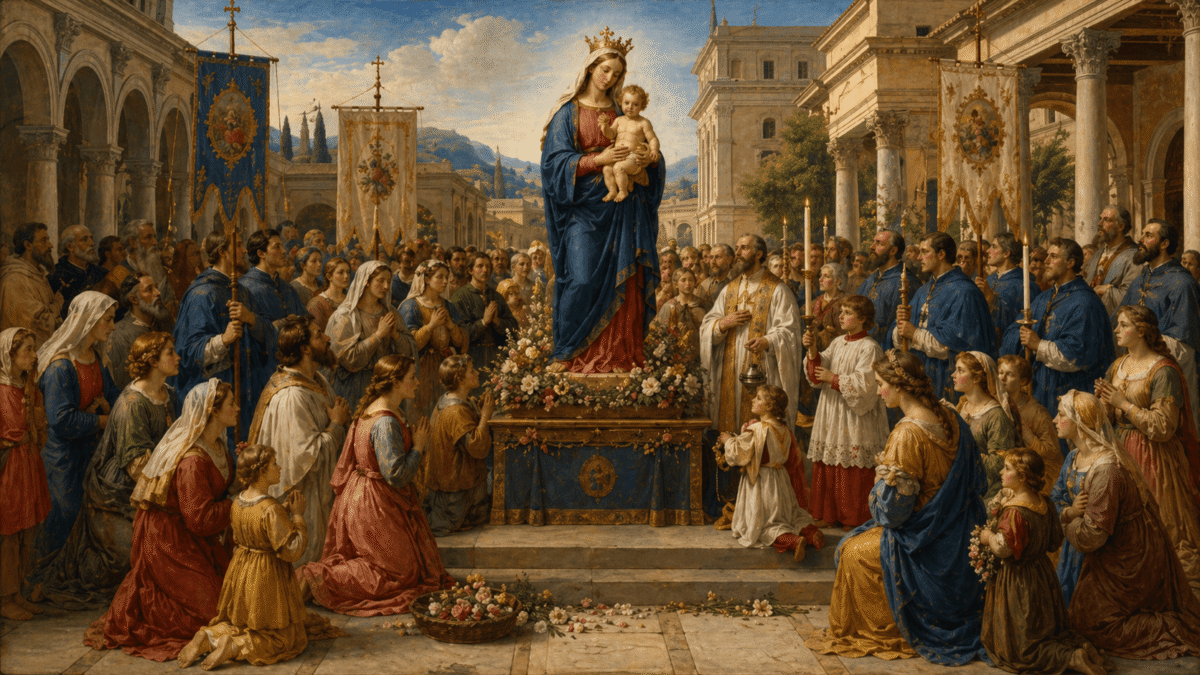
Marian associations, the movements of devotion to Mary
Marian associations are movements of lay people (and at times of priests) who find in Mary the center and the model of their spiritual and apostolic life. Since the sixteenth century, when the Marian Congregations of the Jesuits became the first organized Marian movement, the Church has known a great variety of associations that express, in different forms, the same impulse: to live the Christian faith with Mary and in the manner of Mary.
The great Marian movements
Among the principal Marian associations that have marked the recent history of the Church, the following stand out. The Marian Congregations (sixteenth century), founded in the Jesuit colleges of Rome, were the first model of associated Marian devotion for lay people, especially young students. Today they survive as the Christian Life Communities. The Daughters of Mary Immaculate, linked to the apparitions of Our Lady of the Miraculous Medal (1830), formed parish associations for the Marian formation of women. The Legion of Mary, founded in Dublin in 1921 by Frank Duff, organizes lay people in active apostolate under the protection of Mary, with a strong communal spirit and weekly discipline. The Militia of the Immaculata, founded by Saint Maximilian Kolbe in 1917, centers on consecration to the Immaculata and on the mission of converting sinners. The World Apostolate of Fatima (Blue Army) mobilizes the faithful to live the messages of Fatima through prayer and penance. The Montfortian associations, inspired by Saint Louis-Marie Grignion de Montfort, promote consecration to Christ through Mary according to the spirit of True Devotion.
Common characteristics
Despite the diversity of charisms, Marian associations share certain fundamental traits. They are predominantly lay experiences, born outside organized religious life but frequently under the impulse of charismatic figures (holy founders, apparitions). They are communal experiences: the relationship with Mary is not lived only on a personal level, but in assembly, in prayer cenacles, in regular meetings. They are apostolic experiences: Marian devotion always translates into service to one’s neighbor, evangelization, and witness. They are original experiences: each association develops its own way of reinterpreting the Marian model.
Mary as model of an associated Christian life
What is new in Marian associations, in comparison with individual devotion, is the communal dimension: Mary is not only a personal model of virtue, but the center of an experience of communion among the members. As Mary gathered the apostles in the Cenacle awaiting the Holy Spirit (Acts 1:14), the associations gather the faithful in prayer to receive the same Spirit and to bring the presence of Christ to the world. Contemporary Mariology values this ecclesiological datum: where Mary is present, the Church gathers and receives new missionary strength.
Deepen your studies: explore Mariology, Consecration to Mary, the Rosary, and the Postgraduate Program in Mariology.
Magisterium of the Church
Sodalitatibus marianis per saecula institutis Ecclesia probavit eas tanquam scholam christianae formationis et devotionis ad Virginem.
Paulus VI, Exh. Ap. Marialis Cultus, n. 48 (2 februarii 1974)
📚 Literal translation: The Marian associations instituted throughout the centuries were approved by the Church as schools of Christian formation and of devotion to the Virgin.
Postgraduate Program in Mariology
Would you like to deepen your formation in Mariology? Discover the Postgraduate Program in Mariology of Locus Mariologicus – an academic formation that unites theological rigor, spiritual life, and the living tradition of the Church.
Would you like to study Mariology seriously?
This article grows out of the works in the Locus Mariologicus library. The Postgraduate Program in Mariology takes you to the same source, with academic guidance: Scripture, the Fathers of the Church, and the Magisterium, from the first dogma to contemporary questions.




Responses