Sorrows of Mary: the compassion of the mother
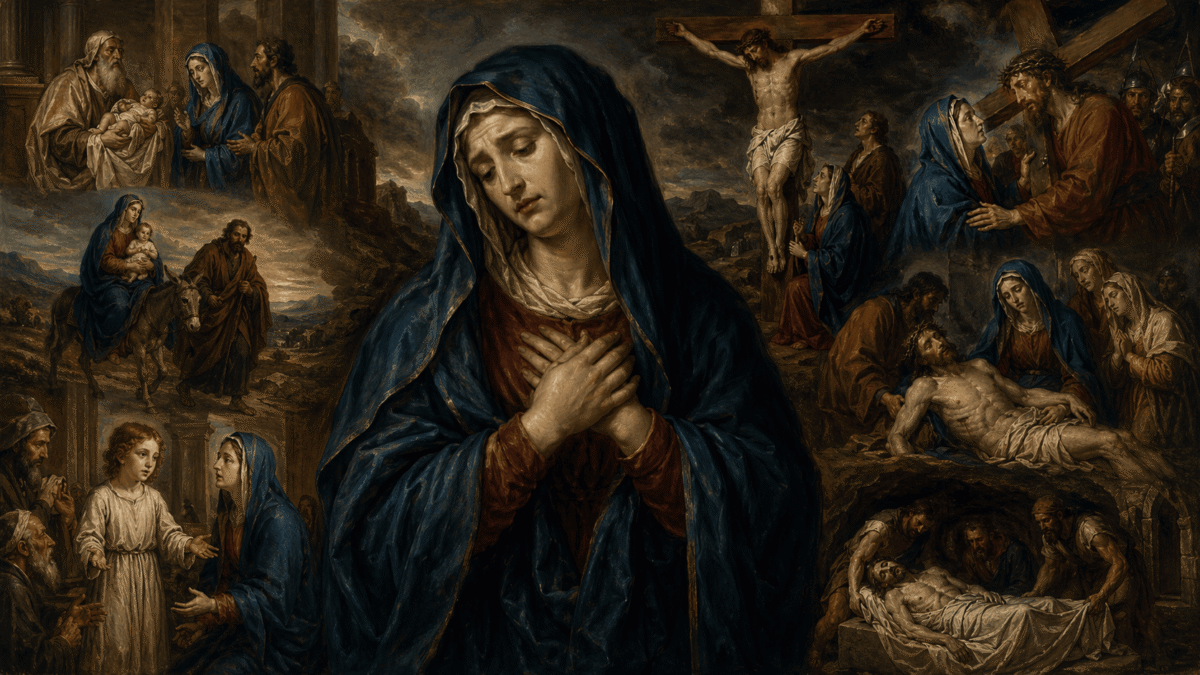
Sorrows of Mary, the compassion of the mother
The Sorrows of Mary (or the Compassion of Mary) constitute one of the central themes of Marian Theology. They refer to the suffering of Mary throughout the life of Jesus, especially in the Passion. Tradition enumerates seven sorrows, a symbolic number of the fullness of suffering.
The seven sorrows
The seven sorrows traditionally enumerated are: 1) the prophecy of Simeon (“a sword will pierce your soul”, Lk 2:35). 2) the flight into Egypt. 3) the loss of the child Jesus in the Temple. 4) the meeting with Jesus on the road to Calvary. 5) the Crucifixion. 6) the receiving of the dead body of Jesus. 7) the burial.
Theology of compassion
The suffering of Mary is not passive: it is com-passion (from the Latin, “to suffer with”), that is, active participation in the redemptive suffering of Christ. Saint Bernard of Clairvaux wrote that the sword of sorrow pierced Mary so deeply that she could be called more than a martyr, for she suffered in spirit what the martyrs suffered in the flesh.
Devotion and liturgy
The feast of Our Lady of Sorrows is celebrated on September 15, the day after the Exaltation of the Holy Cross. The hymn Stabat Mater is the most perfect literary expression of this devotion. The Order of the Servants of Mary (Servites) devoted itself especially to the veneration of the Sorrows of Mary.
Deepen your studies: explore Mariology, Marian Theology, Marian apparitions and the Postgraduate Program in Mariology.
Magisterium of the Church
Et tuam ipsius animam pertransibit gladius, ut revelentur ex multis cordibus cogitationes.
Luke 2:35 (Clementine Vulgate)
📚 Literal translation: And a sword shall pierce your own soul also, that the thoughts of many hearts may be revealed.
O vos omnes qui transitis per viam, attendite et videte si est dolor sicut dolor meus.
Lamentationes 1:12 (Clementine Vulgate), applied by tradition to the Sorrowful Mother
📚 Literal translation: O all you who pass by the way, attend and see if there is any sorrow like my sorrow.
Postgraduate Program in Mariology
Would you like to deepen your formation in Mariology? Discover the Postgraduate Program in Mariology of Locus Mariologicus – an academic formation that unites theological rigor, spiritual life, and the living tradition of the Church.
Would you like to study Mariology seriously?
This article grows out of the works in the Locus Mariologicus library. The Postgraduate Program in Mariology takes you to the same source, with academic guidance: Scripture, the Fathers of the Church, and the Magisterium, from the first dogma to contemporary questions.




Responses